In California, we’ve made a lot of progress in improving greenhouse gas emissions in the electric sector, but have a long way to go in transportation. We need cleaner cars and robust, clean public transit systems that meaningfully support the state’s growing population.
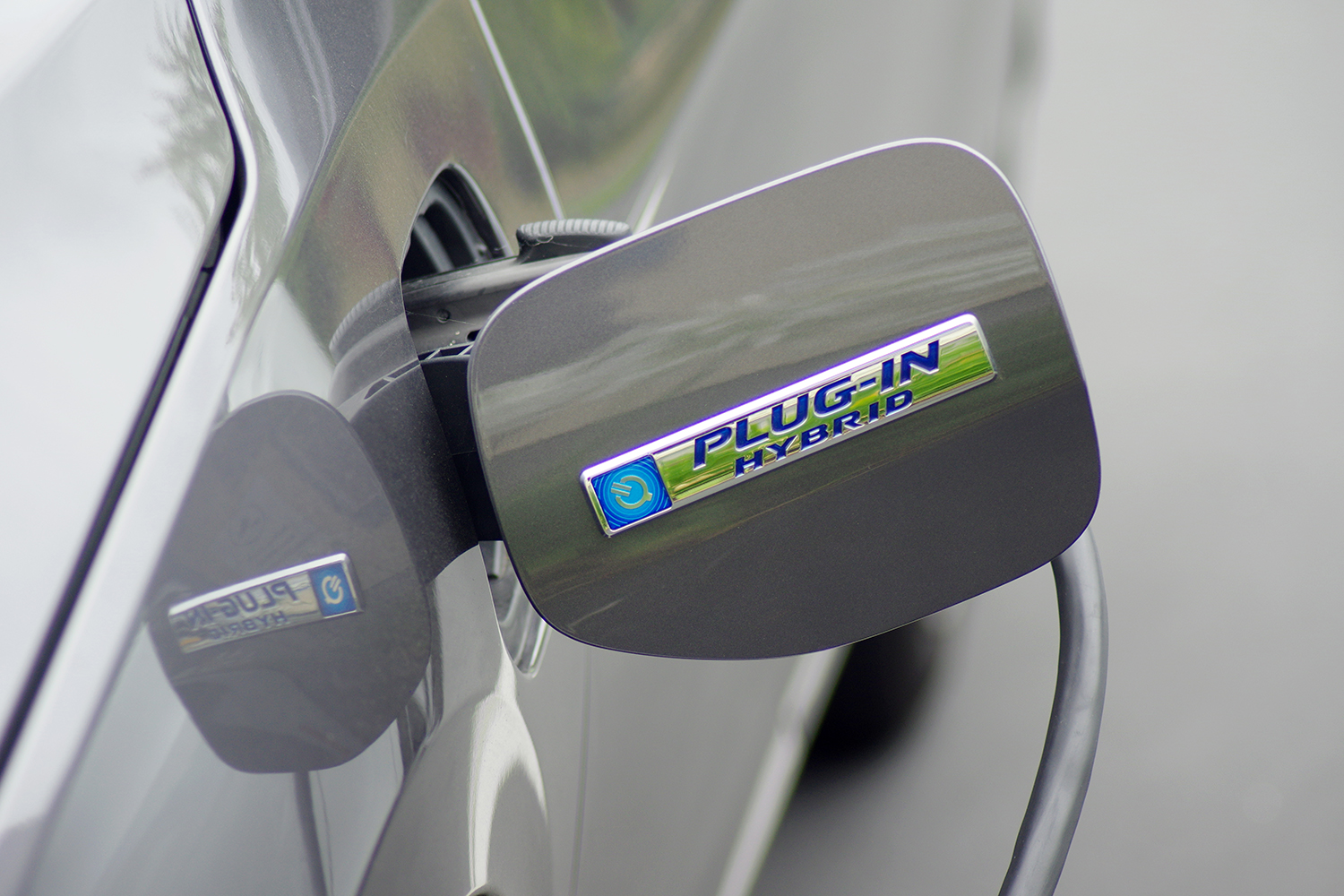
One of the exciting things about working in transportation is that there are so many angles of approach. This summer, student research assistant Scott Machen and Schatz engineer Jerome Carman are developing strategies to allow a microgrid to control electric vehicle charging loads — which will expand microgrid demand response strategies during power outages and peak use days.
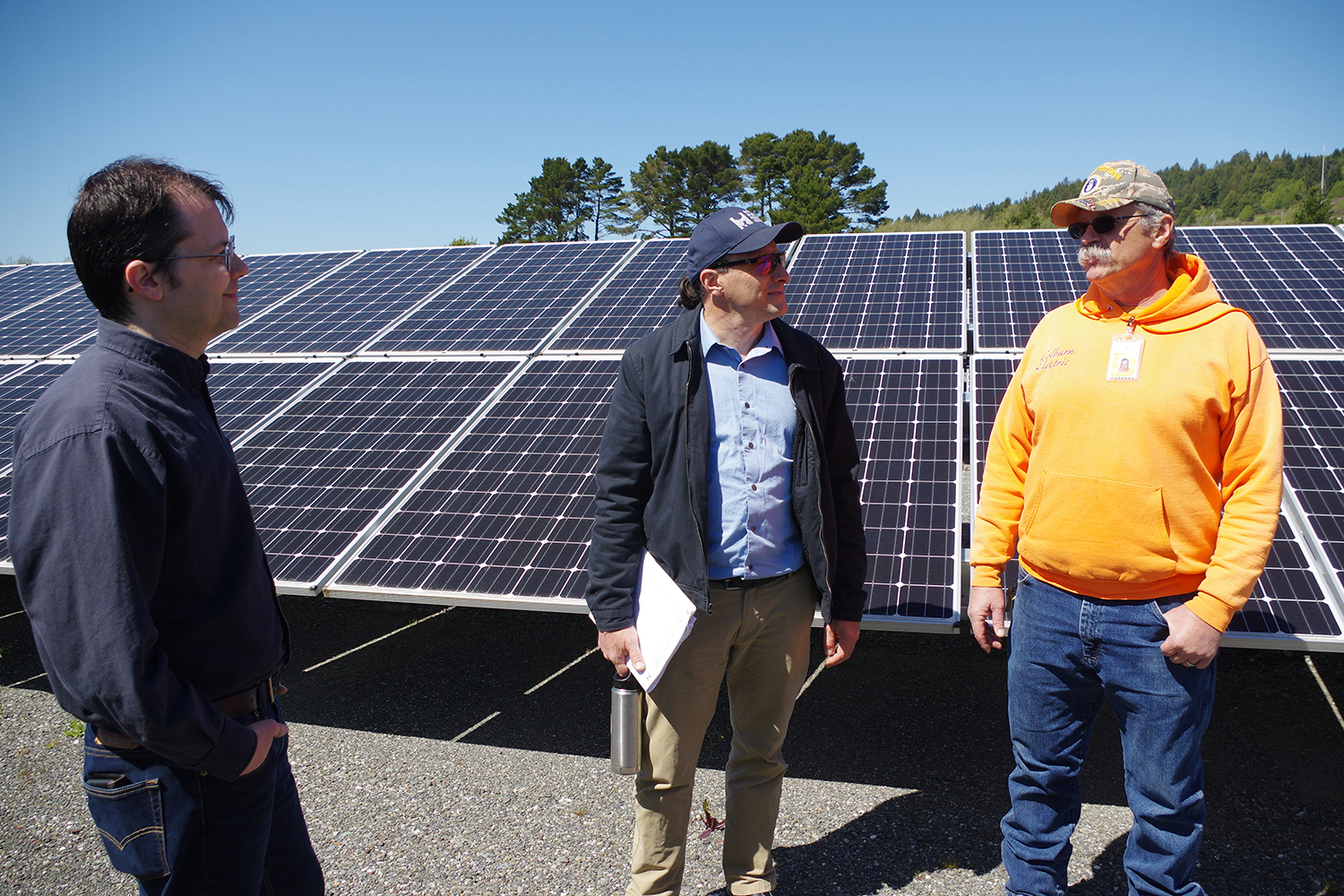
Scott’s objective is to build a prototype computer algorithm to enable smart control of electric vehicle charging for the Redwood Coast Airport microgrid. Jerome and Scott are running live tests on system behavior at the Blue Lake Rancheria’s tribal office charging stations, so that we can better predict how microgrids, chargers, and electric vehicles will interact.
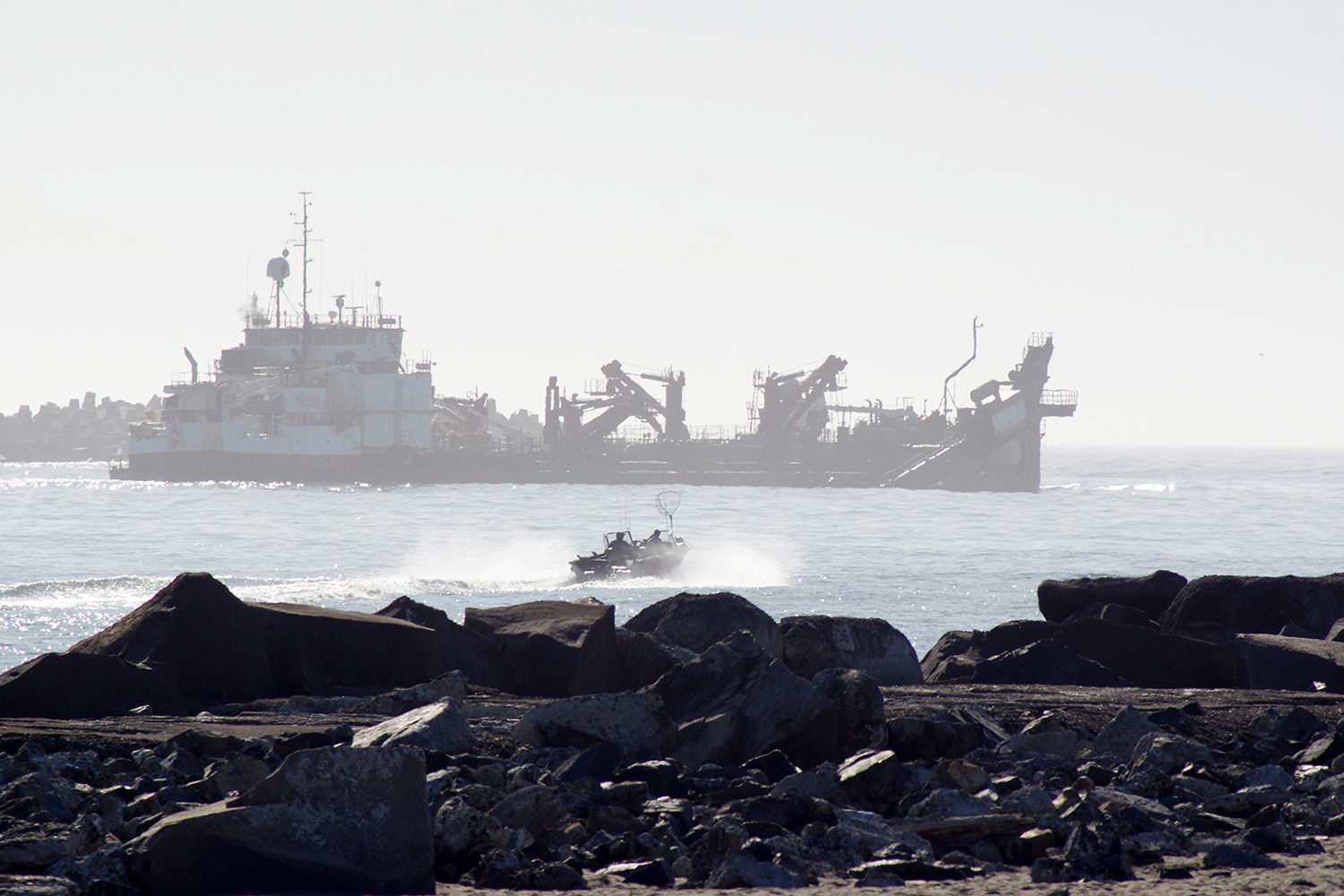
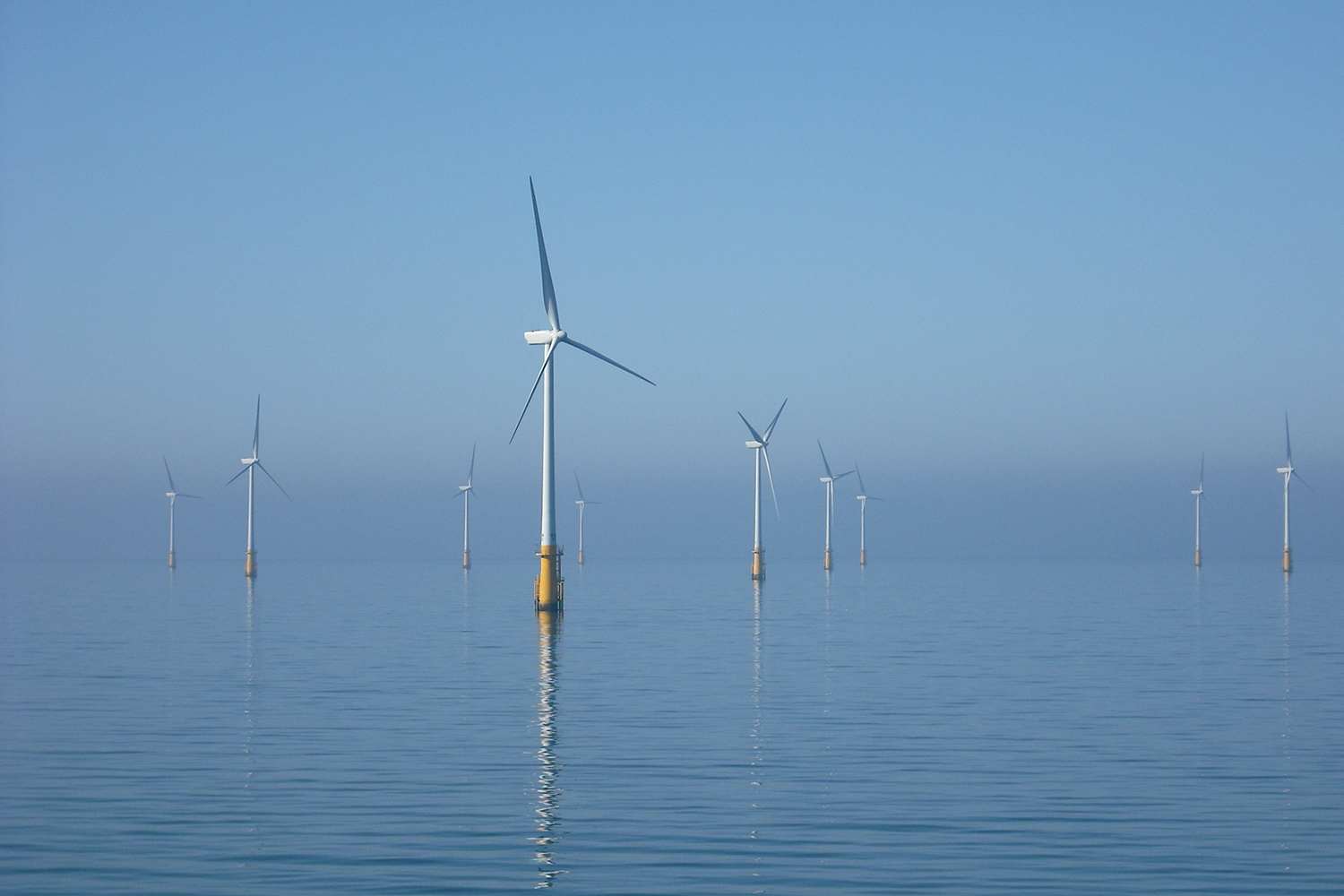
As capital costs for offshore wind rapidly decrease and floating platform technologies come online, the northern coast of California is emerging as a promising site for the first offshore wind farm in the eastern Pacific. The region off Humboldt Bay is of particular interest due to its superior wind resource, existing deep water port, power interconnection capacity, and limited overlap with U.S. military operations.
To assess offshore wind feasibility for the northern California coast, we are conducting three complementary studies. Wind study #2 is being funded by a $150,000 grant from the Bureau of Ocean Energy Management (BOEM), with matching funds from Pacific Gas & Electric (PG&E). This study will evaluate wind patterns and associated energy generation profiles, estimate transmission upgrades, and assess the economic viability of three wind farm models.
Potential generation profile — In order to determine how offshore wind generation would align with regional and state energy needs, we will assess daily wind patterns and production capacity within potential lease areas.
Transmission and interconnection — Large scale wind generation off California’s northern coast would exceed the capacity of the region’s electrical grid. Delivering power to larger load centers in California would require significant upgrades to transmission infrastructure. Upgrades and associated costs will be estimated with collaboration from PG&E.
Subsea cable transmission analysis — Energy could potentially be transmitted to the San Francisco Bay Area via undersea cable. The study will involve preliminary feasibility analysis for this possibility.
Economic viability — The economic viability and cost of electricity from three differently sized wind farms will be evaluated for the specific context of Humboldt County.
Our project will take the first in-depth look at the wind resource and transmission constraints in this region. Previous work has been done to characterize the general wind resource on the north coast, but we will be assessing project sizes and locations that are relevant to the current area being considered for lease. This project will provide a public report that describes the opportunities for energy generation and the expected costs of transmission upgrades. A final report for this wind study will be delivered to BOEM in May 2020.
With separate funding from California’s Ocean Protection Council and the Governor’s Office of Planning and Research, we are also conducting analyses related to environmental impacts, stakeholder benefits and and concerns, seismic hazards, policy and regulation, and other associated topics. Learn more about our offshore wind research…
This spring, we were visited by students from Six Rivers and Arcata High, Mount Shasta Middle, and Cutten Elementary. We participated in the Redwood Environmental Education Fair, the annual GATE Academy, and the Afterschool Visiting Professionals program at Pacific Union. We brought energy workshops to Freshwater, Hydesville, Union Street Charter and Arcata elementary schools. We tabled at the Fuente Nueva and Lafayette science nights, the Plant and Seed Fair, and for career day on campus!
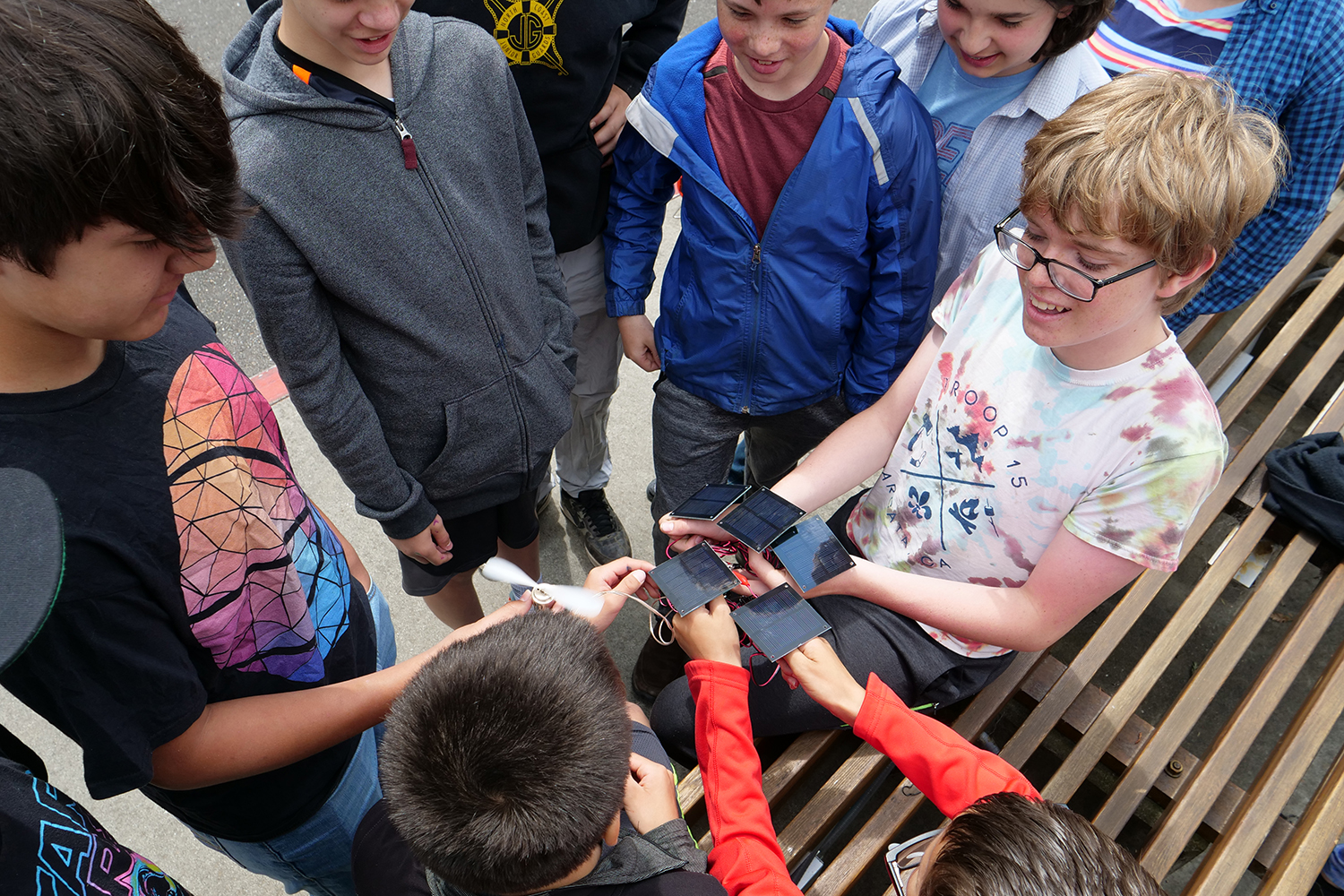
This week, we explored solar circuits with the HSU Robotics Camp, and brought renewable energy activities to the Yurok Tribe’s youth camp, held at the mouth of the Klamath River.
It’s exciting to work with young people across the north coast, so many of whom are already deeply committed to understanding and protecting the earth!
A student at Klamath Camp powers a fan with a solar cell
Wired magazine recently visited the Blue Lake Rancheria and the Schatz Center to learn how microgrid systems create energy security during natural disasters. Reporter Matt Simon compares the Rancheria’s microgrids to the evolution of personal computers — once novel assemblies that are now available out of the box.
Our Center’s microgrid programs focus simultaneously on immediate site needs and on system replicability. Our goal is to make these clean energy technologies feasible for wide deployment, saving our planet while also saving our communities. Two of our projects currently under development were specifically designed with replicability in mind: the Solar+ microgrid at the Blue Lake Rancheria and the Redwood Coast Airport Renewable Energy Microgrid.
The Blue Lake Rancheria and Solar+
Assessing a canopy’s capacity for solar
The Blue Lake Rancheria is host to two microgrids, both partially funded through the California Energy Commission’s EPIC program. The main campus system went live in 2017 and provides energy security for the tribal government, hotel, casino, and site infrastructure including EV charging stations. A second, independent microgrid is now underway at the adjacent Rancheria gas station and convenience store, and will go live in the next few months. This smaller “Solar+” project is being developed as a test case for stores and fueling stations across California. The primary project goal is to design an affordable microgrid package for statewide deployment — allowing these sites to operate throughout regional energy blackouts.
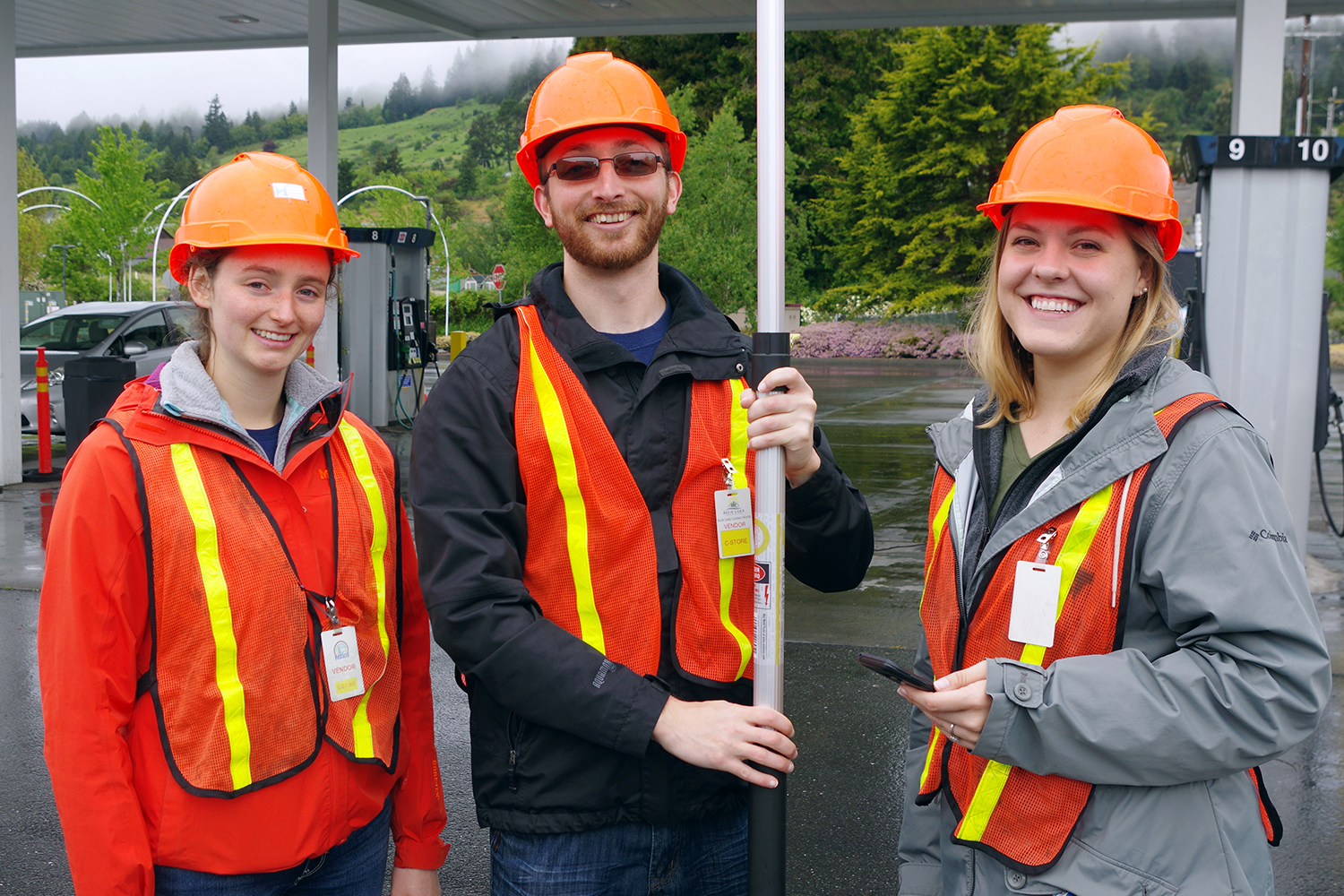
This week, our Solar+ team will be visiting convenience stores and fueling stations across northern California. The team will assess existing electrical infrastructure, which will help us identify how Solar+ could be scaled to most effectively meet site-specific needs. For the tour, Schatz Graduate Fellow Thalia Quinn will be joined by René DeWees and Ellen Thompson. Ellen and René just completed a year on the Solar+ team as student researchers, while Thalia recently presented her master’s thesis on solar+ microgrid costs at gas station and convenience stores in California.
Resiliency needs are intimately tied to location. As Thalia explains, “Recent discussions with fueling station representatives have illuminated the importance of resilient systems during emergency events such as wildfires. These stations support first responder agencies and allow citizen evacuation during natural disasters, making them a prime location for the installation of Solar+.” Through interviews with industry specialists and by carefully documenting a variety of site layouts, we hope to build a flexible, best-fit system that addresses common needs.
Ellen Thompson and René DeWees document a refrigeration system
The Redwood Coast Airport
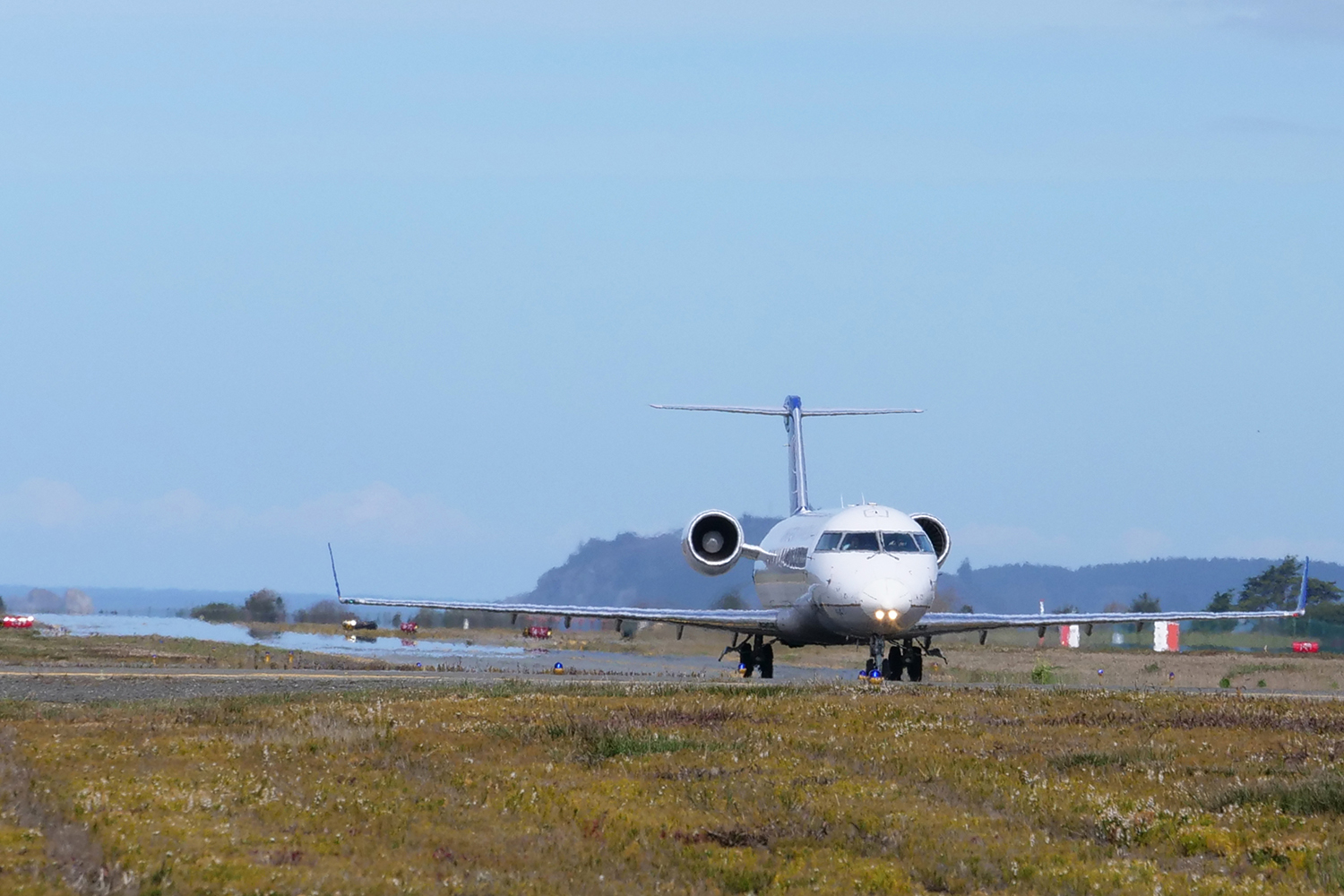
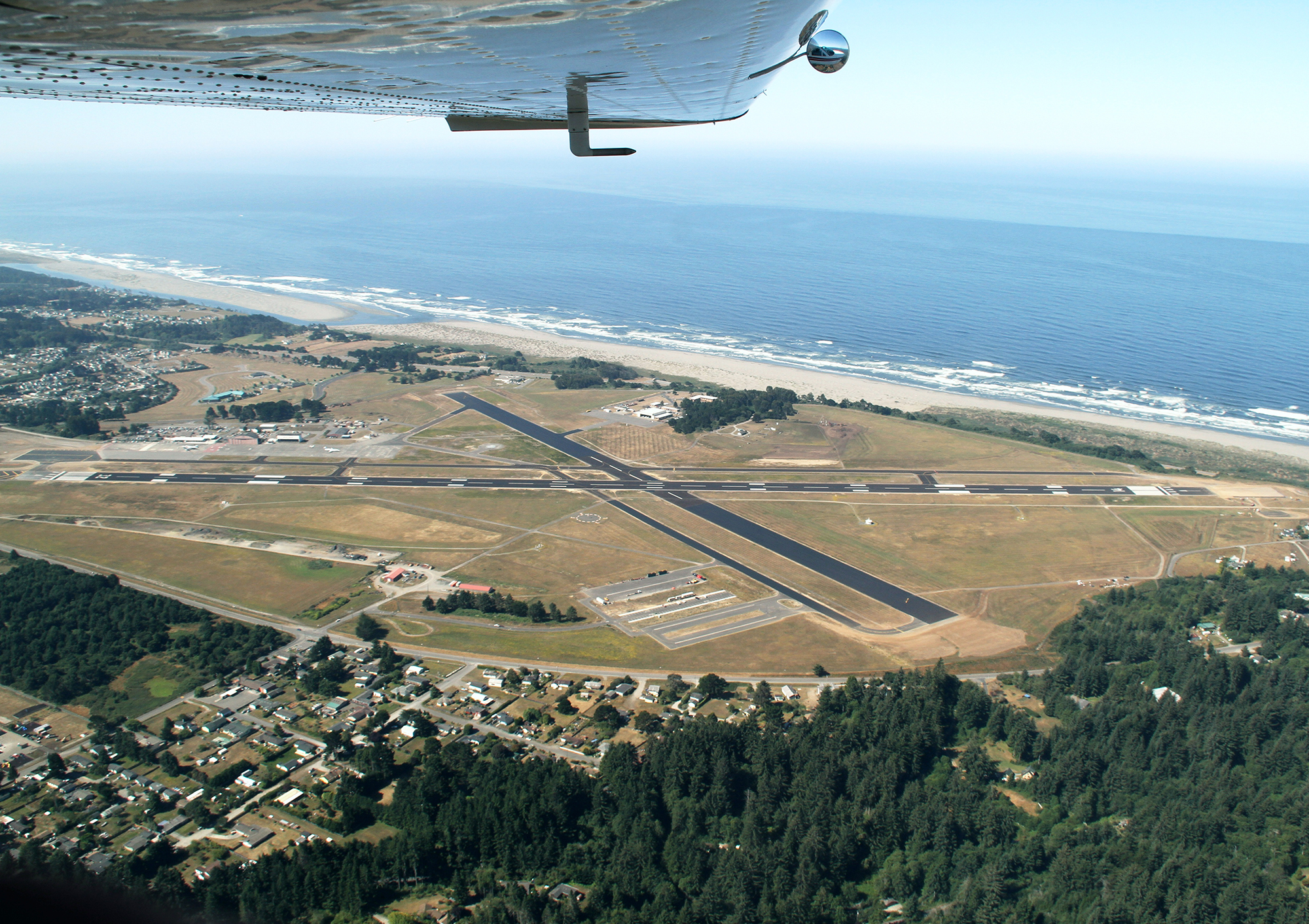
From its remote location nearly 300 miles north of San Francisco, the Redwood Coast Airport (RCA) serves 136,000 residents in a county that spans 3,500 square miles. Located beside the runway is also the regional Coast Guard Air Station, which monitors and provides search and rescue for 250 miles of rugged coastline.
We are currently developing a solar+battery based microgrid for the airport and Coast Guard station that will ensure uninterrupted electrical service in the event of a natural disaster, precautionary de-energization of the grid, or other power outage. The solar arrays will have a capacity of more than 2 MW, and will be coupled with an 8 MWh battery storage system.
The airport microgrid is being funded by the California Energy Commission, with the explicit goal of creating a business case for microgrids. The system will be owned and maintained by the Redwood Coast Energy Authority (RCEA), on land leased from the airport. As the local community choice aggregator, RCEA is responsible for making power purchases on behalf of its customers (including the airport), while Pacific Gas & Electric (PG&E) provides the transmission and distribution system for that power.
The airport microgrid’s first objective is to provide onsite resiliency, so 2 MWh will always be retained in the battery storage. Additional generation will also be retained in storage until it is needed by the macrogrid — typically after nightfall, when the state’s solar arrays stop producing. At this point, RCEA will sell its excess energy generation via CAISO, California’s wholesale electricity market, allowing the state to make ideal use of distributed solar.
This airport system will be the first front-of-the-meter, multi-customer microgrid in PG&E’s service territory — and will be accessible from the PG&E distribution control center. We are currently working with the utility to develop an experimental microgrid tariff that will define the rules of interconnection and compensation for these enhanced resiliency systems. Development of the tariff and establishing a path for CAISO participation are critical steps for widespread microgrid deployment, from both a regulatory and a fiscal perspective.
The Redwood Coast Airport Renewable Energy Microgrid will go live in late 2020 or early 2021.
Site of the upcoming airport microgrid solar array
This Friday (9:30 am – 12:30 pm Pacific), microgrid professionals will join together to share their best practices and lessons learned from recent, cutting edge microgrid systems. Speakers represent seven projects first funded in 2015 through the California Energy Commission’s Electric Program Investment Fund — including the Schatz Center’s design and development of the Blue Lake Rancheria low-carbon microgrid.
Dave Carter, Managing Research Engineer at the Schatz Center, will present on the fully operational Blue Lake Rancheria and the upcoming Redwood Coast Airport microgrid projects.
Announcement from the CEC:
California Energy Commission staff will conduct a workshop to report information and receive public comments on the lessons learned and best practices obtained from Electric Program Investment Fund (EPIC) grants awarded for microgrid research and development in 2015 (PON-14-301). The Energy Commission has managed seven microgrid awards since 2015 and most of the awardees completed their required activities by the end of March 2019. These microgrids are early adopters and experienced many successes and unexpected challenges during the implementation of their grants. This workshop will discuss the challenges and successes the awardees experienced over the last four years as they designed, installed, and operated their microgrids.
Interested in learning more about our design for the Redwood Coast Airport’s renewable energy microgrid? We’ll be joining the folks at the Clean Power Exchange for a free online webinar on Wednesday, April 17, from 11 am to noon (PST).
Panelists will include:
Richard Engel, Director of Power Resources for RCEA
Nikky Avila, Senior Grid Innovation Engineer for PG&E, and
James Zoellick, Managing Research Engineer at the Schatz Center.
We’ll share aspects of the project including:
community resiliency planning
developing new tariffs for connecting microgrids
meeting California’s storage mandate
creating a replicable business model for front-of-meter, multi-customer microgrids, and
participating in the statewide energy wholesale market through local, renewable generation.
Planning is underway to site huge floating wind farms along California’s coast, including offshore Humboldt County, to help the state reach its goals of 100 percent clean energy. But these plans underline one of the key questions for California climate policy – Will the green economy accentuate or narrow the state’s widening income and opportunity gaps? In the case of offshore wind, an entirely new industry is envisioned, which could have a uniquely “high road” potential for well-paying jobs, community benefits, an industrial supply chain, and major infrastructure improvements. But achieving this will not be easy. This presentation will explain this conundrum for offshore wind and state climate policy in general.
Robert Collier is a policy analyst at the UC Berkeley Center for Labor Research and Education, where he researches labor and workforce issues in the clean energy economy. In particular, his work focuses on policy for the transition from fossil fuels to renewable energy, including emerging technologies such as offshore wind power. Prior to joining the Labor Center in 2016, he was a consultant to environmental nonprofits and foundations on a variety of issues related to renewable energy and climate policy, and he spent 16 years as a staff reporter for the San Francisco Chronicle, covering international news, energy, and climate policy.
The Sustainable Futures Speaker Series stimulates interdisciplinary collaboration around issues related to energy, the environment, and society. All lectures are free and open to the public, and are sponsored by the Schatz Center, the Environment & Community graduate program, and the College of Arts, Humanities & Social Sciences at Humboldt State.
Spring 2019 lectures will be held on Thursdays from 5:30 – 7:00 pm in Founders Hall 118.
For additional details on upcoming events or to request accessibility accommodations, email serc@humboldt.edu or call (707) 826-4345.
Sign up for the latest Schatz Center info, including speaker events, on our news page.
Today, the Humboldt County Board of Supervisors approved a Memorandum of Understanding for the Redwood Coast Airport Renewable Energy Microgrid. Key partners for this project include the County of Humboldt, which will house the airport microgrid, the Redwood Coast Energy Authority (RCEA), which will own and operate the microgrid, and the Schatz Energy Research Center at Humboldt State, which is the prime contractor and responsible for the project design and technology integration.
The Redwood Coast Airport Renewable Energy Microgrid will power the Humboldt Bay region with clean, locally generated energy. Annually, its two solar photovoltaic (PV) arrays will provide enough electricity to power 430 households, and prevent the emission of ~880 metric tons of carbon dioxide.
On a typical day, some of the energy generated from the PV arrays will be stored onsite, some will be fed directly to the airport and offset electricity costs, and some will be sold on California’s wholesale energy market. The energy sold on the wholesale market will be timed to best support renewable energy on the grid. By storing power in the batteries, the microgrid will be able to provide clean energy when demand is highest and the sun has set.
During a power outage, the microgrid’s solar + battery storage system will maintain electricity indefinitely for the airport and adjacent Coast Guard Air Station. This will permit flights and rescue operations to continue across the county, even when the highways are closed.
This project is being funded by a $5 million grant from the California Energy Commission’s EPIC program, with $6 million in match funding from RCEA. This system will be the first multi-customer, front-of-the-meter microgrid in Pacific Gas & Electric’s area of service, and is expected to be fully operational in December of 2020.
The Redwood Coast Airport’s renewable energy microgrid is one of four resiliency projects completed or currently underway at the Schatz Energy Research Center. The Schatz Center’s first microgrid at the Blue Lake Rancheria was awarded the DistribuTECH 2018 Project of the Year Award for Distributed Energy Resources (DER) Grid Integration and is currently a finalist for the Greater Good Award from Microgrid Knowledge.
Ennui dreamcatcher synth locavore Blue Bottle. Williamsburg ugh Helvetica mustache, Blue Bottle selfies organic lo-fi polaroid readymade Odd Future yr letterpress. Lo-fi salvia you probably haven’t heard of them occupy. Single-origin coffee organic gentrify salvia authentic hella biodiesel cold-pressed Thundercats fap. Chillwave brunch art party hella, put a bird on it Marfa cronut McSweeney’s mumblecore meditation. Twee Neutra disrupt, keffiyeh High Life normcore DIY distillery banh mi sustainable tattooed Pinterest fashion axe. Ethical photo booth fap literally.
Monotonectally leverage existing robust partnerships before scalable bandwidth banjo tattooed chia. Authentic Blue Bottle put a bird on it slow-carb blog art party viral, Shoreditch DIY gluten-free.
Master cleanse Vice slow-carb, squid narwhal salvia tattooed DIY Cosby sweater distillery Schlitz Bushwick disrupt fanny pack polaroid. Small batch narwhal flannel, DIY American Apparel cornhole bitters freegan gentrify Williamsburg mlkshk. Single-origin coffee food truck Odd Future direct trade chia. Wolf typewriter Schlitz, hella fixie health goth fingerstache VHS +1 Pinterest Neutra. Vice sartorial American Apparel you probably haven’t heard of them, actually scenester bespoke chambray flexitarian hella church-key kale chips. Sartorial gastropub Neutra butcher, pork belly twee DIY tofu. Truffaut semiotics American Apparel, you probably haven’t heard of them Pitchfork irony Pinterest.