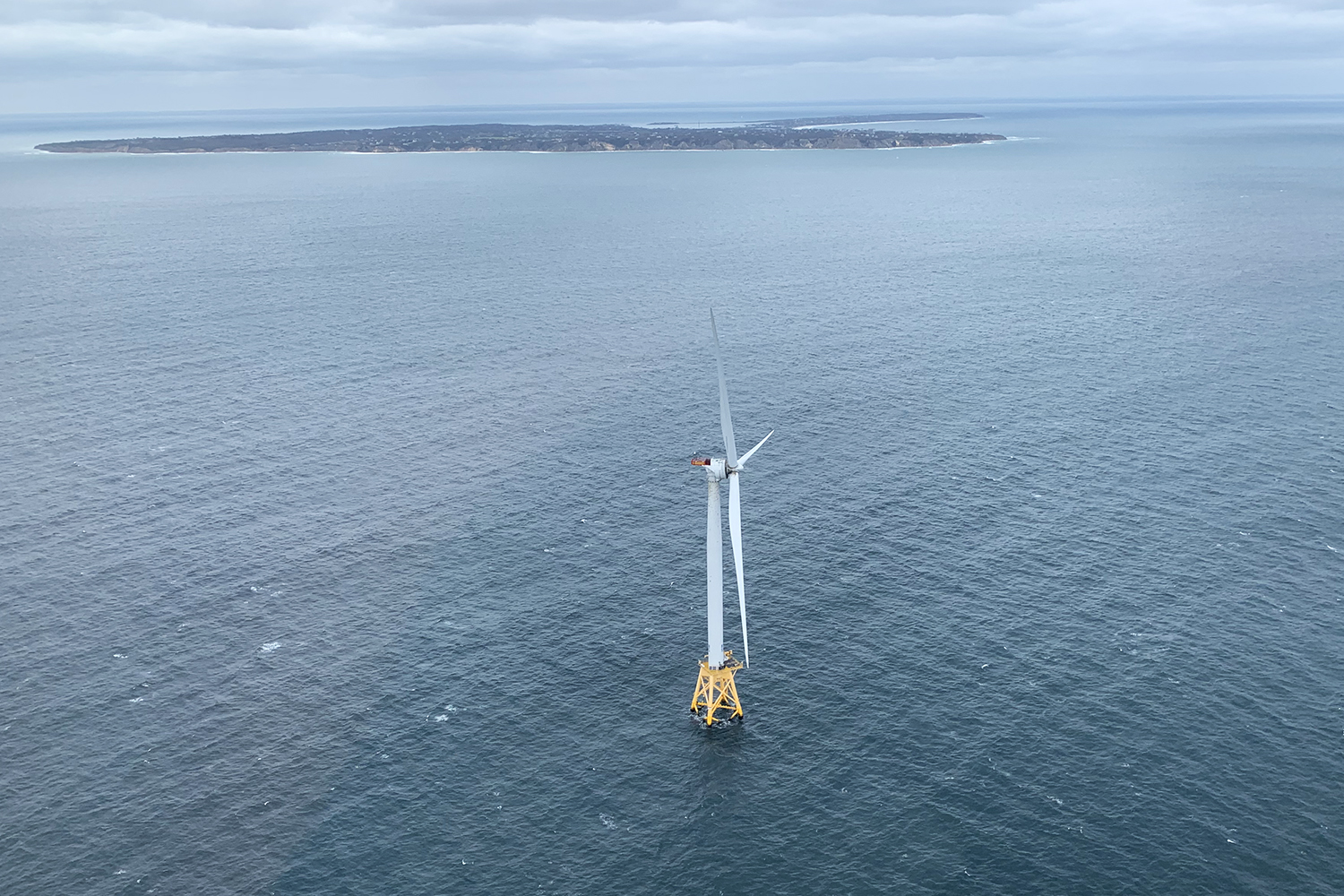
What might a just and equitable energy transition look like for coastal communities? In this talk, Alison Bates will share research she has conducted over the last decade on the social acceptance of offshore wind energy, and how conceptualizations of “community” and a “just” energy transition have evolved over that time. She will examine how various stakeholders are (or are not) engaged with offshore wind; identify drivers of support for, and opposition to, offshore wind; and discuss how offshore wind decision-making processes that aim for justice can sometimes undermine or co-opt marginalized communities. She will also share the results of spatial models that incorporate stakeholder value into decision-making, and how these data can inform governmental processes. Finally, she will address recent and ongoing policy developments for floating wind in the Gulf of Maine.
Alison Bates is an Assistant Professor of Environmental Studies at Colby College in Maine. Dr. Bates researches social acceptance of renewable energy systems and implements an equity and justice framework to inform decision-making in the energy transition. Her research includes multiple technologies including offshore wind, community solar, post-disaster energy grid resilience, and energy efficiency. More recently, she has focused on floating wind development, and the possibilities for technical solutions to social challenges with floating wind. She has worked on state and national energy policy with the Maine Governor’s Energy Office and with U.S. Senator Coons to develop markets and policies for renewable energy infrastructure along the Atlantic Outer Continental Shelf and in the Gulf of Maine. She earned her PhD in Marine Policy at the University of Delaware Center for Carbon-free Power Integration and has ten years of experience in the nonprofit sector for environmental education and public land conservation.
Three graduate fellows joined us last fall, and are now on research teams that span the Center’s programs!
Ogunwo Demilade is the 2020-21 Tuttle Fellow. Demi did her undergraduate work at the University of Lagos, Nigeria where she studied electrical and electronics engineering. After graduation, she worked as a project manager at Ecowatt Nigeria, managing energy audit and power quality assessment projects for residential and industrial facilities. She later joined Starsight, a solar power utility, as a solar construction engineer. At Starsight, she supervised solar PV hybrid systems installation for banks and schools.
Growing up in a country with an unstable supply of electricity and around 50% electricity access, my goal has always been to contribute to solving the electricity access issues in my country using sustainable means. I intend to do my thesis on a solar PV and biomass powered microgrid for rural communities, and I hope to get funding to implement it after I am done with my program.
Since her arrival last fall, Demi has been working on a team that is chronicling how the two Blue Lake Rancheria microgrids performed during a series of voluntary islanding events in August 2020. She sees this research as a great opportunity to explore how microgrid systems operate and what benefits they can provide, from energy savings to demand response services and resilience during emergencies.
Malcolm Moncheur is the 2020-21 Schatz Energy Fellow. He received his bachelors from SUNY College of Environmental Science and Forestry in bioprocess engineering. Malcolm’s first experience with renewable energy was through an internship with Wallowa Resources, a community empowerment nonprofit in northeastern Oregon. At Wallowa Resources, Malcolm provided technical and grant-writing support for community micro-hydroelectric projects — and saw what engineering can achieve when applied through a social change framework.
I was originally drawn to renewable energy through the technical side of things, learning how renewables function and their associated environmental/climate benefits. However, I quickly became interested with issues of equity: who benefits, who doesn’t, and how can we transition to renewables in a just fashion that includes historically marginalized communities? Long term I’d like to focus on climate or energy justice, working to resolve energy inequities through community-owned projects.
Malcolm is currently working on the north coast “SAFE” project (Smoke, Air, Fire, Energy), which is a collaboration between the Schatz Center, the Karuk Tribe, and the Blue Lake Rancheria Tribe to understand both air quality impacts and energy needs associated with fire events.
Hamidah Naishur Nakimuli is the 2020-21 Blue Lake Rancheria Fellow. Hamidah received her undergraduate degree in leisure and hospitality management from Makerere University Uganda. She has ten years of work experience in last mile energy distribution, and her commitment to renewable energy is informed by her firsthand experience with energy distribution injustices.
At the Schatz Center, Hamidah is a member of the solar products test lab, where she has been conducting market studies on products from suppliers in Sierra Leone and Uganda. After completing her graduate work at HSU, she plans to continue engaging with energy related activities that work to increase energy distribution to those with poor energy options, or without energy/electricity at all. In the meantime, she is looking forward to fully exploring HSU’s campus and experiencing the outdoors!
Continuing fellows
Amin Younes and Aditya Singh are continuing as fellows for their second year. Amin is a member of the offshore wind and national energy policy teams at the Schatz Center. His graduate thesis will explore feasible renewable energy plans for Humboldt County, in light of California’s Renewable Portfolio Standard. Aditya Singh is also a member of the Schatz Center’s energy policy research team. For his thesis, Aditya is evaluating the costs and benefits of adding new infrastructure to transition Humboldt County’s conventional bus fleet to battery-electric or hydrogen fuel cell systems.
Interested in becoming a fellow?
All first year graduate studies applicants who are pursuing either the ERE or ETaP pathway in Environmental Systemsand who indicate an interest in energy systems will be automatically considered for clean energy fellowships associated with the Schatz Center.
In your California State University graduate application essay, please discuss the line of research or project work that you propose to pursue at HSU, and how your prior studies and experience have prepared you.HSU graduate program applications are due by February 1 (annually) for fall enrollment. Fellowship recipients will be notified by April 15.
Energy Technology & Policy (ETaP) is an interdisciplinary graduate program focused on issues at the intersection of energy, the environment, and society. Students draw on tools and perspectives from engineering, economics, political science, sociology, public health, and ecology to better understand the multi-faceted drivers and impacts of modern energy systems and climate change. Their graduate research ranges from local to global in scope, making innovative and impactful contributions in a broad array of arenas including renewable energy deployment, clean transportation, environmental justice, and improved energy access in developing countries. 95% of recent ETaP graduates have joined the energy workforce or are now enrolled in related PhD programs!
All incoming ETaP students will be considered for fellowships at the Schatz Center.
In the Environmental Resources Engineering (ERE) graduate program, students develop the practical application of their engineering skills to meet challenges in environmental resource planning, design, and management. Graduates acquire a multidisciplinary toolkit that builds on deep technical foundations and leverages coursework in policy, economics, and more. The ERE graduate program encompasses renewable energy, water quality, and water resources, and all students complete a thesis or project that matches their research and professional interests in one of these areas.
All incoming ERE graduate students whose research goals are focused on renewable energy systems will be considered for fellowships at the Schatz Center.
Since 2009, the Schatz Center has worked closely with the World Bank’s Lighting Global initiatives to increase energy access worldwide by improving the quality assurance of solar products.
Every two years, Lighting Global releases a comprehensive state of the industry analysis — the Global Off-Grid Solar Market Trends Report. This document takes a deep dive into market dynamics and projections, and maps investment and policy opportunities.
As the energy access industry has matured, it has moved beyond its early focus on solar lamps and begun to tackle a wider diversity of energy needs. For example, solar water pump systems could increase irrigation for over 67 million smallholder farmers in Sub-Saharan Africa, South Asia, and Southeast Asia. Solar-based cold storage could enhance operations for over six million smallholder dairy and horticulture farmers in Sub-Saharan Africa. And, critically, health facilities and schools in many low and middle-income countries currently operate without power — according to UNESCO, only 34% of primary schools in Sub-Saharan Africa and 52% in South Asia have electricity.
The off-grid solar sector currently meets the basic electricity needs for 231 million people. This year’s Market Trends Report estimates that to provide universal access by 2030, off-grid solar products would have to meet the energy needs of up to 617 million people. This would require a steep acceleration of solar product deployment, strong collaboration across stakeholder groups, and pairing supportive government policies with innovations in manufacturing, customer service, and financing.
Last summer, our quality assurance lab conducted testing for the first off-grid solar water pump competition, and our team is currently finalizing a report on off-grid refrigeration that explores the potential for these systems to support farming and food distribution. We are also working in cooperation with the ECOWAS Centre for Renewable Energy and Energy Efficiency and government partners in Nigeria and Niger to develop a new approach to procurement, installation, and maintenance ofsolar systems at public facilities in West Africa.
Dr. Deepti Chatti joined the Schatz Energy Research Center this fall as a faculty associate, and is an Assistant Professor in Humboldt State’s Environmental Studies department.
Maia: What is the role of social science in developing appropriate energy tech?
Deepti: The social sciences are crucial to developing appropriate energy technologies. They allow us to understand what people care about and why, and to analyze the myriad other non-technical realities that go into determining how energy technologies will be made and used. The social sciences also help us understand what specific energy uses actually mean to people.
What an energy specialist may call “household energy use” in an abstract sense is actually comprised of intimate home activities of cooking and feeding one’s family, or bathing one’s baby, or keeping an elderly parent warm in the winter. What may be a “project outcome” to an energy specialist is somebody’s real everyday life.
Maia: Based on your research, what would you most want energy specialists to consider as they design technological innovations for rural communities which are inclusive of women’s needs?
Deepti: I study how rural families in India make everyday energy decisions which affect their health and global climate change. I analyze the long history of development interventions in rural Indian kitchens, attempting to change the technologies that people use to cook their everyday meals. My research over the past six years has shown me that even well-intentioned energy projects from the global North sometimes assume that rural communities, and particularly rural women in the global South, are ignorant or resistant to change. All my empirical evidence shows me that is not true; I find that rural families are constantly changing and adapting to their new social, cultural, economic, political, and environmental landscapes.
My interlocutors in the rural Indian Himalayas are deftly balancing changing agrarian patterns, economic conditions, and labor demands. They are navigating dynamic gender and caste hierarchies at home and in their communities. They are also innovating energy technologies on their own. My research ethnographically analyzes why and how families make the energy decisions they do.
Energy systems are integral to understanding the social inequalities of our times.
Maia: This spring, you’ll be teaching a senior seminar on Energy Justice (ENST 480), on Monday and Wednesday evenings. Can you share a bit about the course, and who might want to enroll?
Deepti: My approach to the Energy Justice seminar that I have developed for Spring 2020 is to introduce students to social science and humanistic approaches to studying energy issues. Energy systems are integral to understanding the social inequalities of our times. This class will unpack energy topics through a social justice lens, by understanding colonialism, empire, class, gender, race, and so on. The class is designed as an advanced seminar, and we will read a variety of texts from history, geography, gender studies, and science and technology studies.
Deepti Chatti is an Assistant Professor of Environmental Studies at Humboldt State. She is an interdisciplinary scholar of the environment whose research analyzes the social equity challenges that undergird sustainable development projects to improve energy access in India. Her work contribues to political ecology, feminist science and technology studies, energy geographies, and South Asian studies.
Deepti received a doctorate from Yale University for her research on development efforts to expand energy access to low income families in rural India. Her dissertation focused on “clean cooking” household energy transitions which attempt to abolish the ubiquitous mud stove (mitti ka chulha) from the kitchens of rural India for a variety of health, environmental, and social reasons. Previously, she worked as an environmental engineer in California, and as an environmental public policy researcher in India at The Energy and Resources Institute (TERI). In addition to her PhD and MPhil from Yale’s School of Forestry and Environmental Studies, with a graduate certificate in Women’s, Gender, and Sexuality Studies, she has a graduate degree in environmental science and engineering from Stanford University, and an undergraduate degree in civil engineering from Osmania University.
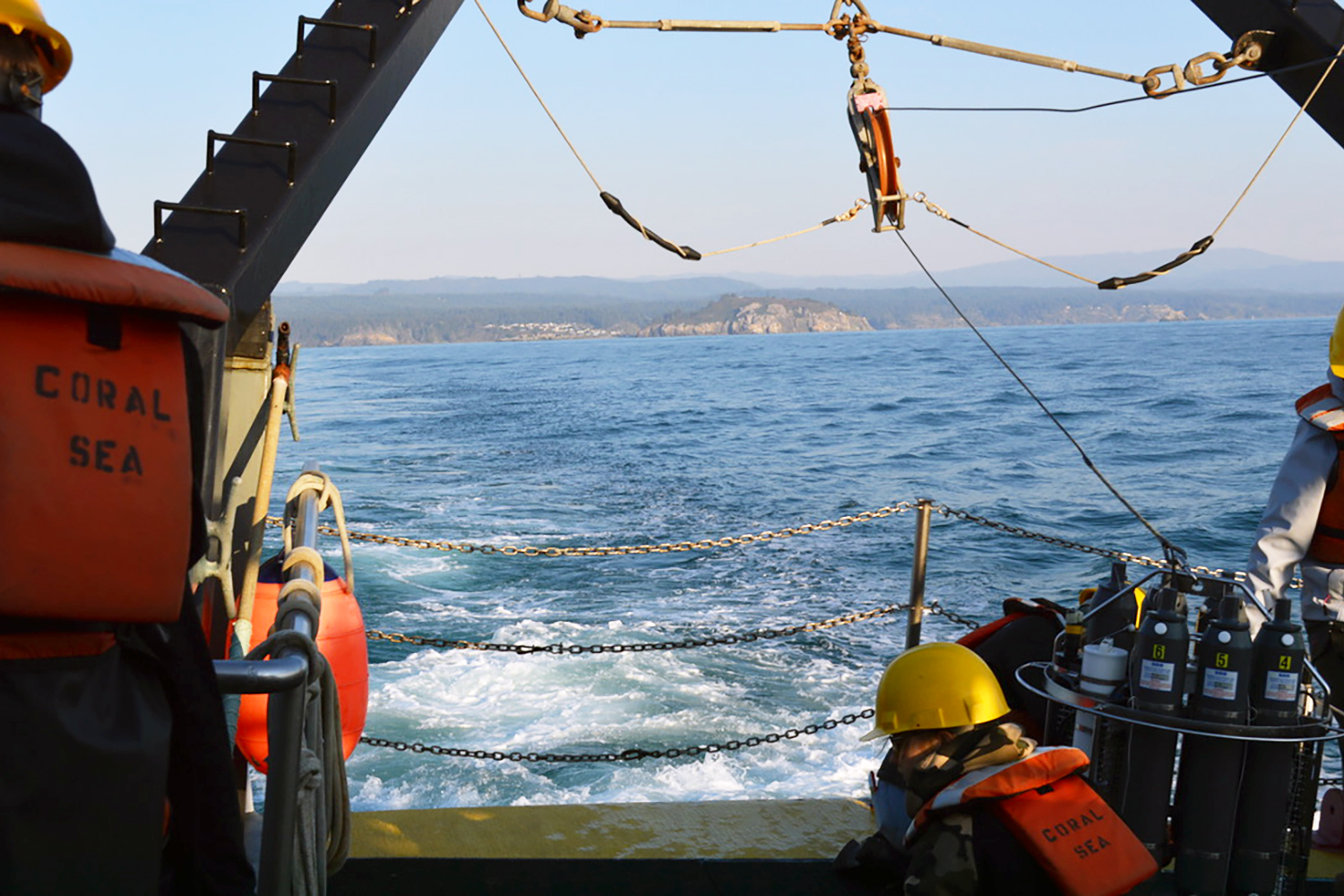
Last month, Mark Severy joined the crew of the R.V. Coral Sea for a research cruise from Humboldt Bay out past the continental shelf. The Coral Sea is Humboldt State’s marine research and teaching vessel, and is utilized by oceanography, marine biology, and fisheries students and faculty.
Mark is the project manager for the Schatz Center’s current offshore wind feasibility studies. He joined the October research trip to get a sense of the space and setting where wind farms might be installed. He also helped with the cruise mission to make observations and collect water samples at five stations along the Trinidad Head Line — a twenty-five mile westbound transect. One of these outlying stations lies within the current area being considered for offshore wind leasing through the Bureau of Ocean Energy Management (BOEM).
Learn more about our offshore wind feasibility studies:
The Schatz Center’s offshore wind research team presented at two events held earlier this month in San Francisco: the Pacific Rim Offshore Wind conference and the California Energy Commission’s (CEC) IEPR Commissioner Workshop on Offshore Wind. Throughout the week, representatives from both public agencies and private sector companies indicated strong interest in exploring offshore wind development possibilities along the California north coast, to help the state reach its ambitious goal of 100% clean energy by 2045.
Arne Jacobson participated in a conference panel discussion about transmission, substation, and interarray challenges and solutions. He noted that substantial investments in transmission infrastructure would be needed to support development of a commercial-scale wind farm — comparing the existing transmission lines to a capillary where an aorta is required.
Mark Severy shared some early results from our offshore wind feasibility studies during the CEC workshop. Close inspection of wind speed data has revealed high variance over the course of a day, week, or season, and from year to year. The graph below charts potential generation for a 144 MW wind farm in the Northern California BOEM call area, based on wind speed data from three weeks: two in late June to early July 2008, and one from early July 2009.
The top graph shows a period where wind speeds are too slow to power turbines, while the middle graph shows a period of nearly maximum generation for six days, followed by an abrupt descent below the minimum speed required to power turbines. The bottom graph reflects rapidly shifting wind speeds, with resultant generation vacillating between zero and peak production over one week. (Note: a minimum 3 m/s is typically required to power turbines; above 25 m/s turbines shut off to avoid deformation.)
This figure demonstrates that we will need a more granular understanding of wind speed than is provided by daily averages, in order to best integrate offshore wind into the California electrical grid. Our working estimates for this farm design are that full capacity power production would be generated 32% of the year, no power would be produced for 21% of the year, and that for 47% of the year, the farm would produce at partial capacity. Overall, this wind farm as modeled would produce 46% of its rated capacity annually, with higher production in the spring and summer.
The next steps of our modeling will investigate how different scale wind farms can integrate into the local electricity grid. We will study how offshore wind can operate in parallel with existing power plants and renewable energy resources and, through a partnership with PG&E, look at the costs and requirements to upgrade the transmission infrastructure.
Takeaways from our student researchers…
In addition to Schatz professional staff, three students participated in the OSW conference and CEC workshop…
Attending the PacRim Offshore Wind conference was an incredibly valuable experience. I gained quantifiable data to use in our project analyses, and also was able to learn a lot from observing how professionals are interacting with each other and how they are talking and thinking about the wind industry. In addition to gathering valuable information about the status of offshore wind technology and the market, there were good presentations and lots of information about current environmental science. And, I was able to talk to numerous experts who are willing to provide feedback on the economic models I am developing for the Schatz Center and for my thesis.
Julia Anderson is a graduate student in Energy Technology & Policy, who is working on the economic components of our offshore wind feasibility studies.
The Pacific Rim Offshore Wind conference and the CEC workshop really opened my eyes to how optimistic the offshore wind industry is and how great the resources off the coast of Northern California are. I got the opportunity to meet so many leaders, policymakers, and researchers in the industry who helped validate the work that I’ve been doing for the Schatz Center. It was most exciting to see our energy commissioners listening so intently and encouragingly to the research that we’ve been working on, especially because of the aggressive goals California has set to completely rely on clean energy sources by 2045. I’m inspired by the enthusiasm shown from the industry and grateful that this is such a favorable time for me to start my future career in renewable energies.
Tina Ortega is a senior in Environmental Resources Engineering. She has been working to model the energy generation from each wind farm scenario, and is analyzing key trends in the data to see how these generation patterns will match up with the grid.
The conference highlighted both the potential value of offshore wind to California as well as the many challenges involved in developing this resource. From a technological perspective, floating offshore wind seems near ready for large-scale deployment and could provide a great deal of value to the California renewable grid mix and the economy as a whole. However, determining how to accomplish large-scale development in a manner that is economical for California ratepayers and minimizes the impacts to the local environment and stakeholders remains a tricky problem to solve. As a student in my final year at HSU, my experience at this conference has left me feeling highly motivated to seek out professional opportunities to address these challenges!
Craig Mitchell is finishing a second bachelor’s, in Environmental Resources Engineering. He interned this summer with Aker Solutions in Oslo, Norway.
Student researchers Julia Anderson, Tina Ortega, and Craig Mitchell (l to r)
Climate change is challenging our communities to redesign how we meet basic needs. Our specific mission at the Schatz Center is to increase energy access and reliability while shifting power generation to clean and renewable sources.
During this week’s public safety power shutoff, the Blue Lake Rancheria Tribe’s main campus remained electrified thanks to its fully integrated solar+storage microgrid. The Rancheria’s gas station also stayed operational, running on a backup diesel generator that will be replaced later this fall by a second solar+ microgrid. The Schatz Center played a leading role in the design and development of both microgrids, working in collaboration with the Rancheria and other project partners.
This week, the Rancheria microgrid was able to provide a safe, warm environment for local families to study and play, charge cell phones, and access the internet; supported a mobile office for Humboldt’s daily newspaper; charged electric vehicles; and gave an electrical boost to municipal water and sewage systems. The gas station delivered fuel and other services for emergency response vehicles, government agencies, the Mad River Fish Hatchery, and thousands of community members.
One of the greatest concerns during power outages is the impacts on people whose medical needs require ongoing access to electricity. During the power shutoff, the Rancheria housed eight people with acute medical needs in their hotel, by request of the County Department of Health and Human Services (DHHS). DHHS credited the Rancheria with saving their lives, due to their critical needs for power. Emergency diesel was also provided to United Indian Health Services, to power the backup generators that keep perishable medicines cold.
As we prepare to deploy new microgrids currently under development for the north coast and beyond, it’s good to see our first commissioned microgrid successfully delivering critical services for our region!
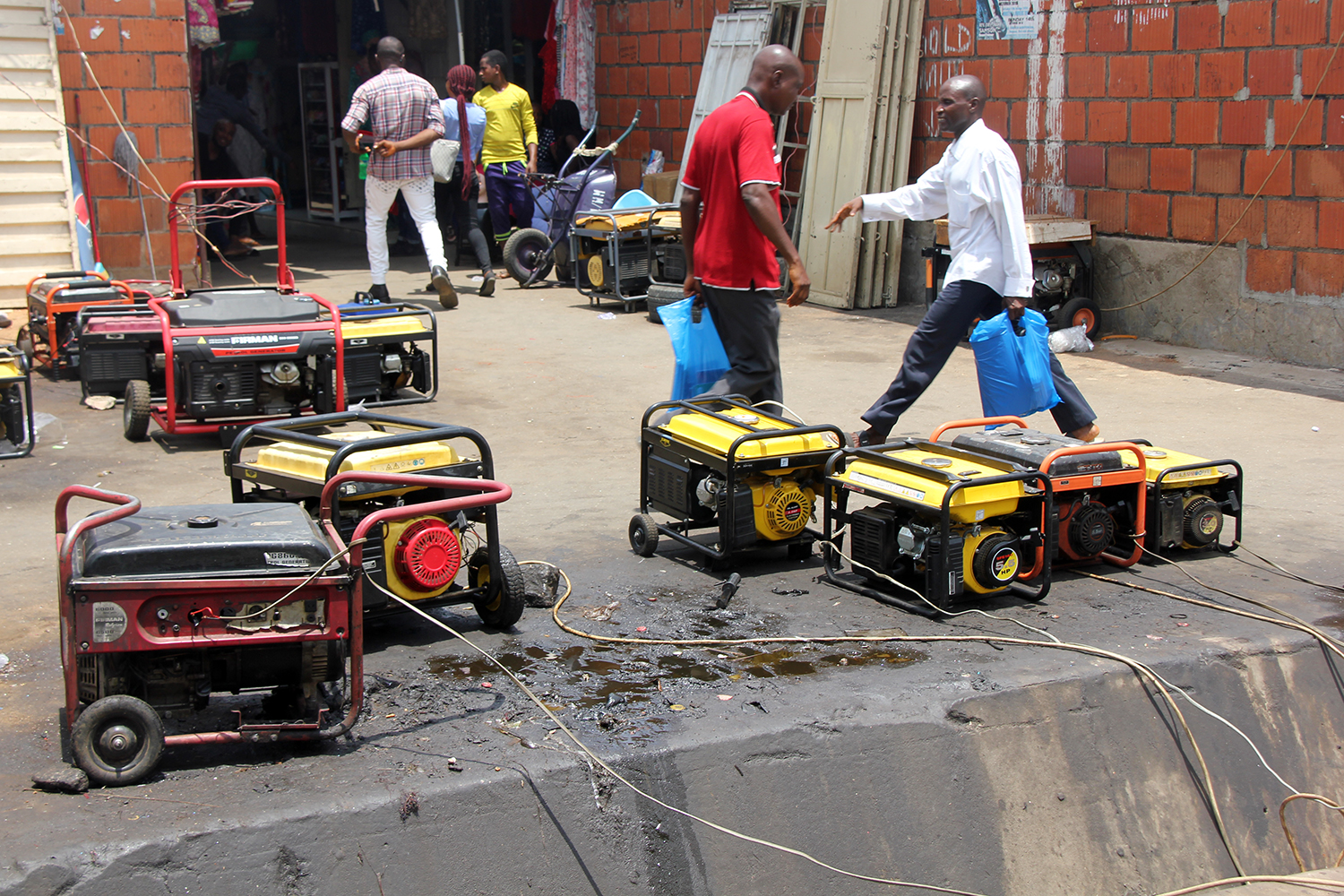
Between 1-2 billion people live without reliable access to an electrical grid. Homes and businesses in these communities suffer outages that last from hundreds to thousands of hours each year — if a grid is even available and affordable. To supply both their intermittent and ongoing electrical needs, many people rely on backup generators (BUGS). And, while generators do increase energy access, they also emit air pollutants, create sound pollution, and can carry significant fueling costs. BUGS are also frequently used inside homes and businesses, increasing the proximity of exposure.
To assess the benefits of replacing BUGS with clean and renewable energy systems, we first need to build a baseline understanding of where BUGS use and impacts stand today. Over the last year, we developed a modeling framework to estimate current generator usage and system characteristics, and emissions associated with public health and environmental impacts. We then applied the best available data from 167 low- and middle-income countries to create the first global profile of BUGS.
In collaboration with the International Institute of Applied System Analysis (IIASA), our results have been used to update an emission inventory which provides critical input to climate and air quality models used by planning agencies worldwide.
Among our key findings:
Global BUGS use is massive. We estimate that 25 million generators are deployed in the 167 countries we surveyed. 75% of those BUGS are operated from locations where a grid connection does exist, but is of marginal quality — either unreliable and/or unaffordable. And, we found that small gasoline generators (under 5 kW) account for over three quarters of the global fleet.
The countries surveyed spend in excess of $40 billion in total on generator fuel each year. In much of sub-Saharan Africa, communities spend more for generator fuel than is spent to maintain and manage their national electric grid. Co-project lead Nicholas Lam explains “This work really brings to light the immense scale at which polluting fossil-fueled generators are relied upon in developing countries. That BUGS are so broadly used as a stopgap measure for unreliable electrical grids demonstrates that grid quality is a critical pillar of energy access.
A key part of our study was estimating the pollutant emissions associated with generator use, including particulates and greenhouse gases. Across the countries studied, we found that BUGS emit a total of 1500 kilotons of nitrogen oxides (NOx) annually. In Africa, BUGS alone account for 7% of the NOx emitted each year. Nitrogen oxides are primary components of smog and acid rain, and exposure can cause respiratory disease, and heart and digestive complications.
Next steps
This first report and implementation of our model relied on existing data from surveys, inventories, and literature. As a topic that has not been examined in great depth, there exist knowledge gaps that if addressed through targeted field-based studies, would refine our model assumptions and allow for more accurate site-specific estimates of BUGS deployment, usage characteristics, and welfare impact.
Further research is also needed to understand where and how clean, renewable energy systems such as solar+storage can be best deployed to replace BUGS in developing countries.
This Backup Generation Impact Study was designed and led by Research Scientist Nicholas Lam and Faculty Scientist Peter Alstone, at the Schatz Energy Research Center. As an engineering student and later a Schatz Research Engineer, Eli Wallach developed and implemented procedures for operationalizing the BUGS framework and identifying major sources of uncertainty affecting our results. Chih-Wei Hsu, a graduate student in HSU’s Energy Technology & Policy program, developed and implemented procedures for sizing and classifying generator fleets and disaggregating them into user sectors. Schatz Center Director Arne Jacobson provided guidance around study strategy and objectives.
This project was developed in partnership with the International Finance Corporation (IFC), a sister organization of the World Bank and member of the World Bank Group, and funded by the IFC with support from the IKEA Foundation, and the Dutch and Italian governments.
The Schatz Center was recently awarded $150,000 from the CA Governor’s Office of Planning & Research to address three elements associated with offshore wind feasibility. Existing research in each of these areas is sparse — and lacks detail specific to the northern California coast:
Military mission compatibility
Geologic and seismic challenges
Localized environmental impacts of a subsea transmission cable
Military mission compatibility: This project will assess the compatibility of offshore wind farms and military operations in northern California, including within the BOEM Call Area for Humboldt. We will be collaborating with the US Navy to understand their operational needs offshore and within Humboldt Bay. Recommendations for increased compatibility may address wind farm design elements including scale, layout, and turbine size.
Geologic and seismic challenges: Mark Hemphill-Haley (HSU Geology) and Eileen Hemphill-Haley (HSU Geology) will assess geologic and seismic hazards in the areas under consideration for an offshore wind farm, undersea cabling, and onshore facilities. In collaboration with ocean engineering experts from Mott MacDonald, we are conducting a geotechnical feasibility analysis to identify challenges associated with onshore cable landing sites and the different anchor types used for the floating wind platforms.
Environmental impacts of subsea transmission cabling: The energy generated by offshore wind would far exceed the power needs of the north coast. Transmitting energy south to San Francisco would involve either (a) expansion of the current onshore transmission system, or (b) development of a subsea transmission cable. In partnership with ecological consultants at H.T. Harvey, we are conducting a preliminary evaluation of environmental effects associated with subsea cable development. This research will evaluate probable and potential impacts to benthic organisms and other marine life and ecosystems, and identify areas for future in-depth review. Mott MacDonald’s ocean engineering team will provide guidance for subsea cable corridor selection and design.
*Wind study 3 will examine the subsea cable option. We are investigating onshore transmission routes in parallel, as part of wind study 2.
Further reading:
To assess offshore wind feasibility for the northern California coast, we are conducting three complementary studies. Learn more about our offshore wind research…
The Blue Lake Rancheria’s main campus microgrid currently has a 500 kW battery system with an energy storage capacity of 950 kWh. We are in the process of integrating a new 634 kW / 1,014 kWh battery storage system into the existing microgrid. This additional storage will capture more solar energy and enhance system resilience while reducing to near-zero the need for legacy backup diesel generation when islanding or during emergencies.
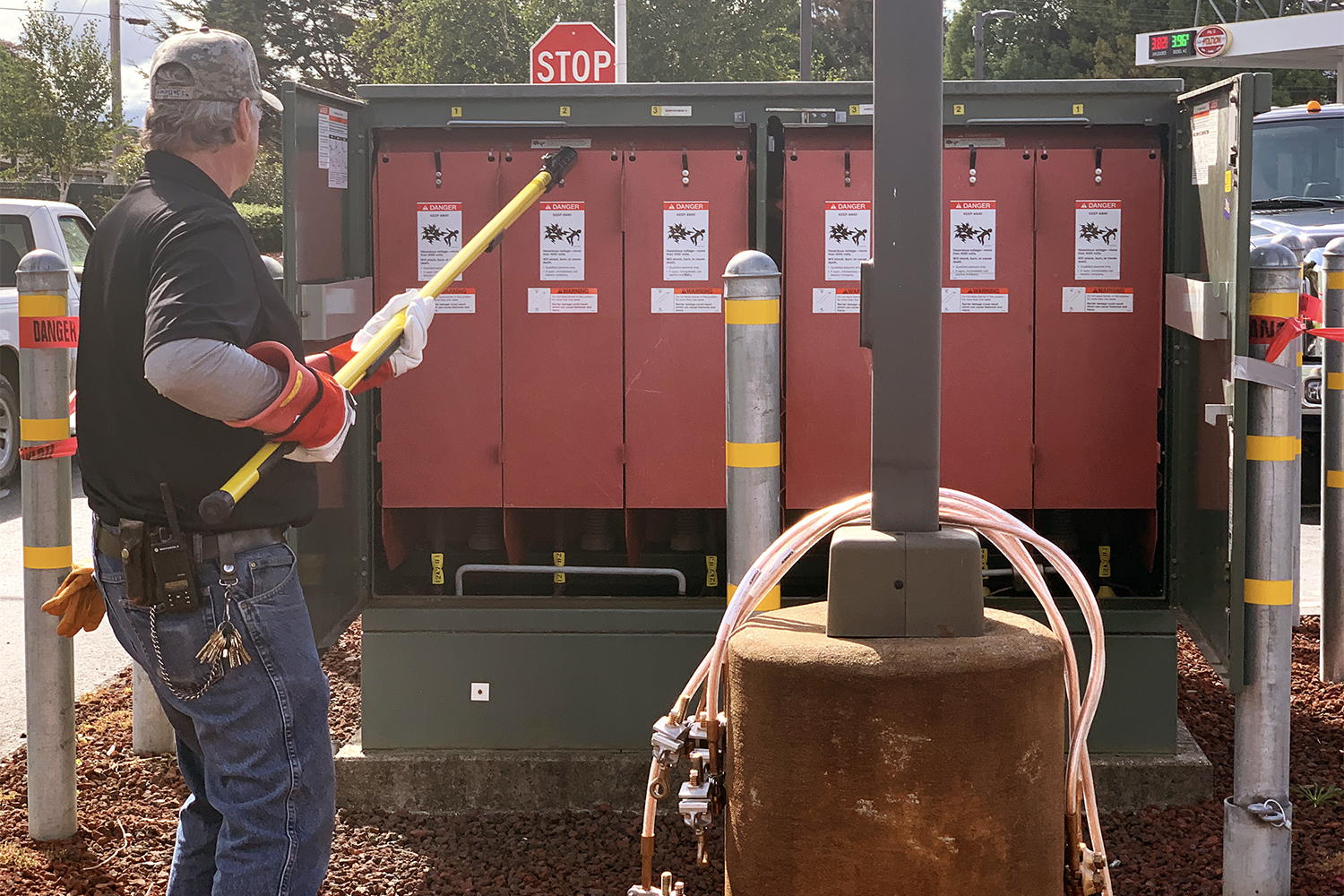
This week, our microgrid team and the Blue Lake Rancheria utilities teams took a major project step by connecting a 2.5 MVA transformer to the microgrid’s 12 kV backbone. This transformer connects the new battery system to the microgrid and provides new electrical service for the Toma Resilience Campus, which is scheduled to open in 2021. The Toma will house sustainability-oriented programs in five major areas: disaster preparedness, response and recovery; clean energy; smart technology; light manufacturing; and sustainable food production.
Yesterday, we:
islanded the Blue Lake Rancheria campus from the power grid
de-energized the 12kV backbone, while keeping critical site functions online
connected the new 2.5 MVA transformer to the 12 kV backbone
upgraded fuses and adjusted relay settings at the point of common coupling with the power grid
reconnected to the power grid
conducted regression testing on the upgraded microgrid control system
Next steps include the final commissioning of the battery system and a witness test by PG&E to receive final permission to operate. The new system will be fully operational this fall.
Further reading…
On September 5, the Blue Lake Rancheria received a Green Power Leadership Award from the Environmental Protection Agency for powering 23% of their electricity needs via the microgrid, cultivating partnerships to build local expertise in green power, and educating local and national audiences about microgrids.