Author: Maia Cheli

  • Announcing the Donald and Andrea Tuttle Fellowship for Clean Energy Studies

    Announcing the Donald and Andrea Tuttle Fellowship for Clean Energy Studies

    The Schatz Energy Research Center is pleased to announce the Donald and Andrea Tuttle Fellowship for Clean Energy Studies at Humboldt State University. The Tuttles have established this annual fellowship as part of an effort to tackle the challenges posed by climate change, and to reduce its impacts on humanity and ecosystems. The fellowship will support graduate students in Environmental Systems who intend to research or conduct project work in renewable energy, energy efficiency, or related areas in the clean energy field.

    The Tuttle Fellowship will provide $15,000 in financial support for one academic year. The recipient is also eligible to be employed on research projects at the Schatz Center (typically, quarter-time throughout the academic year). The fellowship may be renewed once, based on performance and at the discretion of Schatz Center directors and the selection committee, for a second year of study.

    The Tuttle joins two fellowships already associated with the Schatz Center: the Blue Lake Rancheria Fellowship for Clean Energy Studies and the Schatz Energy Fellowship. Current year fellows are working with Center projects in off-grid energy access and smart grid technologies. Jimento Aikhuele and Anamika Singh are involved with the Center’s quality assurance project on solar system installations at public facilities in Nigeria and Niger; Aikhuele’s associated thesis is on the use of renewable energy technologies to prevent maternal and infant fatality. Steven Shoemaker is conducting a benefits analysis of the recently deployed Blue Lake Rancheria microgrid, which was recognized this fall by the US Federal Emergency Management Agency for energy resiliency, while Thalia Quinn is working on the Center’s new “Solar+” distributed generation project.

    Hailing from around the globe, Schatz fellows cite the Center’s unique blend of technology and policy, and bring with them a commitment to social justice and environmental health. Before coming to the Schatz Center, Singh worked for the Bureau of Energy Efficiency, Ministry of Power, in India. “I want to contribute to providing energy access to those 1.2 billion people who are living a life without energy, through renewable energy technology… until you can provide them with basic facilities, development will not come.”

    All graduate student applicants in the Environmental Resources Engineering (ERE) and Energy Technology and Policy (ETaP) pathways of the Environmental Systems program are eligible for fellowship consideration. February 1 is the annual application deadline for admission into the graduate program at Humboldt State. For more information, visit schatzcenter.org/fellowships, email serc@humboldt.edu, or call (707) 826-4345.

  • Sustainable Futures Speaker Series: Scaling up renewable power in Humboldt County – Nov 9

    Join us on Thursday, November 9 at 5:30 pm in Founders Hall 118 for the final session in this semester’s Sustainable Futures Speaker Series. A panel of energy experts will explore the opportunities and challenges of scaling up renewable power in Humboldt County, through questions such as:

    • If we want to support expanded use of renewable energy, should we prioritize purchasing low cost renewable power from outside the area or generating renewable power locally?
    • How might our relative isolation impact the sale of locally generated renewable energy to the Western grid?
    • How do we balance our critical need for rural resilience with investment in renewable sources such as wind and solar?
    • To what extent is our local grid infrastructure ready to support distributed generation?

    Moderator Arne Jacobson (Director, Schatz Energy Research Center) will be joined by Matthew Marshall (Executive Director, Redwood Coast Energy Authority), Antoine Peiffer (Lead Engineer, Principle Power), Jon Stallman (Integrated Grid Planner, Pacific Gas & Electric) and Dave Carter (Managing Research Engineer, Schatz Center) for this forward-looking discussion about clean energy strategies for the north coast.

    This speaker series is intended to stimulate cross-disciplinary discussion, debate, and collaboration around issues related to energy, the environment, and society. The series is sponsored by the Schatz Center, the Environment & Community Graduate Program, and the College of Arts, Humanities & Social Sciences at Humboldt State University. For details on upcoming events or to request accessibility accommodations, email serc@humboldt.edu or call (707) 826-4345.
  • Blue Lake Rancheria Microgrid: project update

    Blue Lake Rancheria Microgrid: project update

    The Blue Lake Rancheria (BLR) renewable energy microgrid received full permission to connect to the Pacific Gas & Electric grid on July 28, 2017. Designed and implemented by a team led by the Schatz Energy Research Center at Humboldt State University, this new microgrid powers critical infrastructure for the BLR tribal community and the Humboldt County region.

    A microgrid is an independent power generation and management system which can operate both while connected to (parallel) or disconnected from (islanded) the electric power grid. In the event of a power outage, a microgrid enters islanded mode and balances all power generation and electrical loads independent of the utility.

    The BLR microgrid breaks new ground in its seamless transition between grid-paralleled and grid-islanded states and by demonstrating stable islanded operation with a high percentage of renewable energy.

    This project heralds the first deployment of the Siemens Spectrum 7 based microgrid management system (MGMS) and the first multi-inverter Tesla battery energy storage system (BESS) utilized in a microgrid application. The MGMS and the BESS were integrated using foundational relay control programming developed at the Schatz Center.

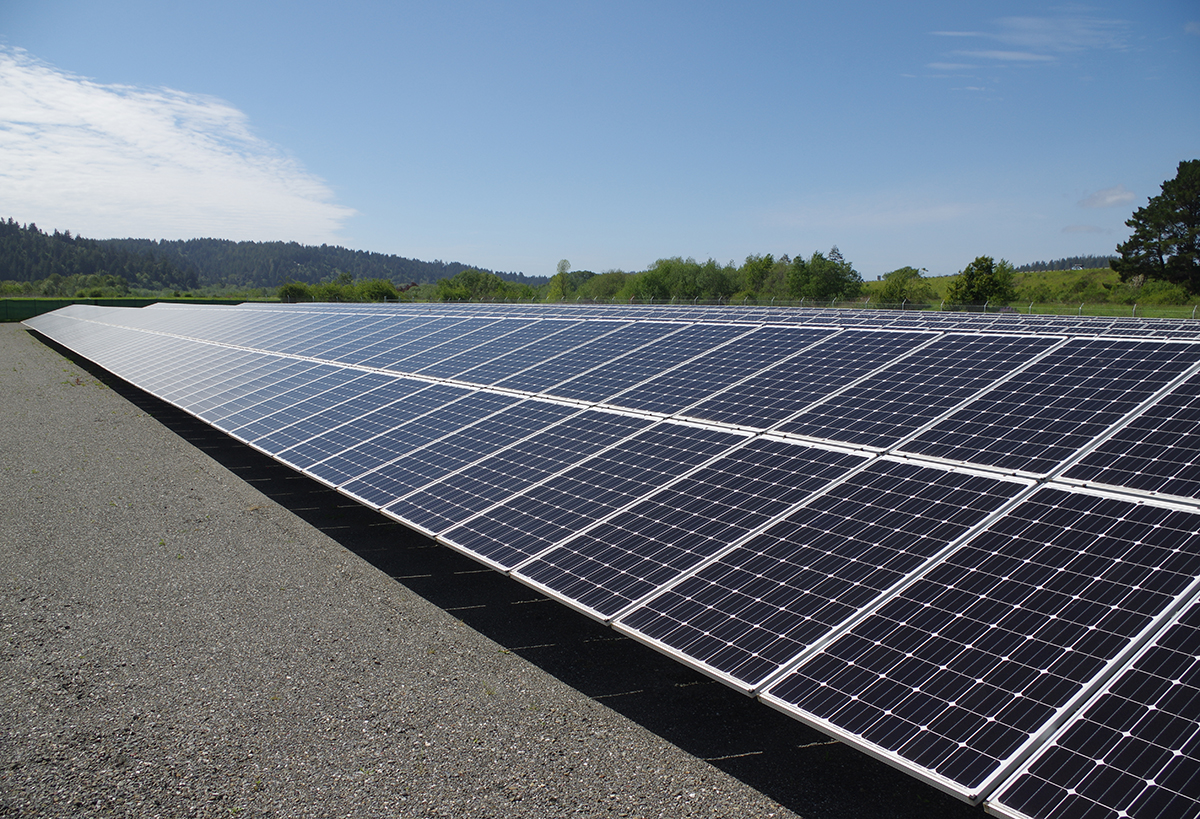
    At 420 kWAC, the Rancheria’s PV array is also the largest installed in Humboldt County. The BLR microgrid has a total of 1.92 MW of generation capacity, including the PV array, a 500 kW, 950 kWh Lithium-ion Tesla battery, and a legacy 1.0 MW backup diesel generator.

    The microgrid powers numerous building and facility loads, including heating, ventilation and cooling; lighting; water and wastewater systems; communications; food production and storage; and transportation. The BLR green commuter program and electric vehicle infrastructure for the tribal government fleet are supported by the microgrid.

    The BLR campus has also been certified to serve as an American Red Cross emergency shelter. The microgrid can maintain stable electricity for the shelter during extreme natural events such as an earthquake, tsunami, flood or wildfire. During an extended grid outage, the Rancheria can designate and shed non-critical energy loads as needed.

    By coupling renewable generation with battery storage, the BLR microgrid achieves significant reductions in both utility cost and greenhouse gas emissions. The microgrid is now saving the Blue Lake Rancheria $250,000 annually and has allowed the Rancheria to increase tribal employment by 10% with new clean energy jobs.

    The Blue Lake Rancheria microgrid was developed through funding from the California Energy Commission’s EPIC program. Major partners on this project included Pacific Gas & Electric, Siemens, Tesla Energy, Idaho National Laboratory, GHD Inc., Colburn Electric, REC Solar, and Kernen Construction.

    • For more information about the Blue Lake Rancheria microgrid and upcoming projects at the Schatz Energy Research Center, call (707) 822-4345 or email serc@humboldt.edu.

    • For more information about Blue Lake Rancheria’s sustainability and green energy initiatives, please email info@bluelakerancheria-nsn.gov.

  • Blue Lake Rancheria receives FEMA’s 2017 Whole Community Preparedness Award

    The Federal Emergency Management Agency (FEMA) announced on September 28 that the Blue Lake Rancheria Tribe (BLR) has been chosen to receive the 2017 John D. Solomon Whole Community Preparedness Award for proactive efforts to address emergency preparedness challenges. Arla Ramsey, Vice Chair of the Rancheria, lauded the tribe’s many collaborators in sustainability and disaster preparedness: “Our partnerships have been critical in our preparedness efforts, such as with the Schatz Energy Research Center, who led our low-carbon, community microgrid project and enabled our emergency power platform.”

    This award is given in recognition of the high earthquake risk faced by Humboldt County, and the BLR’s efforts to prepare for disaster events and ensuing power loss: “… BLR has transformed the Blue Lake Casino and Event Center into an official public shelter with help from the American Red Cross. BLR also installed a back-up green power micro grid should the regular power grid fail. Using a grant from the Department of Homeland Security, BLR developed a Regional Resilience Training & Innovation Center (RTIC) that offers pre-disaster training and exercises to tribes, local governments, and agencies. The tribe has also distributed 72-hour disaster supply backpacks to residents and employees, and in 2017 held a Resiliency Preparedness Fair for the general public. BLR’s actions have been a model for other tribes and communities, and BLR officials assist other tribes and agencies with their emergency preparedness needs.”

    Congratulations to the Rancheria for this much-deserved recognition of their commitment to emergency preparedness through disaster response training and sustainable, distributed energy generation!

  • Sustainable Futures Speaker Series: Amy & Daniel Cordalis on October 5

    Join us on Thursday, October 5 at 5:30 pm in Founders Hall 118, for a presentation by Amy & Daniel Cordalis on “Breathing life back into the Klamath River.”

    Amy Cordalis is General Counsel for the Yurok Tribe. She comes from a long line of Yurok Indians from the village of Requa at the mouth of the Klamath River, who have fought for Yurok rights: her great-uncle’s Supreme Court case, Mattz v. Arnett, confirmed the Yurok Reservation as Indian Country and set the stage for the Tribe’s federally reserved fishing and water rights. Cordalis received her undergraduate from the University of Oregon and her JD from the University of Denver College of Law. Before returning home to work for the Yurok Tribe in 2014, Cordalis worked for the Native American Rights Fund and Berkey Williams LLP on a wide range of Indian law issues.

    Daniel Cordalis is a member of the Navajo Nation and a practicing attorney in natural resources and Indian law. Cordalis clerked for the Colorado Supreme Court and the Native American Rights Fund, and worked for the National Congress of American Indians in Washington D.C. and as an associate attorney for the Denver Earthjustice office. He received an undergraduate in geology from Rice University, a master’s in geography from the University of Colorado at Boulder, and his JD from the University of Colorado.

    The Sustainable Futures Speaker Series is cosponsored by the Schatz Energy Research Center, the Environment & Community graduate program, and the College of Arts, Humanities and Social Sciences at Humboldt State. For details on upcoming events or to request accessibility accommodations, email us at serc@humboldt.edu or call (707) 826-4345.

  • Sustainable Futures Speaker Series: Nick Goulette on September 28

    Join us on Thursday, September 28 at 5:30 pm in Founders Hall 118, for a presentation by Nick Goulette on imagining and achieving the potential of community-based forestry in Northern California. As The Watershed Center’s executive director, Nick Goulette oversees programs focused on forestry, fire and fuels, watershed and fisheries, youth engagement, enterprise development, policy, and research.

    Over the past thirteen years with the Watershed Center, Goulette has worked on a wide range of collaborative projects. He is the Chair of the Northern CA Prescribed Fire Council and a long-time member of the leadership team for the Rural Voices for Conservation Coalition. He also helped establish the CA Forest Biomass Working Group and the CA Statewide Wood Energy Team, and worked with the design and launch of the national Fire Adapted Communities Learning Network.

    Goulette was born and raised in Maine and received a B.S. in Forestry from the University of Vermont with a concentration in Community-Based Forestry. He now lives with his wife Naomi on a homestead in Weaverville, California.

    The Sustainable Futures Speaker Series is cosponsored by the Schatz Energy Research Center, the Environment & Community graduate program, and the College of Arts, Humanities and Social Sciences at Humboldt State. For details on upcoming events or to request accessibility accommodations, email us at serc@humboldt.edu or call (707) 826-4345.

  • Sustainable Futures Speaker Series: Debbie Page-Dumroese on August 31

    Join us on Thursday, August 31 at 5:30 pm in Founders Hall 118, for a presentation by visiting soil scientist Debbie Page-Dumroese on the use of biochar to sequester carbon and improve soil resilience. Biochar is a porous, high-carbon material derived from exposing biomass to temperatures above 500°C in a low-oxygen environment. The resultant “char” is typically used as a soil amendment to increase water-holding capacity and nutrient retention.

    Page-Dumroese has been a Research Soil Scientist with the USDA Forest Service Rocky Mountain Research Station for over three decades. Her work focuses on long-term soil productivity after harvest operation, sustainable harvesting, wood decomposition, and biochar. For the last ten years, she has been investigating the potential to reduce slash pile burns and limit wildfire risks by using onsite biochar conversion technologies.

    The Sustainable Futures Speaker Series is cosponsored by the Schatz Energy Research Center and HSU’s Environment & Community graduate program. For details on upcoming events or to request accessibility accommodations, email us at serc@humboldt.edu or call (707) 826-4345.

  • SERC and solar power in sub-Saharan Africa

    In this week’s New Yorker magazine (issue: June 26, 2017), Bill McKibben reports on solar power development in sub-Saharan Africa, including the role of quality assurance testing offered by SERC and other labs in the Lighting Global network.

    Clarification (for the New Yorker piece): SERC Director Dr. Arne Jacobson played a leading role in the creation and implementation of Lighting Global, a program jointly managed by the International Finance Corporation and World Bank. The international testing labs are part of the Lighting Global network, not subsidiaries of the Schatz Energy Research Center (SERC). SERC provides setup and training for Lighting Global affiliated labs in Africa and Asia, as well as off-grid product testing and standards development.

  • Report from the annual Waste to Wisdom meeting

    Report from the annual Waste to Wisdom meeting

    SERC presented at the Waste to Wisdom annual meeting in Sacramento on May 17th. This public meeting brought together over one hundred academics, policymakers, project developers, community members, and equipment manufacturers from around the country to discuss the opportunities and challenges to increasing utilization of forest residues.

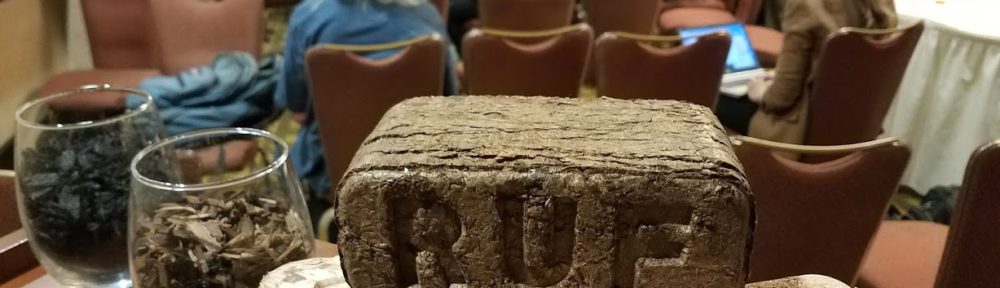
    Arne Jacobson, David Carter, and Mark Severy presented on Biomass Conversion Technologies: System Performance, Case Studies, and Implications for California’s Forest Management. Using examples from our research, SERC engineers described the state of biomass conversion technologies with a focus on biochar, torrefied biomass, and densified briquette production. Our presentation hinged around identifying and discussing methods for overcoming the current challenges of scale, site infrastructure, feedstock quality, environmental safety, and market development that are holding back widespread adoption of these biomass conversion technologies.