Author: Maia Cheli

  • Student research developments: summer 2018

    Student research developments: summer 2018

    This summer, thirteen students contributed to Schatz Center research projects in smart grids, bioenergy, wind, and off-grid energy access.

    SMART GRIDS

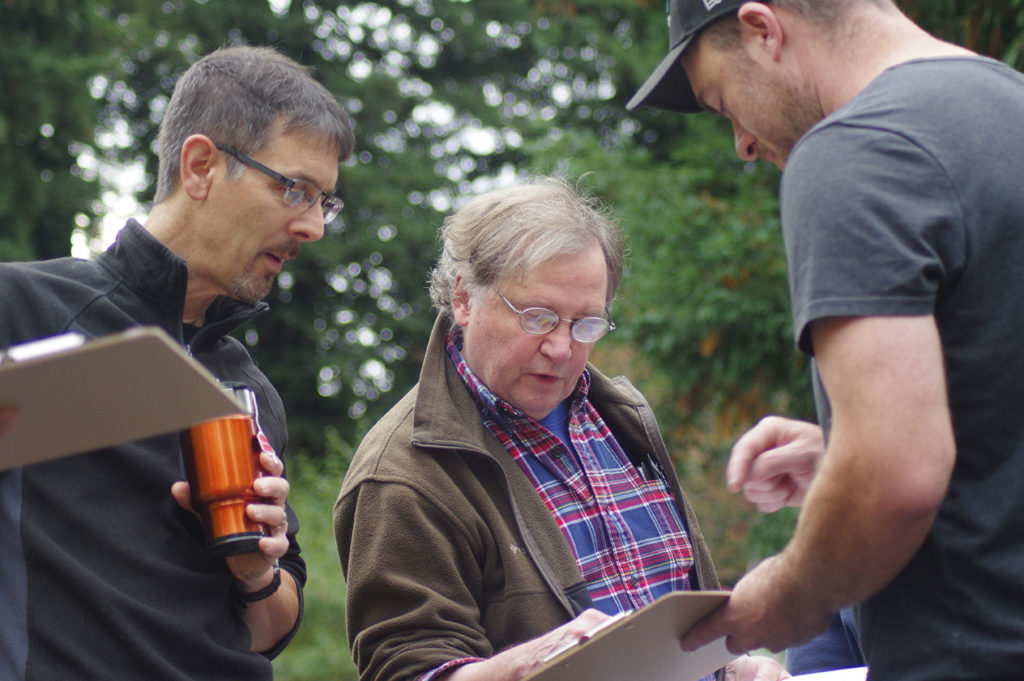
    Craig Mitchell provided construction observation at the Solar+ installation, tracking the canopy weight in real-time and serving as an onsite liaison between contractors and the Schatz microgrid team. As part of his observation, Craig recorded the installation’s actual daily labor and equipment requirements, to better define the needs for similar projects in the future. He is currently developing a hardware design toolkit that documents lessons learned in the Solar+ installation.

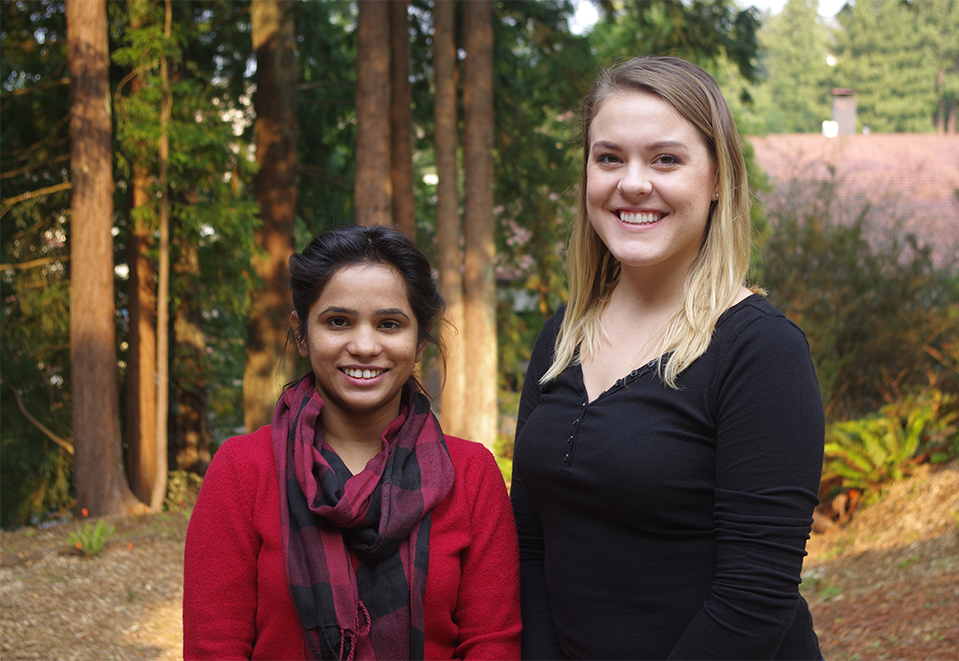
    Solar+ students standing outside the Schatz Center
    Solar+ student team: (l to r) Craig Mitchell, Thalia Quinn, Ellen Thompson and Rene DeWees

    Thalia Quinn, Ellen Thompson and René DeWees have been developing a model to assess the current and future costs of building microgrids that integrate solar, battery storage, and fast EV charging. This model will help define which sites are good candidates for investment, and identify future research and development opportunities. This summer, the team conducted a detailed literature review to assess current and forecasted cost data: Thalia focused on battery storage, Ellen on electric vehicle charging infrastructure, and René on solar PV. They are now refining their cost model and generating a convenience store survey, to understand how current site owners view microgrids and to better assess installation opportunities.

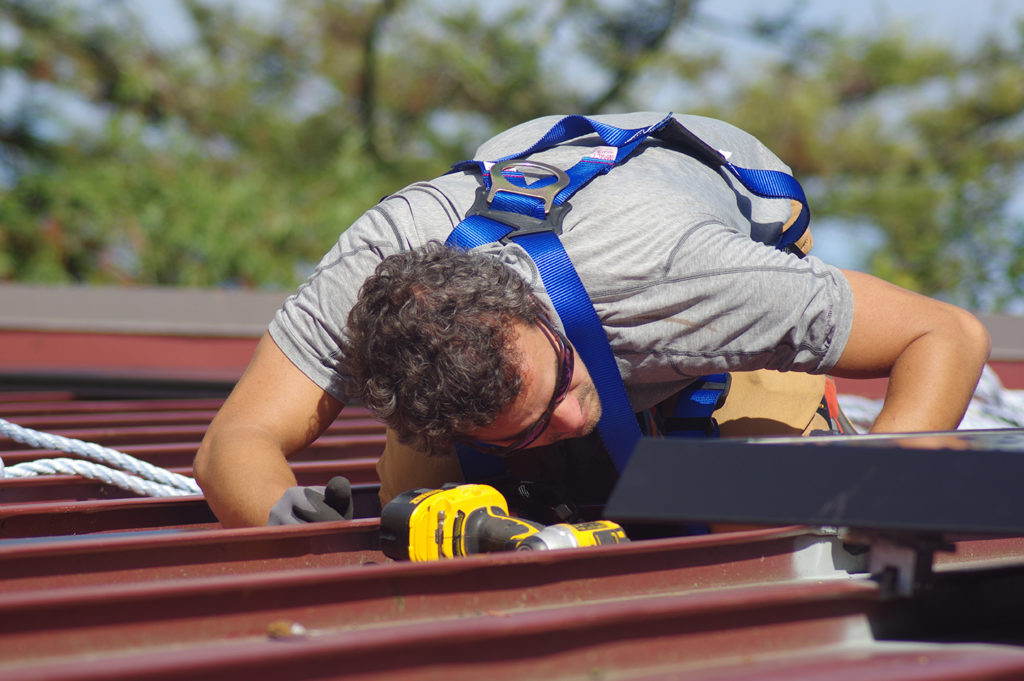
    Smart grid design is also evolving to take advantage of demand response technologies. As part of a collaboration with GE & Southern California Edison, Anh Bui developed an algorithm using Python code for estimating the tension between shifting a customer load to benefit the grid versus shifting a load to reduce their bill. Anh also helped with the installation of our new Schatz Solar Array in September.

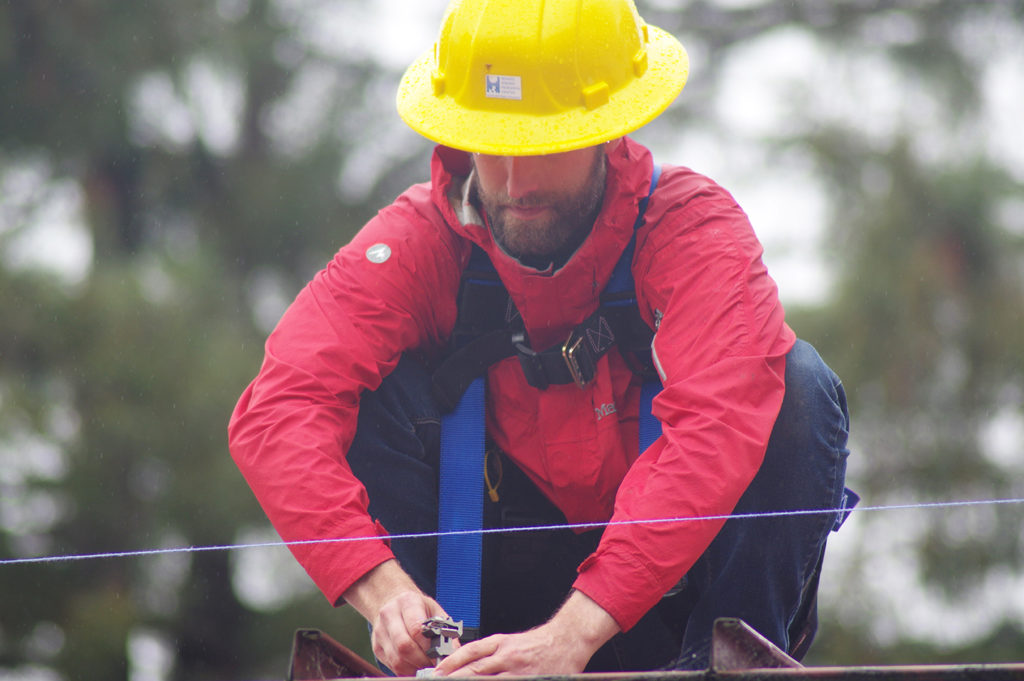
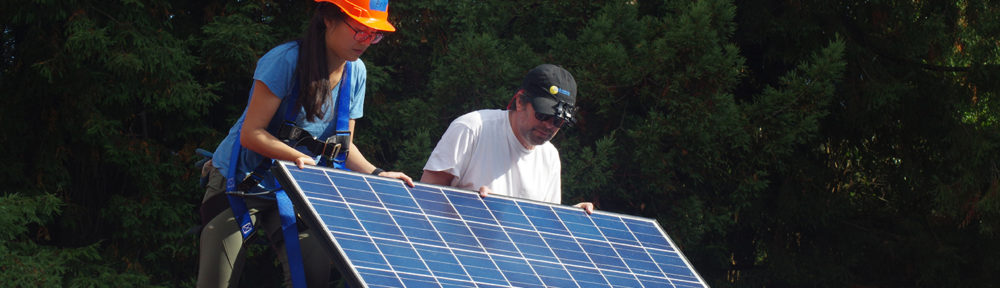
    Anh Bui tightens a solar module on the Schatz Center roof
    Anh Bui installs a module for the new Schatz Solar Array

    BIOENERGY

    This summer, Sabrinna Rios Romero quantified decay rates for the post-harvest residues of seven agricultural crops: corn, wheat, rice, cotton, almond, walnut and grape. These decay rates will allow us to better assess the greenhouse gas (GHG) emission implications of leaving residues in field versus converting them into electricity. This fall, Sabrinna is surveying state foresters to clarify the fate of forest residues — i.e. whether they are piled, burned, or scattered in the field — information which will allow us to more accurately assess emissions following forest harvest. She has also been analyzing biomass samples using a bomb calorimeter and a thermogravimetric analyzer, to measure the performance of a gasifier system.

    Cassidy Barrientos conducted a literature review that characterized GHG emissions from wood chip storage (e.g. chip piles at a power plant). Decomposition during storage — and the resulting emissions — are an area that have not been well-quantified, and may represent an important source of greenhouse gases. In September, Cassidy and Schatz Faculty Research Associate Sintana Vergara presented a poster, “Characterizing greenhouse gas emissions from wood chip storage,” and gave an oral presentation “Waste not: Improving the efficiency of using forestry residues as an energy resource” at the ARI Principal Investigator’s Meeting in Sacramento.

    Cassidy Barrientos in front of her poster at the ARI conference
    Cassidy Barrientos at the ARI Principal Investigator’s Meeting

    Max Blasdel continued his ongoing work for the California Biopower Impacts Project. Max is characterizing the field decomposition of woody biomass residues left behind by forestry operations. His efforts comprise a key component of the business-as-usual case used to evaluate the net climate impacts of biomass removal for electricity generation. Max’s project research will form the basis for his master’s thesis in the Natural Resources program here at Humboldt State.

    WIND ENERGY

    Karsten Hayes developed an initial cost model (using Python and R) for north coast California offshore wind energy. The model includes associated storage needs, and integrates high-resolution offshore wind resource data from the National Renewable Energy Laboratory with load data for Humboldt County and California, drawn from Pacific Gas & Electric and the California Independent System Operator (CAISO).

    OFF-GRID ENERGY ACCESS

    Eli Wallach and Chih-Wei Hsu developed a method to estimate the number of fossil fuel generators used in low- and middle-income countries, how much electricity they generate, and how much fuel they consume. Their work supports a larger effort to estimate the economic, environmental and health impacts of fossil fuel generator systems used as a primary or backup source of electricity. To inform their assumptions and approach, they drew from multiple sources of data, including dozens of nationally representative household and business surveys. These data helped them understand the intensity of generator use at the country level, and in which sectors they are being utilized (i.e. commercial, residential). Eli and Chih-Wei’s fuel consumption estimates for over 130 countries are currently being utilized to update a widely used air quality and climate impacts model maintained by project collaborators at the International Institute of Applied Systems Analysis.

    Schatz fellow Anamika Singh worked this summer with a team led by Dr. Amol Phadke at Lawrence Berkeley National Laboratory. Her research, which included collaboration with Dr. Phadke and Dr. Nikit Abhyankar, focused on identifying the parity price at which renewable energy technologies become feasible for heavy industries in India.

    Chih-Wei and Anamika also helped with our Schatz Solar Array installation in September.

    Tanya Garcia worked in the Schatz Center’s off-grid solar lab this summer, conducting solar product tests — including durability (drop and ingress), safety, and truth in advertising (light output, max power, full battery run time, etc.). She developed communications templates for the test lab network and edited specifications sheets to clarify product test policies. Tanya also helped test an open source electricity monitor, the EmonPi, and provided energy outreach activities for university and K-12 groups. Tanya is continuing her work in the off-grid solar lab this fall.

  • The Schatz Center roof goes solar

    The Schatz Center roof goes solar

    On the last weekend of September, HSU and Schatz Center alumnus Nate Coleman returned to Humboldt State with a team of solar professionals to lead the installation of a photovoltaic array on the roof of the Schatz Energy Research Center. Dodging between downpours, and assisted by Center staff, students, and HSU Facilities Management personnel, the team heroically completed the installation in two days.

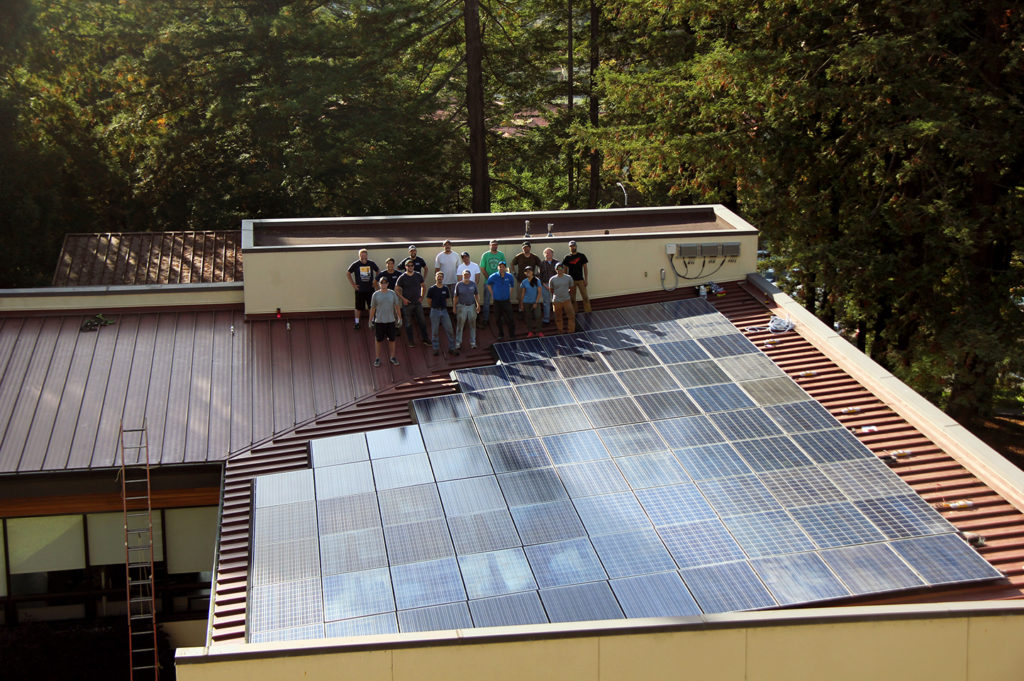
    The system is now complete except for the final electrical connections and an inspection, and should be live near the end of October. The 20 kilowatt (DC) array will produce an average of 57 kilowatt-hours per day, enough to completely power the Center’s new West Wing, with 25 kWh left over to power the main building.

    The eighty modules of the solar array and the proprietary mounting hardware and connectors were donated to Humboldt State from Zep Solar through the efforts of Coleman and Jack West — a member of the Center’s Advisory Board and also an alumnus of the university.

    Later this year, an array display will be installed outside the Center. Visitors will be able to see a live report of energy generated by the array, plus rooftop weather data that directly impacts array efficiency: solar radiation, air temperature and relative humidity, wind speed and direction, and the temperature of the modules. The monitor will also feature project news from the Schatz Center and data from the onsite EV charging station. The interpretive display has been funded by HEIF, the student-run Humboldt Energy Independence Fund, and NorthCAT, the Northern California Center for Alternative Transportation Fuels and Advanced Vehicle Technologies. HEIF also provided the instrumentation for the data acquisition system.

    The Schatz Solar Array installation team included:

    • Solar professionals: Brian Atchley, Greg Ball, Nate Coleman, Marcelo Macedo, and Ryan Woodward
    • HSU Facilities: Charles Day, Travis Fleming, Ray Robinson, and Brian Toroni
    • Students: Anh Bui, Carisse Geronimo, Chih-Wei Hsu, Craig Mitchell, and Anamika Singh
    • Schatz staff: Charles Chamberlin, Nick Lam, Peter Lehman, Marc Marshall, Kyle Palmer, Rich Williams, and Jim Zoellick

    Nate and Marcelo on the roof
    Nate Coleman and Marcelo Macedo prepare the Schatz roof for module installation
    Jim and Carisse set a thermocouple on the white backside of a module
    Jim Zoellick shows Carisse Geronimo where to place a thermocouple on the back of a module
    Jim, Charles and Ray consult the module layout plan
    Jim Zoellick, Charles Chamberlin, and Ray Robinson prepare for the installation
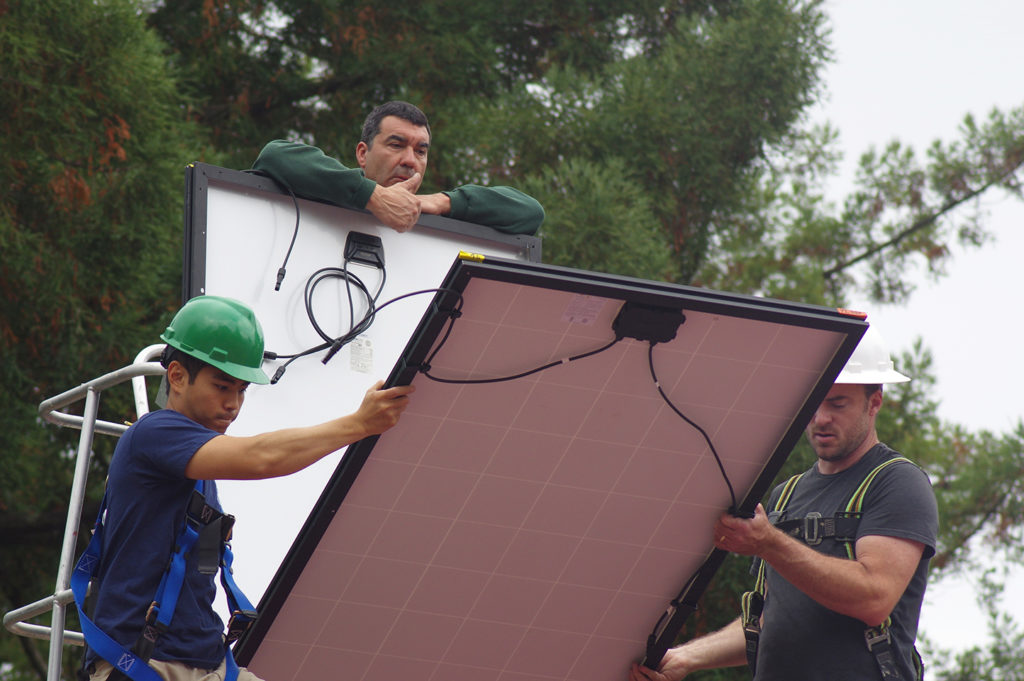
    Chih-Wei and Ray remove a panel from the stack on the lift, while Charles holds the remainder
    Charles Day delivers solar panels via hydraulic lift to Chih-Wei Hsu and Ray Robinson
    Craig twists a module mount near the edge of the roof
    Craig Mitchell tightens mounting hardware on the Schatz roof
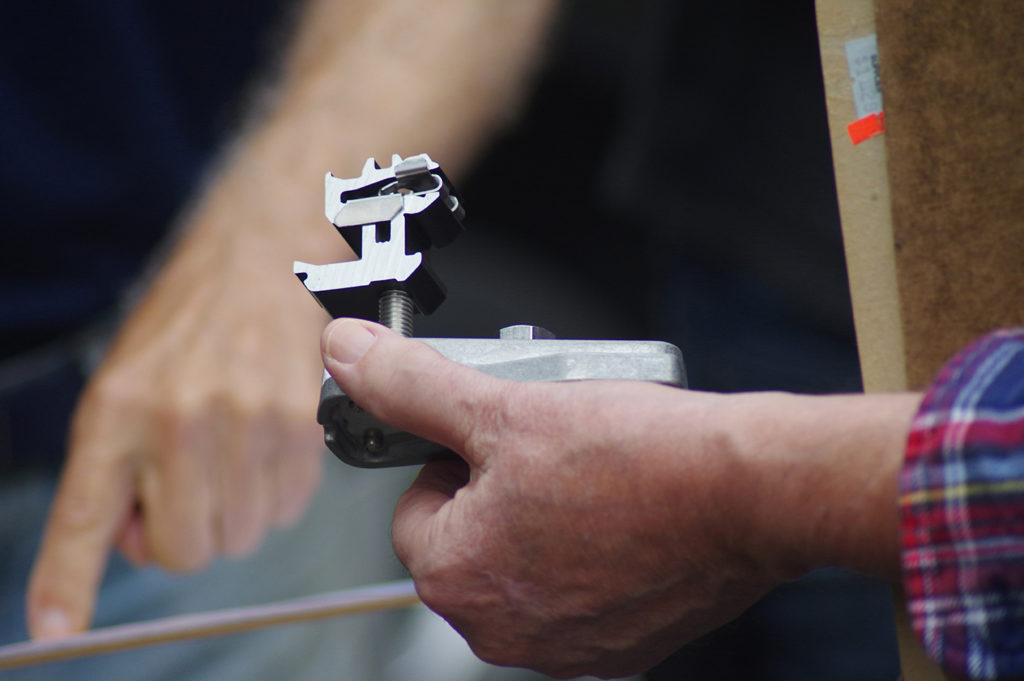
    Charles Chamberlin holds the specialized mounting hardware
    “The mounting hardware works like a charm.” – Peter Lehman
    Marcelo bends close to the roof to view a connection
    Marcelo Macedo inspects hardware connections
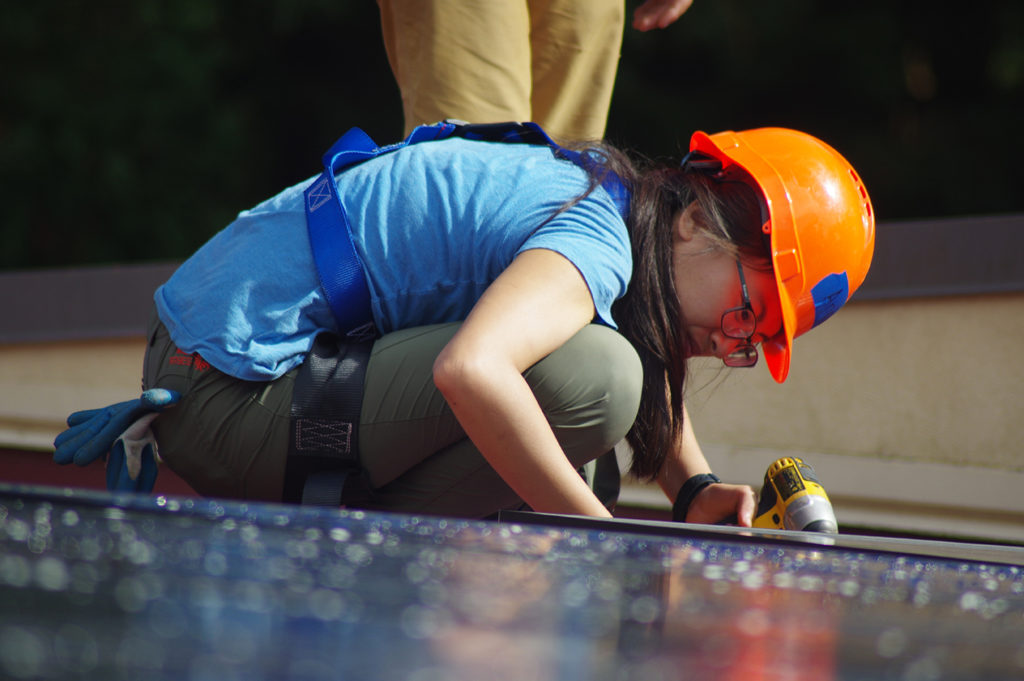
    Anh works at the base of a rain-covered module
    Anh Bui attaches modules to the roof
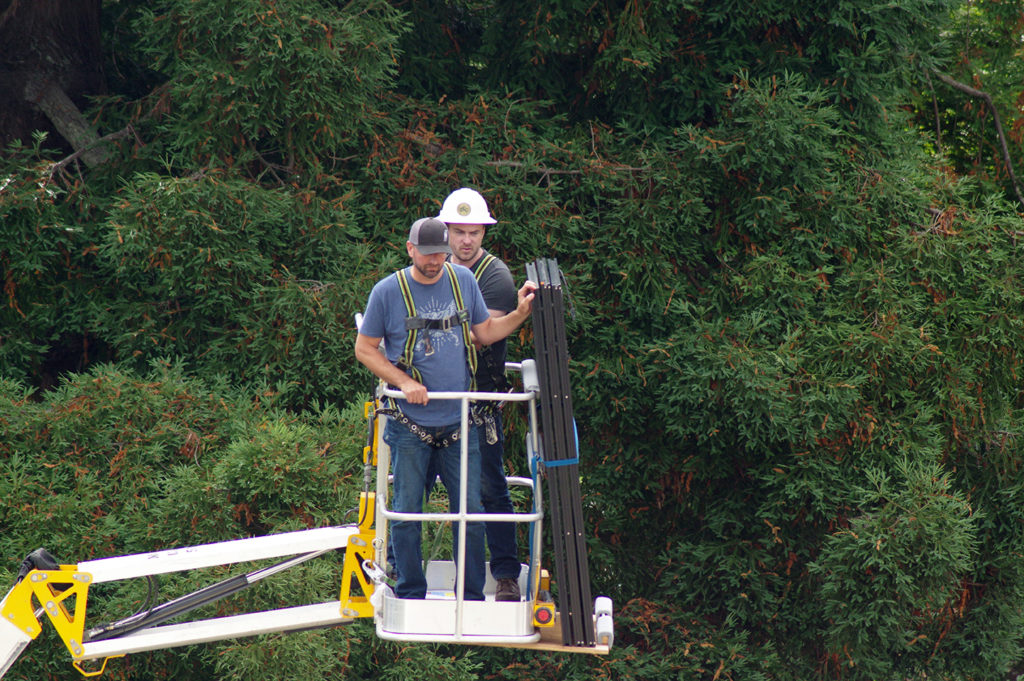
    Travis and Ray transport panels in a hydraulic lift with redwoods behind
    Travis Fleming and Ray Robinson lift solar panels from the courtyard to the Schatz roof
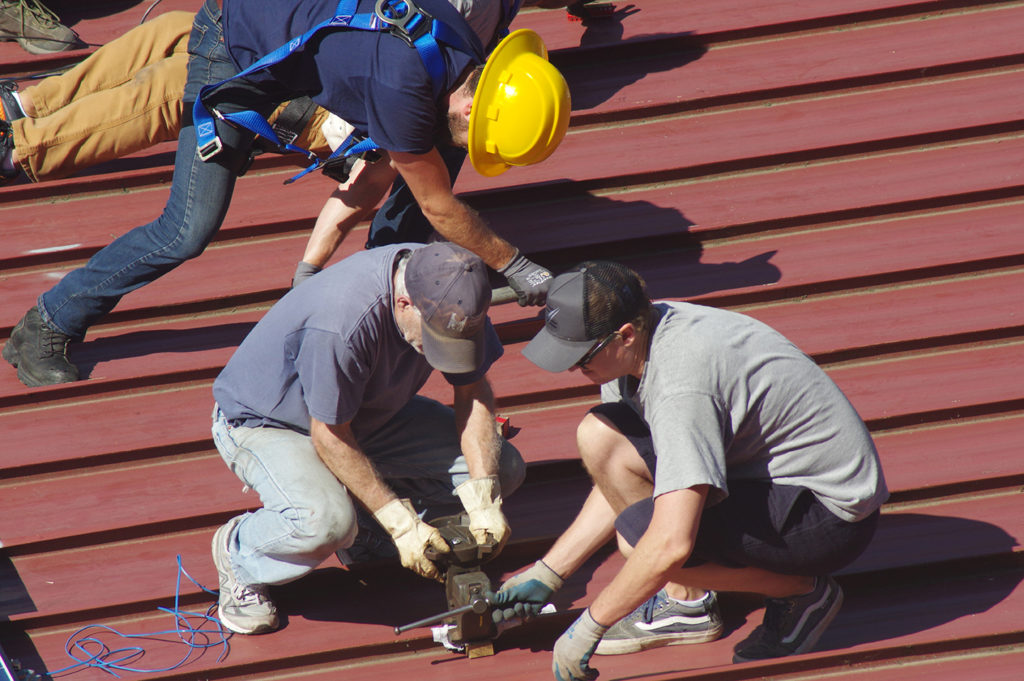
    Nate, Peter and Craig crimp roof bars
    Craig Mitchell, Peter Lehman, and Nate Coleman (l to r) prepare the roof for mounting hardware
    The installation team stands on the roof next to the assembled array
    The module installation is complete!
  • Electrifying transportation at HSU

    Electrifying transportation at HSU

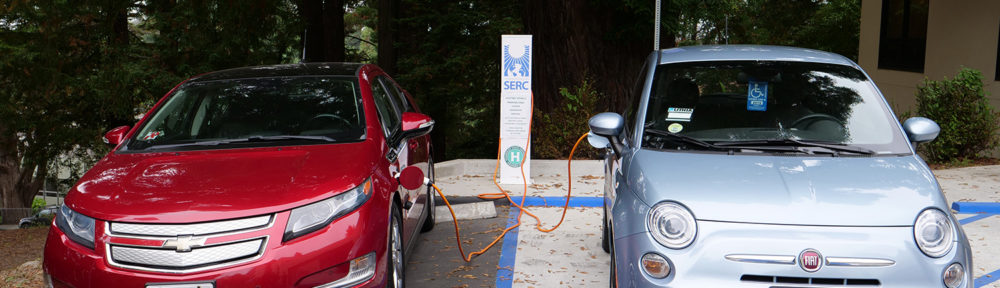
    HSU’s first electric vehicle station has already provided 60 “charge ups” in the month since fall semester began. Vehicles charged for an average of 2 hours, obtaining an average of 8 kWh of energy, up to a maximum of 31 kWh — and there were 16 times where the primary EV and the ADA parking spot were charging simultaneously.

    Since the EV station was installed in early May, it has provided 126 charge ups, that powered 3,600 miles of travel, and avoided the combustion of 117 gallons of gasoline and the emission of 800 kg of CO2e.*

    On October 11 at 5:30 pm in Siemens Hall 108, the Sustainable Futures Speaker Series will host a panel discussion on “Achieving 5 million zero-emission vehicles in California by 2030.” Experts from local planning, state regulation, mass transit, and advanced fuel infrastructure development will share strategies for achieving a zero-emission vehicle rollout on the north coast.

    HSU’s EV charging station is located to the south of the Schatz Energy Research Center (across from the BSS building on the south side of campus). This station can provide charging for either of two adjacent parking spaces. One parking space is EV-only; parking here is limited to four hours, and the vehicle must be charging while parked. The second space is ADA parking (EV not required). HSU parking permits are required for both spaces.

    *We assume a vehicle efficiency of 0.325 kWh/mi for EVs, and 31 mpg for gasoline vehicles. Carbon emissions are calculated using the gasoline carbon intensity of 8,815 g CO2e/gallon from EPA emission estimates, and HSU’s 2016 electricity carbon intensity of 192 g CO2e/kWh. (The electricity carbon intensity is the emissions rate associated with the power currently being purchased or generated by a particular source.)

  • Dedication of the Schatz Center West Wing

    Dedication of the Schatz Center West Wing

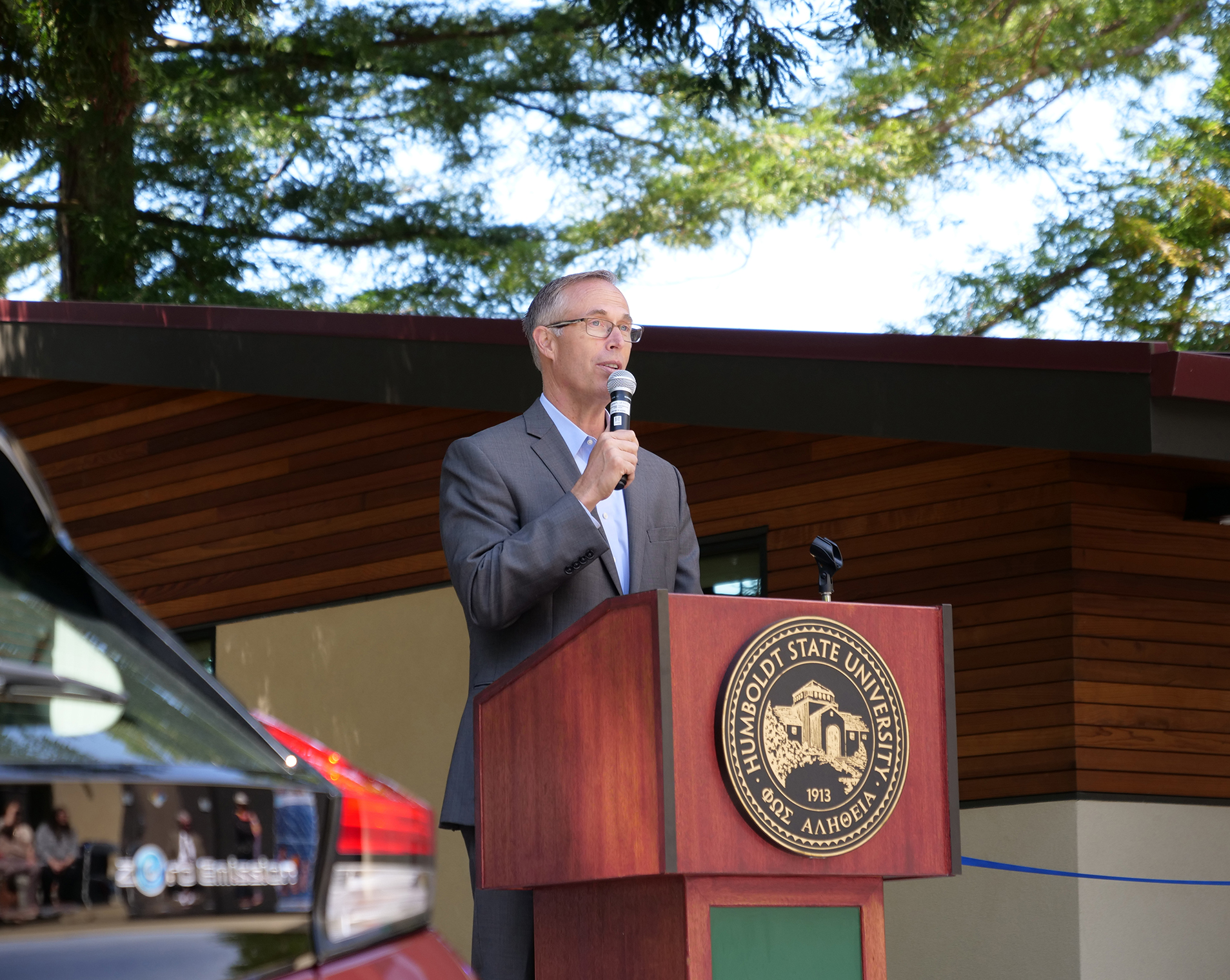
    On Friday, May 4, we formally dedicated our new West Wing addition. Congressional Representative Jared Huffman was joined by HSU President Lisa Rossbacher, Blue Lake Rancheria Tribal Council Member Jason Ramos, and Schatz Advisory Board members Jack West and Andrea Tuttle to celebrate the Center’s expansion.

    The 1900 square foot addition is located immediately west of the main building, and includes two faculty offices, a conference room, and fourteen staff and student workstations. This increase in space has enabled us to hire nine additional student research assistants for summer 2018 to work on projects in wind energy, smart grids, biomass assessment, and off-grid energy access.

    The dedication ceremony was followed by an open house with demonstrations in solar product testing, biomass energy, and microgrid management systems, an unveiling of interpretive photo galleries newly installed throughout both buildings, and the official deployment of the first electric vehicle charging station on the HSU campus.

    The West Wing addition was designed by Suarez Kuehne Architecture of San Francisco and built by a team led by Adams Commercial General Contracting of Eureka. Humboldt State University Facilities Management coordinated the design and construction process. The project was fully funded by donor contributions, including major support from the estate of Louis W. Schatz, additional gifts from Anne and David Katz, Peter and Carolyn Lehman, Christina and Jack West, Jamie Everett, and Joel Lehman, and grant funding from the California Energy Commission.

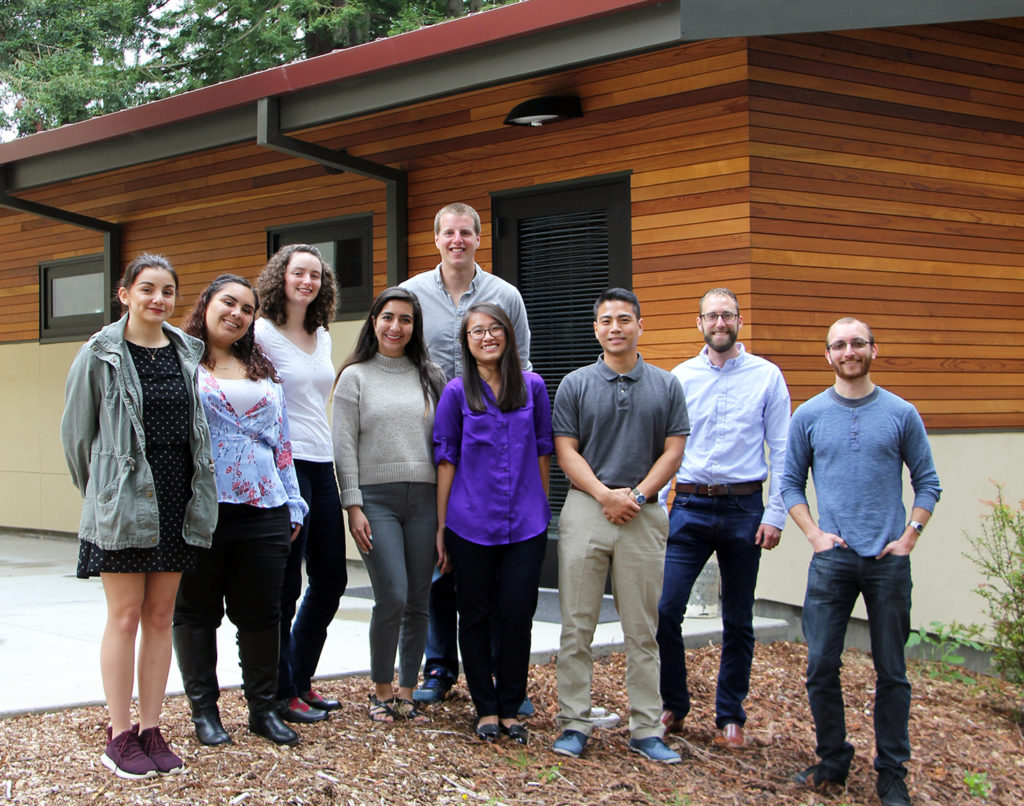
    Students stand outside the West Wing
    Summer 2018 Schatz student research assistants (l to r):
    Cassidy Barrientos, Tanya Garcia, Ellen Thompson, Sabrinna Rios Romero, Karsten Hayes, Anh Bui, Chih-Wei Hsu, Craig Mitchell, and Rene DeWees
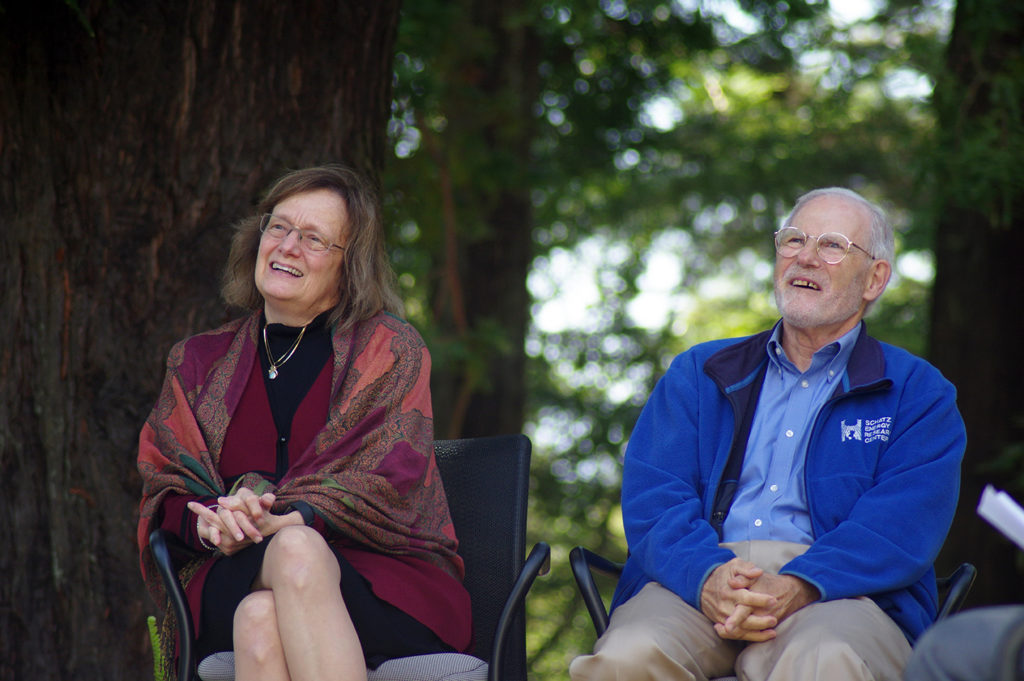
    President Rossbacher and Peter Lehman sit beneath redwood trees
    HSU President Lisa Rossbacher and Schatz Founding Director Peter Lehman
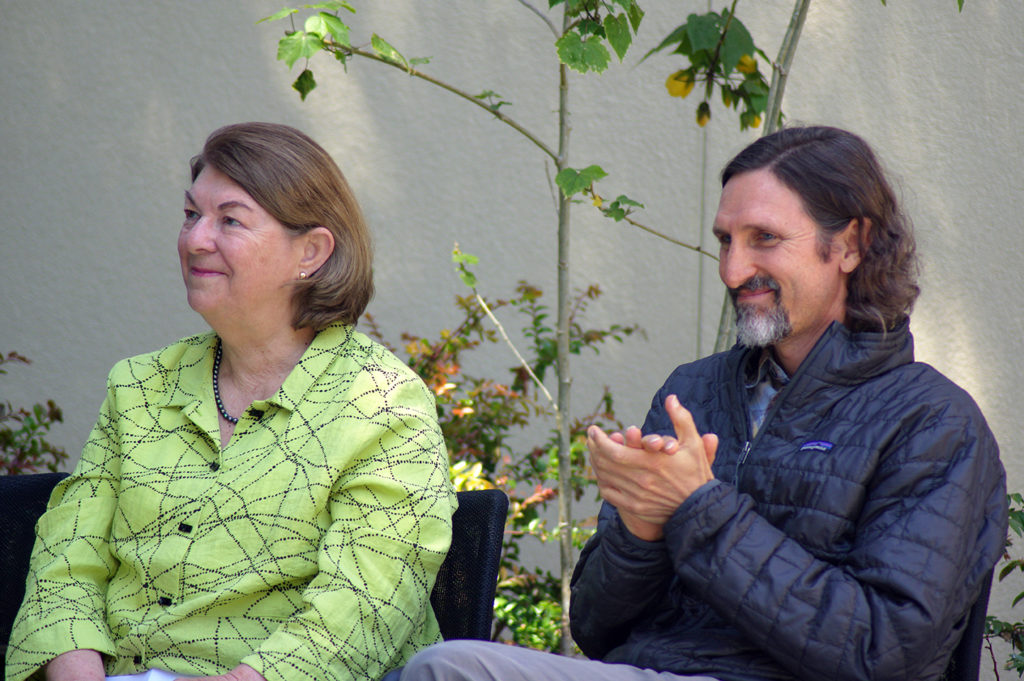
    Andrea Tuttle and Jack West, smiling and applauding
    Schatz Advisory Board member Andrea Tuttle  is recognized for sponsoring the Donald and Andrea Tuttle Fellowship for Clean Energy Studies (with Advisory Board member Jack West)
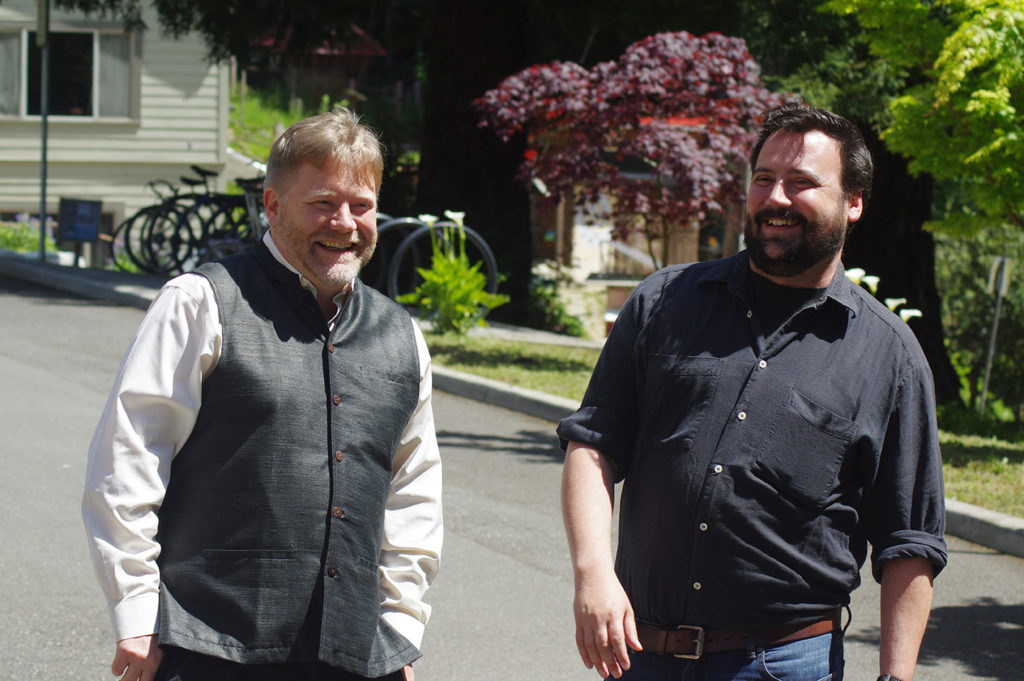
    Arne Jacobson and Matthew Marshall laugh together
    Schatz Director Arne Jacobson and RCEA Executive Director Matthew Marshall celebrate the dedication
  • Sustainable Futures 3/22: Restoring Redwood Forests in a Changing Climate

    With rapid climate change, the importance of coast redwood forests is increasing. Old-growth redwood forests on the northcoast store record-breaking amounts of carbon, and the trees themselves are growing faster today than in previous decades. Research shows that restoration techniques are effective at accelerating the growth of harvested forests and increasing their carbon sequestration potential.

    Emily Burns is the Director of Science for Save the Redwoods League, and directs the research program that includes the Redwoods and Climate Change Initiative and the Redwood Genome Project. She holds a PhD in Integrative Biology from UC Berkeley for her studies on the impacts of fog on coast redwood forest flora, and a BS in Plant Biology from UC Davis. She is a Research Associate in the Ecology and Evolutionary Biology Department at UC Santa Cruz, and was the recipient of the 2013 Women in Science Frameshifter Award from St. Catherine University. Burns contributes frequently to the League’s blog, and in her scant spare time, she enjoys embroidering, particularly designs of native plants of redwood forests.

    The Sustainable Futures Speaker Series at Humboldt State creates interdisciplinary discussion, debate, and collaboration around issues related to energy, the environment, and society. Lectures are held on Thursdays from 5:30-7 pm in HSU Founders Hall 118. For details on upcoming events or to request accessibility accommodations, visit our series events page or call (707) 826-4345.

  • A clean energy microgrid for the Humboldt County airport

    A clean energy microgrid for the Humboldt County airport

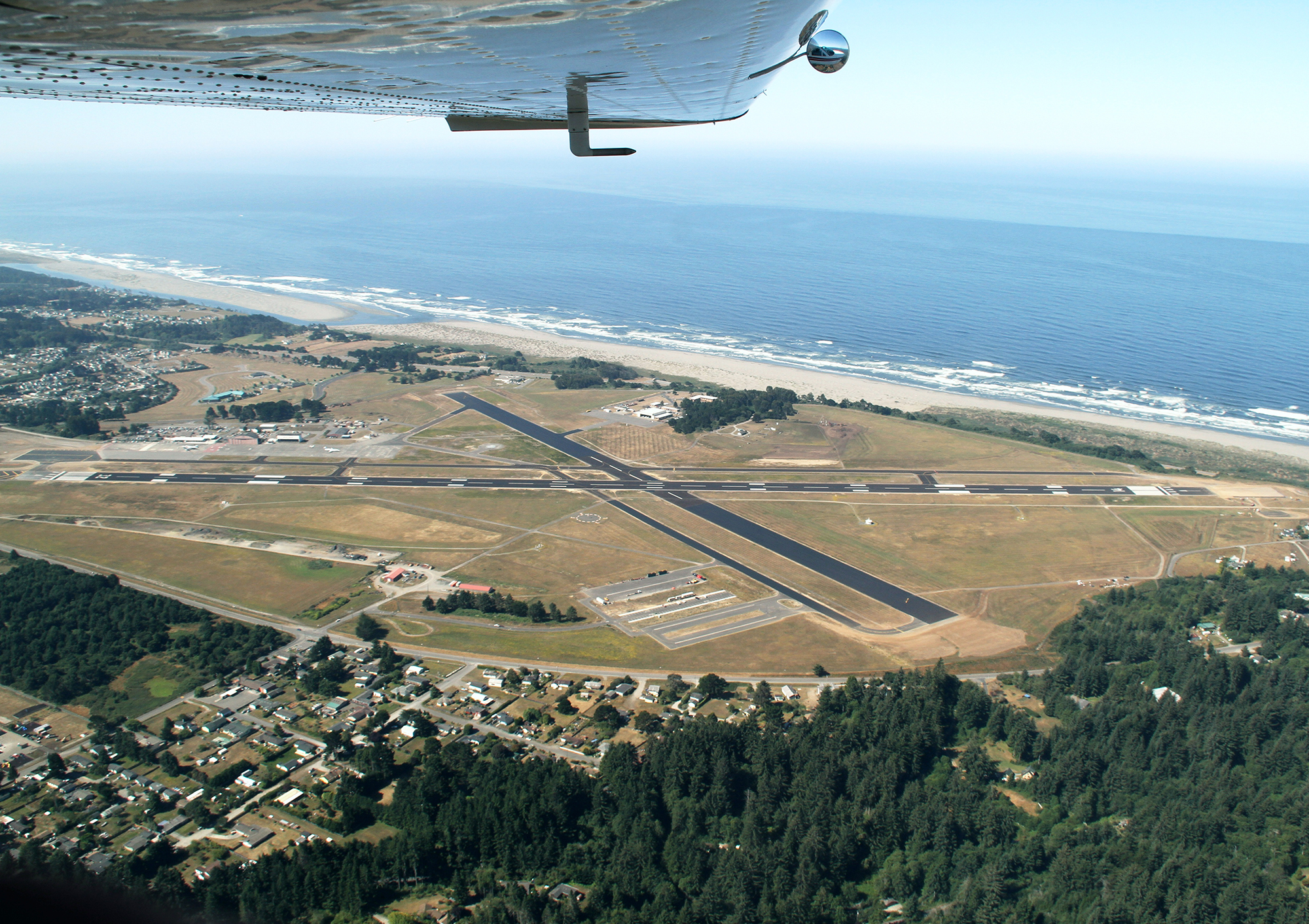
    A cutting-edge clean energy microgrid is coming to Humboldt County’s regional airport. Designed by the Schatz Center, the microgrid will generate green electricity, create jobs for local contractors and technicians, and provide an energy lifeline in the event of a natural disaster. Last week, the California Energy Commission announced a $5 million grant award through its EPIC program that will support $6 million in matching funding from the Redwood Coast Energy Authority (RCEA), for development of this solar + storage microgrid system.

    “The Redwood Coast Energy Authority is excited to be partnering with the Schatz Center, PG&E, and the County,” said Matthew Marshall, Executive Director of the RCEA. “This project will allow us to provide enhanced resiliency and emergency-response capabilities for the airport and Coast Guard and deliver the environmental and economic benefits of developing our local renewable resources.”

    Composed of a 2.3 megawatt photovoltaic array covering 9 acres—the largest in Humboldt County—and an 8 megawatt-hour battery storage system, equivalent to the batteries in 100 Tesla Model S cars, the microgrid will support 18 electric accounts including the airport and the U.S. Coast Guard Air Station.

    The California Redwood Coast-Humboldt County Airport serves 50,000 flights a year and 140,000 customers, including commercial, private, and emergency medical flights. The Coast Guard Air Station Humboldt Bay provides search and rescue for 250 miles of rugged rural coastline, from the Mendocino-Sonoma County line to the California-Oregon border. Since roads into and out of Humboldt County are often closed by fires and slides, energy stability at the regional airport is crucial.

    “This is a wonderful project for Humboldt County and we have a great team eager to get started,” said Peter Lehman, founding director of the Schatz Center and principal investigator for the project. “The airport microgrid will make us a safer and more resilient community and plow new ground in developing the electric grid of the future.”

    As the first multi-customer microgrid in Pacific Gas and Electric’s service territory, the project will provide a test bed for the policies, tariff structures, and operating procedures necessary to integrate microgrids into California’s electric grid. Lessons learned will help the state strengthen its power grid by creating a roadmap for microgrid integration across the state.

    A microgrid combines energy generation–often solar or wind power–with energy storage and smart controls to allow it to run both connected to and disconnected from the larger power grid. Under normal conditions, microgrids add power to the grid and smooth out power fluctuations, adding stability. In an outage, microgrids can “island” and supply electricity indefinitely. As extreme weather events and fires driven by climate change continue to cause regional outages, the ability to maintain independent power generation is key to local resiliency. Microgrids provide life-saving power to transportation hubs and other critical facilities like shelters, hospitals, and fire stations.

    The airport microgrid is the second designed by the Schatz Center for the Humboldt Bay region. The Center’s renewable energy microgrid at the Blue Lake Rancheria (BLR) went live in 2017, providing clean energy to the BLR campus and enabling the Rancheria to operate as a Red Cross Shelter. Last fall, the Rancheria was recognized by the Federal Emergency Management Agency for its contributions to community safety.

  • SFSS lecture this Thursday (2/22): Do wind turbines make good neighbors?

    In this week’s Sustainable Futures Speaker Series, energy researcher Joseph Rand shares results from a nationwide survey of people who live in proximity to wind farms. Wind power now supplies over 6% of the nation’s electricity demand, with over 60,000 turbines installed across the country. Which factors create community opposition or support for wind farm development?

    Joseph Rand is a research affiliate in the Electricity Markets & Policy Group at Lawrence Berkeley National Lab, and holds a MS in Energy and Resources from UC Berkeley and a BA in Environmental Studies from Macalester College. He conducts research and analysis on renewable energy, including cost and market analysis, spatial data analysis, and research related to public acceptance and deployment barriers of renewable energy.

    The Sustainable Futures Speaker Series at Humboldt State creates interdisciplinary discussion, debate, and collaboration around issues related to energy, the environment, and society. Lectures are held on Thursdays from 5:30-7 pm in HSU Founders Hall 118. For details on upcoming events or to request accessibility accommodations, visit our series events page or call (707) 826-4345.

  • Sustainable Futures Speaker Series: Spring 2018

    This spring’s Sustainable Futures Speaker Series features nine talks on topics ranging from wind turbines to Icelandic glaciers, microgrids to traditional forestry practices, cannabis policy to tanoak restoration, the legal personhood of rivers to climate change in redwood ecologies, and the implications of clean energy access for human health. Events are held on Thursdays from 5:30-7:00 pm in Founders Hall 118 on the Humboldt State University campus.

    This interdisciplinary speaker series is intended to stimulate cross disciplinary discussion, debate, and collaboration around issues related to energy, the environment, and society. The series is sponsored by the Schatz Center, the Environment & Community Graduate Program, and the College of Arts, Humanities and Social Sciences at Humboldt State.

    For details on upcoming events or to request accessibility accommodations, please email or call the Schatz Center at (707) 826-4345.

  • 2018 Global Off-Grid Solar Forum and Expo

    2018 Global Off-Grid Solar Forum and Expo

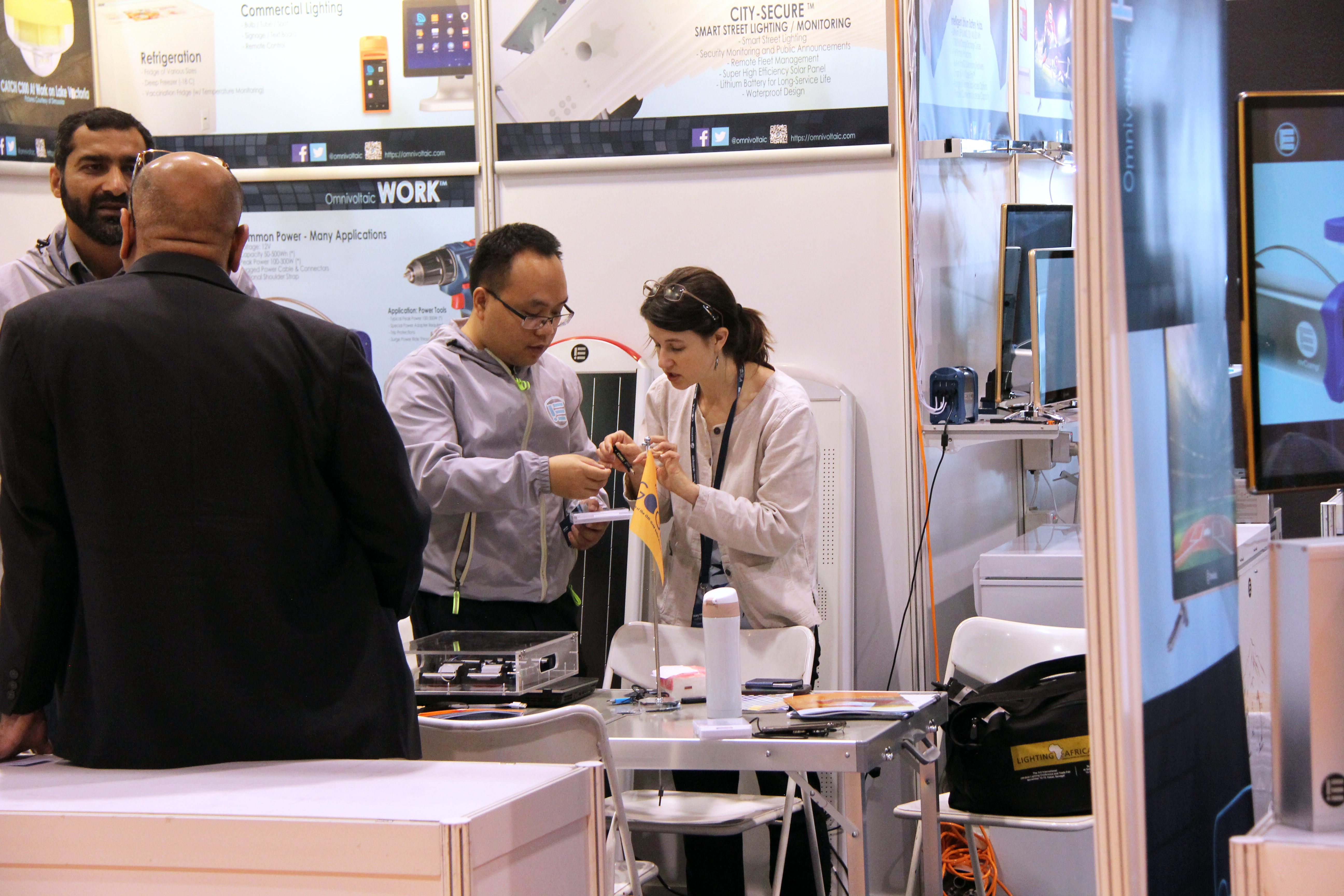
    The Schatz Energy Research Center was a major presence at the 5th Global Off-Grid Solar Forum and Expo, which took place this week in Hong Kong. The conference is the premier global event for the off-grid solar industry. Schatz Center Director Arne Jacobson was on the conference organizing committee, and six members of the Center’s off-grid team delivered presentations and facilitated discussions in conference sessions and side events over the three-day meeting.

    The Schatz Center’s involvement in the conference is linked to its leadership role in the World Bank Group’s Lighting Global Quality Assurance Program, the world’s leading framework for quality assurance and consumer protection for off-grid solar products. The quality assurance program is widely used to support consumer protection for low-income families in off-grid areas of Africa, Asia, and the Pacific Islands.

    The Center’s work on Lighting Global is carried out in partnership with CLASP, a D.C.-based non-profit, and it involves close collaboration with the Global Off-Grid Lighting Association (GOGLA).

  • Blue Lake Rancheria microgrid wins Project of the Year Award at DistribuTECH conference

    Blue Lake Rancheria microgrid wins Project of the Year Award at DistribuTECH conference

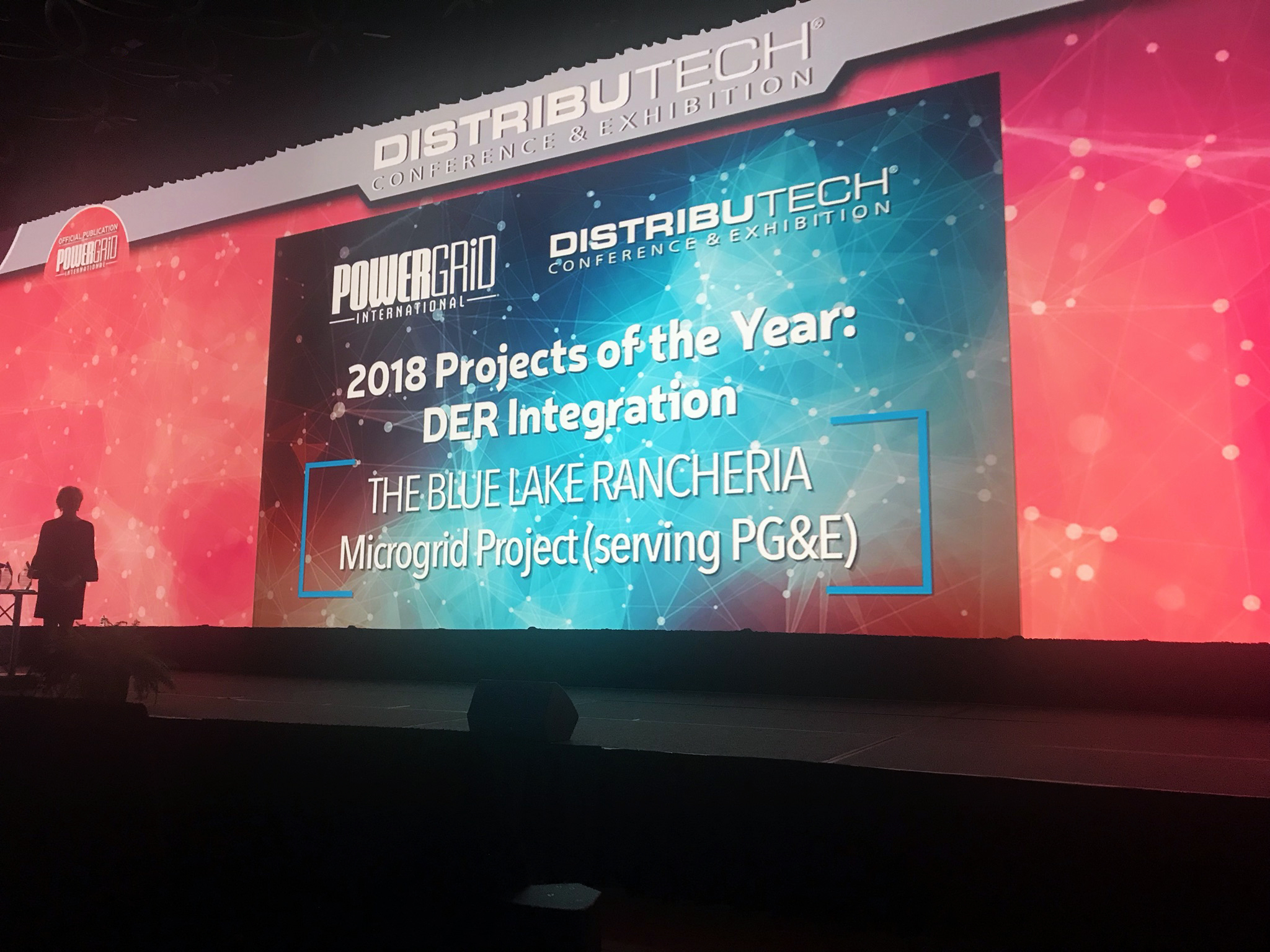
    The Blue Lake Rancheria (BLR) microgrid was awarded the 2018 Project of the Year Award for Distributed Energy Resources (DER) Grid Integration at the annual DistribuTECH conference held this week in San Antonio, Texas. The award was given in recognition of the project’s ingenuity, scope, practicality, vision, and follow-through.

    The Schatz Energy Research Center at Humboldt State University is the project lead and system integrator. The BLR microgrid integrates a photovoltaic array, a Tesla battery, and a legacy backup generator. A Siemens management system and foundational programming developed by Schatz engineers control the microgrid, which provides renewable electricity, lowers the Rancheria’s energy costs, and supports clean energy jobs. The microgrid also provides an emergency services backbone for its remote rural community and equips the Rancheria to serve as a Red Cross shelter in the event of a natural disaster.

    DER design strategically deploys power generation across multiple sites to lower impact on existing grid infrastructure and to make use of renewable technologies including solar and wind. By locating power generation close to where that power will be used, utilities are able to streamline infrastructure improvements. When microgrids are employed, these smaller generation sites can disconnect from the main grid in the event of a grid outage – protecting critical electricity supply within a campus, business, hospital, or other community facility.

    The BLR microgrid was funded by the California Energy Commission’s Electric Program Investment Charge and the Blue Lake Rancheria Tribe. Major project partners include Pacific Gas & Electric, Siemens, Tesla Energy, Idaho National Laboratory, GHD Inc., Colburn Electric, REC Solar, McKeever Energy & Electric, and Kernen Construction.

    The Schatz Energy Research Center develops clean and renewable energy technologies for implementation worldwide. Current projects and expertise include smart-grid design, bioenergy assessment, off-grid energy access, and clean transportation. The Center also plays a leading role in the World Bank Group’s Lighting Africa and Lighting Asia initiatives, which support high quality, affordable energy solutions for people in off-grid and marginal-grid communities. The Schatz Center is located on the campus of Humboldt State University in Arcata, California.

    Press Contact:
    Maia Cheli, Schatz Energy Research Center
    maiacheli@humboldt.edu / 707-826-4363