We are glad to announce that the remainder of this semester’s Sustainable Futures Speaker Series will be going online via webinar… visit our speaker series page for the schedule of upcoming events! Talks will be given from 5:30-7:00 pm on Thursday evenings (Pacific). Each lecture will be streamed via Zoom with closed captioning, and will be followed by a Q&A discussion period. All events are free and open to the public. Questions? Please email info@schatzcenter.org.
April 9: Amanda Baugh
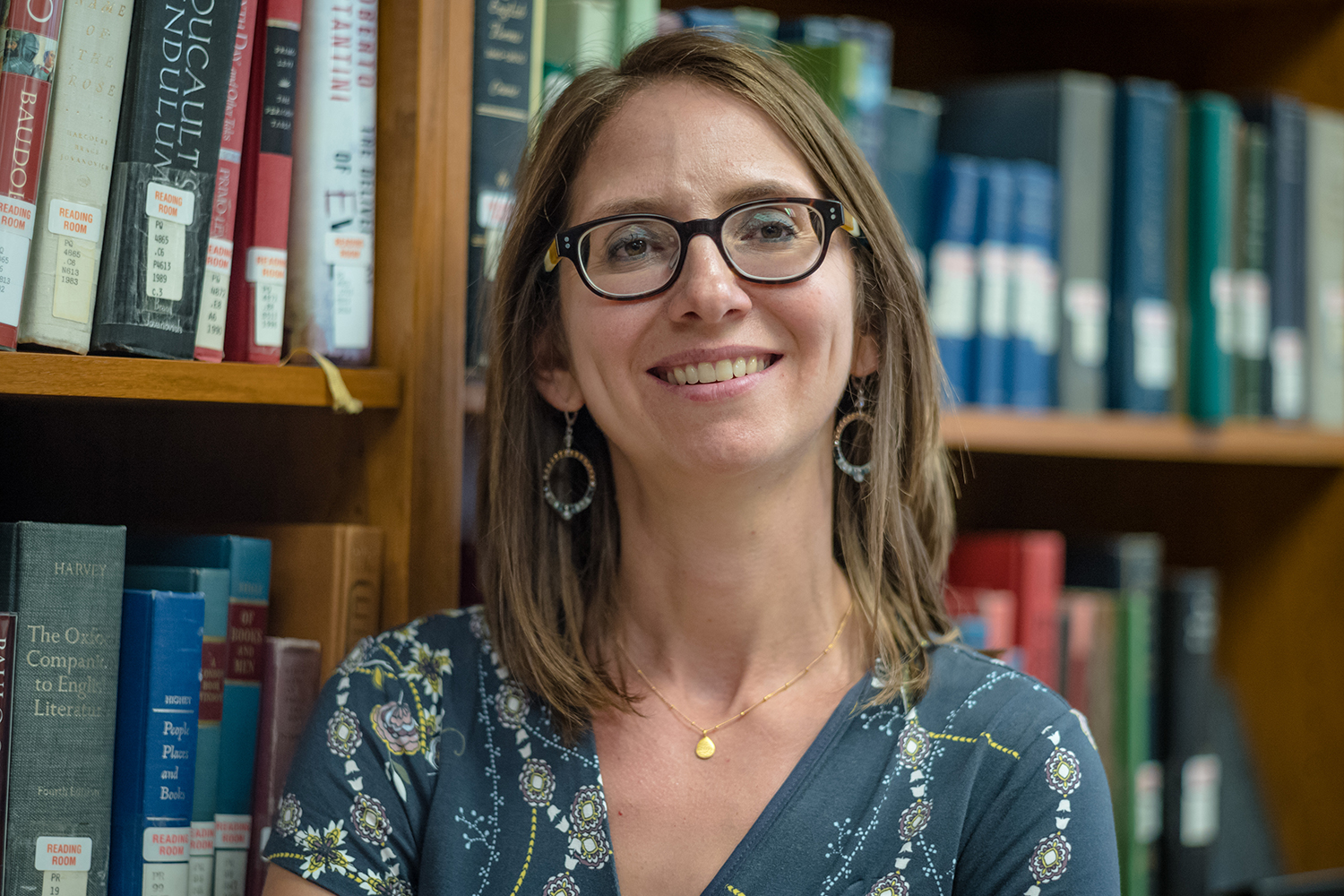
Amanda Baugh is an Associate Professor of Religious Studies at California State University, Northridge, who specializes in the study of religion, race, and environmental values among diverse American groups. She is the author of “God and the Green Divide: Religious Environmentalism in Black and White” (University of California Press, 2016).
The Sustainable Futures Speaker Series stimulates interdisciplinary collaboration around issues related to energy, the environment, and society. Lectures are sponsored by the Schatz Energy Research Center, the Environment & Community graduate program, and the College of Arts, Humanities & Social Sciences at Humboldt State.
The North Coast Offshore Wind Workshop scheduled for April 28 has been postponed. Our team is investigating options for sharing our initial findings, while maintaining clarity, accessibility, and community engagement. Please RSVP (see below) if you would like to receive information directly on these events.
Original post
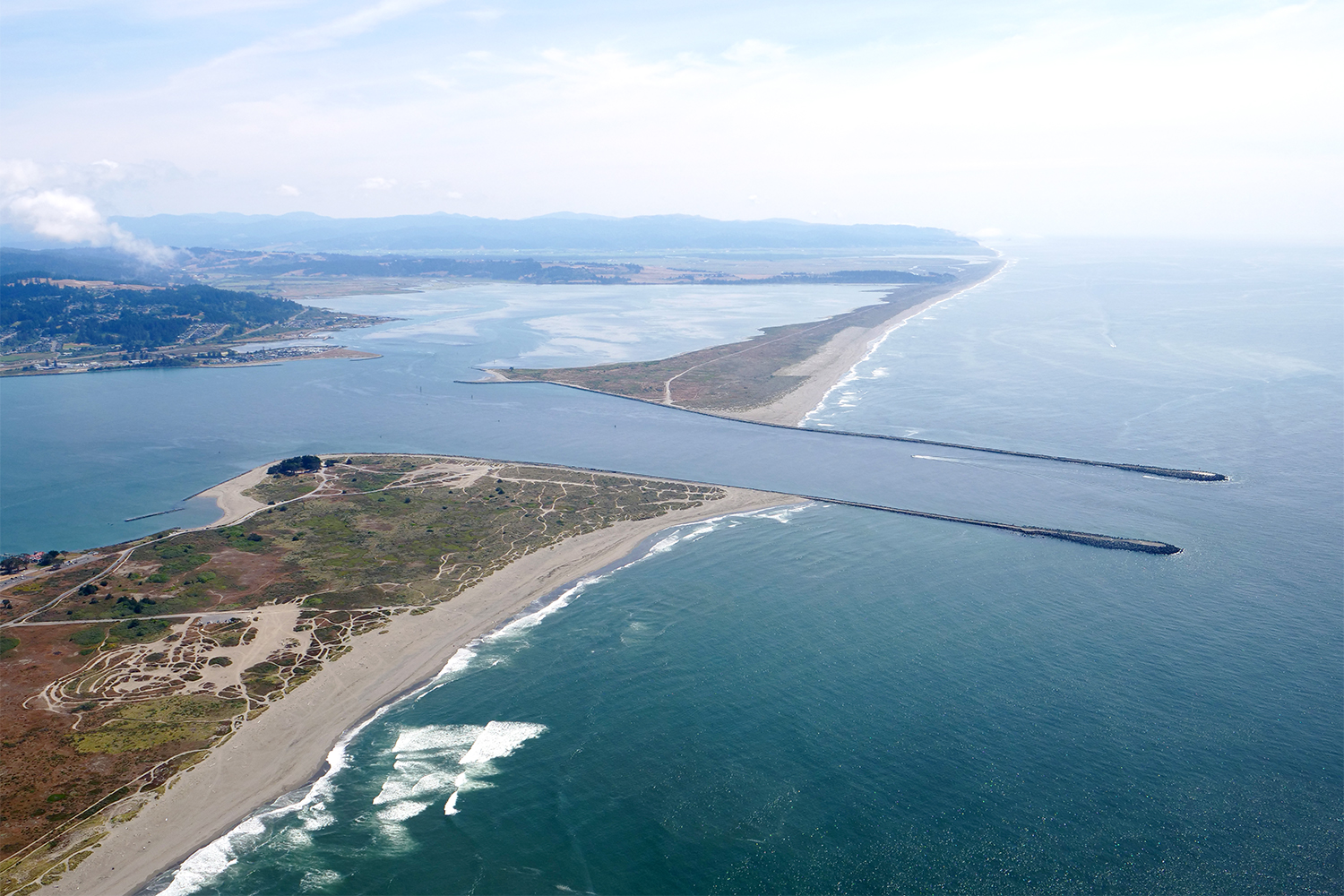
The North Coast Offshore Wind Workshop will present initial findings about the opportunities and challenges associated with offshore wind energy in the Humboldt Bay region. This workshop is free and open to the public, and is being hosted by the California Ocean Protection Council and the Schatz Energy Research Center at Humboldt State University.
The all-day event will be held on Tuesday, April 28, at the Wharfinger Building in Eureka, CA.
If you plan to attend, please RSVP. A recording will be made available to the public following the workshop. We are also currently exploring remote participation options.
Each session will include a presentation of findings and a panel discussion, followed by a Q&A.
Lunch and snacks will be provided by the Schatz Center for participants.
For additional information or to request accessibility accommodations, please contact the Schatz Center at (707) 826-4345 or by email.
Learn more about the Schatz Center’s offshore wind feasibility studies. These studies are being funded by the California Ocean Protection Council, the California Governor’s Office of Planning and Research, and the Bureau of Ocean Energy Management.
AGENDA
8:00 am
Breakfast Reception
8:30 am
Introduction and Opening Remarks Presenters: Mark Gold, California Ocean Protection Council Karen Douglas, California Energy Commission Arne Jacobson, Schatz Energy Research Center
9:00 am
Session 1: Energy Generation, Transmission, and Economic Development Presenters: Mark Severy, Schatz Energy Research Center Steve Hackett, Humboldt State University
10:45 am
Session 2: Port and Local Infrastructure Presenters: Shane Phillips, Mott MacDonald Aaron Porter, Mott MacDonald
12:15 pm
Lunch
1:00 pm
Session 3: Environmental Setting Presenters: Sharon Kramer, H.T. Harvey & Associates Ecological Consultants Scott Terrill, H.T. Harvey & Associates Ecological Consultants Mark Hemphill-Haley, Humboldt State University
2:45 pm
Session 4: Regional Perspectives Presenter: Laurie Richmond, Humboldt State University
4:30 pm
Reflections and Next Steps
Note: agenda details are subject to change. Please RSVP or visit this page again for schedule updates.
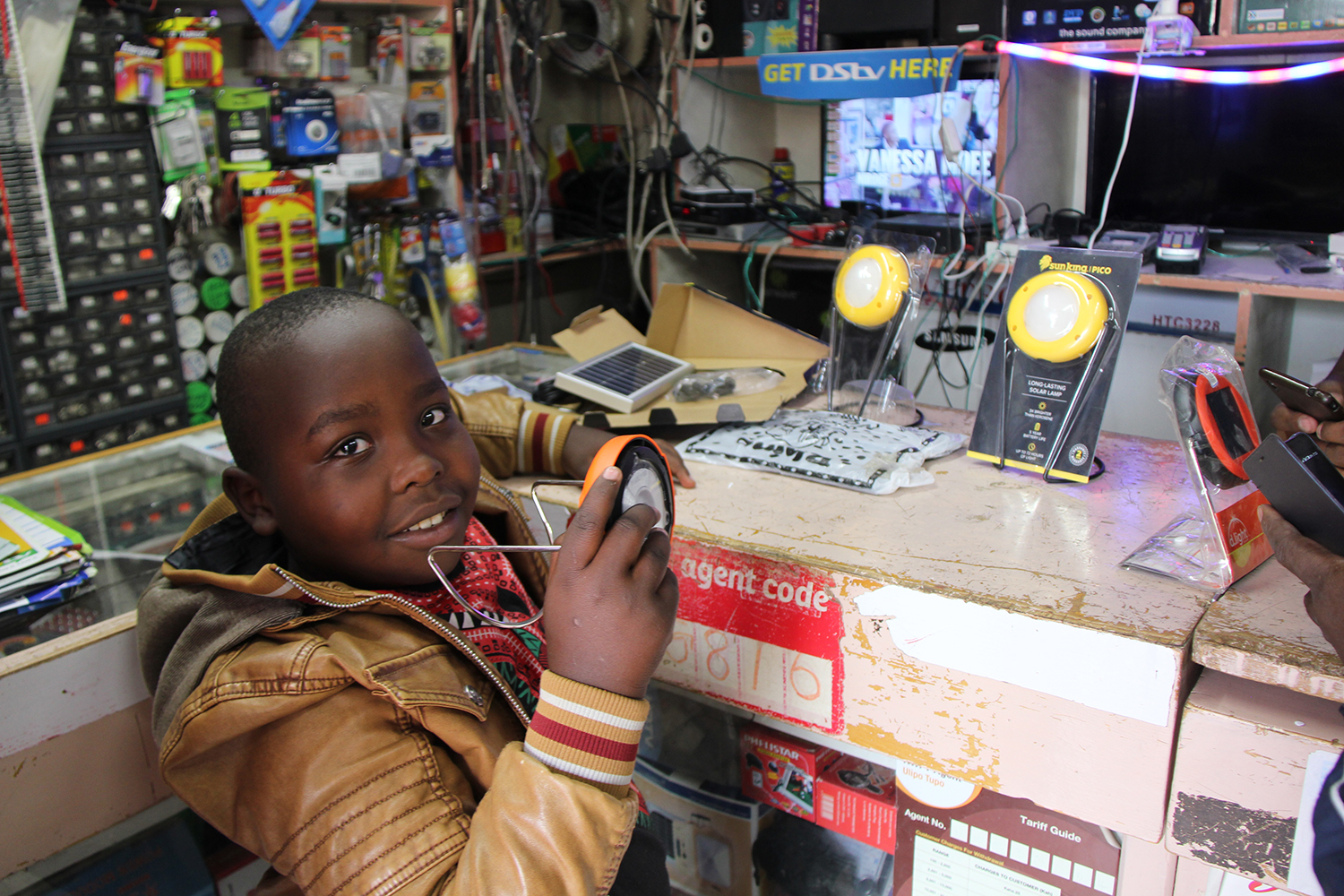
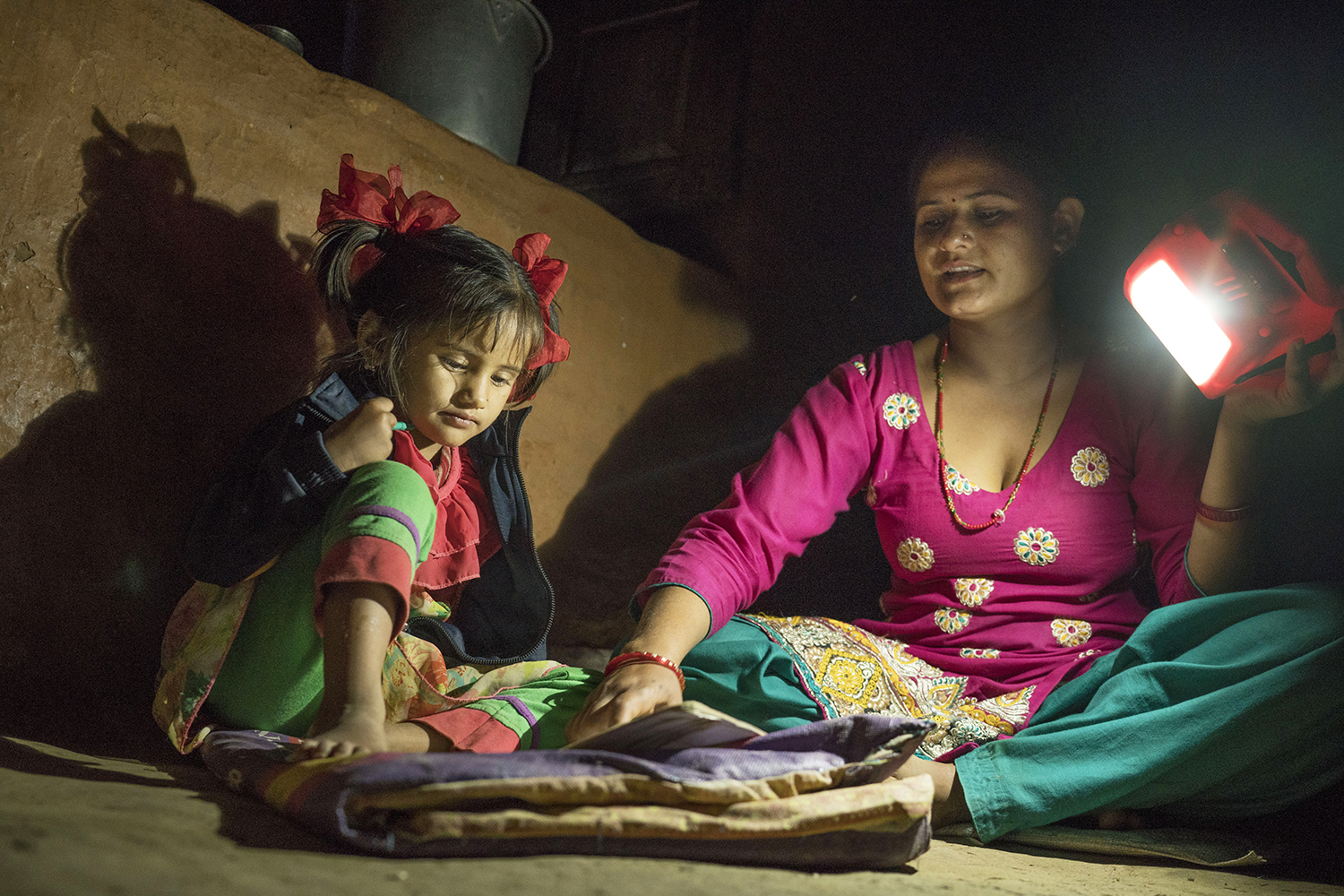
Join us in Nairobi on February 18-20, for the annual Global Off-Grid Solar Forum & Expo. Five members of the Schatz Center’s off-grid team will be participating in the conference: Arne Jacobson, Nicholas Lam, Kristen Radecsky, Kim Thorpe, and Kaileigh Vincent-Welling.
On Thursday, February 20, Schatz Center Director Arne Jacobson will join Lauren Boucher, Ari Reeves, and Elisa Lai of CLASP for a session on quality assurance for modern off-grid energy. Building on the foundation laid by Lighting Global Quality Assurance, CLASP and the Schatz Center are expanding the QA program to cover a broader range of off-grid solar products. The program will also achieve a major milestone this year, with the International Electrotechnical Commission (IEC) publishing quality standards for off-grid solar products. The session will explore program changes upcoming in 2020, and invite feedback from participants on QA product data and services.
Later that day, Schatz research scientist Nicholas Lam will join Robin Gravesteijn of the United Nations Capital Development Fund and Joyce Nkuyahaga of the Uganda Solar Energy Association for a panel on digital inclusivity for energy access in Uganda. This session will explore pay-as-you-go strategies for financing electrical access, and whether energy access in turn expands financial inclusivity.
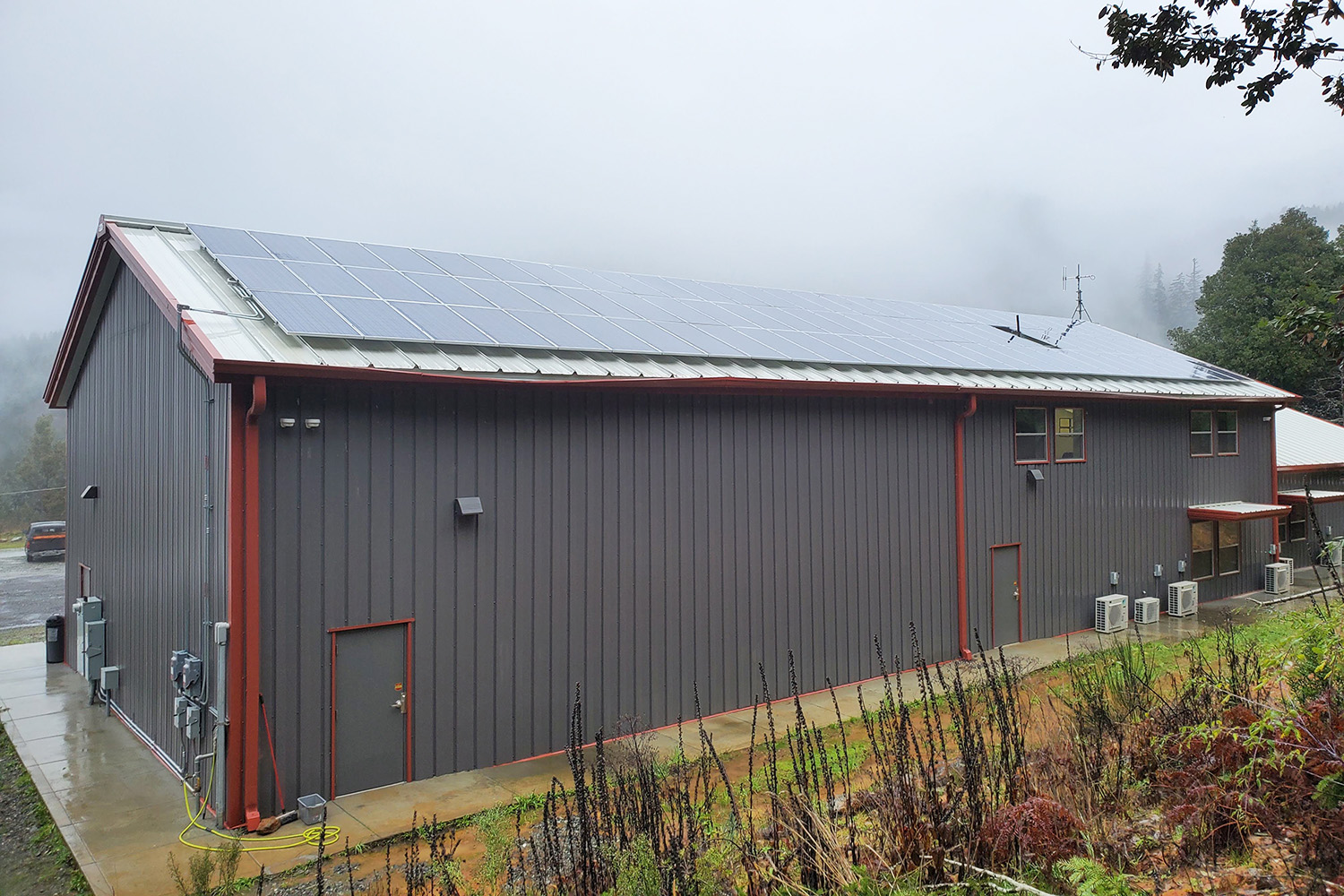
On December 19, the Yurok Tribe celebrated the installation of a new, 28 kW solar photovoltaic system on the Tulley Creek Transportation Building, and announced plans to install a second, 24 kW system on the Tulley Creek Firehouse.
This first system is supported by a Solar Accelerator Fund Grant from GRID Alternatives and Wells Fargo. The second will be supported by a Cornerstone Grant from the Charitable Foundation of the Energy Bar Association.
These two systems are early project goals identified in the Tribe’s newly created Strategic Energy Action Plan, and together are a first step toward fulfilling the Tribe’s Energy Vision:
“To make sure all Tribal members living within the Yurok Ancestral Territory have access to reliable, affordable, modern, cost-effective energy services. In addition, the Tribe seeks an energy program that promotes energy self-sufficiency, environmental sustainability, use of local renewable resources, job creation, and economic opportunity for Tribal members.”
Yurok Tribe Energy Vision
About 40% of families in the Weitchpec and Pecwan districts do not have access to grid electricity, and must rely instead on generators for their electricity supply. The Yurok Strategic Energy Action Plan outlines a strategy for the creation of a tribal energy program to provide residents with clean, affordable energy. This plan was developed by the Yurok Tribe in collaboration with the Schatz Center, and supported by a grant from the U.S. Department of Energy.
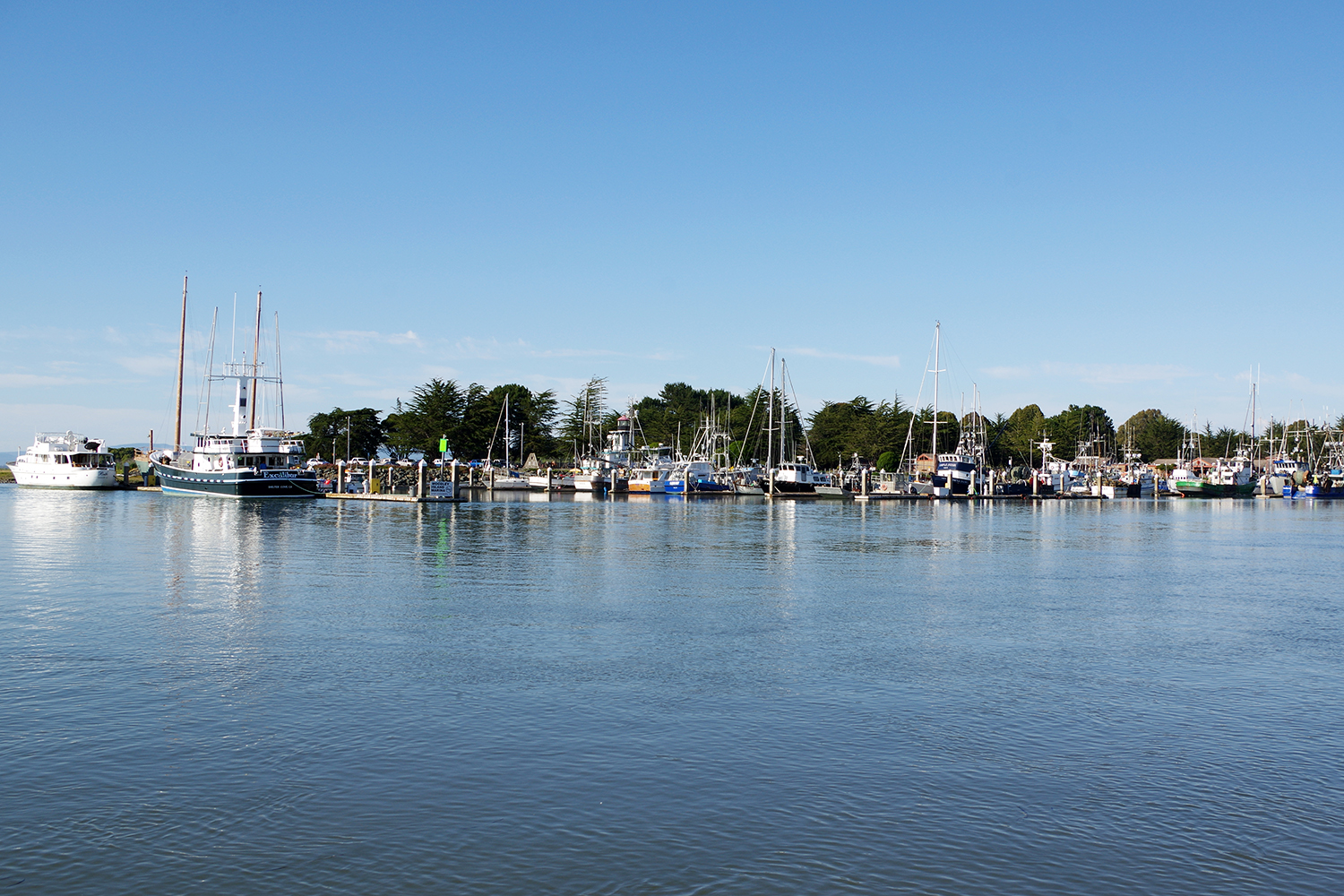
Fishing communities are facing a variety of challenges including declines in participation, reduced access to fish resources, aging physical infrastructure, gentrification, competition from foreign imports, the “graying” or aging of their fleets, and a host of environmental stressors. These factors can represent threats to the continued viability of individual fishing communities. Such communities are clearly in need of tools that will enable them to plan strategically and to be more proactive in charting a sustainable future. This presentation will describe efforts to engage two California north coast fishing communities — Eureka and Shelter Cove — in a bottom-up planning process called Fishing Community Sustainability Planning. The presentation will describe the planning methods conducted in each port and the outcomes, highlighting how strategic planning can help communities build social and political capital and begin a process of community transformation.
Laurie Richmond is an Associate Professor in Environmental Science & Management at Humboldt State. Her research focuses on the human dimensions of marine and coastal issues. Prior to coming to HSU she worked as a social scientist for NOAA Fisheries in Hawaii. She has been conducting research in collaboration with coastal communities for over a decade and has worked with communities in Alaska, the Western Pacific, and California. She is a newly appointed member of the State of California’s Ocean Protection Council Science Advisory Team.
Sustainable Futures Speaker Series
Our visiting speaker series stimulates interdisciplinary collaboration around issues related to energy, the environment, and society. All lectures are free and open to the public, and are sponsored by the Schatz Center, the Environment & Community graduate program, and the College of Arts, Humanities & Social Sciences at Humboldt State.
Fall 2019 lectures will be held on Thursdays from 5:30 – 7:00 pm in Founders Hall 118.
For additional details on upcoming events or to request accessibility accommodations, email serc@humboldt.edu or call (707) 826-4345.
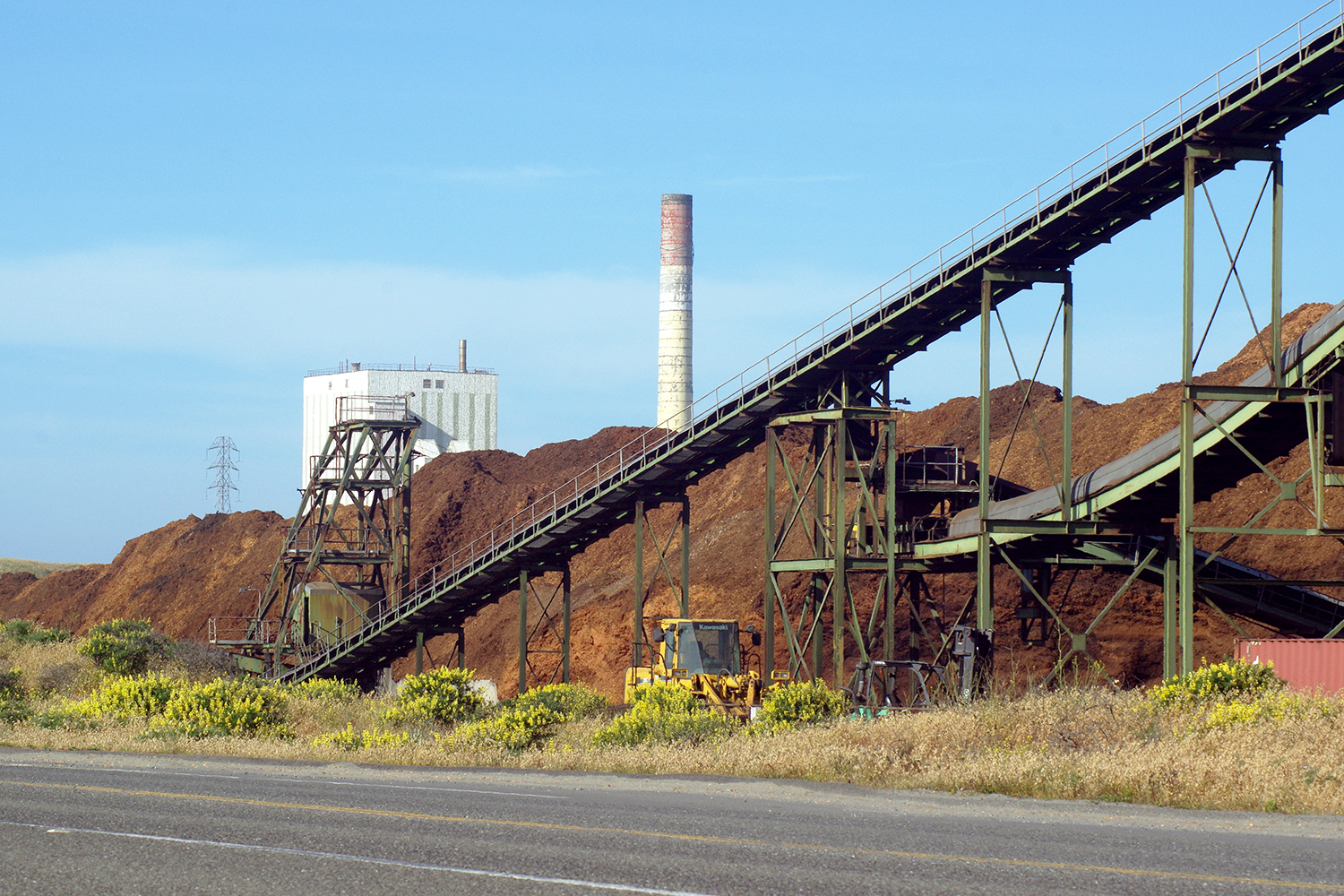
California faces a forest management crisis, as severe drought, wildfire, and pest infestation worsen in the face of climate change. If managed properly, bioelectricity could help support sustainable forest management while advancing California’s renewable energy and climate goals. However, there are also legitimate concerns surrounding the climate and air quality impacts of these systems as they exist today. New research from the Schatz Center is shedding light on the net environmental impacts of using forest residues for bioenergy — and is supporting policymakers in deciding whether, and under which circumstances, these systems should be promoted.
Dr. Kevin Fingerman is an Associate Professor of Environmental Science & Management at Humboldt State University. His research employs life cycle assessment, geospatial analysis, and simulation modeling tools to evaluate the broad-based impacts of bioenergy and transportation energy systems. He has also worked extensively on the water/energy nexus and on bioenergy policy. Prior to joining HSU Kevin worked in Rome for the United Nations Food and Agriculture Organization. He holds MS and PhD degrees from UC Berkeley’s Energy & Resources Group.
Jerome Carman is a graduate of the Environmental Systems master’s program at Humboldt State University (HSU), where he focused on energy systems engineering with an emphasis on thermodynamic analysis. Jerome has a diverse background: complimented by a bachelor’s degree in physics, he has published work in both high energy particle physics and atmospheric physics. Over the past seven years his professional career has focused on state and local government planning and policy, specializing in climate action planning, greenhouse gas life cycle assessment, and low carbon transportation.
Sustainable Futures Speaker Series
Our visiting speaker series stimulates interdisciplinary collaboration around issues related to energy, the environment, and society. All lectures are free and open to the public, and are sponsored by the Schatz Center, the Environment & Community graduate program, and the College of Arts, Humanities & Social Sciences at Humboldt State.
Fall 2019 lectures will be held on Thursdays from 5:30 – 7:00 pm in Founders Hall 118.
For additional details on upcoming events or to request accessibility accommodations, email serc@humboldt.edu or call (707) 826-4345.
On Thursday, November 14, staff from Lighting Global will participate in a webinar on Sustainable Energy for Powering Household and Community Lighting Needs in Humanitarian Settings. This is the third of a four-part series on sustainable energy in humanitarian settings jointly organized by the International Committee of the Red Cross, energypedia UG, and the United Nations Institute for Training and Research.
Representatives from Lighting Global and Oxfam will discuss which quality solar products are on the market for household use, and how humanitarian actors can assess which lighting solutions for households and communities are needed. In two case studies, Practical Action and Mercy Corps will share their experiences from a community needs assessment in Rwanda, and from delivering quality solar products in Afghanistan.
The webinar will be held on Thursday, November 14 from 3-4:30 pm CET / 6-7:30 am PST (check your local time), and is free and open to the public.
The proposed wind farm at the Monument and Bear River ridges could generate about 400 GWh annually, which is equivalent to nearly half of Humboldt County’s electricity use. Anticipated project features include a significant contribution to north coast renewable energy generation and to California’s clean energy mandate; creation of local green jobs and technical expertise; and Humboldt Bay development. Concerns raised include impacts on bat and bird deaths; tree removal; effects on sites with cultural and ecological significance to Native American Tribes; erosion and sedimentation from sub-river drilling and road expansion; visual impacts; light and noise pollution; and traffic congestion.
This session provides an opportunity to discuss possibilities for wind energy development in Humboldt County, through a panel representing a diverse set of perspectives.
Schatz Center Director Arne Jacobson will moderate the evening’s talk.
Please note that this is a Wednesday. The event begins at 5:30 pm, and will be held in Founders Hall 118.
Sustainable Futures Speaker Series
Our visiting speaker series stimulates interdisciplinary collaboration around issues related to energy, the environment, and society. All lectures are free and open to the public, and are sponsored by the Schatz Center, the Environment & Community graduate program, and the College of Arts, Humanities & Social Sciences at Humboldt State.
Fall 2019 lectures will be held on Thursdays from 5:30 – 7:00 pm in Founders Hall 118.
For additional details on upcoming events or to request accessibility accommodations, email serc@humboldt.edu or call (707) 826-4345.
Kivalina, Alaska, is pursuing planned community relocation as a comprehensive strategy to adapt to the realities of climate changed–world in the Arctic. Kivalina people have been pursuing relocation ever since the U.S. government forcibly consolidated the Kivalliñiġmiut onto a shifting barrier island at the coastal edge of their traditional 2,200-square-mile territory in 1905. Kivalina’s relocation plans encompass a comprehensive strategy to protect the village from present and future climate harms, and to improve current living conditions by providing more room to build new homes and alleviate overcrowding, provide access to water and sanitation services (homes in Kivalina still do not have running water or toilets), and expand economic opportunities by connecting village residents to the mainland.
Since 2012, Jen Marlow and Michael Gerace have directed Re-Locate, a series of projects designed to address a wide range of issues determined by Kivalina leaders to be among the most urgent or useful to the village’s relocation planning efforts. Re-Locate has co-organized local coalitions around projects with individuals and institutions from Kivalina, raised required project funds, recruited multidisciplinary partners who bring the expertise projects need to be successful, and managed the development and deployment of project outputs. Re-Locate is working toward creating the support these outputs need for their long term sustainment. This talk will explore this history and the sustainability, desirability, and success of such a process as a response to climate displacement.
Jen Marlow is an Assistant Professor in the Environmental Science and Management Department. She teaches Environmental Law & Regulation and Environmental Conflict Resolution. Jen came to Humboldt State via Anchorage, Alaska, but is originally from upstate New York. Jen received a Bachelor of Arts in Environmental Studies with a focus in literature from Middlebury College in Vermont, and a law degree from the University of Washington School of Law in Seattle. She is licensed to practice law in Washington and Alaska, and her special research interests are in climate law, climate justice, and climate–induced displacement.
Michael Gerace is an ethnographic artist and designer currently making mobile and waterless sanitation infrastructure, participatory digital platforms, and residential architecture. Michael is the founder and co-director of Re-Locate, a group of multidisciplinary partners who work with the people and institutions of Kivalina, Alaska in support of a community-led and culturally specific relocation and he is co-owner of Re-Locate LLC, a business researching and developing non-sewered and mobile sanitation technologies.
Sustainable Futures Speaker Series
Our visiting speaker series stimulates interdisciplinary collaboration around issues related to energy, the environment, and society. All lectures are free and open to the public, and are sponsored by the Schatz Center, the Environment & Community graduate program, and the College of Arts, Humanities & Social Sciences at Humboldt State.
Fall 2019 lectures will be held on Thursdays from 5:30 – 7:00 pm in Founders Hall 118.
For additional details on upcoming events or to request accessibility accommodations, email serc@humboldt.edu or call (707) 826-4345.
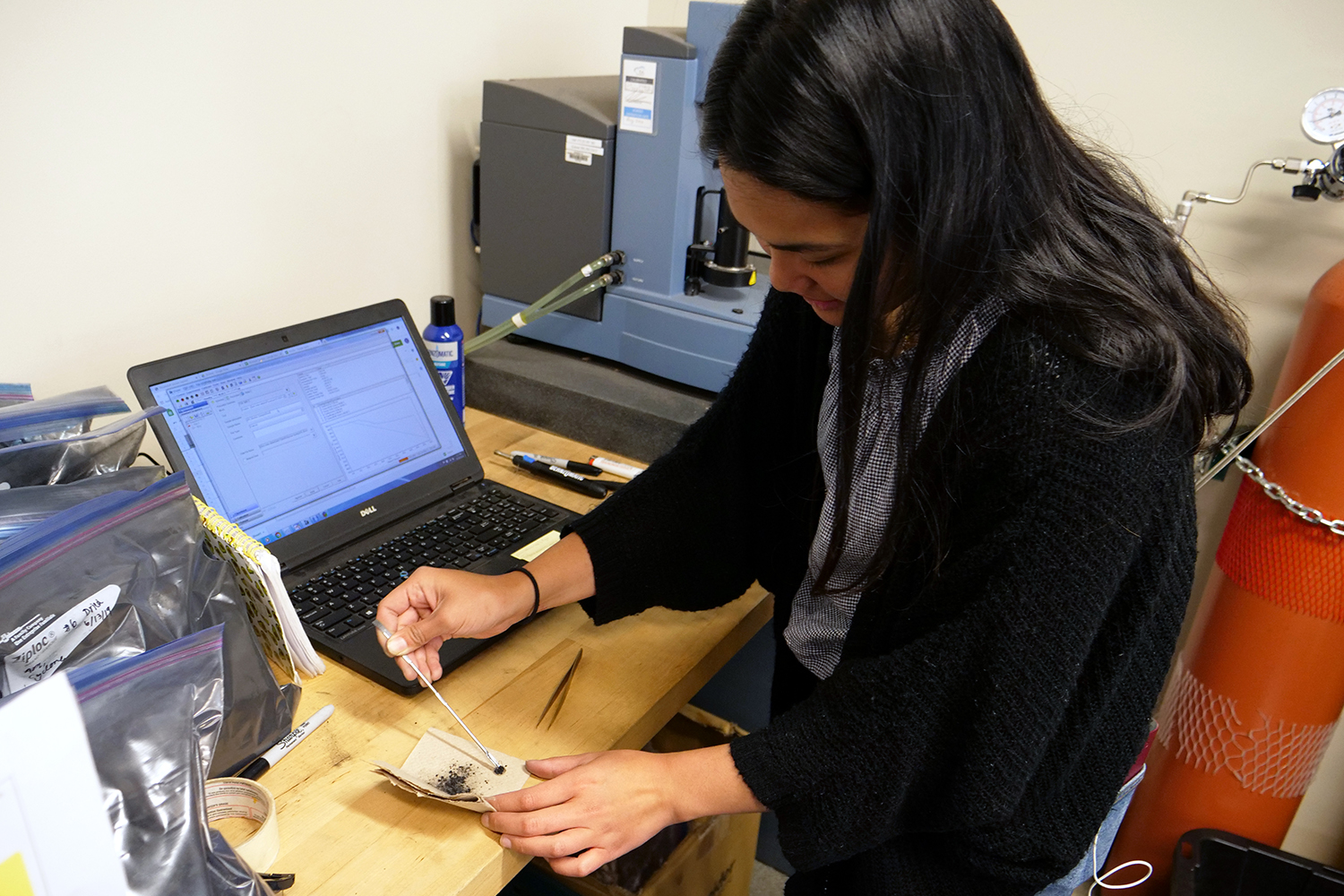
Hello! I am a graduate student in the Energy, Technology and Policy option of the Environmental Systems program at HSU, and the first recipient of the Donald and Andrea Tuttle Fellowship for Clean Energy Studies. Currently, I am working on a team led by Dr. Sintana Vergara on characterizing greenhouse gas emissions from stored woody biomass. My thesis will be closely related to this topic, as my primary research interests are in waste, its potential reuse for energy, and climate impacts.
I started attending HSU in the fall of 2018, a few months after graduating from CSU Bakersfield. There, I completed the coursework for a B.S. in Biology with a concentration in Biotechnology. My past research work has involved various spectroscopic techniques for characterization of lysyl oxidase, an enzyme that creates connective tissue links between collagen and elastin, and plays a role in cancer cell metastasis. I am grateful for my time in biochemistry research, but I am excited to shift gears into renewable energy work. I am happy to be living in Humboldt County, where the community focus on sustainability and resource conservation is inspiring me to do my best work.