
Author: Schatz Center

  • SFSS webinar 5/7 — Coming of age at the end of the world: an existential toolkit for the climate generation

    SFSS webinar 5/7 — Coming of age at the end of the world: an existential toolkit for the climate generation

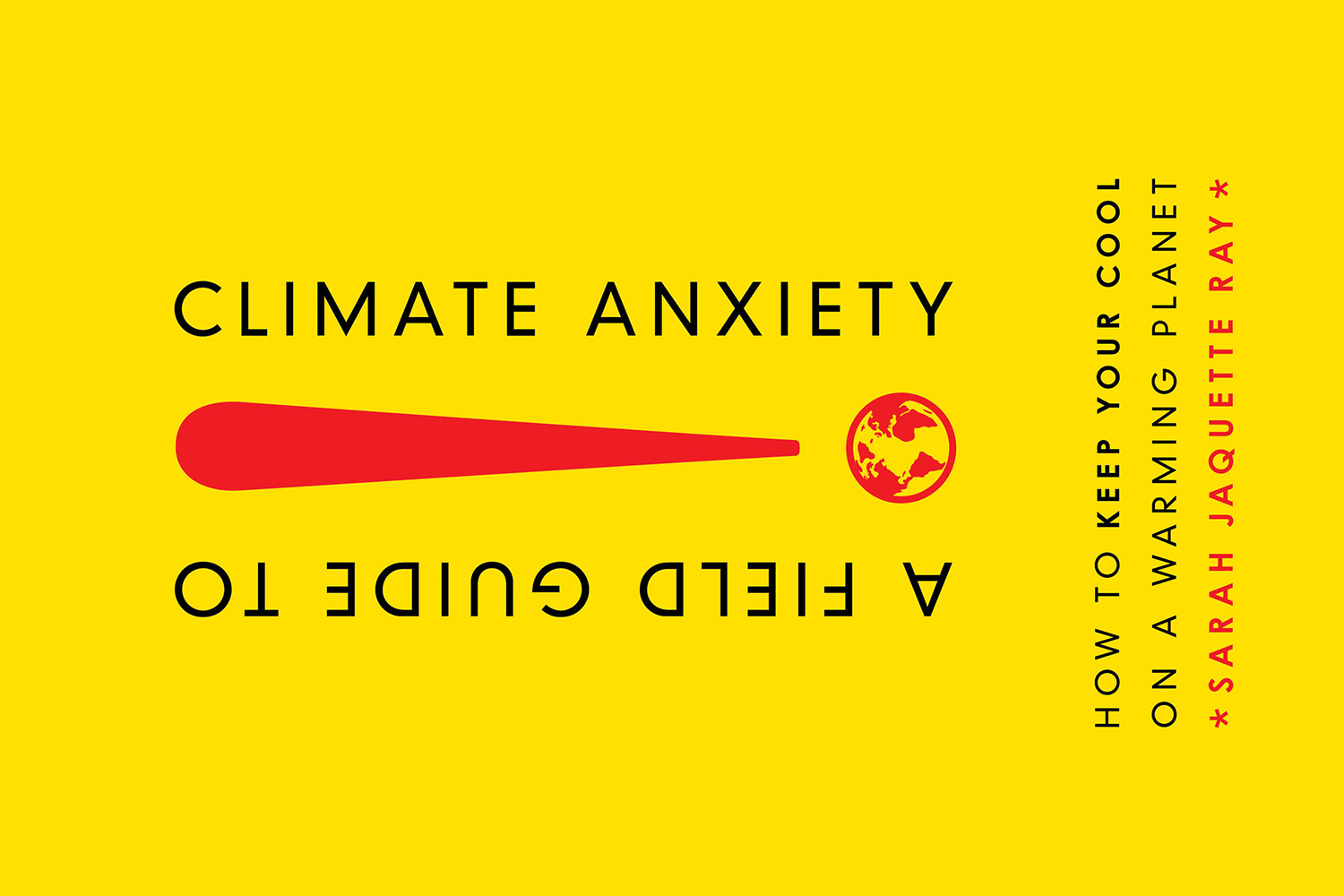
    Sarah Jaquette Ray has been leading undergraduate environmental studies programs since 2009. During this time, she has observed changes in how students feel about environmental problems, the relationship between those problems and social justice, and their own ability to tackle the problems we face. In her new book, A Field Guide to Climate Anxiety: How to Keep Your Cool on a Warming Planet, Ray researches and guides students through strategies to cultivate personal and collective resilience, to engage for the long haul as social change leaders in this political and ecological moment. This talk will explore the unique challenges and strengths of the climate generation — the youth leading the charge in the movement for climate justice around the world — and offer strategies for existential survival.

    Sarah Jaquette Ray is program leader of the Environmental Studies BA major at Humboldt State. She is author of The Ecological Other: Environmental Exclusion in American Culture (Arizona, 2013), and co-editor of three volumes, most recently, Latinx Environmentalisms: Place, Justice, and the Decolonial (Temple, 2019). A Field Guide to Climate Anxiety: How to Keep Your Cool on a Warming Planet was released this April on Earth Day.

    How to attend

    We’re holding this semester’s Sustainable Futures Speaker Series online via webinar. Talks are given from 5:30-7:00 pm on Thursday evenings (Pacific). Each lecture has been streamed via Zoom with closed captioning, and will be followed by a Q&A discussion period. All events are free and open to the public.

    About the series

    The Sustainable Futures Speaker Series stimulates interdisciplinary collaboration around issues related to energy, the environment, and society. All lectures are free and open to the public, and are sponsored by the Schatz Energy Research Center, the Environment & Community graduate program, and the College of Arts, Humanities & Social Sciences at Humboldt State. For Spring 2020, we’re bringing our ongoing series online via Zoom with closed captioning. Please visit schatzcenter.org/speakers for the full lineup. Questions? Email info@schatzcenter.org.
  • 4/24 webinar: Innovations of the Redwood Coast Airport microgrid

    4/24 webinar: Innovations of the Redwood Coast Airport microgrid

    View the webinar recording

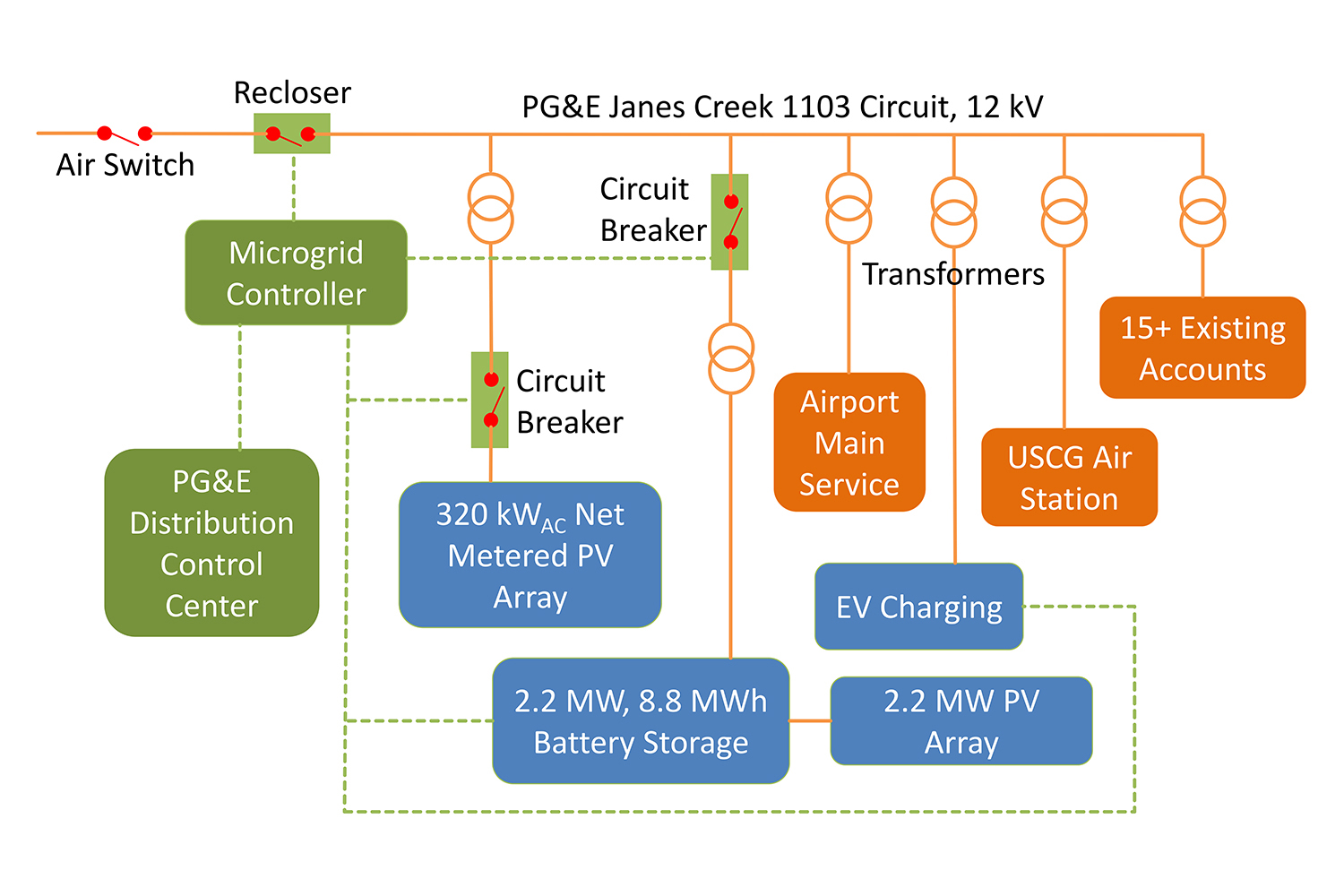
    On Friday, April 24 @ noon (Pacific), the California Community Choice Association will launch a new monthly webinar series. This opening event will explore innovations developed for the Redwood Coast Airport microgrid — including novel roles and responsibilities for both CCAs and utilities, new tariffs and agreements, new policies for wholesale market participation, and technical advances.

  • Covid-19 update: summer student research

    Covid-19 update: summer student research

    Due to the ongoing challenges associated with the coronavirus, including the need for our community to shelter-in-place, we do not anticipate announcing a call for new student research positions for this summer. This was a difficult decision to make — both because we are committed to providing professional development and learning opportunities for HSU students, and because we very much value the insights and project contributions made by our student team members.

    We look forward to welcoming new student researchers once the pandemic has receded and we are able to return to onsite Center operations. During this time, we encourage students and our broader community to:

    Upcoming SRA openings will be posted on our jobs page, our news blog, and on the Humboldt State University Handshake page.

  • SFSS webinar 4/23: The global burden of backup generators

    SFSS webinar 4/23: The global burden of backup generators

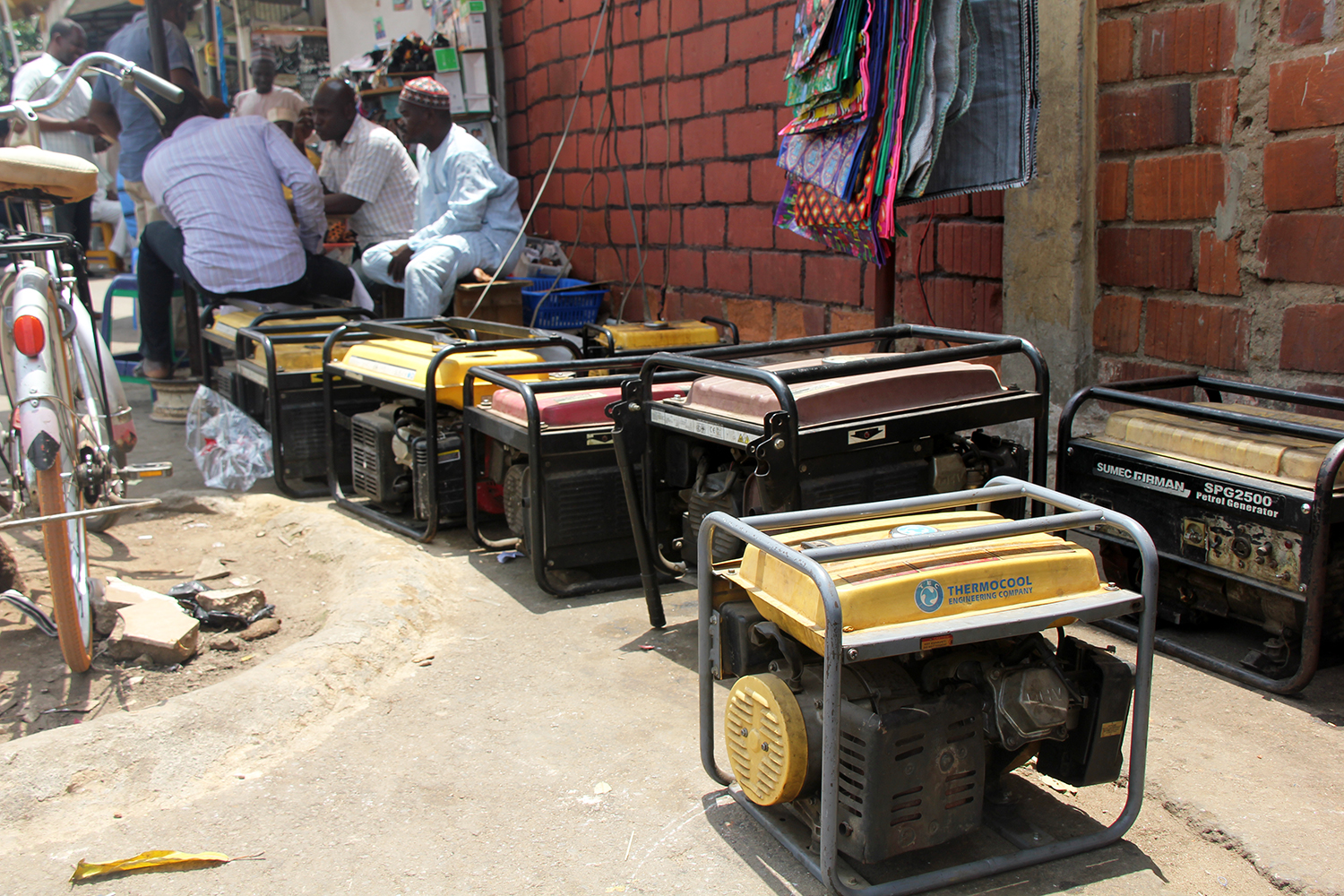
    Between 1-2 billion people can’t access a reliable power grid. In some communities, the grid is unstable, with power outages that total hundreds to thousands of hours each year. In others, the grid is unaffordable – or there is no grid at all. Many of these communities rely on diesel or gasoline backup generators, which emit greenhouse gases and particulate pollutants inside and in close proximity to homes, businesses, and community markets.

    In 2019, scientists at the Schatz Center built a model to assess backup generator use around the globe. In this talk, project leads Peter Alstone and Nicholas Lam share their recent findings about the global impacts of backup generator use on human health, economies, and the environment. The findings shed light on the opportunity for small, solar-based systems to increase energy access in underserved communities by replacing dirty backup generators.

    Nicholas Lam is a research scientist at the Schatz Center. Nick’s work focuses on the welfare impacts of clean energy transitions in low and middle income countries. Peter Alstone is a faculty scientist at the Schatz Center, and an assistant professor of environmental resources engineering at Humboldt State. Peter’s research areas include distributed energy systems and energy access, for both on and off-grid environments.

    How to attend

    We’re holding this semester’s Sustainable Futures Speaker Series online via webinar — visit our speaker series page for the schedule of upcoming events. Talks will be given from 5:30-7:00 pm on Thursday evenings (Pacific). Each lecture will be streamed via Zoom with closed captioning, and will be followed by a Q&A discussion period. All events are free and open to the public.

    About the series

    The Sustainable Futures Speaker Series stimulates interdisciplinary collaboration around issues related to energy, the environment, and society. All lectures are free and open to the public, and are sponsored by the Schatz Energy Research Center, the Environment & Community graduate program, and the College of Arts, Humanities & Social Sciences at Humboldt State. For Spring 2020, we’re bringing our ongoing series online via Zoom with closed captioning. Please visit schatzcenter.org/speakers for the full lineup. Questions? Email info@schatzcenter.org.
  • Seabird distribution in 3D: assessing risk from offshore wind energy generation

    Seabird distribution in 3D: assessing risk from offshore wind energy generation

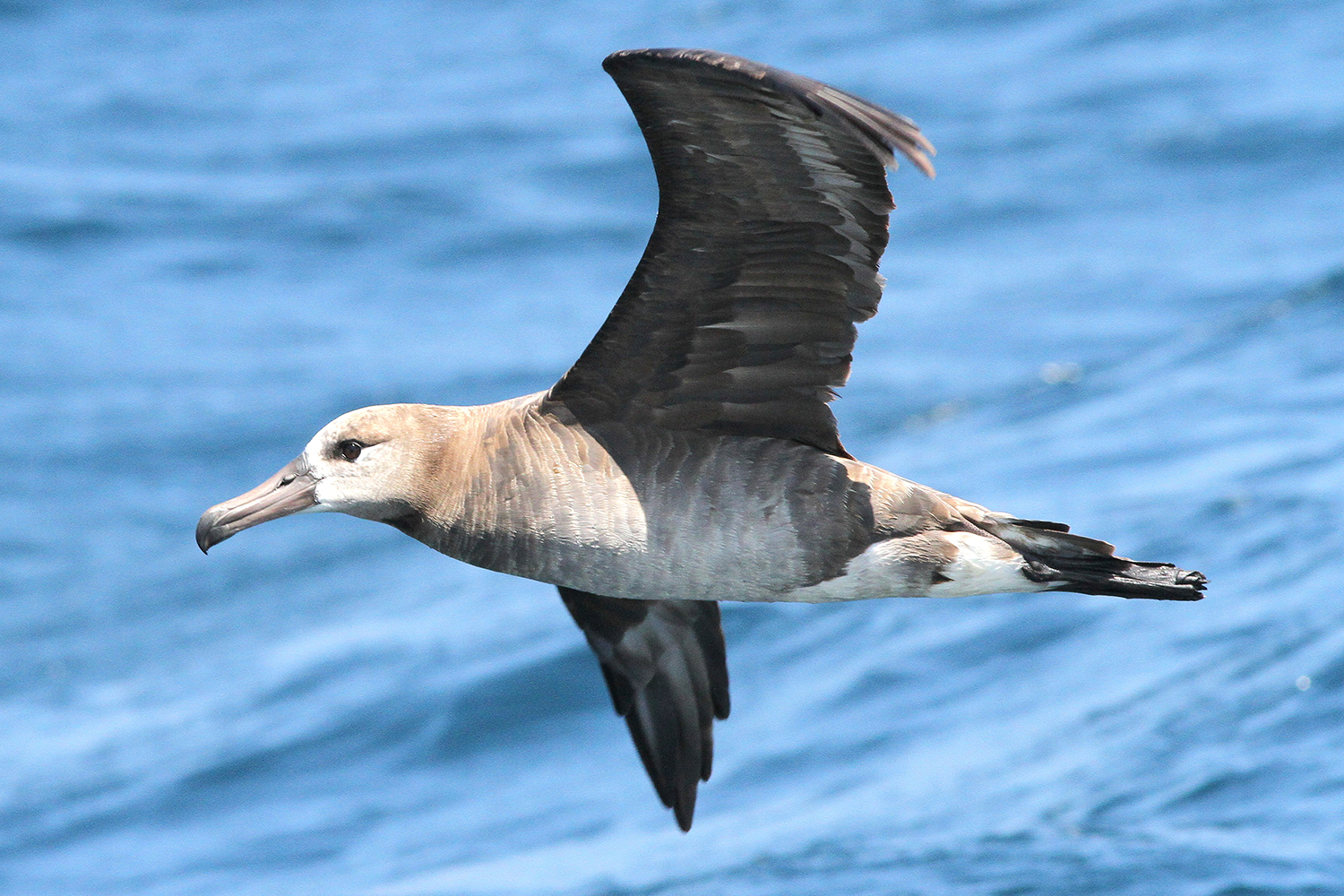
    Seabird species may be at risk for collision with, or displacement by, offshore wind turbines. Existing seabird distribution models describe the density and species composition in the California Current, and are used to identify hot spots for seabird activity. However, these models do not describe the three-dimensional distribution of flight behavior above the sea surface. Understanding flight height is key to accurately modeling the risk of direct interactions between seabirds and offshore wind turbines, and is the focus of our latest offshore wind feasibility study.

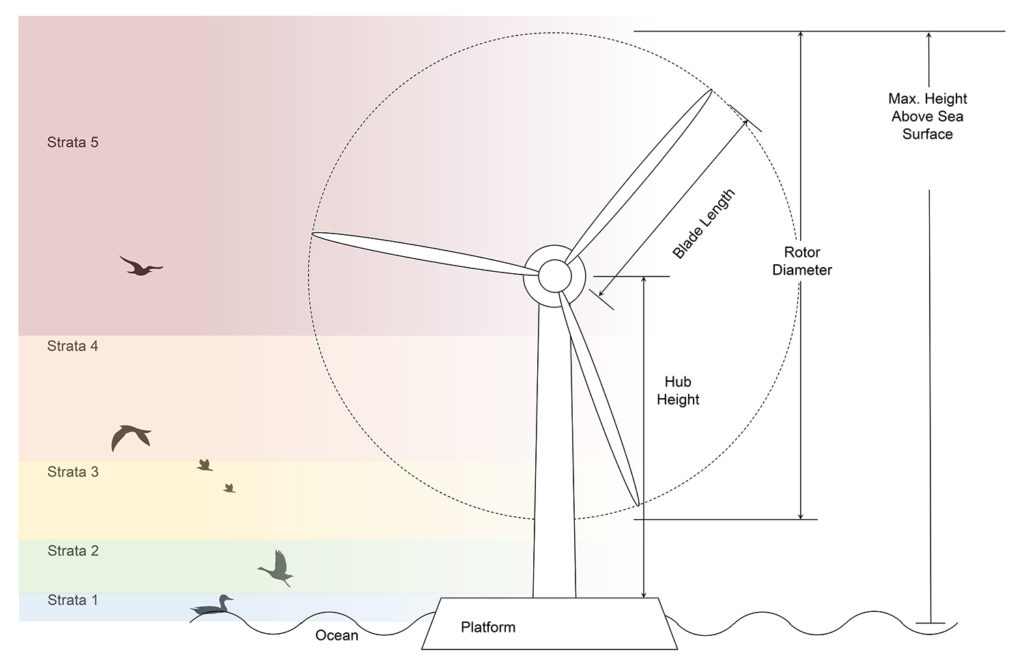
    Seabird flight height is known to vary as a function of species and wind speed — so this study will integrate data-driven existing 2D species distribution models, species-specific seabird flight heights as a function of wind speed, and the latest wind resource data, to make a 3D probability map of seabirds in space. This will allow us to model the risk of different turbine designs and power outputs, for locations offshore California and southern Oregon.

    Image shows a turbine with delimiters for hub height, blade length, rotor diameter, and max distance above the sea, intersecting with 5 different strata of bird flight.

    Our two-year project will kick off in the summer of 2020, and is being funded through a $500,000 grant through the California Energy Commission’s Electric Program Investment Charge (EPIC). H. T. Harvey & Associates ecologists will synthesize 2D seabird species distribution data from records on more than 120 ship-based and aerial surveys spanning the period of 1976-2016 and provide flight-height data for all offshore species occurring in the study area, as well as contribute to model development. The Schatz Center will use the seabird model to evaluate the relative risk of seabird impacts and power production potential at sites off California, to optimize the design and location of potential wind farms.

  • SFSS webinar 4/9: Rethinking Religious Environmentalism: Varieties of Latinx Catholic Expressions

    SFSS webinar 4/9: Rethinking Religious Environmentalism: Varieties of Latinx Catholic Expressions

    How to attend

    We are glad to announce that the remainder of this semester’s Sustainable Futures Speaker Series will be going online via webinar… visit our speaker series page for the schedule of upcoming events! Talks will be given from 5:30-7:00 pm on Thursday evenings (Pacific). Each lecture will be streamed via Zoom with closed captioning, and will be followed by a Q&A discussion period. All events are free and open to the public. Questions? Please email info@schatzcenter.org.

    April 9: Amanda Baugh

    Amanda Baugh is an Associate Professor of Religious Studies at California State University, Northridge, who specializes in the study of religion, race, and environmental values among diverse American groups. She is the author of “God and the Green Divide: Religious Environmentalism in Black and White” (University of California Press, 2016).

    The Sustainable Futures Speaker Series stimulates interdisciplinary collaboration around issues related to energy, the environment, and society. Lectures are sponsored by the Schatz Energy Research Center, the Environment & Community graduate program, and the College of Arts, Humanities & Social Sciences at Humboldt State.

  • North Coast Offshore Wind Workshop – postponed

    North Coast Offshore Wind Workshop – postponed

    UPDATE 3/17/20

    The North Coast Offshore Wind Workshop scheduled for April 28 has been postponed. Our team is investigating options for sharing our initial findings, while maintaining clarity, accessibility, and community engagement. Please RSVP (see below) if you would like to receive information directly on these events.


    Original post

    The North Coast Offshore Wind Workshop will present initial findings about the opportunities and challenges associated with offshore wind energy in the Humboldt Bay region. This workshop is free and open to the public, and is being hosted by the California Ocean Protection Council and the Schatz Energy Research Center at Humboldt State University.

    The all-day event will be held on Tuesday, April 28, at the Wharfinger Building in Eureka, CA.

    • If you plan to attend, please RSVP. A recording will be made available to the public following the workshop. We are also currently exploring remote participation options.
    • Each session will include a presentation of findings and a panel discussion, followed by a Q&A.
    • Lunch and snacks will be provided by the Schatz Center for participants.
    • For additional information or to request accessibility accommodations, please contact the Schatz Center at (707) 826-4345 or by email.

    Learn more about the Schatz Center’s offshore wind feasibility studies. These studies are being funded by the California Ocean Protection Council, the California Governor’s Office of Planning and Research, and the Bureau of Ocean Energy Management.

    AGENDA
    8:00 amBreakfast Reception
    8:30 amIntroduction and Opening Remarks
    Presenters:
    Mark Gold, California Ocean Protection Council
    Karen Douglas, California Energy Commission
    Arne Jacobson, Schatz Energy Research Center
    9:00 amSession 1: Energy Generation, Transmission, and Economic Development
    Presenters:
    Mark Severy, Schatz Energy Research Center
    Steve Hackett, Humboldt State University
    10:45 amSession 2: Port and Local Infrastructure
    Presenters:
    Shane Phillips, Mott MacDonald
    Aaron Porter, Mott MacDonald
    12:15 pmLunch
    1:00 pmSession 3: Environmental Setting
    Presenters:
    Sharon Kramer, H.T. Harvey & Associates Ecological Consultants
    Scott Terrill, H.T. Harvey & Associates Ecological Consultants
    Mark Hemphill-Haley, Humboldt State University
    2:45 pmSession 4: Regional Perspectives
    Presenter:
    Laurie Richmond, Humboldt State University
    4:30 pmReflections and Next Steps

    Note: agenda details are subject to change. Please RSVP or visit this page again for schedule updates.

  • Join us at the Global Off-Grid Solar Forum & Expo

    Join us at the Global Off-Grid Solar Forum & Expo

    Join us in Nairobi on February 18-20, for the annual Global Off-Grid Solar Forum & Expo. Five members of the Schatz Center’s off-grid team will be participating in the conference: Arne Jacobson, Nicholas Lam, Kristen Radecsky, Kim Thorpe, and Kaileigh Vincent-Welling.

    On Thursday, February 20, Schatz Center Director Arne Jacobson will join Lauren Boucher, Ari Reeves, and Elisa Lai of CLASP for a session on quality assurance for modern off-grid energy. Building on the foundation laid by Lighting Global Quality Assurance, CLASP and the Schatz Center are expanding the QA program to cover a broader range of off-grid solar products. The program will also achieve a major milestone this year, with the International Electrotechnical Commission (IEC) publishing quality standards for off-grid solar products. The session will explore program changes upcoming in 2020, and invite feedback from participants on QA product data and services.

    Later that day, Schatz research scientist Nicholas Lam will join Robin Gravesteijn of the United Nations Capital Development Fund and Joyce Nkuyahaga of the Uganda Solar Energy Association for a panel on digital inclusivity for energy access in Uganda. This session will explore pay-as-you-go strategies for financing electrical access, and whether energy access in turn expands financial inclusivity.

  • Yurok Tribe celebrates new solar array in Tulley Creek

    Yurok Tribe celebrates new solar array in Tulley Creek

    On December 19, the Yurok Tribe celebrated the installation of a new, 28 kW solar photovoltaic system on the Tulley Creek Transportation Building, and announced plans to install a second, 24 kW system on the Tulley Creek Firehouse.

    This first system is supported by a Solar Accelerator Fund Grant from GRID Alternatives and Wells Fargo. The second will be supported by a Cornerstone Grant from the Charitable Foundation of the Energy Bar Association.

    These two systems are early project goals identified in the Tribe’s newly created Strategic Energy Action Plan, and together are a first step toward fulfilling the Tribe’s Energy Vision:

    “To make sure all Tribal members living within the Yurok Ancestral Territory have access to reliable, affordable, modern, cost-effective energy services. In addition, the Tribe seeks an energy program that promotes energy self-sufficiency, environmental sustainability, use of local renewable resources, job creation, and economic opportunity for Tribal members.”

    Yurok Tribe Energy Vision

    About 40% of families in the Weitchpec and Pecwan districts do not have access to grid electricity, and must rely instead on generators for their electricity supply. The Yurok Strategic Energy Action Plan outlines a strategy for the creation of a tribal energy program to provide residents with clean, affordable energy. This plan was developed by the Yurok Tribe in collaboration with the Schatz Center, and supported by a grant from the U.S. Department of Energy.

    Learn more about the Yurok Tribe’s strategic energy efforts

  • Dec 5 at HSU: Fishing community sustainability planning

    Dec 5 at HSU: Fishing community sustainability planning

    Fishing communities are facing a variety of challenges including declines in participation, reduced access to fish resources, aging physical infrastructure, gentrification, competition from foreign imports, the “graying” or aging of their fleets, and a host of environmental stressors. These factors can represent threats to the continued viability of individual fishing communities. Such communities are clearly in need of tools that will enable them to plan strategically and to be more proactive in charting a sustainable future. This presentation will describe efforts to engage two California north coast fishing communities — Eureka and Shelter Cove — in a bottom-up planning process called Fishing Community Sustainability Planning. The presentation will describe the planning methods conducted in each port and the outcomes, highlighting how strategic planning can help communities build social and political capital and begin a process of community transformation.

    Laurie Richmond is an Associate Professor in Environmental Science & Management at Humboldt State. Her research focuses on the human dimensions of marine and coastal issues. Prior to coming to HSU she worked as a social scientist for NOAA Fisheries in Hawaii. She has been conducting research in collaboration with coastal communities for over a decade and has worked with communities in Alaska, the Western Pacific, and California. She is a newly appointed member of the State of California’s Ocean Protection Council Science Advisory Team.

    Sustainable Futures Speaker Series

    Our visiting speaker series stimulates interdisciplinary collaboration around issues related to energy, the environment, and society. All lectures are free and open to the public, and are sponsored by the Schatz Center, the Environment & Community graduate program, and the College of Arts, Humanities & Social Sciences at Humboldt State.

    Fall 2019 lectures will be held on Thursdays from 5:30 – 7:00 pm in Founders Hall 118.

    • For additional details on upcoming events or to request accessibility accommodations, email serc@humboldt.edu or call (707) 826-4345.