Category: Research and program updates

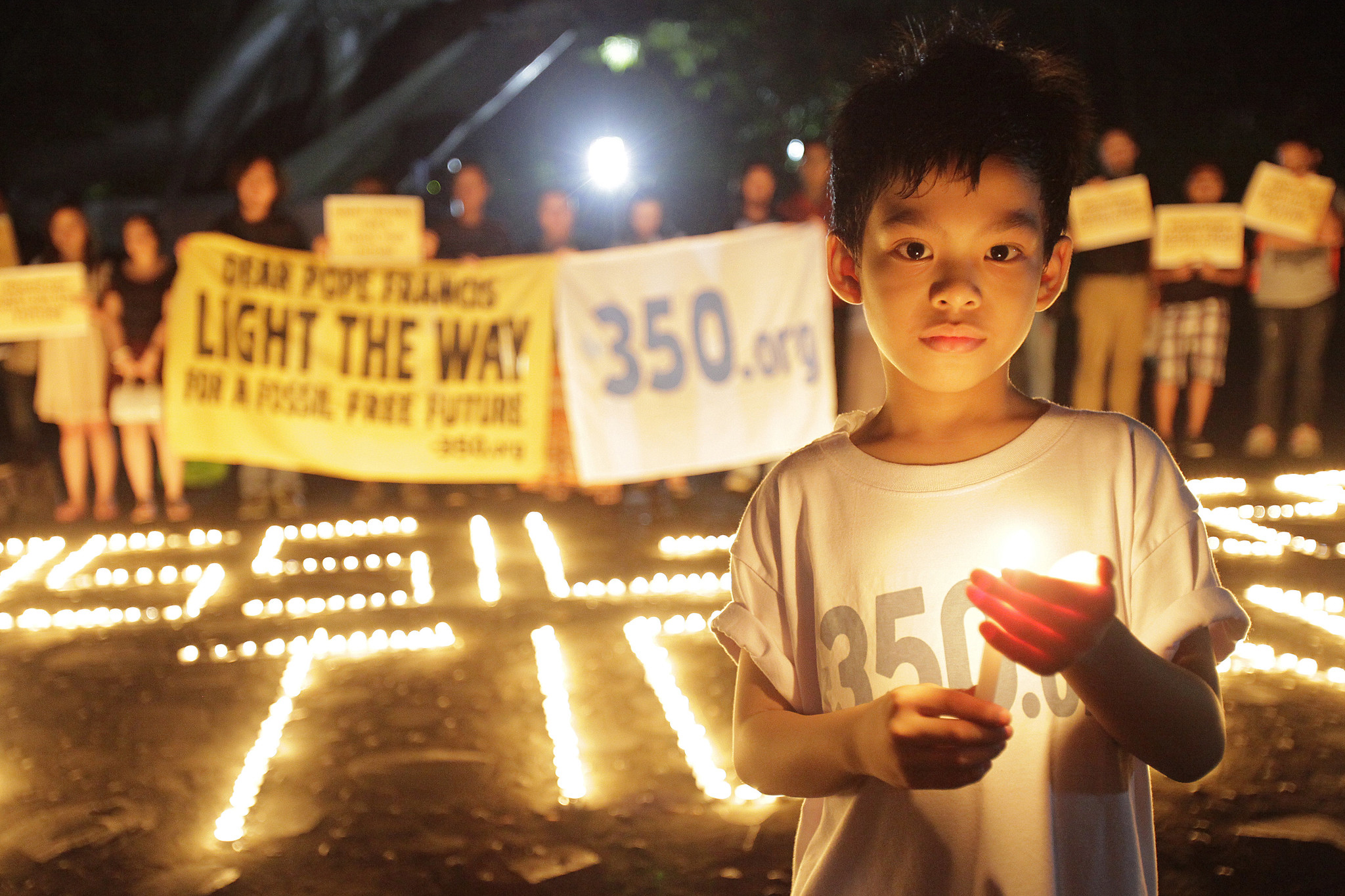
  • Thursday, October 7 @ 4 pm: Bill McKibben, co-founder of 350.org — What can we still do?

    Thursday, October 7 @ 4 pm: Bill McKibben, co-founder of 350.org — What can we still do?

    Bill McKibben
    Bill McKibben (photo by Nancie Battaglia)

    Clearly we’re not going to stop climate change — the last two years have shown us just how much damage has already been done. So what can we do — both to slow the rise of temperature, and to find some resilience in our divided societies?

    Bill McKibben is a contributing writer to The New Yorker, a founder of the grassroots climate campaign 350.org and the Schumann Distinguished Professor in Residence at Middlebury College in Vermont. He was a 2014 recipient of the Right Livelihood Prize, sometimes called the ‘alternative Nobel,’ and the Gandhi Peace Award. He has written over a dozen books about the environment, including his first, The End of Nature, published 30 years ago, and his most recent, Falter: Has the Human Game Begun to Play Itself Out?

    How to attend

    We’re holding the fall 2021 series online via Zoom. All events are free and open to the public.

    Accessibility

    Live captioning is provided for all talks. To request additional support, please contact info@schatzcenter.org or call 707-826-4345.

    About the series

    The Sustainable Futures speaker series stimulates interdisciplinary collaboration around issues related to energy, the environment, and society. These lectures are sponsored by the Schatz Center, the Environment & Community graduate program, and the College of Arts, Humanities & Social Sciences at Humboldt State.

    Questions? Email info@schatzcenter.org or call 707-826-4345.

  • Thursday, September 23 @ 5:30 pm: Grace Wu — Building a net zero energy system that protects biodiversity

    Thursday, September 23 @ 5:30 pm: Grace Wu — Building a net zero energy system that protects biodiversity

    Grace Wu
    Grace Wu

    Achieving net zero economy-wide carbon emissions will require the large-scale expansion of low-carbon energy infrastructure at unprecedented rates. Yet we lack an understanding of where that infrastructure may be sited, the scale of the land and ocean area requirements, and its possible conservation impacts. This talk will present results from studies that use highly detailed energy and land use modeling to examine the effect of various levels of environmental protections on the energy infrastructure required for the Western US to achieve ambitious climate targets.

    Grace Wu is an Assistant Professor in the Environmental Studies Program at the University of California Santa Barbara. She is broadly interested in the dynamics and drivers of land use change, climate change mitigation, and advancing our ability to plan for sustainable, multi-use landscapes that protect biodiversity and advance climate goals. She uses spatial science approaches to identify and understand the co-benefits and trade-offs between climate solutions and habitat conservation.

    Before joining UCSB, Grace was a Smith Conservation Fellow at The Nature Conservancy and the National Center for Ecological Analysis and Synthesis. She was also a UC President’s Postdoctoral Fellow at the John Muir Institute of the Environment at UC Davis. She holds a BA from Pomona College, MPhil from University of Cambridge, and an MS and PhD in Energy and Resources from UC Berkeley.

    How to attend

    We’re holding the fall 2021 series online via Zoom. All events are free and open to the public.

    Accessibility

    Live captioning is provided for all talks. To request additional support, please contact info@schatzcenter.org or call 707-826-4345.

    About the series

    The Sustainable Futures speaker series stimulates interdisciplinary collaboration around issues related to energy, the environment, and society. These lectures are sponsored by the Schatz Center, the Environment & Community graduate program, and the College of Arts, Humanities & Social Sciences at Humboldt State.

    Questions? Email info@schatzcenter.org or call 707-826-4345.

  • SFSS webinar — Building a data backbone: using data to drive the design of vaccine cold chains in low income countries

    SFSS webinar — Building a data backbone: using data to drive the design of vaccine cold chains in low income countries

    Register for this talk (May 6 at 5:30 pm Pacific)

    Reliable infrastructure is core to the functioning of most systems, including water, sanitation, and health. Nexleaf’s project work includes integrating sensor data and the Internet of Things to provide analyses for governments and other stakeholders who design, finance, maintain and scale reliable infrastructure in support of public health in low and middle income countries. In this talk, Nithya Ramanathan will share her experiences in scaling Nexleaf’s ColdTrace solution, which has been deployed in 23 countries and now protects the vaccine supply for 1 in 10 babies born on Earth. She will also explore that critical role that energy plays in public health.

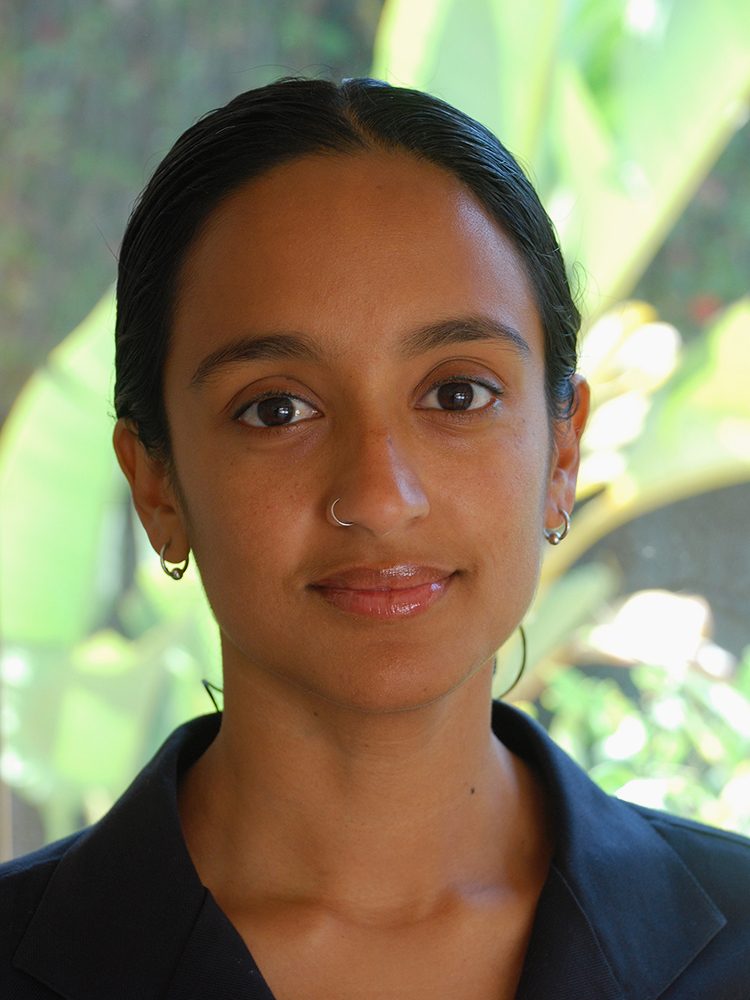
    Headshot of Nithya Ramanathan

    Nithya Ramanathan is the Chief Executive Officer and Co-founder of Nexleaf Analytics, a nonprofit organization dedicated to preserving human life and protecting our planet by designing sensor technologies, generating data analytics, and advocating for data-driven solutions to global challenges. Nexleaf focuses on serving low-income countries by protecting temperature-sensitive vaccines for newborns, reducing air pollution through incentivizing adoption of cleaner cooking practices, and increasing the livelihood of smallholder farmers by protecting produce from spoilage.

    How to attend

    Register for this talk (May 6 at 5:30 pm Pacific)

    We’re holding the spring series online via Zoom. All events are free and open to the public.

    Accessibility

    Live captioning is provided for all talks. To request additional support, please contact info@schatzcenter.org or call 707-826-4345.

    About the series

    The Sustainable Futures speaker series stimulates interdisciplinary collaboration around issues related to energy, the environment, and society. These lectures are sponsored by the Schatz Center, the Environment & Community graduate program, and the College of Arts, Humanities & Social Sciences at Humboldt State.

    Questions? Email info@schatzcenter.org or call 707-826-4345.

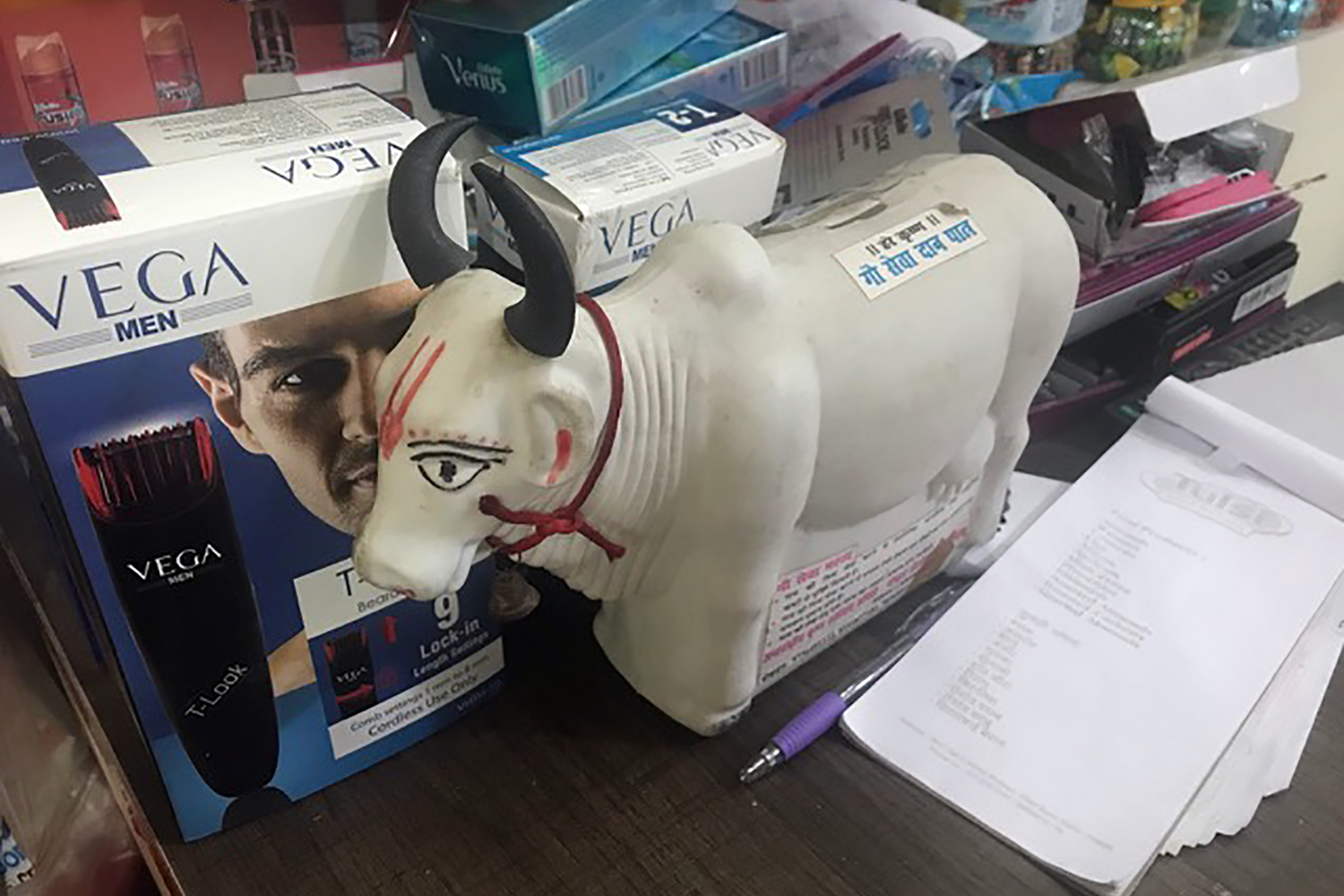
  • SFSS webinar — Labors of love: on the political ethics and economy of bovine politics in Himalayan India

    SFSS webinar — Labors of love: on the political ethics and economy of bovine politics in Himalayan India

    Register for this talk (April 22 at 5:30 pm Pacific)


    This talk will explore how conceptualizing love as work can provide a fresh perspective on scholarly concerns about the ethics of a politics rooted in love. Anthropologist Radhika Govindrajan will address this question through an ethnographic exploration of bovine politics in the Central Himalayan state of Uttarakhand in India. All the actors involved in the social worlds of cow-protection, whether religious gurus or rural women, assert that genuine love for the cow entails a willingness to labor for her. To be a subject in love, for them, is to be a subject who labors. However, they have very different understandings of both the nature of this love and the labors it necessitates. This presentation will examine three distinct kinds of work – protection, service, and care-labor – that these social actors undertake in the pursuit of love. Dr. Govindrajan will trace how these different labors produce a varying set of relationships, affiliations, and obligations that crucially shape the politics of love and its ethical potentialities. Understanding love as labor, she argues, allows us to see that it is the nature of the labor involved in love that conditions its political and ethical possibilities.

    Headshot of Radhika Govindrajan

    Radhika Govindrajan is an Associate Professor of Anthropology at the University of Washington. She is the author of Animal Intimacies: Interspecies Relatedness in India’s Central Himalayas, published in 2018 by the University of Chicago Press and by Penguin India in 2019. She has also published articles in journals such as American EthnologistComparative Study of South Asia, Africa, and the Middle EastSouth Asia: Journal of South Asian Studies, and HAU: Journal of Ethnographic Theory. She is currently working on a project that explores scandals around sex, land, and religion in rural Uttarakhand.

    How to attend

    Register for this talk (April 22 at 5:30 pm Pacific)

    We’re holding the spring series online via Zoom. All events are free and open to the public.

    Accessibility

    Live captioning is provided for all talks. To request additional support, please contact info@schatzcenter.org or call 707-826-4345.

    About the series

    The Sustainable Futures speaker series stimulates interdisciplinary collaboration around issues related to energy, the environment, and society. These lectures are sponsored by the Schatz Center, the Environment & Community graduate program, and the College of Arts, Humanities & Social Sciences at Humboldt State.

    Questions? Email info@schatzcenter.org or call 707-826-4345.

  • SFSS webinar 4/15 — The hamburger is eating the forest: changing the trajectory of one of Brazil’s largest exports

    SFSS webinar 4/15 — The hamburger is eating the forest: changing the trajectory of one of Brazil’s largest exports

    Register for this talk (April 15 at 4 pm Pacific) — please note revised time


    Cattle raising is the chief driver of deforestation in many parts of the world, demanding huge amounts of land for both pasture and cultivation of feed. This makes cattle the largest source of greenhouse gas emissions in many countries. In Brazil, over 60% of the national emissions come from this one source, and much of the meat and leather is destined for export — thus all the consumers, not just the producers, are implicated. In this talk, Barbara Bramble will describe the current status of cattle industry operations in different regions, and compare the impacts of other commodities that are similarly associated with deforestation and climate change. She will then describe new approaches she and her collaborators are taking to reduce deforestation emissions using science, legislation, communications,  and advocacy in both consumer and producer countries.

    Headshot of Barbara Bramble

    Barbara Bramble is the Vice President of International Conservation and Corporate Strategies at the National Wildlife Federation. At NWF, she works with the private sector to sever the link between deforestation and agricultural production; she helps global brands and retailers to avoid purchasing agricultural and forest commodities that originate from recently cleared tropical forests and other carbon rich lands, and to implement voluntary certification standards for sustainable products. For over three decades she has directed NWF’s advocacy to improve U.S. international environmental policy with regard to climate change and forest conservation, and the social and environmental policies of multilateral financial institutions.

    She is also the Chair of the Board of the Forest Stewardship Council, the preeminent eco-label for wood and paper products from sustainably managed forests, and formerly chaired the Board of Directors of the Roundtable on Sustainable Biomaterials, which is the equivalent organization for biofuels and bio-based products. Before joining NWF, she served as legal advisor to the White House Council on Environmental Quality, and as an environmental lawyer in private practice.

    How to attend

    Register for this talk (April 15 at 4 pm Pacific)

    We’re holding the spring series online via Zoom. All events are free and open to the public.

    Accessibility

    Live captioning is provided for all talks. To request additional support, please contact info@schatzcenter.org or call 707-826-4345.

    About the series

    The Sustainable Futures speaker series stimulates interdisciplinary collaboration around issues related to energy, the environment, and society. These lectures are sponsored by the Schatz Center, the Environment & Community graduate program, and the College of Arts, Humanities & Social Sciences at Humboldt State.

    Questions? Email info@schatzcenter.org or call 707-826-4345.

  • SFSS webinar 4/8 — Quantifying systemic racial and ethnic disparities in air pollution in California

    SFSS webinar 4/8 — Quantifying systemic racial and ethnic disparities in air pollution in California

    Register for this talk (April 8 at 4 pm Pacific)


    Despite decades of effort to improve air quality in California, large and systemic racial and ethnic disparities in air pollution exposure still persist. In particular, people of color and members of disadvantaged communities are exposed to higher-than-average concentrations of many health-relevant air pollutants, including particulate matter and nitrogen oxides. Recent advances in measurement and modeling technology — as well as new conceptual frameworks for evaluating environmental injustice — can help us better understand the contours of and possible solutions to this problem. This seminar will present quantitative evidence on environmental inequity in California and the Bay Area using a combination of statewide modeling and intensive measurements using a fleet of Google Street View cars specially equipped to measure air quality. The findings point to possible air pollution control approaches that may be especially impactful in addressing these disparities.

    Headshot of Joshua Apte

    Joshua Apte is an Assistant Professor at UC Berkeley, jointly appointed in the Department of Civil and Environmental Engineering and in the School of Public Health. His research focuses on the intersection of air quality, sustainability, and environmental justice, with an emphasis on the development of new methods for quantifying air pollution exposures. His group uses field measurements, air quality models, and satellite remote sensing to to quantify air pollutant emissions and concentrations, and their resulting spatial patterns, human exposures, and public health consequences in US communities and around the world.

    Before coming to UC Berkeley, he was previously on the faculty at the University of Texas at Austin, the inaugural ITRI-Rosenfeld Postdoctoral Fellow at Lawrence Berkeley National Laboratory, and a Fulbright-Nehru Fellow at the Indian Institute of Technology, Delhi. He holds MS and PhD degrees from the Energy and Resource Group at UC Berkeley and a ScB in Environmental Science from Brown University.

    How to attend

    Register for this talk (April 8 at 4 pm Pacific)

    We’re holding the spring series online via Zoom. All events are free and open to the public.

    Accessibility

    Live captioning is provided for all talks. To request additional support, please contact info@schatzcenter.org or call 707-826-4345 as early as possible before an event.

    About the series

    The Sustainable Futures speaker series stimulates interdisciplinary collaboration around issues related to energy, the environment, and society. These lectures are sponsored by the Schatz Center, the Environment & Community graduate program, and the College of Arts, Humanities & Social Sciences at Humboldt State.

    Questions? Email info@schatzcenter.org or call 707-826-4345.

  • SFSS webinar 4/1 — E kūkulu nā kiaʻi: guarding against green colonialism in Hawaiʻi

    SFSS webinar 4/1 — E kūkulu nā kiaʻi: guarding against green colonialism in Hawaiʻi

    Register for this talk (April 1, 5:30 pm Pacific)


    This talk will explore two recent, interconnected land struggles in Hawaiʻi — one over the proposed Thirty-Meter Telescope on Maunakea, and the other over a renewable energy project on Oʻahu.  In 2019, worldwide attention turned to Native Hawaiian uprisings around the sacred summit of Maunakea. In the islands, the kiaʻi mauna (mountain guardians/protectors) inspired communities across the archipelago to stand against forces of transnational capital and settler state police power, in protection of ancestral lands. The largest number of arrests targeted a Kanaka Maoli and Pacific Islander-led movement against a massive wind farm in the rural community of Kahuku, Oʻahu.

    This presentation will situate the Kahuku wind farm issue in a longer history of contention over the “green colonialism” of renewable energy projects that have failed to include predominantly-Indigenous Hawaiian communities in the planning. The Hawaiian cultural concepts of kiaʻi, kūkulu, and aloha ʻāina, as they have informed the practices of protectors, will frame the discussion.

    Headshot of Noelani Goodyear-Kaʻōpua

    Born and raised on Oʻahu, Noelani Goodyear-Kaʻōpua is a professor and chair of the political science department at the University of Hawaiʻi at Mānoa, where she teaches Hawaiian and Indigenous politics. A lifetime student of and participant in Hawaiian movements, Noelani’s research has involved documenting, analyzing and proliferating the ways people are transforming imperial and settler colonial relations through Indigenous political values and initiatives.

    Her books include The Seeds We Planted: Portraits of a Native Hawaiian Charter SchoolA Nation Rising: Hawaiian Movements for Life, Land and SovereigntyNā Wāhine Koa: Hawaiian Women for Sovereignty and Demilitarization; and The Value of Hawaiʻi (vol 2 & 3).

    How to attend

    Register for this talk (April 1, 5:30 pm Pacific)

    We’re holding the spring series online via Zoom. All events are free and open to the public.

    Accessibility

    Live captioning is provided for all talks. To request additional support, please contact info@schatzcenter.org or call 707-826-4345 as early as possible before an event.

    About the series

    The Sustainable Futures speaker series stimulates interdisciplinary collaboration around issues related to energy, the environment, and society. These lectures are sponsored by the Schatz Center, the Environment & Community graduate program, and the College of Arts, Humanities & Social Sciences at Humboldt State.

    Questions? Email info@schatzcenter.org or call 707-826-4345.

  • SFSS webinar 3/25 — The Ecological Superblock / Neo Nature: the city in the Anthropocene

    SFSS webinar 3/25 — The Ecological Superblock / Neo Nature: the city in the Anthropocene

    Please note that the time has changed to 7:30 pm (Pacific) on March 25
    Register for this talk


    The rapid undergoing and coming climatic and ecological change, coupled with rapid acceleration in population growth, raise doubts and concerns regarding the ability of the existing urban systems to adapt to future changes. These changes represent a unique opportunity to use ecologically based architecture and urban design, blending urban systems into natural systems within an integrated ecosystem named the Ecological Superblock. Ecological Superblock provides a breakthrough solution capable of adapting and evolving to change. Its design employs ecological intelligence principles that shift design thinking from the traditional processes of perfecting the single unique design to ecological processes and systems dynamics.

    Aiman Tabony is a researcher and an architect with a PhD in architecture, computation, and ecology from the Architectural Association in London. With Enriqueta Llabres he cofounded LlabresTabony Architects in 2017, a London-based multidisciplinary design studio specializing in the fields of architecture, urbanism, geography, ecology, and landscape architecture. The ethos of their practice relies in its critical approach to ecology and its relationship with the built environment.

    How to attend

    Register for this talk (March 25, 7:30 pm Pacific)

    We’re holding the spring series online via Zoom. All events are free and open to the public.

    Accessibility

    Zoom captioning is provided for all live talks, and human-generated captions are provided for all video recordings when published online. To request additional support, please contact info@schatzcenter.org or call 707-826-4345 at least one week before an event.

    About the series

    The Sustainable Futures speaker series stimulates interdisciplinary collaboration around issues related to energy, the environment, and society. These lectures are sponsored by the Schatz Center, the Environment & Community graduate program, and the College of Arts, Humanities & Social Sciences at Humboldt State.

    Questions? Email info@schatzcenter.org or call 707-826-4345.

  • SFSS webinar 3/18 — Cántaro Azul: An organization’s journey to contribute to the human right to water and sanitation in rural Mexico

    SFSS webinar 3/18 — Cántaro Azul: An organization’s journey to contribute to the human right to water and sanitation in rural Mexico

    Register for this talk (March 18, 5:30 pm Pacific)


    Back in 2005, a group of students at the University of California, Berkeley, designed the first ultraviolet water disinfection system for rural households. Part of the team started a nonprofit organization — Cántaro Azul — with the objective of empowering people with appropriate safe water technologies. As Cántaro Azul evaluated the impact of water programs, it developed evidence that health and social benefits produced by the dissemination of such technologies varied across households and communities, highly modulated by existent inequalities. In 2014, Cántaro Azul shifted its work from a technology to a service paradigm that now focuses on strengthening community-based water management organizations (CBWMO). Working in a country with more than 100,000 rural communities without access to safe water, Cántaro Azul realized that directly scaling its services would only reach a fraction of the population and in 2017 began efforts to advocate for local and national public policies that seek to strengthen CBWMOs.

    In this talk, Fermín Reygadas will share some of the achievements of Cántaro Azul, including the creation of the first public water institution in México that is governed by CBWMOs, as well as the many challenges that the organization has encountered and that lay ahead in the road towards achieving the human right to water and sanitation in rural Mexico.

    Headshot for Fermín Reygadas

    Fermín Reygadas is Co-Founder and CEO of Cántaro Azul, the largest water, hygiene, and sanitation organization in Mexico. Since 2006, he has led the design, implementation, and evaluation of technologies, service-delivery models, financing mechanisms, advocacy strategies, and public policies that contribute to expand the human right to water and sanitation. He is an Ashoka Fellow and his work has been recognized by the US Environmental Protection Agency, the Big Ideas Competition at Berkeley, the 6th and 8th World Water Forums, and the UBS-Visionaris Social Entrepreneurship Award. He holds a PhD from the Energy and Resources Group at the University of California, Berkeley.

    How to attend

    Register for this talk (March 18, 5:30 pm Pacific)

    We’re holding the spring series online via Zoom. All events are free and open to the public.

    Accessibility

    Zoom captioning is provided for all live talks, and human-generated captions are provided for all video recordings when published online. To request additional support, please contact info@schatzcenter.org or call 707-826-4345 at least one week before an event.

    About the series

    The Sustainable Futures speaker series stimulates interdisciplinary collaboration around issues related to energy, the environment, and society. These lectures are sponsored by the Schatz Center, the Environment & Community graduate program, and the College of Arts, Humanities & Social Sciences at Humboldt State.

    Questions? Email info@schatzcenter.org or call 707-826-4345.

  • SFSS webinar 3/11 — Environmental justice in Indian Country and moving toward a transformational land ethic

    SFSS webinar 3/11 — Environmental justice in Indian Country and moving toward a transformational land ethic

    Register for this talk (March 11, 5:30 pm Pacific)


    In her acclaimed book As Long As Grass Grows: The Indigenous Fight for Environmental Justice from Colonization to Standing Rock, author Dina Gilio-Whitaker interrogates the centuries long history of injustices against American Indians, understanding genocide and land theft as processes of environmental injustice. She contends that this history along with Native people’s unique political relationship to the state changes the meaning of environmental justice compared to other populations. Through the lens of what she calls an “Indigenized” EJ and the story of the Standing Rock DAPL struggle, Gilio-Whitaker looks at ways Native activism and resilience still animate Native life today. Her talk will also lean into current work on a forthcoming book that examines accountability and what an ethical relationship to land looks like in the U.S. settler state.

    Dina Gilio-Whitaker (Colville Confederated Tribes) is a lecturer of American Indian Studies at California State University San Marcos, and an independent educator in American Indian environmental justice policy planning.  At CSUSM she teaches courses on environmentalism and American Indians, traditional ecological knowledge, religion and philosophy, Native women’s activism, American Indians and sports, and decolonization. She also works within the field of critical sports studies, examining the intersections of indigeneity and the sport of surfing. As a public intellectual, Dina brings her scholarship into focus as an award-winning journalist as well, contributing to numerous online outlets including Indian Country Today, the Los Angeles TimesHigh Country News. Dina is the author of two books; the most recent award-winning As Long As Grass Grows: The Indigenous Fight for Environmental Justice from Colonization to Standing Rock. She is currently under contract with Beacon Press for a new book under the working title Illegitimate Nation: Privilege, Race, and Accountability in the U.S. Settler State.

    We are grateful to the Office of Sustainability and the Native American Studies department at Humboldt State for cosponsoring this talk.

    How to attend

    Register for this talk (March 11, 5:30 pm Pacific)

    We’re holding the spring series online via Zoom. All events are free and open to the public.

    Accessibility

    Zoom captioning is provided for all live talks, and human-generated captions are provided for all video recordings when published online. To request additional support, please contact info@schatzcenter.org or call 707-826-4345 at least one week before an event.

    About the series

    The Sustainable Futures speaker series stimulates interdisciplinary collaboration around issues related to energy, the environment, and society. These lectures are sponsored by the Schatz Center, the Environment & Community graduate program, and the College of Arts, Humanities & Social Sciences at Humboldt State.

    Questions? Email info@schatzcenter.org or call 707-826-4345.