Please note that the time has changed to 7:30 pm (Pacific) on March 25 Register for this talk
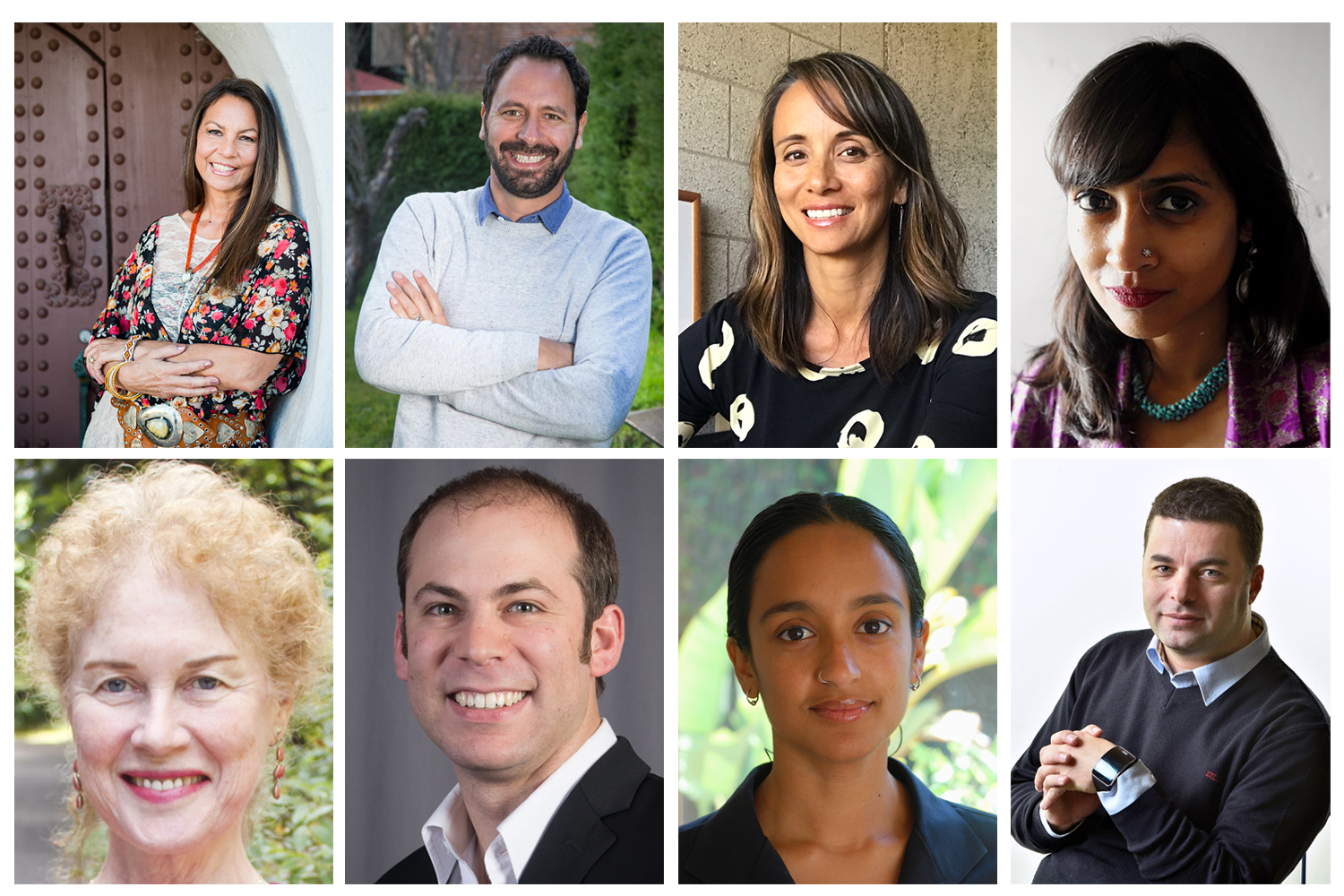
The rapid undergoing and coming climatic and ecological change, coupled with rapid acceleration in population growth, raise doubts and concerns regarding the ability of the existing urban systems to adapt to future changes. These changes represent a unique opportunity to use ecologically based architecture and urban design, blending urban systems into natural systems within an integrated ecosystem named the Ecological Superblock. Ecological Superblock provides a breakthrough solution capable of adapting and evolving to change. Its design employs ecological intelligence principles that shift design thinking from the traditional processes of perfecting the single unique design to ecological processes and systems dynamics.
Aiman Tabony is a researcher and an architect with a PhD in architecture, computation, and ecology from the Architectural Association in London. With Enriqueta Llabres he cofounded LlabresTabony Architects in 2017, a London-based multidisciplinary design studio specializing in the fields of architecture, urbanism, geography, ecology, and landscape architecture. The ethos of their practice relies in its critical approach to ecology and its relationship with the built environment.
We’re holding the spring series online via Zoom. All events are free and open to the public.
Accessibility
Zoom captioning is provided for all live talks, and human-generated captions are provided for all video recordings when published online. To request additional support, please contact info@schatzcenter.org or call 707-826-4345 at least one week before an event.
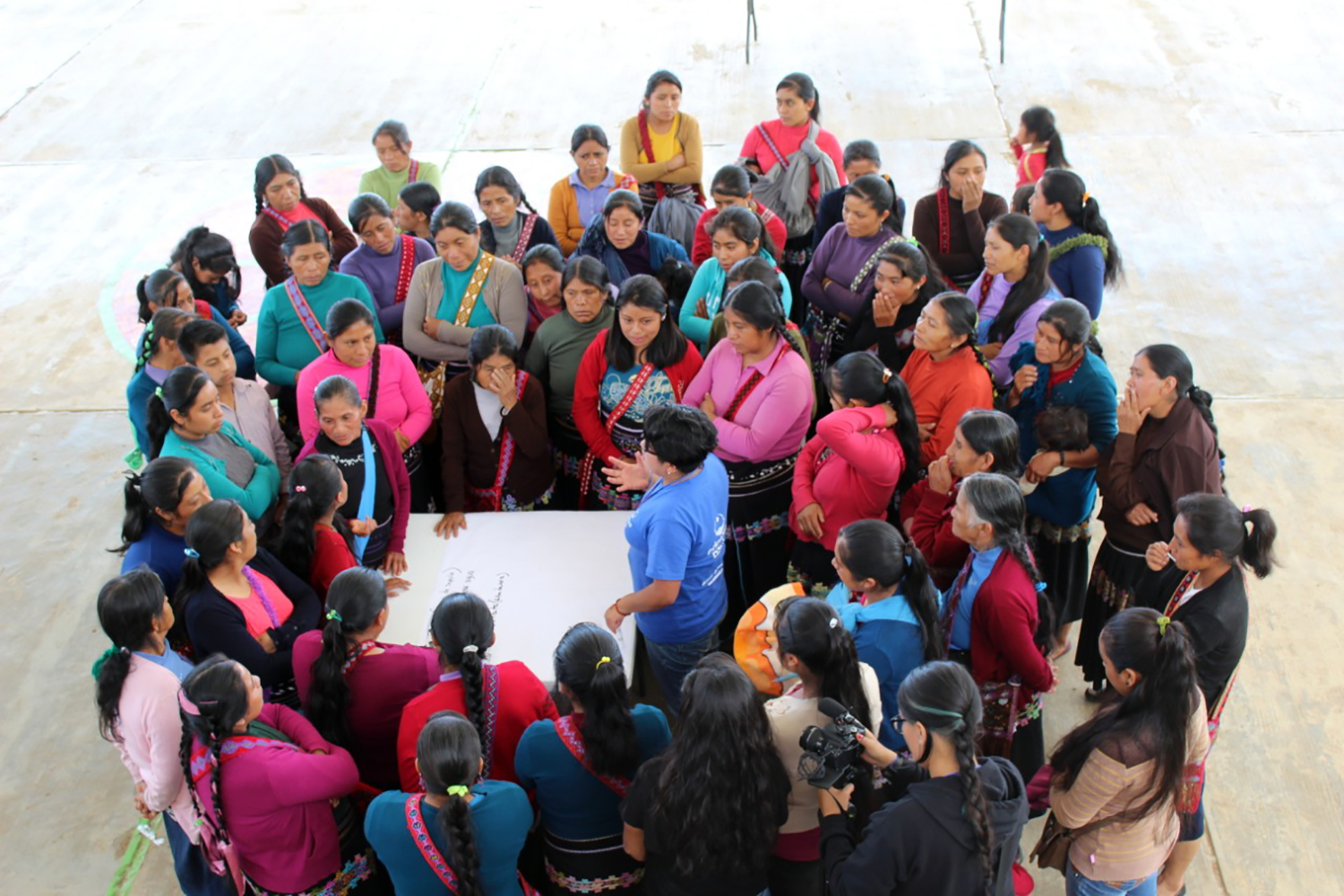
Back in 2005, a group of students at the University of California, Berkeley, designed the first ultraviolet water disinfection system for rural households. Part of the team started a nonprofit organization — Cántaro Azul — with the objective of empowering people with appropriate safe water technologies. As Cántaro Azul evaluated the impact of water programs, it developed evidence that health and social benefits produced by the dissemination of such technologies varied across households and communities, highly modulated by existent inequalities. In 2014, Cántaro Azul shifted its work from a technology to a service paradigm that now focuses on strengthening community-based water management organizations (CBWMO). Working in a country with more than 100,000 rural communities without access to safe water, Cántaro Azul realized that directly scaling its services would only reach a fraction of the population and in 2017 began efforts to advocate for local and national public policies that seek to strengthen CBWMOs.
In this talk, Fermín Reygadas will share some of the achievements of Cántaro Azul, including the creation of the first public water institution in México that is governed by CBWMOs, as well as the many challenges that the organization has encountered and that lay ahead in the road towards achieving the human right to water and sanitation in rural Mexico.
Fermín Reygadas is Co-Founder and CEO of Cántaro Azul, the largest water, hygiene, and sanitation organization in Mexico. Since 2006, he has led the design, implementation, and evaluation of technologies, service-delivery models, financing mechanisms, advocacy strategies, and public policies that contribute to expand the human right to water and sanitation. He is an Ashoka Fellow and his work has been recognized by the US Environmental Protection Agency, the Big Ideas Competition at Berkeley, the 6th and 8th World Water Forums, and the UBS-Visionaris Social Entrepreneurship Award. He holds a PhD from the Energy and Resources Group at the University of California, Berkeley.
We’re holding the spring series online via Zoom. All events are free and open to the public.
Accessibility
Zoom captioning is provided for all live talks, and human-generated captions are provided for all video recordings when published online. To request additional support, please contact info@schatzcenter.org or call 707-826-4345 at least one week before an event.
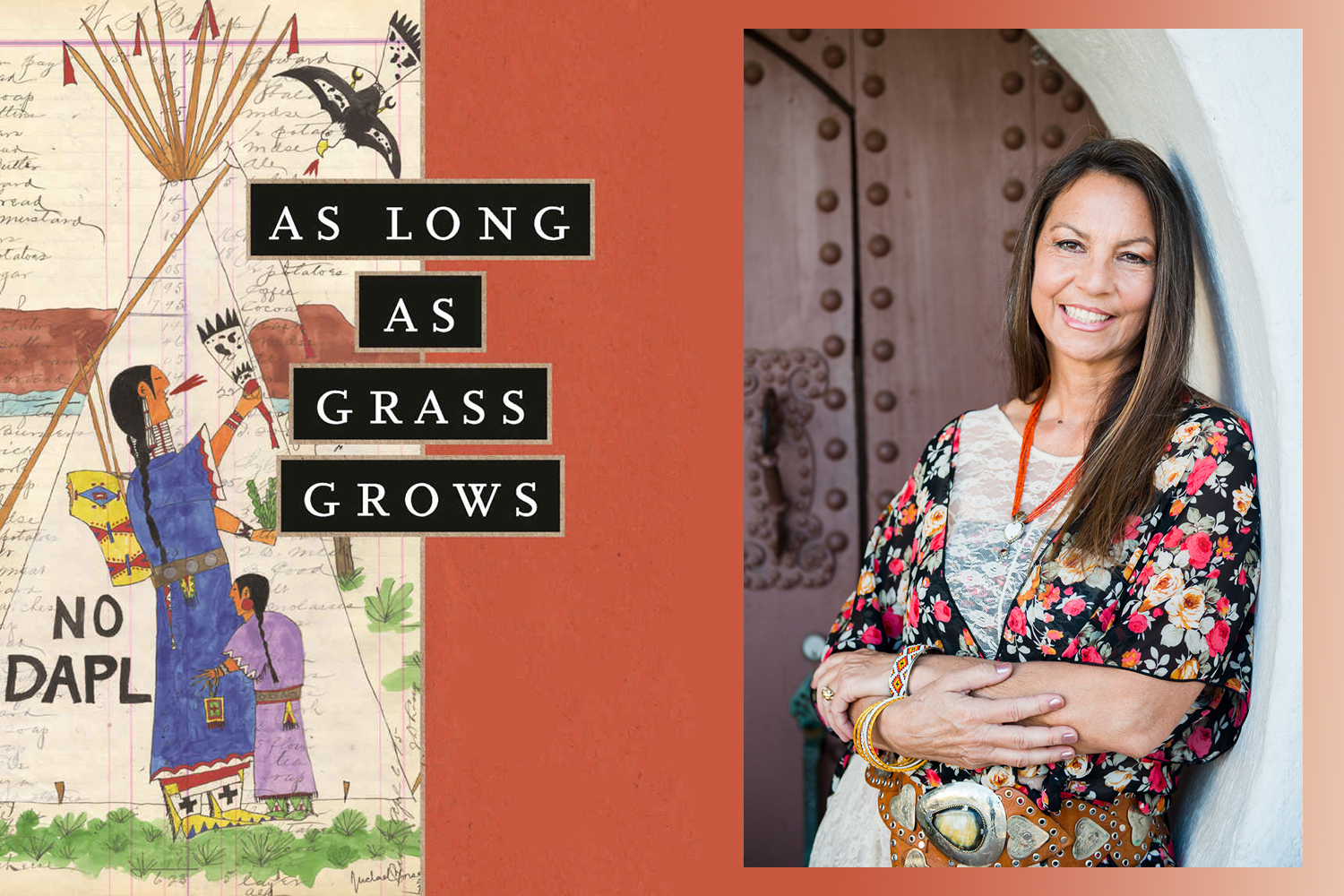
In her acclaimed book As Long As Grass Grows: The Indigenous Fight for Environmental Justice from Colonization to Standing Rock, author Dina Gilio-Whitaker interrogates the centuries long history of injustices against American Indians, understanding genocide and land theft as processes of environmental injustice. She contends that this history along with Native people’s unique political relationship to the state changes the meaning of environmental justice compared to other populations. Through the lens of what she calls an “Indigenized” EJ and the story of the Standing Rock DAPL struggle, Gilio-Whitaker looks at ways Native activism and resilience still animate Native life today. Her talk will also lean into current work on a forthcoming book that examines accountability and what an ethical relationship to land looks like in the U.S. settler state.
Dina Gilio-Whitaker (Colville Confederated Tribes) is a lecturer of American Indian Studies at California State University San Marcos, and an independent educator in American Indian environmental justice policy planning. At CSUSM she teaches courses on environmentalism and American Indians, traditional ecological knowledge, religion and philosophy, Native women’s activism, American Indians and sports, and decolonization. She also works within the field of critical sports studies, examining the intersections of indigeneity and the sport of surfing. As a public intellectual, Dina brings her scholarship into focus as an award-winning journalist as well, contributing to numerous online outlets including Indian Country Today, the Los Angeles Times, High Country News. Dina is the author of two books; the most recent award-winning As Long As Grass Grows: The Indigenous Fight for Environmental Justice from Colonization to Standing Rock. She is currently under contract with Beacon Press for a new book under the working title Illegitimate Nation: Privilege, Race, and Accountability in the U.S. Settler State.
We’re holding the spring series online via Zoom. All events are free and open to the public.
Accessibility
Zoom captioning is provided for all live talks, and human-generated captions are provided for all video recordings when published online. To request additional support, please contact info@schatzcenter.org or call 707-826-4345 at least one week before an event.
We’re holding this year’s series online via webinar. Each lecture will be streamed via Zoom, and will be followed by a Q&A discussion period. All events are free and open to the public.
Visit our Sustainable Futures page for descriptions of each talk, or simply click on the talk titles above to register for an event.
Accessibility
Zoom captioning is provided for all live talks, and human-generated captions are provided for all video recordings when published online. To request additional support, please contact info@schatzcenter.org or call 707-826-4345 at least one week before an event.
About the series
The Sustainable Futures speaker series stimulates interdisciplinary collaboration around issues related to energy, the environment, and society. These lectures are sponsored by the Schatz Center, the Environment & Community graduate program, and the College of Arts, Humanities & Social Sciences at Humboldt State.
Three graduate fellows joined us last fall, and are now on research teams that span the Center’s programs!
Ogunwo Demilade is the 2020-21 Tuttle Fellow. Demi did her undergraduate work at the University of Lagos, Nigeria where she studied electrical and electronics engineering. After graduation, she worked as a project manager at Ecowatt Nigeria, managing energy audit and power quality assessment projects for residential and industrial facilities. She later joined Starsight, a solar power utility, as a solar construction engineer. At Starsight, she supervised solar PV hybrid systems installation for banks and schools.
Growing up in a country with an unstable supply of electricity and around 50% electricity access, my goal has always been to contribute to solving the electricity access issues in my country using sustainable means. I intend to do my thesis on a solar PV and biomass powered microgrid for rural communities, and I hope to get funding to implement it after I am done with my program.
Since her arrival last fall, Demi has been working on a team that is chronicling how the two Blue Lake Rancheria microgrids performed during a series of voluntary islanding events in August 2020. She sees this research as a great opportunity to explore how microgrid systems operate and what benefits they can provide, from energy savings to demand response services and resilience during emergencies.
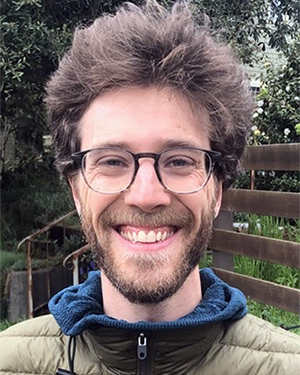
Malcolm Moncheur is the 2020-21 Schatz Energy Fellow. He received his bachelors from SUNY College of Environmental Science and Forestry in bioprocess engineering. Malcolm’s first experience with renewable energy was through an internship with Wallowa Resources, a community empowerment nonprofit in northeastern Oregon. At Wallowa Resources, Malcolm provided technical and grant-writing support for community micro-hydroelectric projects — and saw what engineering can achieve when applied through a social change framework.
I was originally drawn to renewable energy through the technical side of things, learning how renewables function and their associated environmental/climate benefits. However, I quickly became interested with issues of equity: who benefits, who doesn’t, and how can we transition to renewables in a just fashion that includes historically marginalized communities? Long term I’d like to focus on climate or energy justice, working to resolve energy inequities through community-owned projects.
Malcolm is currently working on the north coast “SAFE” project (Smoke, Air, Fire, Energy), which is a collaboration between the Schatz Center, the Karuk Tribe, and the Blue Lake Rancheria Tribe to understand both air quality impacts and energy needs associated with fire events.
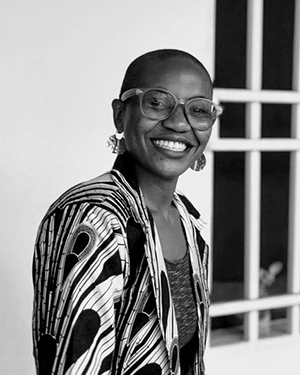
Hamidah Naishur Nakimuli is the 2020-21 Blue Lake Rancheria Fellow. Hamidah received her undergraduate degree in leisure and hospitality management from Makerere University Uganda. She has ten years of work experience in last mile energy distribution, and her commitment to renewable energy is informed by her firsthand experience with energy distribution injustices.
At the Schatz Center, Hamidah is a member of the solar products test lab, where she has been conducting market studies on products from suppliers in Sierra Leone and Uganda. After completing her graduate work at HSU, she plans to continue engaging with energy related activities that work to increase energy distribution to those with poor energy options, or without energy/electricity at all. In the meantime, she is looking forward to fully exploring HSU’s campus and experiencing the outdoors!
Continuing fellows
Amin Younes and Aditya Singh are continuing as fellows for their second year. Amin is a member of the offshore wind and national energy policy teams at the Schatz Center. His graduate thesis will explore feasible renewable energy plans for Humboldt County, in light of California’s Renewable Portfolio Standard. Aditya Singh is also a member of the Schatz Center’s energy policy research team. For his thesis, Aditya is evaluating the costs and benefits of adding new infrastructure to transition Humboldt County’s conventional bus fleet to battery-electric or hydrogen fuel cell systems.
Interested in becoming a fellow?
All first year graduate studies applicants who are pursuing either the ERE or ETaP pathway in Environmental Systemsand who indicate an interest in energy systems will be automatically considered for clean energy fellowships associated with the Schatz Center.
In your California State University graduate application essay, please discuss the line of research or project work that you propose to pursue at HSU, and how your prior studies and experience have prepared you.HSU graduate program applications are due by February 1 (annually) for fall enrollment. Fellowship recipients will be notified by April 15.
Energy Technology & Policy (ETaP) is an interdisciplinary graduate program focused on issues at the intersection of energy, the environment, and society. Students draw on tools and perspectives from engineering, economics, political science, sociology, public health, and ecology to better understand the multi-faceted drivers and impacts of modern energy systems and climate change. Their graduate research ranges from local to global in scope, making innovative and impactful contributions in a broad array of arenas including renewable energy deployment, clean transportation, environmental justice, and improved energy access in developing countries. 95% of recent ETaP graduates have joined the energy workforce or are now enrolled in related PhD programs!
All incoming ETaP students will be considered for fellowships at the Schatz Center.
In the Environmental Resources Engineering (ERE) graduate program, students develop the practical application of their engineering skills to meet challenges in environmental resource planning, design, and management. Graduates acquire a multidisciplinary toolkit that builds on deep technical foundations and leverages coursework in policy, economics, and more. The ERE graduate program encompasses renewable energy, water quality, and water resources, and all students complete a thesis or project that matches their research and professional interests in one of these areas.
All incoming ERE graduate students whose research goals are focused on renewable energy systems will be considered for fellowships at the Schatz Center.
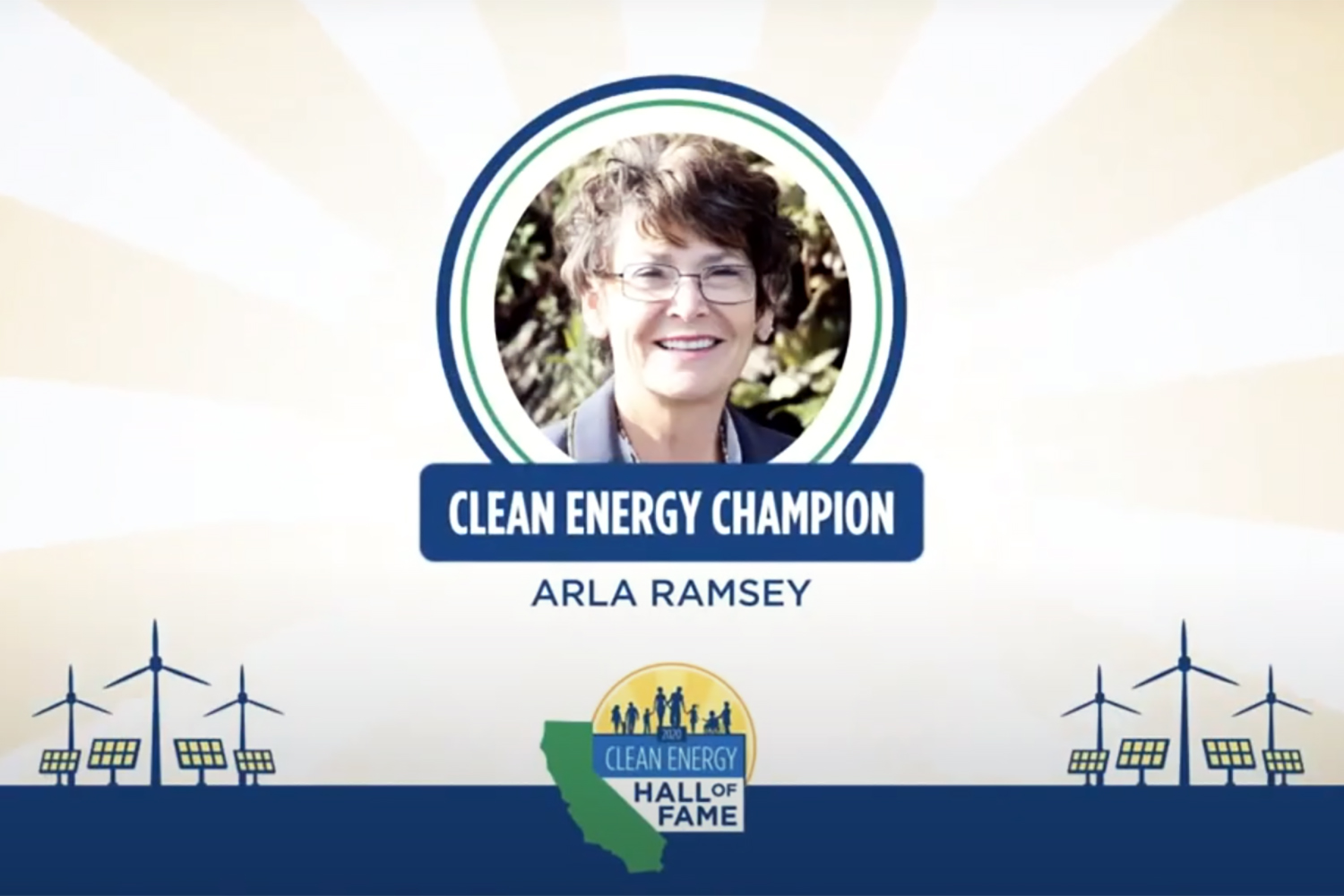
Congratulations to Arla Ramsey, Vice Chair of the Blue Lake Rancheria Tribe, for receiving an inaugural Clean Energy Champion award from the California Energy Commission! This new award recognizes leaders from across California whose outstanding achievements are helping to advance the state’s bold clean energy goals.
We wanted to share a few thoughts on what Arla’s visionary leadership has meant to our team:
Solar Plus microgrid kickoff celebration
Arla Ramsey’s leadership at the Blue Lake Rancheria has been critical for advancing clean energy on California’s north coast. The innovative microgrid projects she has championed not only serve our community in times of need but now are a model for statewide action towards resilient clean energy. — Peter Alstone, project lead on the Rancheria’s “Solar Plus” microgrid
It’s great to see recognition for such a strong indigenous leader, who routinely faces great risks in the interest of advancing innovative solutions for grid decarbonization and resiliency. While implementing the Blue Lake Rancheria Microgrid, Arla’s steadfast leadership and encouragement bolstered our team’s confidence and inspired us to keep striving even in the face of our most challenging setbacks. — Dave Carter, project manager on the Rancheria’s main campus microgrid
Arla Ramsey is a powerhouse. She has done so much for the Blue Lake Rancheria Tribe and surrounding communities. When she puts her mind to something, there is no stopping her. We have worked with Arla and her team at the Blue Lake Rancheria on a number of sustainable energy projects. They are so forward-looking in their efforts and their investments. They look to deploy energy technologies that make economic sense, provide local resilience and security, and help to move our region toward a carbon free future in order to mitigate climate change. They are an amazing team and have been a tremendous partner, and Arla is right out in front leading the charge! — James Zoellick, project manager on the Rancheria’s “Solar Plus” microgrid
As one of the leaders of the Blue Lake Rancheria Tribe, Arla Ramsey has been a strong force for the Tribe’s efforts to make the Rancheria a shining example of a sustainable community. Arla has been a trusted partner, always willing to contribute that extra effort, as we have worked with the Tribe to achieve their renewable energy goals. We congratulate her on being named a Clean Energy Champion, a well deserved honor. — Peter Lehman, project lead on the Rancheria’s main campus microgrid
We’re grateful to work in partnership with the Blue Lake Rancheria on clean energy microgrid development and so much more — and we are inspired by Arla Ramsey’s decades of leadership that has done so much to advance our national understanding of sustainable community development!
We are outraged and grieved by the recent murders of George Floyd and Breonna Taylor by police, and by the violence inflicted against protestors across the nation who are taking a stand to change our country’s systemic oppression of Black people. We know that police brutality is a product of racist power structures, and that this same brutality reinforces oppression. George Floyd and Breonna Taylor are among the latest victims of a culture of hatred and violence towards Black bodies that has been present since the founding of this country.
We recognize that this oppression is maintained through a fundamentally unequal distribution of resources, and of exposure to harm. Across the globe, the access by Black, brown, and indigenous peoples to basic goods is curtailed by racist, colonialist systems. The same systems expose these communities to higher levels of pollution — again threatening and shortening lives. Further, we recognize that the extent to which communities can mobilize and deploy solutions is often stymied by racism, and that the nature of privilege makes it much easier for those who already occupy positions of power to be heard and acknowledged.
Systemic racism impacts every location, including ours here on California’s north coast. Our community is still reeling from the loss of David Josiah Lawson, a Black student leader, three years ago, and from the incapacity of our police and legal system to bring justice for his murder. Students and staff on our campus face very different challenges depending on the color of their skin, their language, and their heritage — including ongoing harassment on and off campus, as recent events have again made apparent. None of these events happen in isolation.
As a majority white organization in a predominantly white field, we recognize that we must be simultaneously humble and strong. We must be humble to realize the gaps in our understanding — and in our empathy. We must be proactive in developing a safe, inclusive, and collaborative work environment that supports our non-white students and staff. We must learn more inclusive ways of engaging with all people toward a just division of resources. At the same time, we must be strong in our protection of all people.
We know we have a great deal of work to do, and much to learn and unlearn.
We stand in solidarity, and in humility, to acknowledge the truths of our history, and to affirm:
Our good friend Don Tuttle passed away on May 15 at the age of 81. We were very sad to learn the news, and we extend our heartfelt condolences to his wife, Andrea, and his family and friends.
Don and Andrea Tuttle are longtime friends and supporters of the Schatz Energy Research Center and Humboldt State University. Andrea is a founding member of the Schatz Center’s Advisory Board, and they jointly established the Donald and Andrea Tuttle Fellowship for Clean Energy Studies in 2017. This fellowship provides support to graduate students in the Energy Technology and Policy (ETaP) and Environmental Resources Engineering options of the Environmental Systems graduate program.
Don was a kind, thoughtful, and wise person. Over his long career, his persistent, careful, and historically-minded approach to environmental protection in relation to regional economic and infrastructure development has made a real and lasting difference in our community. We are grateful for his good works and leadership, and we will miss him very much.
~ Arne Jacobson
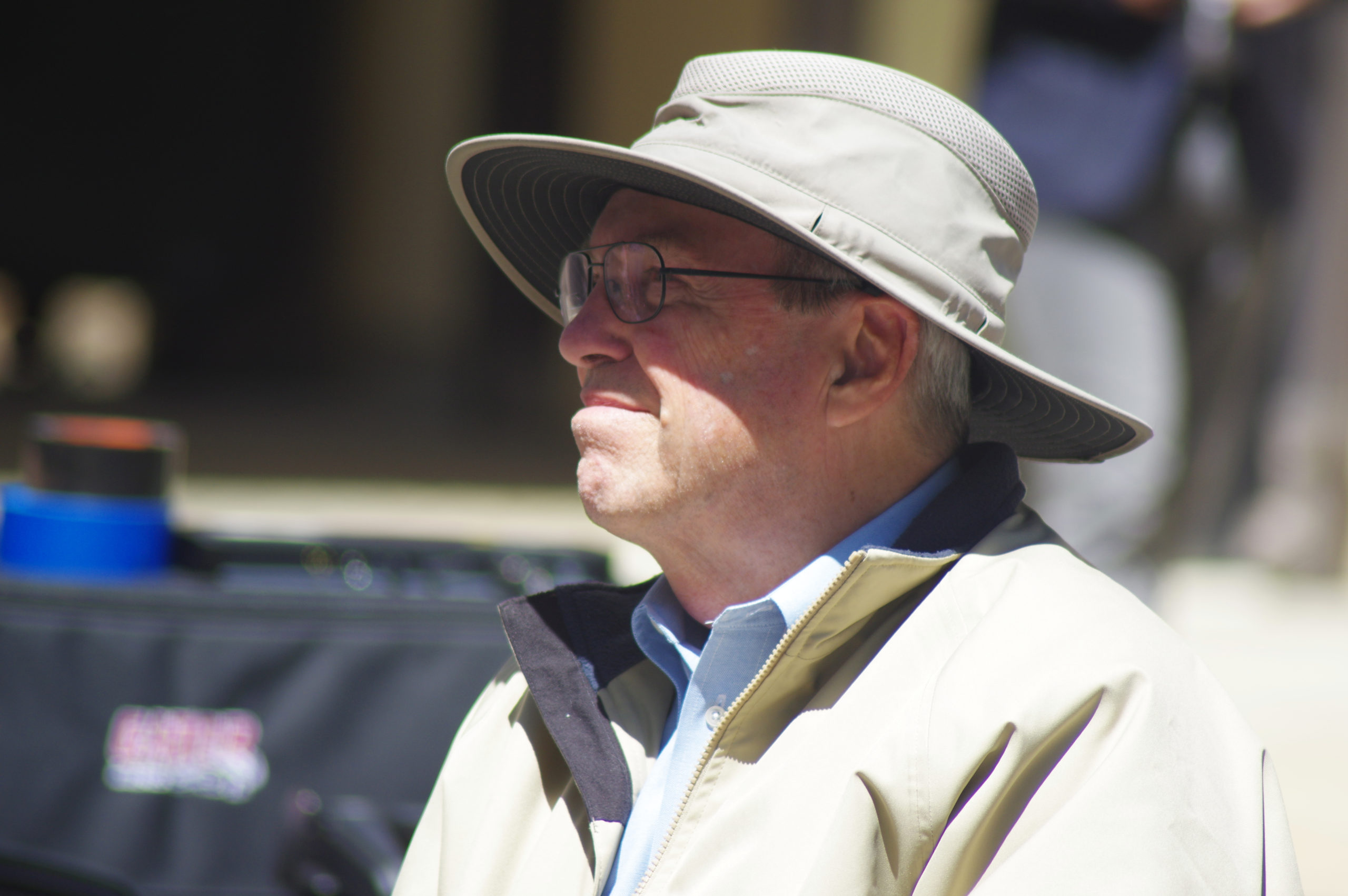
Don Tuttle greets Sintana Vergara at the opening ceremony for the West Wing of the Schatz Center in May 2018
This month, five student researchers from the Schatz team were recognized by Humboldt State University and by the Environmental Resources Engineering (ERE) department for outstanding achievements. Chih-Wei Hsu and Ciara Emery received masters degrees this December; Sabrinna Rios Romero is graduating this month with a BS in ERE; and Liszet Burgueno and Elizabeth Van Skike are a junior and senior in ERE, respectively. We’re delighted that each of them is being recognized by the campus community, and wanted to share a little about their research here at the Center.
Chih-Wei Hsu
Chih-Wei Hsu graduated in December with a MS in Environmental Systems with a concentration in Energy Technology and Policy. His thesis revealed inequities by race and income in California’s deployment of public charging infrastructure and the cost of owning an electric vehicle. At the Schatz Center, Chih-Wei contributed to transportation projects including a Climate Resilient Electrified Transit Plan for the Humboldt Transit Authority. He also contributed to energy access projects, including analyses related to off-grid solar product adoption in Uganda and the environmental footprint of backup generators in areas with unreliable electric grids.
During his time at Humboldt, Chih-Wei was also deeply engaged in the campus and local community. He was a student director for HSU’s Sponsored Programs Foundation board, a member of the Humboldt Energy Independence Fund governing committee, an active volunteer with GRID Alternatives — and helped to install the Schatz Center’s solar array in 2018! Chih-Wei is now the EV Fellow at the International Council on Clean Transportation. This month, he was awarded the Patricia O. McConkey award as an Outstanding Graduate Student.
Chih-Wei Hsu, Kristina Kunkel, and Anh Bui (left to right)
Ciara Emery
Ciara Emery graduated in December with an MA in Environment and Community. Her thesis contributed to the Center’s offshore wind feasibility research by interviewing local stakeholders to understand their perceptions of the challenges and potentials for wind farm development off Humboldt Bay. Ciara also attended conferences and workshops to evaluate the discussions being held within the community. Ciara presented her findings as part of the California State University research competition in April.
Ciara is now the Field Representative for Congressman Jared Huffman in Humboldt, Del Norte, and Trinity counties. This month, she was recognized by HSU for Outstanding Student Research.
Elizabeth Van Skike
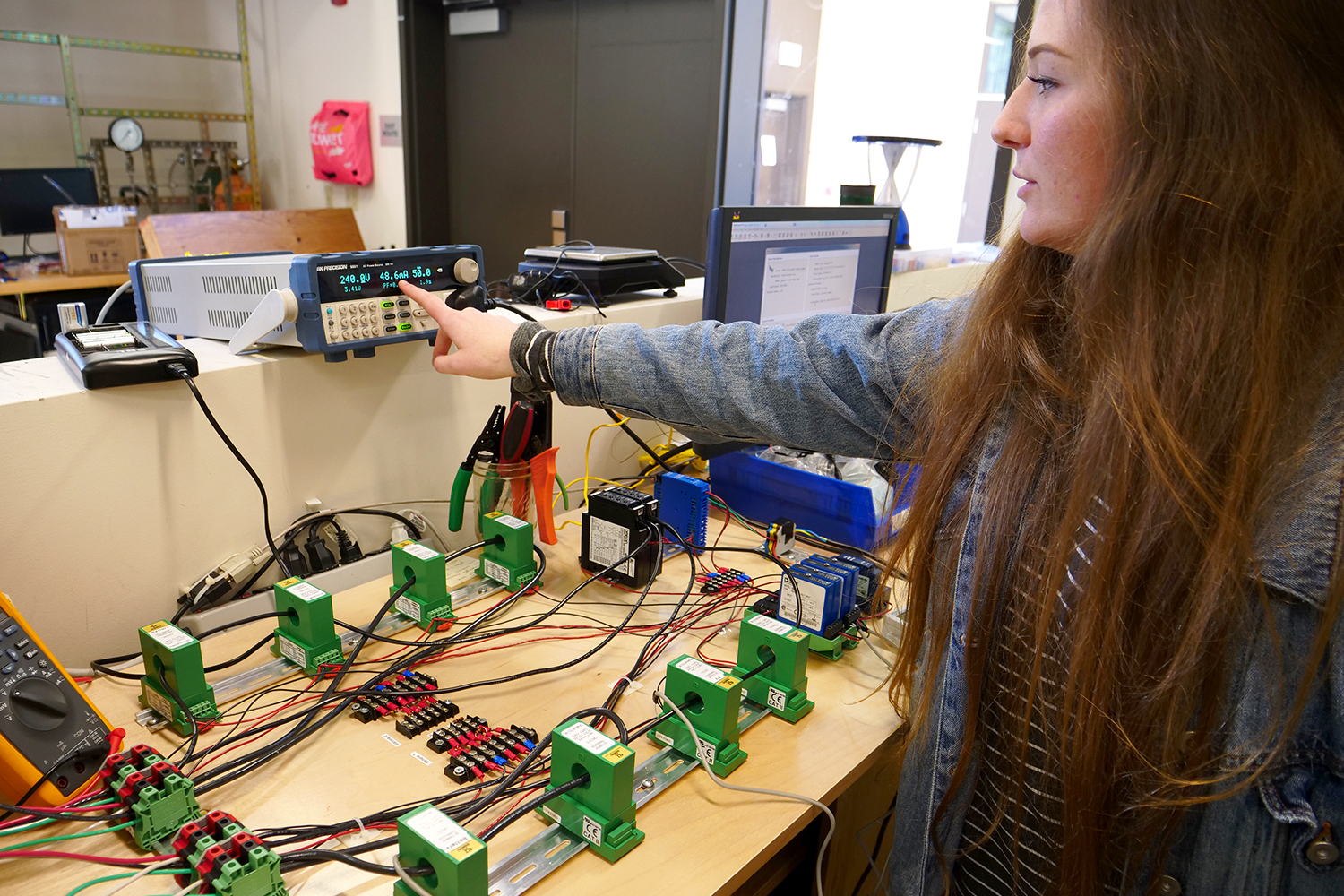
Elizabeth Van Skike at our solar water pump test station
Elizabeth Van Skike is a 2020 recipient for the Homer Arnold award for Applied Research in Environmental Resources Engineering. A key member of our solar products test lab team since 2018, Ellie has helped perform safety, durability, and performance testing on solar lighting products and appliances — including televisions, radios, and solar water pumps. She has designed and built electrical systems and components, including a data acquisition circuit for overprotection and solar charge product tests. And, she has trained fellow student researchers and new employees on product test protocols.
Elizabeth is continuing at the Schatz Center this summer, and will work on multiple projects related to quality assurance for off-grid solar products.
Sabrinna Rios Romero
In 2018, Sabrinna Rios Romero furthered our understanding of biomass life cycles by quantifying the decay rates for the post-harvest residues of seven California crops. Measuring decay rates allows us to better assess how leaving agricultural residues in the field — versus converting them into electricity — impacts greenhouse gas emissions. Sabrinna also conducted a survey of state foresters to assess which post-logging residue pathways (e.g. piling, burning, and scattering) were most commonly used across California. And, she worked in the Center’s biomass lab to measure the performance of a gasifier system.
In addition to her Center research and engineering clubs activities, Sabrinna accomplished her ERE degree in only four years, an atypical achievement within this challenging major program!
Sabrinna Rios Romero and Steven Shoemaker (left to right), as ribbon-cutters for the grand opening of the West Wing
Liszet Burgueno
Liszet Burgueno is a second year engineering student who has excelled academically while demonstrating ongoing commitment to bettering her community. She holds officer positions in both the Renewable Energy Student Union (RESU) and the Society of Hispanic Professional Engineers (SHPE), and also works for the Humboldt Energy Independence Fund, an organization that funds the implementation of green projects on campus. In 2019, as a student research assistant at the Schatz Center, Liszet contributed substantially to a literature review and experimental protocol development for measuring greenhouse gas emissions from stored woody biomass.
Liszet is the 2020 recipient of the Engineers Without Borders award. The EWB award honors a student’s contribution to ERE club projects, fundraisers, and community service, as well as professional-student interaction and social responsibility within and outside the ERE community.
Spring 2019 student researchers (left to right): Liszet Burgueno, Craig Mitchell, Ellen Thompson, Merissa Coello, Rene DeWees, and Thalia Quinn
We are very proud of our students and their work, and we congratulate Chih-Wei, Ciara, Elizabeth, Sabrinna, and Liszet for their accomplishments. ~ Arne Jacobson
Over the past 10 years, the off-grid energy access team at the Schatz Center has worked with the World Bank Group, CLASP, and a broad range of stakeholders to develop and maintain the Lighting Global Quality Standards, which have been the backbone of the Lighting Global Quality Assurance program.
In recent years, several national governments have adopted these standards to protect their markets from poor quality products, and others have expressed interest in adoption. To ensure a harmonized approach across countries, the Lighting Global Quality Standards are now moving to the internationally recognized and familiar standards platform of the International Electrotechnical Committee (IEC).
Our team has worked diligently to transfer the current standards to a new IEC document, consulted international experts on battery and PV safety requirements, sought stakeholder feedback, and shepherded the document through the IEC review process. The new document, IEC TS 62257-9-8, is expected to be published soon, and will cover quality standards for pico-solar products and solar home system kits. The IEC document is similar to the current Lighting Global Quality Standards, but includes additional safety requirements for lithium batteries and PV modules.
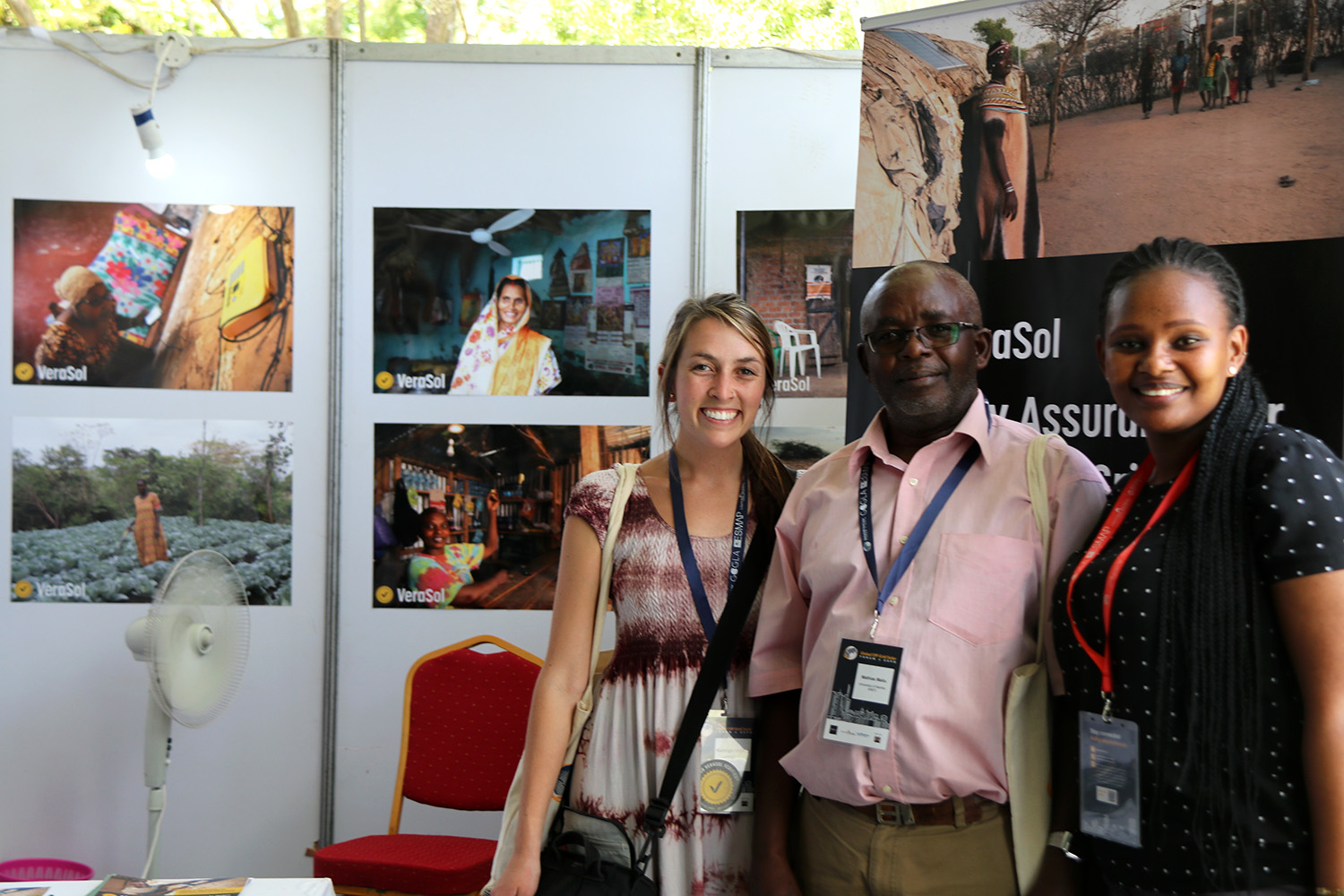
On Thursday, May 7 at 13:00 GMT, VeraSol* will host a free, public webinar about the IEC document. Participants will learn how the new IEC document differs from the Lighting Global Quality Standards and receive guidance on how public and private entities can successfully transition to using the new standards.
*VeraSol is the new name for Lighting Global Quality Assurance, and reflects the organization’s addition of non-lighting appliances such as solar water pumps, refrigerators, and media and communications devices. VeraSol is managed by CLASP in collaboration with the Schatz Center, with foundational support from the World Bank, UKaid, IKEA Foundation, and others. Learn more at VeraSol.org.