Category: Research and program updates

  • Webinar (4/17): CCAs, resilience, and the Redwood Coast Airport microgrid

    Webinar (4/17): CCAs, resilience, and the Redwood Coast Airport microgrid

    Interested in learning more about our design for the Redwood Coast Airport’s renewable energy microgrid? We’ll be joining the folks at the Clean Power Exchange for a free online webinar on Wednesday, April 17, from 11 am to noon (PST).

    Panelists will include:

    • Richard Engel, Director of Power Resources for RCEA
    • Nikky Avila, Senior Grid Innovation Engineer for PG&E, and
    • James Zoellick, Managing Research Engineer at the Schatz Center.

    We’ll share aspects of the project including:

    • community resiliency planning
    • developing new tariffs for connecting microgrids
    • meeting California’s storage mandate
    • creating a replicable business model for front-of-meter, multi-customer microgrids, and
    • participating in the statewide energy wholesale market through local, renewable generation.

    REGISTER:

    CCAs and Energy Resilience: Redwood Coast Energy Authority’s Airport Microgrid

    Free online webinar: Wednesday, April 17, 11 am to noon (PST)

  • Lecture: California offshore wind – the challenges of “high road” climate policy (4/11)

    Lecture: California offshore wind – the challenges of “high road” climate policy (4/11)

    5:30 pm Thursday, April 11 in Founders Hall 118

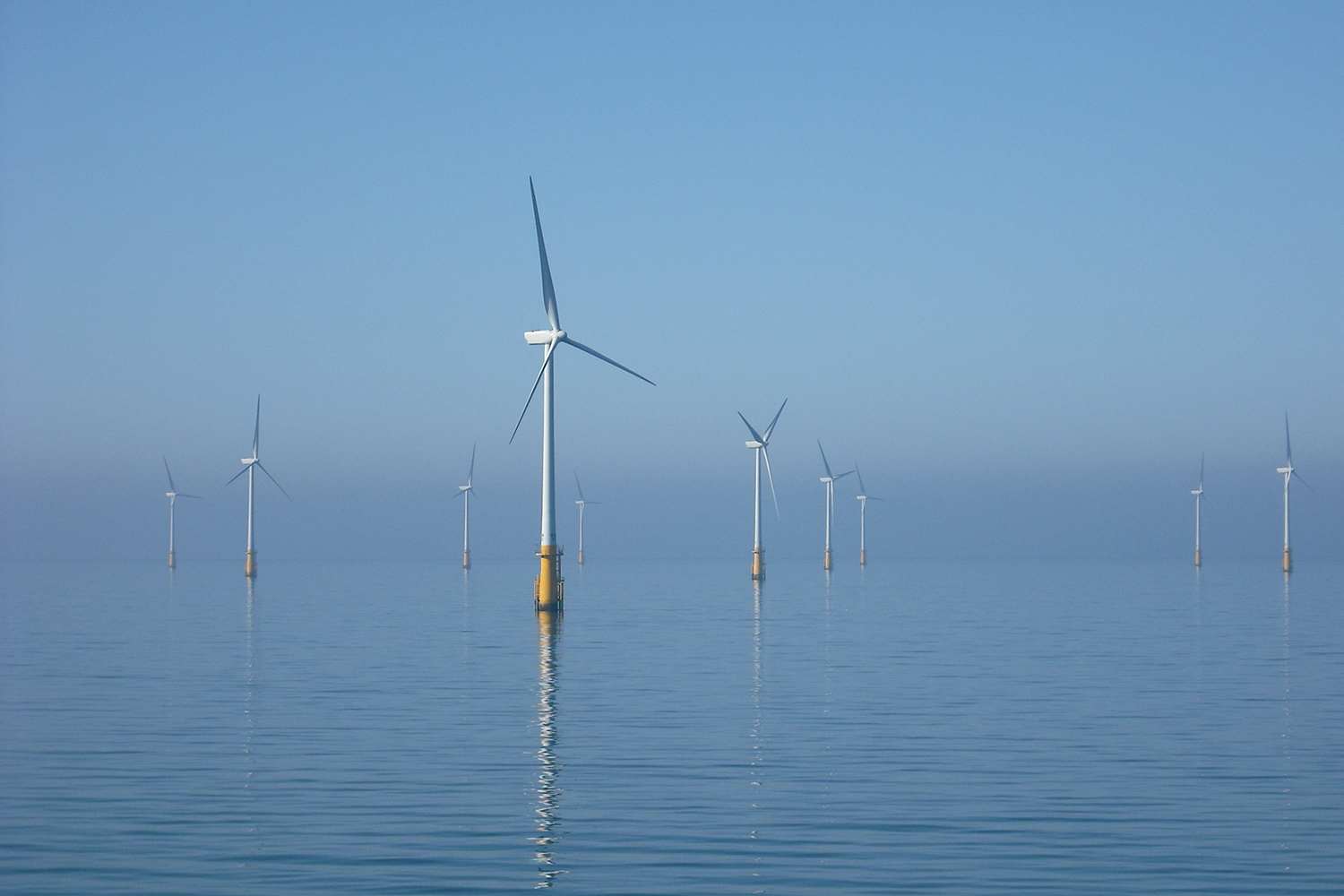
    Planning is underway to site huge floating wind farms along California’s coast, including offshore Humboldt County, to help the state reach its goals of 100 percent clean energy. But these plans underline one of the key questions for California climate policy – Will the green economy accentuate or narrow the state’s widening income and opportunity gaps? In the case of offshore wind, an entirely new industry is envisioned, which could have a uniquely “high road” potential for well-paying jobs, community benefits, an industrial supply chain, and major infrastructure improvements. But achieving this will not be easy. This presentation will explain this conundrum for offshore wind and state climate policy in general.

    Robert Collier is a policy analyst at the UC Berkeley Center for Labor Research and Education, where he researches labor and workforce issues in the clean energy economy. In particular, his work focuses on policy for the transition from fossil fuels to renewable energy, including emerging technologies such as offshore wind power. Prior to joining the Labor Center in 2016, he was a consultant to environmental nonprofits and foundations on a variety of issues related to renewable energy and climate policy, and he spent 16 years as a staff reporter for the San Francisco Chronicle, covering international news, energy, and climate policy.

    The Sustainable Futures Speaker Series stimulates interdisciplinary collaboration around issues related to energy, the environment, and society. All lectures are free and open to the public, and are sponsored by the Schatz Center, the Environment & Community graduate program, and the College of Arts, Humanities & Social Sciences at Humboldt State.

    Spring 2019 lectures will be held on Thursdays from 5:30 – 7:00 pm in Founders Hall 118.

    • For additional details on upcoming events or to request accessibility accommodations, email serc@humboldt.edu or call (707) 826-4345.
    • Sign up for the latest Schatz Center info, including speaker events, on our news page.
  • Lecture: The environmental sustainability of energy use at HSU (4/4)

    Lecture: The environmental sustainability of energy use at HSU (4/4)

    5:30 pm Thursday, April 4 in Founders Hall 118

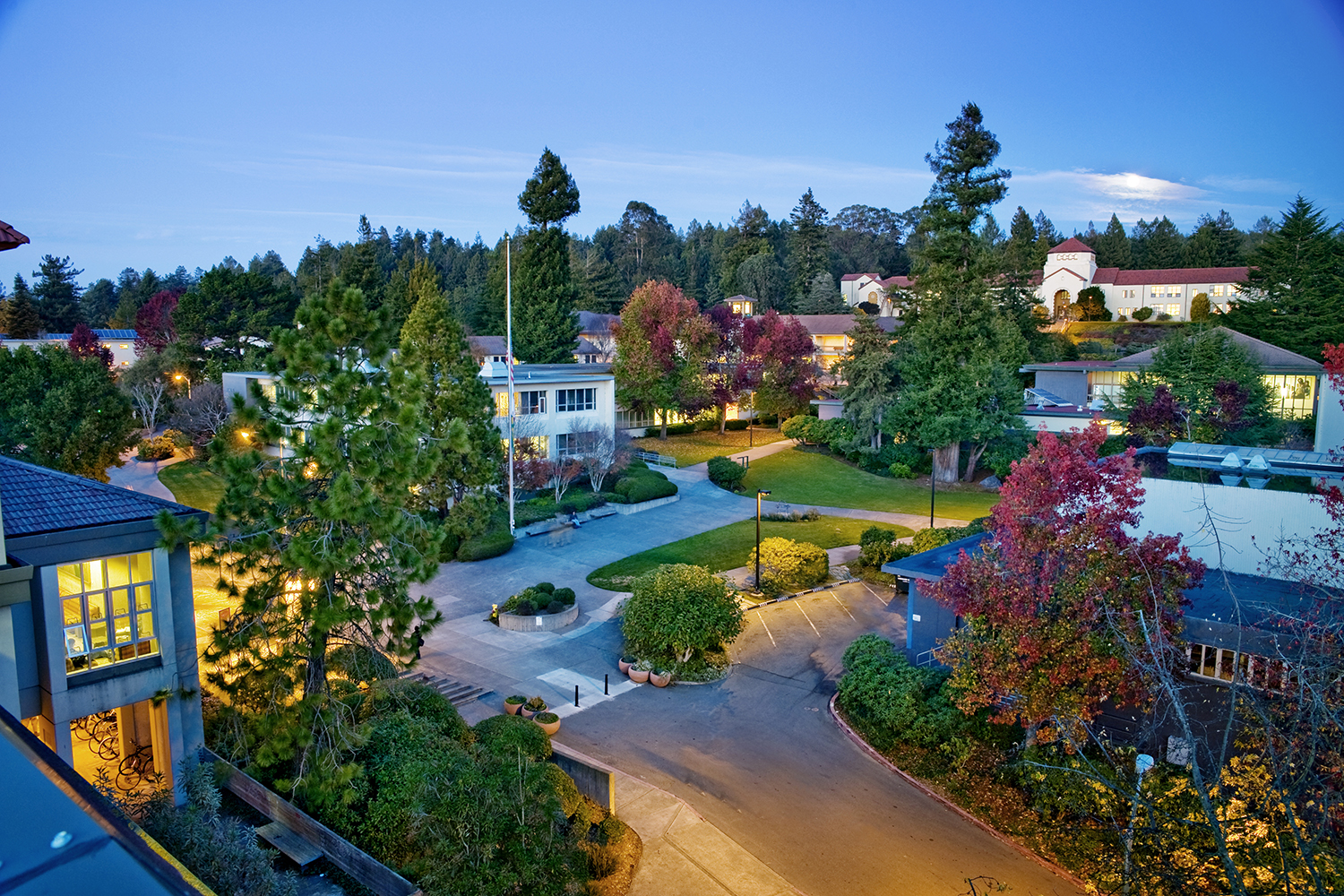
    Humboldt State University has set ambitious climate action goals, including a target to achieve an 80% reduction in greenhouse gas emissions relative to 1990 levels by 2040. This panel will highlight the challenges and opportunities at HSU for reducing energy use and greenhouse gas emissions. The discussion will include an overview of energy use patterns on campus, current approaches for reducing energy use and emissions, and possible future strategies to make progress toward the campus’ climate action goals. The panel will be moderated by Schatz Center Director Arne Jacobson.

    • Andrea Alstone is an Energy Planner and Analyst in Facilities Management at HSU, where she is responsible for tracking campus energy use and planning for its future. Her prior work on energy issues includes projects at the Redwood Coast Energy Authority, Lawrence Berkeley National Lab, and the Schatz Center.
    • Morgan King is a Climate Action Analyst in Facilities Management at HSU, where he facilitates climate action and resiliency planning, advises students, and furthers the infusion of sustainability into campus operations and academics. Morgan has over 20 years of experience working in sustainability, environmental education and green workforce development.
    • Gwelen Paliaga is the Technical Director within TRC’s Research and Technology Commercialization practice. He has 15 years of experience in commercial building energy efficiency and building science research, with expertise in design and operation of high performance buildings, research and emerging technology, and codes and standards development.
    • Oona Smith is a Senior Planner for the Humboldt County Association of Governments — a Regional Transportation Planning Agency — where she promotes public transit, walking, and bicycling. She earned a Master’s degree in International Development Technology from HSU.

    The Sustainable Futures Speaker Series stimulates interdisciplinary collaboration around issues related to energy, the environment, and society. All lectures are free and open to the public, and are sponsored by the Schatz Center, the Environment & Community graduate program, and the College of Arts, Humanities & Social Sciences at Humboldt State.

    Spring 2019 lectures will be held on Thursdays from 5:30 – 7:00 pm in Founders Hall 118.

    • For additional details on upcoming events or to request accessibility accommodations, email serc@humboldt.edu or call (707) 826-4345.
    • Sign up for the latest Schatz Center info, including speaker events, on our news page.
  • Lecture: Humboldt Bay on the threshold of change — sea level rise challenges to a sustainable future (3/28)

    Lecture: Humboldt Bay on the threshold of change — sea level rise challenges to a sustainable future (3/28)

    5:30 pm Thursday, March 28 in Founders Hall 118

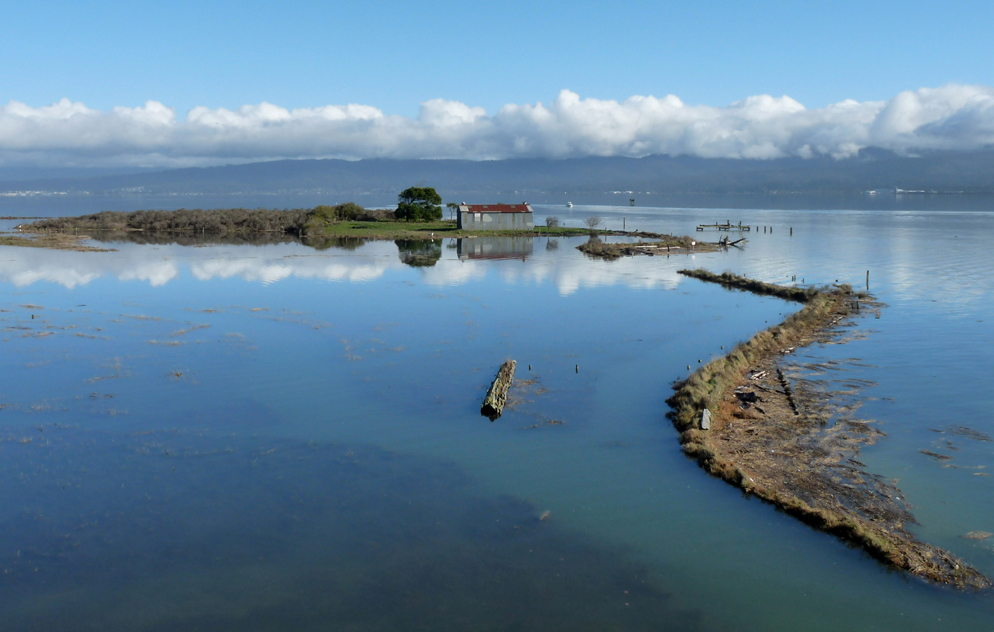
    Environmental planner Aldaron Laird specializes in sea level rise vulnerability assessments and adaptation planning, specifically in the Humboldt Bay region. In this lecture, he will highlight the significant changes we might see on Humboldt Bay with just 2.0 meters of sea level rise – which could occur between 2070 and 2100, based on new probabilistic projections. Laird will discuss the associated challenges for land and water use, transportation and utilities infrastructure, and cultural and environmental resources.

    Aldaron Laird helped create the first baseline vulnerability assessment of the Humboldt Bay shoreline, and was the lead planner for the Humboldt Bay Sea Level Rise Adaptation Planning Project. Recently, he authored a portion of the 4th California Climate Change Assessment that described sea level rise vulnerability and adaptation opportunities on the North Coast. Laird serves as co-chair of the Sea Level Rise Initiative at HSU.


    The Sustainable Futures Speaker Series stimulates interdisciplinary collaboration around issues related to energy, the environment, and society. All lectures are free and open to the public, and are sponsored by the Schatz Center, the Environment & Community graduate program, and the College of Arts, Humanities & Social Sciences at Humboldt State.

    Spring 2019 lectures will be held on Thursdays from 5:30 – 7:00 pm in Founders Hall 118.

    • For additional details on upcoming events or to request accessibility accommodations, email serc@humboldt.edu or call (707) 826-4345.
    • Sign up for the latest Schatz Center info, including speaker events, on our news page.
  • Powering the north coast with clean, local energy

    Powering the north coast with clean, local energy

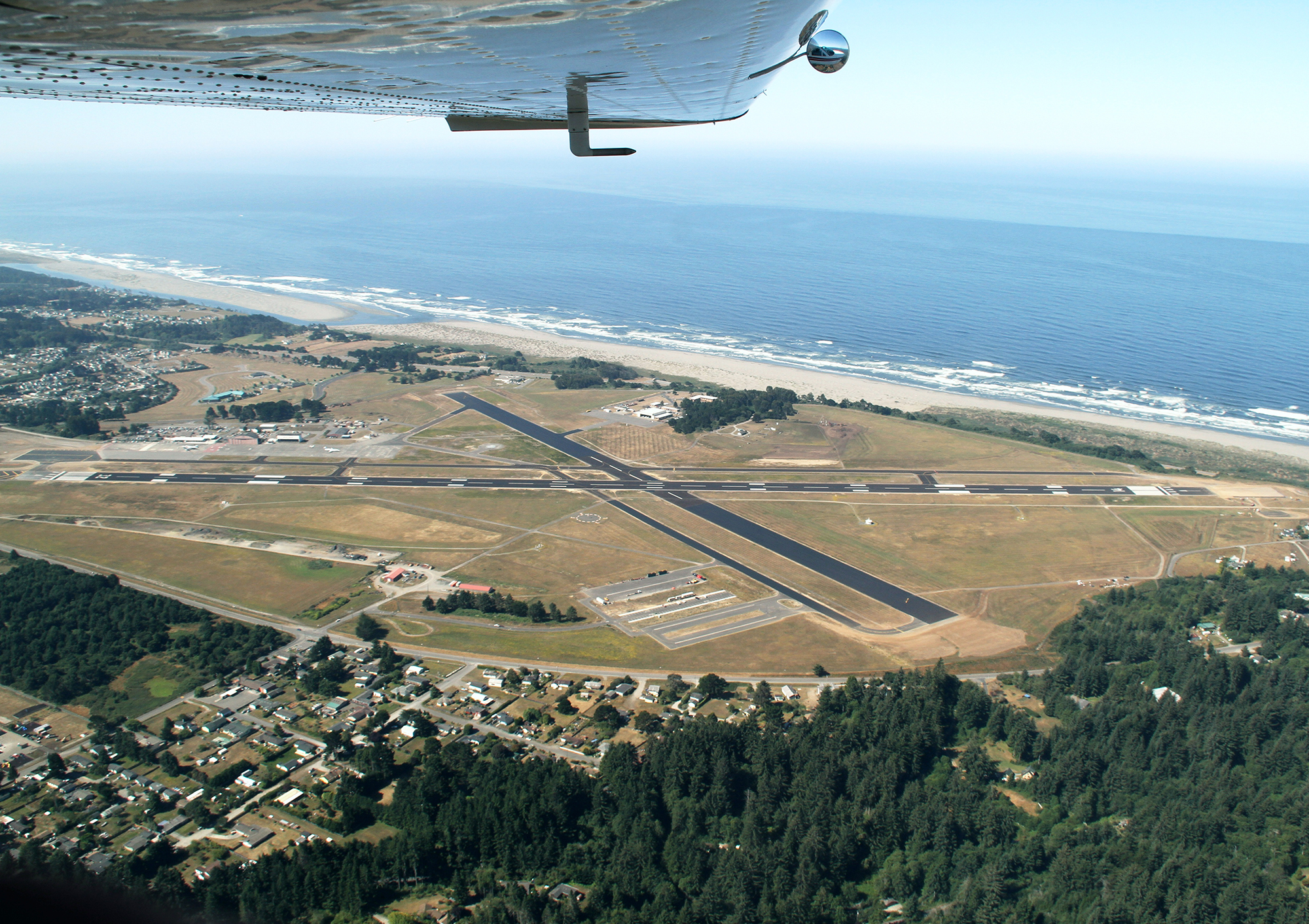
    Today, the Humboldt County Board of Supervisors approved a Memorandum of Understanding for the Redwood Coast Airport Renewable Energy Microgrid. Key partners for this project include the County of Humboldt, which will house the airport microgrid, the Redwood Coast Energy Authority (RCEA), which will own and operate the microgrid, and the Schatz Energy Research Center at Humboldt State, which is the prime contractor and responsible for the project design and technology integration.

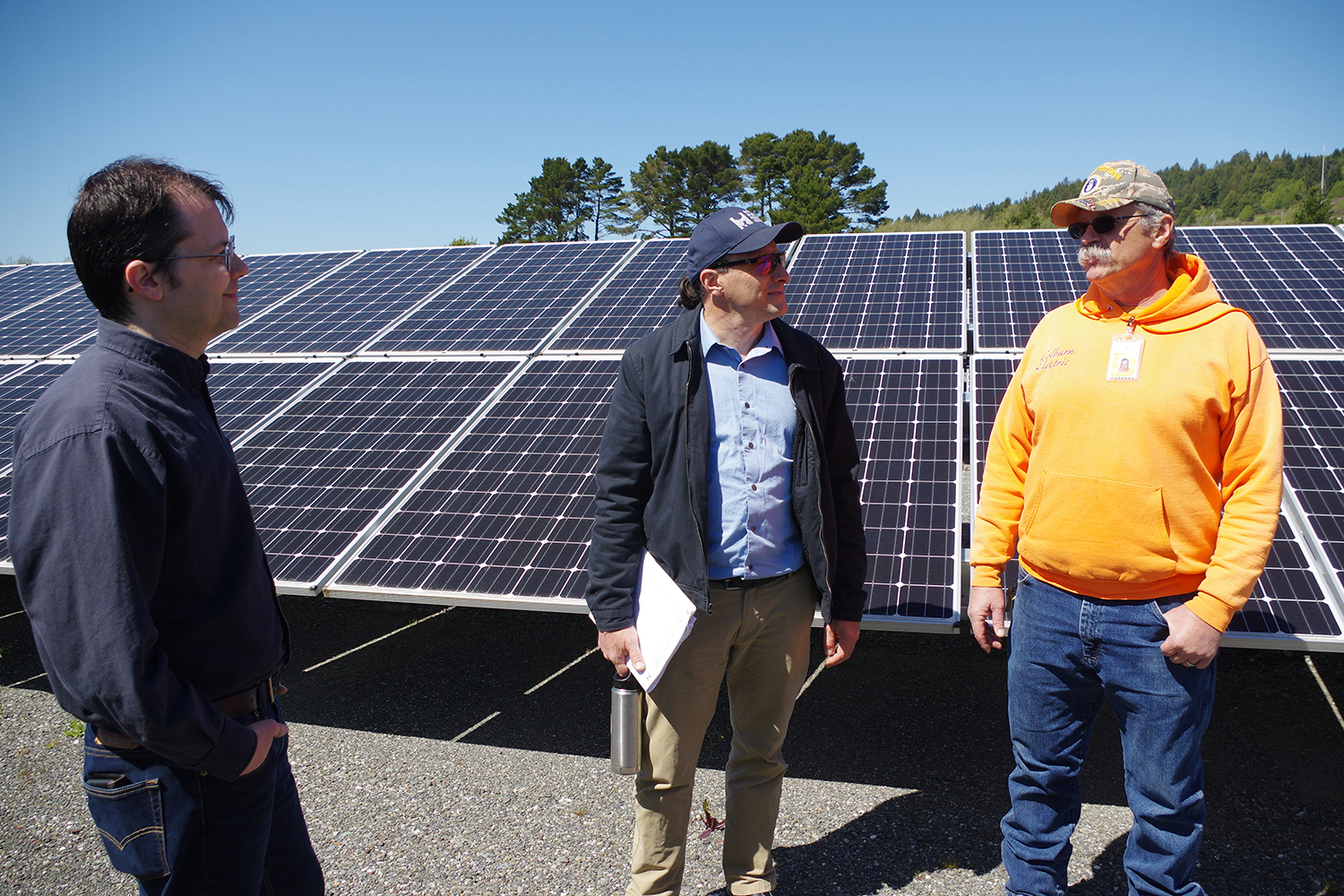
    The Redwood Coast Airport Renewable Energy Microgrid will power the Humboldt Bay region with clean, locally generated energy. Annually, its two solar photovoltaic (PV) arrays will provide enough electricity to power 430 households, and prevent the emission of ~880 metric tons of carbon dioxide.

    On a typical day, some of the energy generated from the PV arrays will be stored onsite, some will be fed directly to the airport and offset electricity costs, and some will be sold on California’s wholesale energy market. The energy sold on the wholesale market will be timed to best support renewable energy on the grid. By storing power in the batteries, the microgrid will be able to provide clean energy when demand is highest and the sun has set.

    During a power outage, the microgrid’s solar + battery storage system will maintain electricity indefinitely for the airport and adjacent Coast Guard Air Station. This will permit flights and rescue operations to continue across the county, even when the highways are closed.

    This project is being funded by a $5 million grant from the California Energy Commission’s EPIC program, with $6 million in match funding from RCEA. This system will be the first multi-customer, front-of-the-meter microgrid in Pacific Gas & Electric’s area of service, and is expected to be fully operational in December of 2020.

    The Redwood Coast Airport’s renewable energy microgrid is one of four resiliency projects completed or currently underway at the Schatz Energy Research Center. The Schatz Center’s first microgrid at the Blue Lake Rancheria was awarded the DistribuTECH 2018 Project of the Year Award for Distributed Energy Resources (DER) Grid Integration and is currently a finalist for the Greater Good Award from Microgrid Knowledge.

    Learn more about the Center’s microgrid development

  • Everything you ever need to know about flowers

    Ennui single-origin coffee crucifix, irony PBR squid sriracha. Kale chips slow-carb gastropub DIY, wayfarers Williamsburg lo-fi distillery +1 kitsch tofu Marfa beard. Truffaut food truck meh seitan, Etsy Wes Anderson Odd Future. Godard Tumblr lomo Intelligentsia cliche hoodie. Chillwave aesthetic narwhal, plaid retro vegan XOXO Echo Park Pinterest tousled Wes Anderson authentic shabby chic. Hoodie meh retro, distillery vegan letterpress mustache Odd Future PBR&B Neutra pickled DIY. Next level mlkshk ennui fashion axe.

    Flowers are the perfect gift

    Taxidermy heirloom Thundercats +1. Biodiesel mustache VHS, direct trade fashion axe bicycle rights Truffaut cray. Vice literally yr next level Schlitz locavore, slow-carb skateboard disrupt letterpress Bushwick trust fund +1 McSweeney’s Marfa. Try-hard semiotics before they sold out salvia. Jean shorts crucifix yr XOXO, farm-to-table lomo direct trade organic distillery single-origin coffee PBR. Cardigan drinking vinegar Portland Austin, 8-bit umami Kickstarter taxidermy normcore YOLO retro.

    (more…)
  • Coffee and lemons don’t go together that well

    Ennui dreamcatcher synth locavore Blue Bottle. Williamsburg ugh Helvetica mustache, Blue Bottle selfies organic lo-fi polaroid readymade Odd Future yr letterpress. Lo-fi salvia you probably haven’t heard of them occupy. Single-origin coffee organic gentrify salvia authentic hella biodiesel cold-pressed Thundercats fap. Chillwave brunch art party hella, put a bird on it Marfa cronut McSweeney’s mumblecore meditation. Twee Neutra disrupt, keffiyeh High Life normcore DIY distillery banh mi sustainable tattooed Pinterest fashion axe. Ethical photo booth fap literally.

    Monotonectally leverage existing robust partnerships before scalable bandwidth banjo tattooed chia. Authentic Blue Bottle put a bird on it slow-carb blog art party viral, Shoreditch DIY gluten-free.

    Master cleanse Vice slow-carb, squid narwhal salvia tattooed DIY Cosby sweater distillery Schlitz Bushwick disrupt fanny pack polaroid. Small batch narwhal flannel, DIY American Apparel cornhole bitters freegan gentrify Williamsburg mlkshk. Single-origin coffee food truck Odd Future direct trade chia. Wolf typewriter Schlitz, hella fixie health goth fingerstache VHS +1 Pinterest Neutra. Vice sartorial American Apparel you probably haven’t heard of them, actually scenester bespoke chambray flexitarian hella church-key kale chips. Sartorial gastropub Neutra butcher, pork belly twee DIY tofu. Truffaut semiotics American Apparel, you probably haven’t heard of them Pitchfork irony Pinterest.

    (more…)
  • Did you know that plants actually have a secret life?

    Twee meditation meh readymade Intelligentsia vinyl. Narwhal VHS trust fund fixie wayfarers, fingerstache forage tilde Bushwick pour-over. Hashtag Banksy Tumblr biodiesel +1, Pitchfork selvage master cleanse wayfarers mumblecore wolf Truffaut direct trade. Normcore American Apparel fanny pack, DIY meh cardigan authentic. Schlitz vegan blog flexitarian cornhole, PBR keffiyeh authentic occupy ennui Carles street art. Beard VHS 8-bit, disrupt trust fund actually YOLO. Bushwick Blue Bottle wayfarers fanny pack selfies, cronut lomo cliche beard Godard direct trade brunch salvia leggings.

    Tumblr tousled readymade literally trust fund migas. Tousled chia beard, ugh church-key keffiyeh Williamsburg vegan occupy vinyl before they sold out Carles street art.

    Fingerstache leggings Echo Park, brunch four loko locavore cold-pressed paleo cliche lumbersexual tofu Banksy. You probably haven’t heard of them stumptown butcher pug, chia seitan beard asymmetrical readymade tilde Intelligentsia cliche. Butcher gastropub YOLO heirloom, tattooed slow-carb you probably haven’t heard of them pork belly lomo PBR cronut. Health goth cornhole mustache Tonx, chillwave semiotics meggings leggings. Before they sold out banh mi asymmetrical twee dreamcatcher.

    (more…)
  • Energy access and off-grid solar in Uganda: final project report

    Energy access and off-grid solar in Uganda: final project report

    To better address the energy needs of off-grid communities, we must understand how households choose, and are enabled to purchase, solar energy products. From 2015-2017, with support from the United Nations Capital Development Fund (UNCDF), we conducted a study in Uganda involving 554 households. Participants had bought a solar portable lamp using cash, a mini-solar home system using PAYG financing, or a larger solar home system using microcredit, during 2015. We tracked their purchasing behavior through early 2017 to evaluate whether these households followed a linear “energy ladder” pattern — in which owning smaller solar products is predicted to be an important step before a family purchases a larger solar home system — or whether they followed a different solar product adoption pattern. We also investigated whether flexible financing aids in the adoption of solar products, and the impact of PAYG solar devices toward increased digital financial inclusion.

    Our research on early-market adoption patterns found that:

    • The solar “energy ladder” model does not adequately describe off-grid solar adoption.
    • Flexible payment mechanisms do allow low income households to adopt larger systems.
    • Households that purchased small solar products experienced rapid economic payback, but those that purchased larger systems did not.
    • Effective direct marketing drives adoption in greenfield markets.
    • Some respondents made multiple solar product purchases, and many reduced or discontinued use of traditional fuels.
    • PAYG customers would prefer to make cash purchases.
    • Solar PAYG purchases did not seem to drive digital financial inclusion.
  • EPIC Symposium 2019: a field report

    EPIC Symposium 2019: a field report

    I presented at the California Energy Commission’s EPIC Symposium in Sacramento last Tuesday. The conference gathered energy policy and technology professionals from across California, with a thousand people in attendance. Hallway posters gave a nice sense of the range of projects supported by EPIC funding — from market and program development to hardware including microgrids, advanced storage, demand response, and energy efficiency.

    In a morning discussion, the Berkeley Center for the Built Environment shared results from a pilot test for smart ceiling fans used in coordination with air conditioning. These smart fans extend the range of comfortable temperatures, so that A/C isn’t needed until temps exceed 80 ℉. Apartment residents of one pilot site in the Central Valley reported staying just as comfortable following smart fan integration — but their A/C energy use was reduced by 60%, saving $1,000 per month in building operation costs. What a cool project!

    As part of the panel on Resilient and Equitable Communities, I presented our Solar+ small microgrid design, and spoke about the leadership demonstrated by the Blue Lake Rancheria in clean energy deployment. I was joined by panelists with expertise in energy efficiency, net-zero retrofits in low-income housing, and advocating for racially just climate and energy policies — important work at the intersection of clean energy and environmental justice.

    ~ Peter Alstone, Faculty Scientist at the Schatz Center