
Category: Research and program updates

  • Solar+ systems and wildfire solutions

    Solar+ systems and wildfire solutions

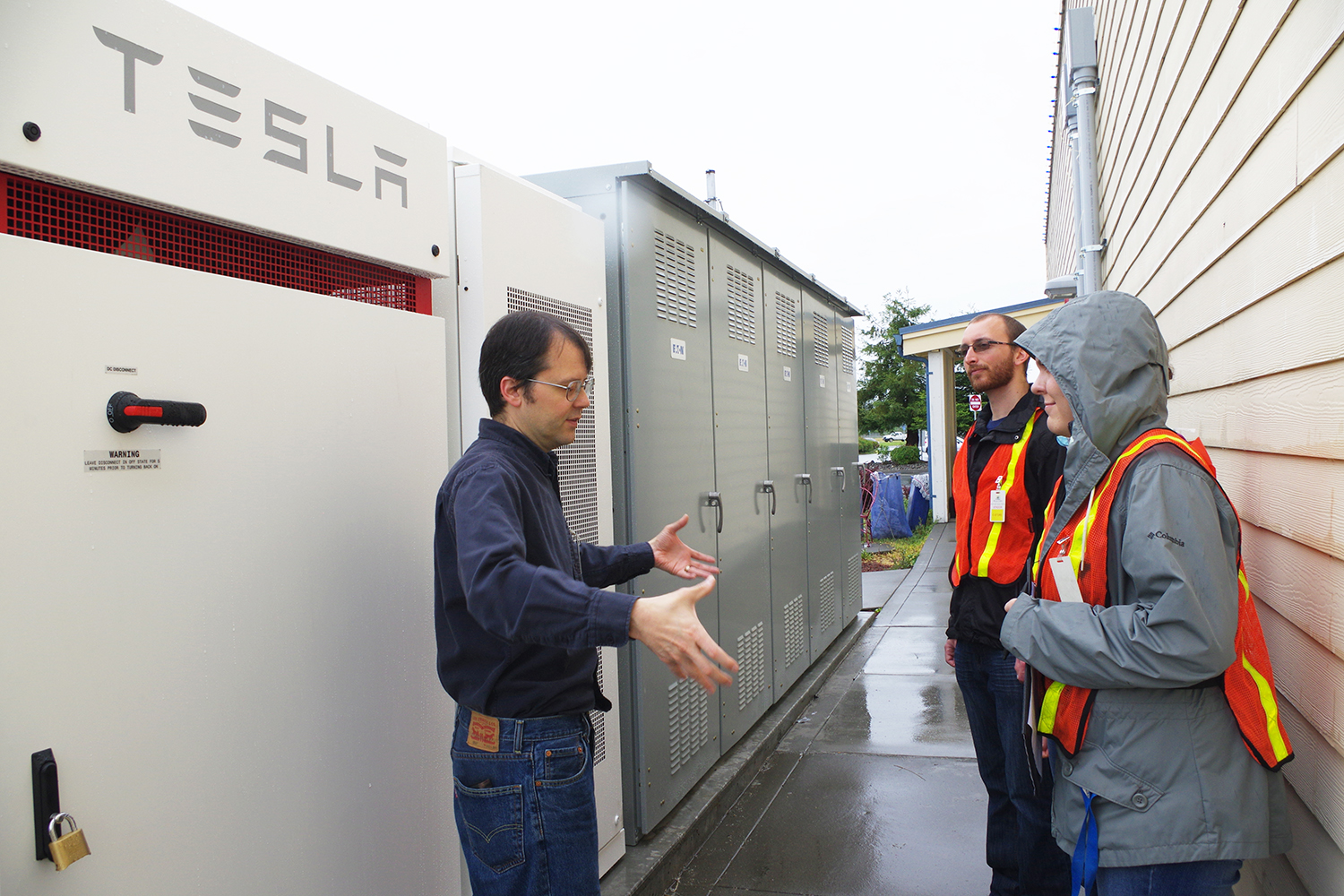
    The Solar+ project at the Blue Lake Rancheria (BLR) is fast approaching completion. This summer, we are working closely with the BLR and with our project partners at Lawrence Berkeley National Laboratory to connect the final pieces of hardware and software for the Rancheria’s fueling station microgrid. Once the project is commissioned and operational, we will run a range of experiments on the advanced controls that form the core of the system.

    When we started this project in 2017, we knew that finding microgrid solutions that work for small-to-medium commercial buildings was important — but we could not have predicted how wildfires would intensify the need for these systems. Electric utilities on the West Coast are now using Public Safety Power Shutoff events to reduce wildfire risk by deenergizing parts of the grid. We have already had one of these events in PG&E’s service territory this summer, impacting ~22,000 customers, and expect more to come. Because fueling stations provide critical services not only for evacuees but also for first responders in high risk fire districts, maintaining electricity at these stations has become a wildfire mitigation goal.

    Our May technical advisory meeting for this project focused on resiliency and disaster preparedness. Designing microgrids that can keep critical facilities online during blackouts is emerging as a key area of our work. As our Solar+ microgrid at the Blue Lake Rancheria enters its deployment and reporting phase, we will seek ways to connect our results with this emerging challenge.

  • Schatz in the community

    Schatz in the community

    This spring, we were visited by students from Six Rivers and Arcata High, Mount Shasta Middle, and Cutten Elementary. We participated in the Redwood Environmental Education Fair, the annual GATE Academy, and the Afterschool Visiting Professionals program at Pacific Union. We brought energy workshops to Freshwater, Hydesville, Union Street Charter and Arcata elementary schools. We tabled at the Fuente Nueva and Lafayette science nights, the Plant and Seed Fair, and for career day on campus! 

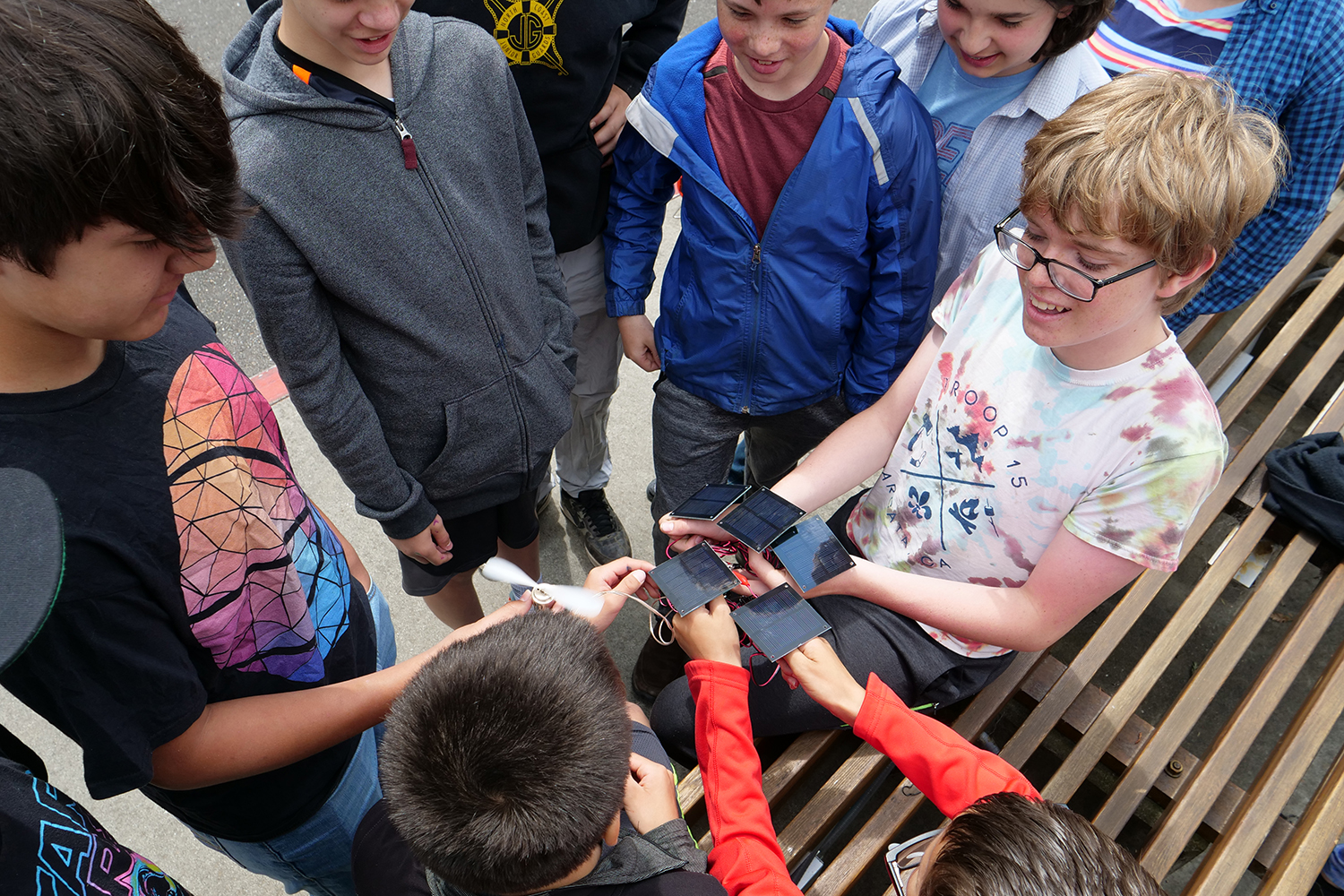
    This week, we explored solar circuits with the HSU Robotics Camp, and brought renewable energy activities to the Yurok Tribe’s youth camp, held at the mouth of the Klamath River.

    It’s exciting to work with young people across the north coast, so many of whom are already deeply committed to understanding and protecting the earth!

    A girl holds a fan and a solar cell, connected by wires
    A student at Klamath Camp powers a fan with a solar cell
  • Pathways to clean cooking

    Pathways to clean cooking

    Nicholas Lam recently attended the Pathways to Clean Cooking 2050 conference in Wexford, Ireland. The conference brought together researchers and practitioners to discuss strategies to increase access to clean and affordable residential energy services — in particular, ways to satisfy cooking needs without increased use of fossil fuels.

    Nick presented on research we are conducting in Nepal to assess how the introduction of electric cooking appliances and biogas systems affects residential energy use, household air quality, and particulate exposure. This research project, Clean Cooking Nepal, is being conducted in collaboration with LEADERS Nepal in Kathmandu, with financial support from the Clean Cooking Alliance.

    The conference culminated in the development of a declaration outlining sectoral needs and commitments — calling for, among other items, a prioritization of initiatives that provide immediate emissions reductions and social benefits through sustainable cooking to the communities most vulnerable to climate change.

    Roughly 50 participants pose for a photo in front of a cookstove
    Participants at the Wexford conference
  • Off-grid conferences in Amsterdam

    Off-grid conferences in Amsterdam

    On June 17-18, Arne Jacobson and Kim Thorpe, along with colleagues from CLASP, represented the Lighting Global Quality Assurance team at the Global Off-Grid Lighting Association’s (GOGLA) annual member conference in Amsterdam, Netherlands. GOGLA is a trade association with over 150 members from the off-grid solar industry. 

    During the conference we met with company representatives from new and established companies to discuss current and future changes to the Lighting Global Quality Assurance program.  We also attended sessions on GOGLA’s policy advocacy work and consumer protection efforts, and new technologies being developed for pay-as-you-go providers.

    On June 19, Kim and Arne attended the Efficiency for Access roundtable in Amsterdam. This meeting brought together industry leaders involved in supporting the off-grid household and productive use appliance market — with a focus on fans, televisions, refrigerators and solar water pumps. Results from Dalberg’s 2019 State of the Off-Grid Appliance Market report were presented, followed by small group meetings to identify market research gaps and next steps. (The full report will be available in July through the Efficiency for Access site.) The Efficiency for Access team also introduced a new data platform, Equip Data, that compares performance data for major off-grid appliances. During the session, Arne delivered a presentation related to our Off-Grid Refrigeration Systems (OGReS) research, which is being carried out jointly with 60 Decibels with support from the Energy Savings Trust.

  • Clean energy for healthcare

    Clean energy for healthcare

    In April, Arne Jacobson and Meg Harper attended the United Nations Foundation (UNF) Clean Energy for Healthcare conference in Nairobi, Kenya. Arne and Meg presented interim findings from our QA for Public Facilities project — in which the Schatz Center is working with the World Bank and ECREEE to design a quality assurance framework for solar installations at public facilities such as health clinics and schools in sub-Saharan Africa.

    Key messages echoed throughout the conference included:

    • the overwhelming need for electricity in rural health care
    • the ability for solar PV systems to meet electricity needs in the absence of reliable grid power
    • the importance of pairing energy efficient appliances with these systems, and
    • the need for long-term operation and maintenance — along with business models to financially support this O&M — throughout the systems’ 10-20 year design life.

    During the conference, the UNF and Sustainable Energy for All (SE4ALL) released a new report which explores many of these themes — Lasting Impact: Sustainable Off-Grid Solar Delivery Models to Power Health and Education.

    Further reading:

  • The future of energy

    The future of energy

    Wired magazine recently visited the Blue Lake Rancheria and the Schatz Center to learn how microgrid systems create energy security during natural disasters. Reporter Matt Simon compares the Rancheria’s microgrids to the evolution of personal computers — once novel assemblies that are now available out of the box.


    Our Center’s microgrid programs focus simultaneously on immediate site needs and on system replicability. Our goal is to make these clean energy technologies feasible for wide deployment, saving our planet while also saving our communities. Two of our projects currently under development were specifically designed with replicability in mind: the Solar+ microgrid at the Blue Lake Rancheria and the Redwood Coast Airport Renewable Energy Microgrid.

    The Blue Lake Rancheria and Solar+

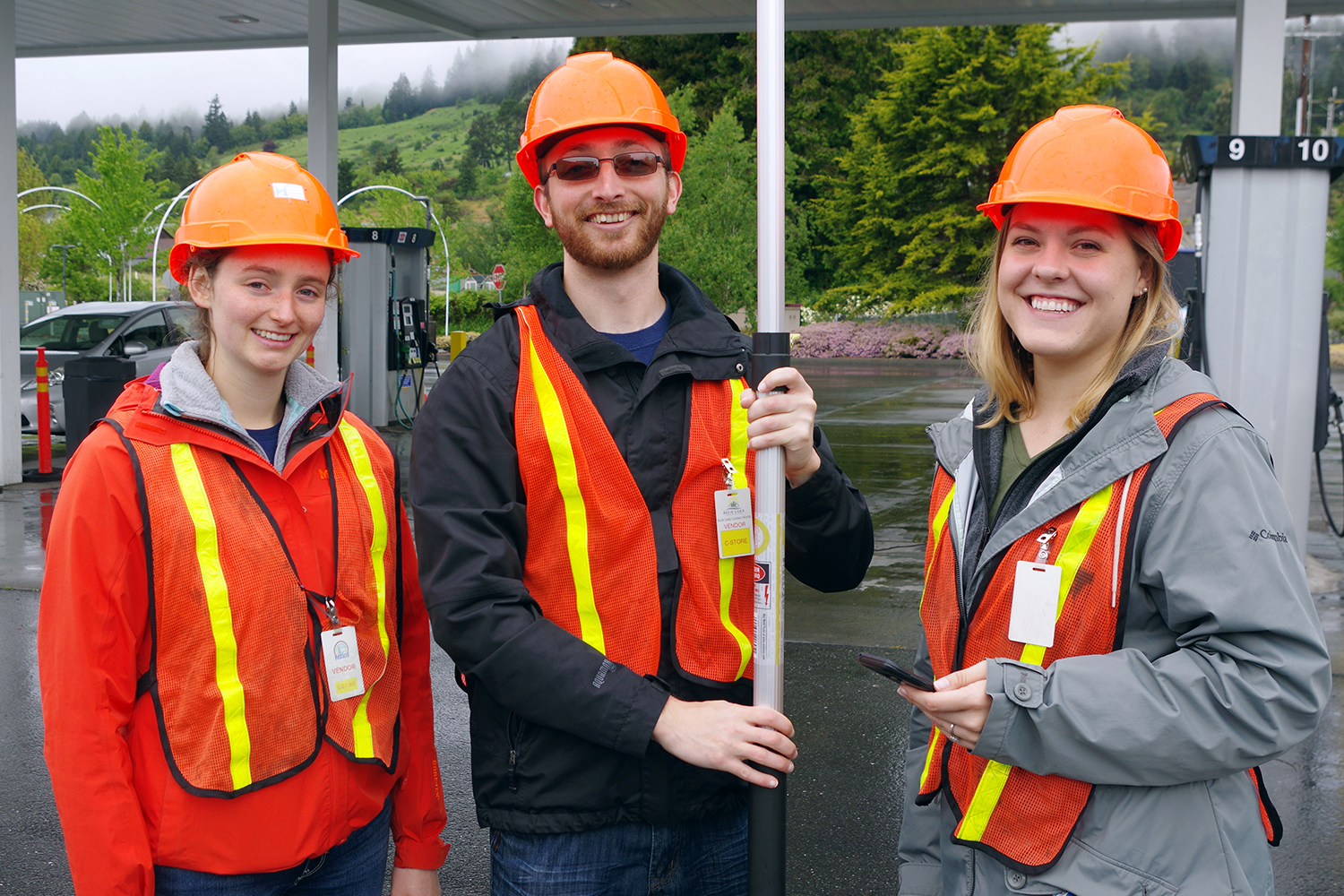
    Two students use a GoPro on an extension pole to take canopy measurements at a fueling station
    Assessing a canopy’s capacity for solar

    The Blue Lake Rancheria is host to two microgrids, both partially funded through the California Energy Commission’s EPIC program. The main campus system went live in 2017 and provides energy security for the tribal government, hotel, casino, and site infrastructure including EV charging stations. A second, independent microgrid is now underway at the adjacent Rancheria gas station and convenience store, and will go live in the next few months. This smaller “Solar+” project is being developed as a test case for stores and fueling stations across California. The primary project goal is to design an affordable microgrid package for statewide deployment — allowing these sites to operate throughout regional energy blackouts.

    This week, our Solar+ team will be visiting convenience stores and fueling stations across northern California. The team will assess existing electrical infrastructure, which will help us identify how Solar+ could be scaled to most effectively meet site-specific needs. For the tour, Schatz Graduate Fellow Thalia Quinn will be joined by René DeWees and Ellen Thompson. Ellen and René just completed a year on the Solar+ team as student researchers, while Thalia recently presented her master’s thesis on solar+ microgrid costs at gas station and convenience stores in California.

    Resiliency needs are intimately tied to location. As Thalia explains, “Recent discussions with fueling station representatives have illuminated the importance of resilient systems during emergency events such as wildfires. These stations support first responder agencies and allow citizen evacuation during natural disasters, making them a prime location for the installation of Solar+.” Through interviews with industry specialists and by carefully documenting a variety of site layouts, we hope to build a flexible, best-fit system that addresses common needs.

    Two students in orange vests stand inside a convenience store refrigerator
    Ellen Thompson and René DeWees document a refrigeration system

    The Redwood Coast Airport

    From its remote location nearly 300 miles north of San Francisco, the Redwood Coast Airport (RCA) serves 136,000 residents in a county that spans 3,500 square miles. Located beside the runway is also the regional Coast Guard Air Station, which monitors and provides search and rescue for 250 miles of rugged coastline.

    We are currently developing a solar+battery based microgrid for the airport and Coast Guard station that will ensure uninterrupted electrical service in the event of a natural disaster, precautionary de-energization of the grid, or other power outage. The solar arrays will have a capacity of more than 2 MW, and will be coupled with an 8 MWh battery storage system.

    The airport microgrid is being funded by the California Energy Commission, with the explicit goal of creating a business case for microgrids. The system will be owned and maintained by the Redwood Coast Energy Authority (RCEA), on land leased from the airport. As the local community choice aggregator, RCEA is responsible for making power purchases on behalf of its customers (including the airport), while Pacific Gas & Electric (PG&E) provides the transmission and distribution system for that power.

    The airport microgrid’s first objective is to provide onsite resiliency, so 2 MWh will always be retained in the battery storage. Additional generation will also be retained in storage until it is needed by the macrogrid — typically after nightfall, when the state’s solar arrays stop producing. At this point, RCEA will sell its excess energy generation via CAISO, California’s wholesale electricity market, allowing the state to make ideal use of distributed solar.

    This airport system will be the first front-of-the-meter, multi-customer microgrid in PG&E’s service territory — and will be accessible from the PG&E distribution control center. We are currently working with the utility to develop an experimental microgrid tariff that will define the rules of interconnection and compensation for these enhanced resiliency systems. Development of the tariff and establishing a path for CAISO participation are critical steps for widespread microgrid deployment, from both a regulatory and a fiscal perspective.

    The Redwood Coast Airport Renewable Energy Microgrid will go live in late 2020 or early 2021.

    A short-mowed grassy area is shown with an edging of fence to the right and trees in the distance.
    Site of the upcoming airport microgrid solar array
  • Webinar (5/13): proposed changes to Lighting Global standards for solar products

    Webinar (5/13): proposed changes to Lighting Global standards for solar products

    On May 13, Schatz Center Director Arne Jacobson will present on proposed changes to the Lighting Global Quality Standards / IEC 62257-13-1. The proposed changes include increased battery and PV safety requirements, and additional labeling and performance reporting requirements. Following the presentation, Dr. Jacobson will be joined by Jit Bhattacharya of Fenix International and Stephan Lux of Fraunhofer ISE for a panel discussion. A Q&A session will close the webinar.

    This event is cohosted by Lighting Global and GOGLA, and will be live from 16:30 – 18:00 CEST.

    Lighting Global has opened a call for stakeholder comments on the proposed changes through May 17. The proposed changes and survey response link are included in the document below:


  • A public session on offshore wind and California fisheries and wildlife (5/3)

    A public session on offshore wind and California fisheries and wildlife (5/3)

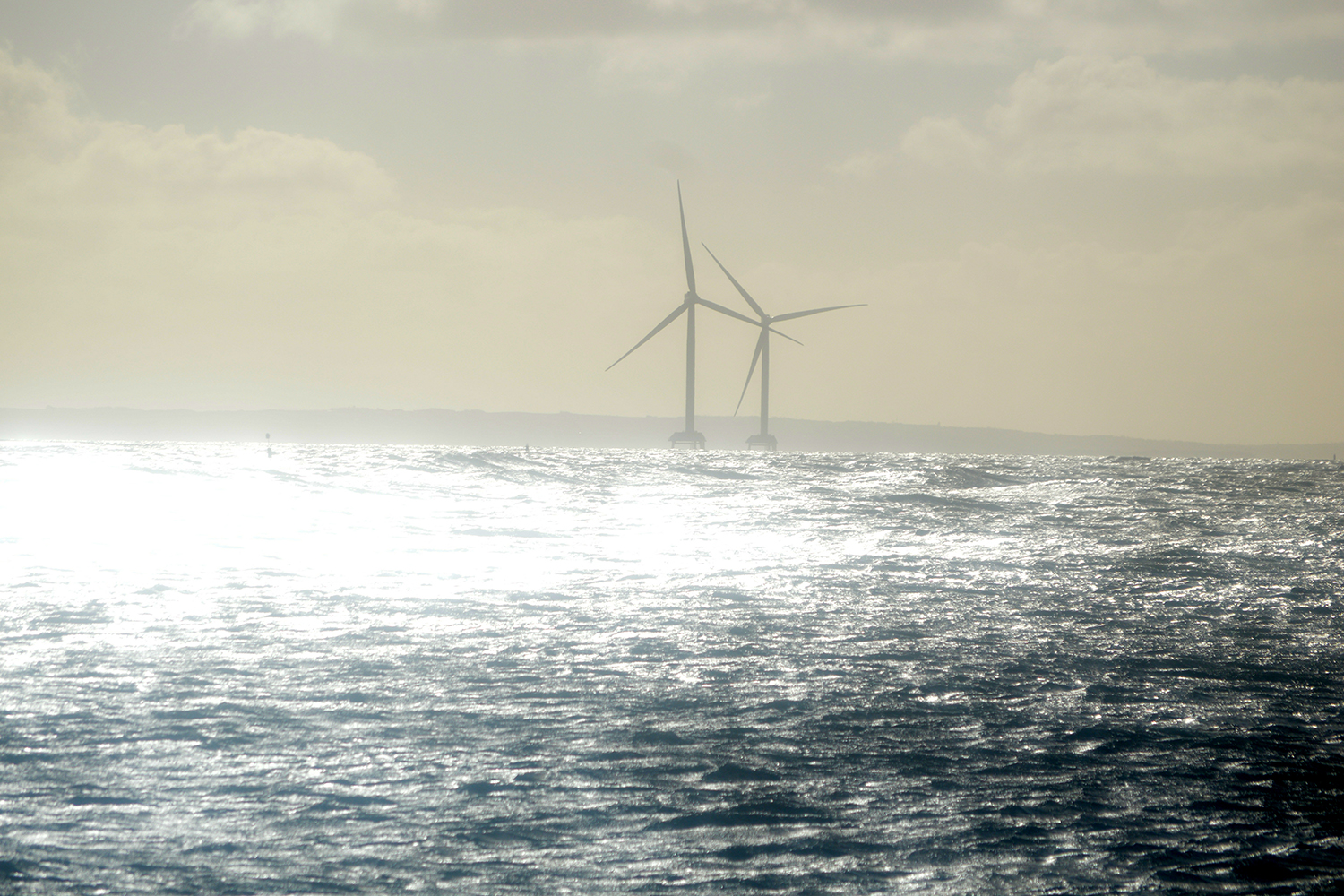
    On Friday, May 3, experts from natural resource and energy agencies, the wind industry, and fisheries and environmental groups will gather in Eureka to discuss how fisheries and wildlife might coexist with offshore wind farms along California’s coast. Mark Severy, Senior Research Engineer at the Schatz Center, will speak about our current wind feasibility analysis for Northern California, funded by the California Ocean Protection Council.

    The May 3 discussion is being convened by Senator Mike McGuire and Assemblymember Mark Stone.

    Attendance is free and open to the public. The hearing will be held from 11-2 pm at the Humboldt Bay Aquatic Center and will be live streamed.


    Announcement from the
    Joint Committee on Fisheries and Aquaculture
    May 3, 2019 Hearing Background

    Senator Mike McGuire, Chair of the Joint Committee on Fisheries and Aquaculture (JCFA), and Assemblymember Mark Stone, Vice Chair, are hosting California’s Fisheries and Wildlife: How will they co-exist with Offshore Wind Energy Development? The hearing will be held Friday, May 3, 2019 from 11:00 a.m. to 2:00 p.m., at the Humboldt Bay Aquatic Center, Room 203, in Eureka, California.

    The hearing will provide our legislators, their staff and the public an opportunity to learn more about California’s developing offshore wind energy industry from agency and industry leading experts. The JCFA will also hear testimony from environmental and fisheries leaders about their perspectives and concerns. The presenters will emphasize the need to incorporate fish and wildlife needs during the development process. The hearing will be live streamed and recorded.

    Presentations and discussion will focus on why wind energy is important to the State’s energy supply, how to mitigate potential environmental impacts on land and sea, balancing the need for green energy while protecting our environment, and how wind energy and protecting California’s fisheries can be compatible.

    The agenda features presentations by state and federal agency and wind energy industry representatives as well as environmental advocates and fishing industry representatives.

    Testimony will be provided by representatives of the Bureau of Energy Management, the California Energy Commission, the California Natural Resources Agency, the California Coastal Commission, Principle Power, Schatz Energy Research Center and American Wind Energy Association.

    The hearing will also include testimony from the Audubon Society, the Surfrider Foundation, the Natural Resources Defense Council, the Pacific Coast Federation of Fishermen’s Associations, Humboldt Fishermen’s Marketing Association and the Responsible Offshore Development Alliance.

    Additional information including links to: the agenda, press releases, articles about the hearing, live stream links, and presenter biographies may be viewed at the committee web site under the “2019 hearings” heading.

    The public is welcome to attend and there is no fee for admission. The hearing will include a public comment period.

    Please contact Tom Weseloh, Chief Consultant, Joint Committee on Fisheries and Aquaculture for more information.

  • Webinar (4/26): Lessons learned & best practices from 7 EPIC-funded microgrids

    Webinar (4/26): Lessons learned & best practices from 7 EPIC-funded microgrids

    This Friday (9:30 am – 12:30 pm Pacific), microgrid professionals will join together to share their best practices and lessons learned from recent, cutting edge microgrid systems. Speakers represent seven projects first funded in 2015 through the California Energy Commission’s Electric Program Investment Fund — including the Schatz Center’s design and development of the Blue Lake Rancheria low-carbon microgrid.

    Dave Carter, Managing Research Engineer at the Schatz Center, will present on the fully operational Blue Lake Rancheria and the upcoming Redwood Coast Airport microgrid projects.

    Announcement from the CEC:

    California Energy Commission staff will conduct a workshop to report information and receive public comments on the lessons learned and best practices obtained from Electric Program Investment Fund (EPIC) grants awarded for microgrid research and development in 2015 (PON-14-301). The Energy Commission has managed seven microgrid awards since 2015 and most of the awardees completed their required activities by the end of March 2019. These microgrids are early adopters and experienced many successes and unexpected challenges during the implementation of their grants. This workshop will discuss the challenges and successes the awardees experienced over the last four years as they designed, installed, and operated their microgrids.

  • Visit from the Agricultural Research Institute

    Visit from the Agricultural Research Institute

    On April 9, the Schatz Center hosted a session during the Agricultural Research Institute’s (ARI) 2019 Logistics Meeting. The ARI, which supports applied agricultural and natural resource research within the California State University (CSU) system, has funded several projects at the Schatz Center related to bioenergy and forestry practices.

    Fifteen administrators from different CSU campuses that operate the ARI program visited the Schatz Center for a tour, demonstration, and to learn about our ARI-supported research. Director Arne Jacobson and faculty associates Sintana Vergara and Kevin Fingerman discussed their research on biochar quality and bioenergy lifecycle assessment. After their presentations, Graduate Student Research Assistant and Tuttle Fellow, Carisse Geronimo, provided a demonstration of the methods and results of her research characterizing the properties and decay rates of biomass woodchips.

    Learn more about our ARI-funded research: