
Category: Webinars and events

  • 10/19 webinar: Reflections and Next Steps — offshore wind feasibility studies

    10/19 webinar: Reflections and Next Steps — offshore wind feasibility studies

    Join us this afternoon from 2-4:30 pm (Pacific) for the closing webinar in our offshore wind feasibility series, to learn about next steps in both research and planning processes.

    Register now

    We welcome participation in these events from a broad audience. Each session is free and open to the public.

    Recordings, slide decks, and other materials from this series can be downloaded on our wind studies page.

    Today’s speakers

    We will open today with remarks from U.S. Congressman Jared Huffman. Next up, Arne Jacobson will share his reflections on the Schatz Center’s research findings to date and on questions raised during this webinar series. He will also outline our current and upcoming offshore wind studies, and share the timeline of our forthcoming reports and analyses.

    Then, we will hear from federal and state agency representatives, to learn of their next steps for exploring offshore wind energy development on the north coast. They will also discuss how community members and other interested parties can continue to stay informed and participate in these processes. Panelists include:

    • Chris Potter, Program Manager, Ocean Protection Council
    • Necy Sumait, Chief, Renewable Energy, Pacific Region, Bureau of Ocean Energy Management
    • Eli Harland, Advisor to Commissioner Karen Douglas, California Energy Commission
    • and other state and federal agency experts in offshore wind planning

    We will then close with a discussion period in which participants are invited to ask questions, share insights, and offer comments on the webinar series.

    Funding

    Production of this five-part offshore wind webinar series is supported by the Ocean Protection Council of the California Natural Resources Agency. The research studies were funded by the California Ocean Protection Council, the Governor’s Office of Planning and Research, and the Bureau of Ocean Energy Management. 

    More information

  • SFSS webinar 10/22 — Redwood Coast telecom resilience

    SFSS webinar 10/22 — Redwood Coast telecom resilience

    Redwood Coast telecom resilience: how broadband, internet, cellular, and emergency communications are changing, and becoming more resilient and climate-smart

    ** Please note that this talk will be held at 4 pm Pacific. **

    REGISTER for this talk

    Internet access and cellular communication are increasingly essential for a productive, healthy life. Telemedicine, ecommerce, distance learning, community economies, and social services are all enabled by broadband, cellular networks, satellites, and other kinds of digital connective infrastructure. Digital communications are also increasingly essential to operating lifeline sectors – energy, transportation, water, and food – with maximum efficiency, and to ensure continual operations during both emergencies and business as usual.

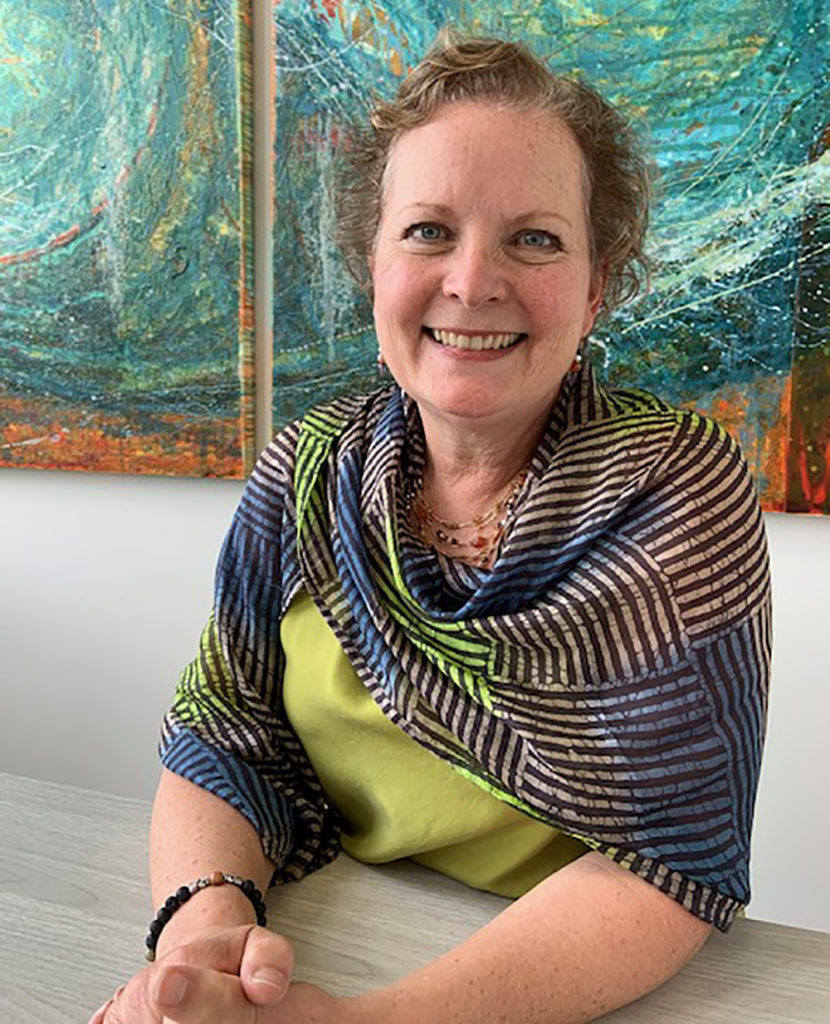
    A smiling woman sits in front of a painting

    In rural environments, the economics of telecom are more difficult, and rural areas of the United States, including rural tribal communities, still lie across a “digital divide” where the quality of internet access, cellular communications, and emergency communications are insufficient, and lag relative to their urban counterparts. Gaps in telecom resources have been highlighted by the covid-19 pandemic, as well recent power shutoff events and outages.

    This discussion between two resiliency innovators from California’s rural north coast will focus on solutions that are already in play — or on the near horizon — to bridge the digital divide and provide robust telecom service in rural areas.

    Karen Eckersley (above right) is a communications engineer by training and has a technology construction, integration and consulting background. She is a Communications Division Program Outreach Coordinator for the California Public Utilities Commission, and lives in Humboldt County, where she is working to help local Tribes improve their communications resiliency.

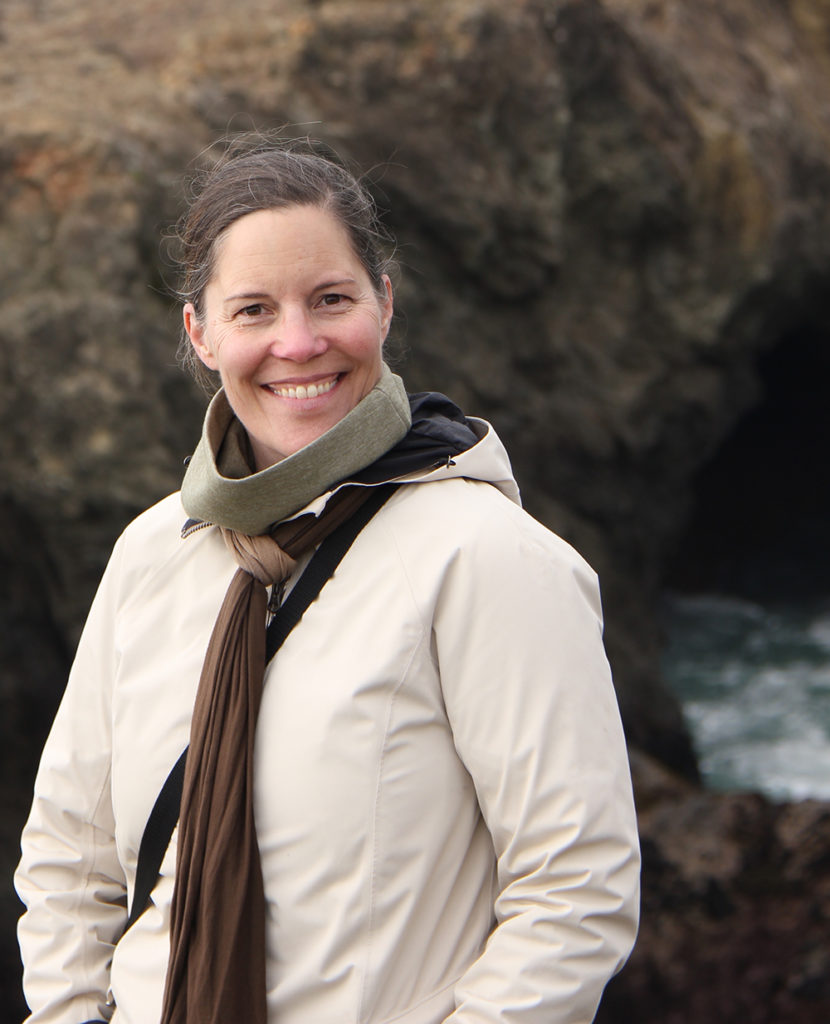
    A smiling woman in an off-white coat and scarves stands before a rock face at the ocean.

    Jana Ganion (right) is the Sustainability and Government Affairs Director for the Blue Lake Rancheria Tribe, where she creates strategies for zero-carbon resilience. Her development experience includes low-carbon microgrids, electrified transportation infrastructure, and strategic planning and deployment in sustainability, climate mitigation and adaptation, emergency preparedness, and economic development.

    How to attend

    We’re holding this year’s Sustainable Futures Speaker Series online via webinar. Each lecture will be streamed via Zoom, and will be followed by a Q&A discussion period. All events are free and open to the public.

    About the series

    The Sustainable Futures Speaker Series stimulates interdisciplinary collaboration around issues related to energy, the environment, and society. All lectures are free and open to the public, and are sponsored by the Schatz Energy Research Center, the Environment & Community graduate program, and the College of Arts, Humanities & Social Sciences at Humboldt State University.

    Questions? Email info@schatzcenter.org.

  • SFSS webinar 10/8 — When Latinx studies and environmental studies meet

    SFSS webinar 10/8 — When Latinx studies and environmental studies meet

    REGISTER for this talk

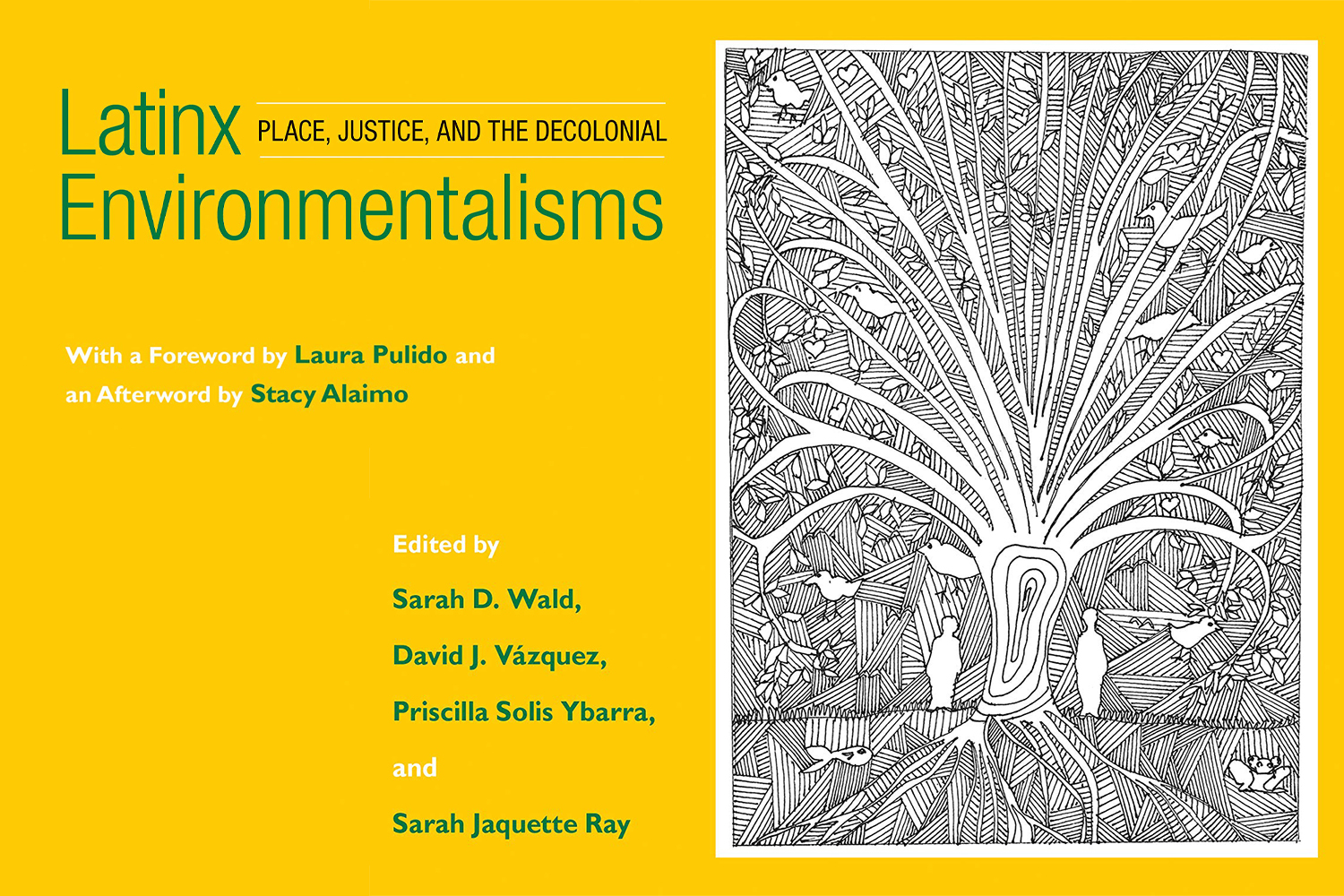
    This event will feature a panel discussion with the editors of Latinx Environmentalisms: Place, Justice, and the Decolonial — Sarah D. Wald, David J. Vázquez, Priscilla Solis Ybarra, and Sarah Jaquette Ray.

    The whiteness of mainstream environmentalism often fails to account for the richness and variety of Latinx environmental thought. Building on insights of environmental justice scholarship as well as critical race and ethnic studies, Latinx Environmentalisms maps the ways Latinx cultural texts integrate environmental concerns with questions of social and political justice.

    In this roundtable discussion, the editors of Latinx Environmentalisms come together to celebrate the publication of the volume and to talk about the connections – as well as the remaining tensions – between Latinx Studies and the environmental humanities.

    How to attend

    We’re holding this year’s Sustainable Futures Speaker Series online via webinar. Each lecture will be streamed via Zoom, and will be followed by a Q&A discussion period. All events are free and open to the public.

    About the series

    The Sustainable Futures Speaker Series stimulates interdisciplinary collaboration around issues related to energy, the environment, and society. All lectures are free and open to the public, and are sponsored by the Schatz Energy Research Center, the Environment & Community graduate program, and the College of Arts, Humanities & Social Sciences at Humboldt State University.

    Questions? Email info@schatzcenter.org.

  • 10/5 webinar: Community Perspectives on Regional Impacts and Opportunities — offshore wind feasibility studies

    10/5 webinar: Community Perspectives on Regional Impacts and Opportunities — offshore wind feasibility studies

    Please join us on Monday, October 5 from 2:00-4:30 pm (Pacific) for the fourth webinar in Exploring the Feasibility of Offshore Wind Energy for the California North Coast.

    Register now

    We welcome participation in these events from a broad audience. Each session is free and open to the public. Closed-caption recordings will also be released following each webinar.

    Please visit our wind studies page for recordings and materials from the first three webinars.

    Today’s speakers

    We will open with remarks from:

    • Mike Wilson, 3rd District Supervisor, Humboldt County Board of Supervisors and North Coast Representative for the California Coastal Commission
    • Arne Jacobson, principal investigator on our offshore wind feasibility studies, and Director of the Schatz Center

    Laurie Richmond, Associate Professor of Environmental Science & Management at HSU, will then share key findings from a north coast community perspectives analysis regarding the potential impacts and opportunities of offshore wind energy. This research was carried out from 2018-2020, and included interviews with community members as well as input from public meetings and workshops held during this period. The Schatz Center team also conducted a literature review of lessons learned from other communities around the world that have engaged with offshore wind.

    Following the presentation, we will hear reflections from five panelists:

    • Mike Anderson, Commercial fisherman
    • Jana Ganion, Sustainability and Government Affairs Director for the Blue Lake Rancheria Tribe
    • Jeff Hunerlach, District Representative, District 40, Operating Engineers Local #3
    • Harrison Ibach, President of the Humboldt Fishermen’s Marketing Association
    • Jennifer Savage, California Policy Manager for the Surfrider Foundation

    Panelist comments will be followed by a discussion period in which participants are invited to share their questions and insights regarding the possibility of wind farm development in the Humboldt Bay region.

    Funding

    Production of this five-part offshore wind webinar series is supported by the Ocean Protection Council of the California Natural Resources Agency. The research studies were funded by the California Ocean Protection Council, the Governor’s Office of Planning and Research, and the Bureau of Ocean Energy Management. 

    More information

  • 9/28 webinar: Port and coastal infrastructure — offshore wind feasibility studies

    9/28 webinar: Port and coastal infrastructure — offshore wind feasibility studies

    Please join us on Monday, September 28 from 2:00-4:30 pm (Pacific) for the third webinar in Exploring the Feasibility of Offshore Wind Energy for the California North Coast.

    Register now

    We welcome participation in these events from a broad audience. Each session is free and open to the public. Closed-caption recordings will also be released following each webinar.

    Please visit our wind studies page for recordings and materials from the first two webinars.

    Today’s speakers

    We will open with remarks from:

    • Jennifer Lucchesi, Executive Officer, California State Lands Commission, and
    • Arne Jacobson, principal investigator on our offshore wind feasibility studies, and Director of the Schatz Center

    Aaron Porter and Shane Phillips of Mott MacDonald will then present analyses of the port and coastal infrastructure that would be required to support offshore wind from the Humboldt Bay harbor, and discuss potential use and environmental impacts for the Bay.

    Following the presentation, we will hear reflections from five panelists:

    • Adam Canter, Tribal Botanist/GIS Specialist for the Wiyot Tribe Natural Resources Department, Table Bluff Reservation
    • Tyrone Conner, Deputy Chief of Waterways Management and Chief of Aids To Navigation for the Eleventh Coast Guard District
    • Sharon Kramer, Principal and Senior Marine Biologist at H. T. Harvey & Associates
    • Larry Oetker, Executive Director of the Humboldt Bay Harbor and Recreation District
    • Antoine Peiffer, Vice President of Engineering at Principle Power

    Panelist comments will be followed by a Q&A discussion.

    Funding

    Production of this five-part offshore wind webinar series is supported by the Ocean Protection Council of the California Natural Resources Agency. The research studies were funded by the California Ocean Protection Council, the Governor’s Office of Planning and Research, and the Bureau of Ocean Energy Management. 

    More information

  • 9/21 webinar: Ecological and geological setting — offshore wind feasibility studies

    9/21 webinar: Ecological and geological setting — offshore wind feasibility studies

    Please join us on Monday, September 21 from 2:00-4:30 pm (Pacific) for the second webinar in Exploring the Feasibility of Offshore Wind Energy for the California North Coast.

    Register now

    We welcome participation in these events from a broad audience. Each session is free and open to the public. Closed-caption recordings will also be released following each webinar.

    Today’s speakers

    We will open with remarks from:

    • Mark Gold, Executive Director of the California Ocean Protection Council
    • Garry George, Clean Energy Director of the National Audubon Society / Power Working Group
    • Arne Jacobson, principal investigator on our offshore wind feasibility studies, and Director of the Schatz Center

    Sharon Kramer and Scott Terrill of H.T. Harvey will then share their findings on the ecological setting which could be impacted by offshore wind farm development on the north coast. H.T. Harvey is a project partner on our offshore wind feasibility studies, including the environmental inventory shared today, and the Seabird 3D study currently in development.

    Next, Mark Hemphill-Haley will describe the geological environment of this region. Mark is a Professor of Geology at Humboldt State and a project partner on our feasibility studies. (The geological report will be published soon.)

    We will then hear from five panelists:

    • Tom Wheeler, Executive Director of EPIC
    • David M Pereksta, Avian Biologist at the Bureau of Ocean Energy Management
    • Brandon Southall, President and Senior Scientist at Southall Environmental Associates, Inc. and Research Associate at the University of California, Santa Cruz
    • Andrea Copping, Senior Research Scientist for the Coastal Division at the Pacific Northwest National Laboratory
    • Aaron Porter, Senior Project Engineer for the Coastal Division, at Mott MacDonald

    Panelist comments will be followed by a Q&A discussion, in which participants are invited to ask questions and share their insights on the feasibility of offshore wind for the California north coast.

    Funding

    Production of this five-part offshore wind webinar series is supported by the Ocean Protection Council of the California Natural Resources Agency. The research studies were funded by the California Ocean Protection Council, the Governor’s Office of Planning and Research, and the Bureau of Ocean Energy Management. 

    More information

  • 9/14 webinar:  Energy Production and Delivery, and Economic Development — offshore wind feasibility studies

    9/14 webinar: Energy Production and Delivery, and Economic Development — offshore wind feasibility studies

    We hope you will join us this afternoon from 2:00-5:00 pm (Pacific) for the first webinar in Exploring the Feasibility of Offshore Wind Energy for the California North Coast. This will be the first of a five-part series in which we hope to build a collaborative discussion about the feasibility of offshore wind energy for the California north coast, and its potential to contribute to California’s clean energy and climate goals.

    We welcome participation in these events from a broad audience. Each session is free and open to the public. Closed-caption recordings will also be released following each webinar.

    Register now

    Today’s speakers

    We will open with remarks from:

    • Arne Jacobson, principal investigator on our offshore wind feasibility studies, and Director of the Schatz Center
    • Karen Douglas, Commissioner at the California Energy Commission, and
    • Necy Sumait, Chief of Renewable Energy for the Pacific Region at the Bureau of Ocean Energy Management

    Next, Arne Jacobson will share an overview of offshore wind technology, discuss how offshore wind could contribute to California’s clean energy and climate targets, and outline our recent and ongoing feasibility analyses of offshore wind in the Humboldt Bay region.

    Mark Severy will then share report findings on:

    • the offshore wind generation capacity on California’s north coast
    • challenges related to the limited capacity of existing local transmission infrastructure
    • the economic viability of wind development
    • and potential economic and employment benefits

    Mark was formerly the project manager for these feasibility studies, and is now at the Pacific Northwest National Laboratory.

    We will then hear from five panelists with insight into generation and transmission, and to north coast goals for renewable energy and economic development:

    • Matthew Marshall, Executive Director, Redwood Coast Energy Authority
    • Jason Ramos, Tribal Council Vice Chair, Deputy Tribal Administrator, Blue Lake Rancheria Tribe of California
    • Neil Raffan, Regulatory Analyst, Integrated Resource Planning, Energy Division, California Public Utilities Commission
    • Marco Rios, Manager, Transmission System Planning, Pacific Gas & Electric
    • Donna Wright, President/CEO of the Greater Eureka Chamber of Commerce

    Panelist comments will be followed by a community discussion, in which participants are invited to ask questions and share their insights on the feasibility of offshore wind for the California north coast.

    Funding

    Production of this five-part offshore wind webinar series is supported by the Ocean Protection Council of the California Natural Resources Agency. The research studies were funded by the California Ocean Protection Council, the Governor’s Office of Planning and Research, and the Bureau of Ocean Energy Management. 

    More information

  • Offshore wind energy webinar series opens Monday 9/14

    Offshore wind energy webinar series opens Monday 9/14

    REGISTER now

    Please join us for a five-part webinar series on Exploring the Feasibility of Offshore Wind Energy for the California North Coast. This online series will open on September 14 and run for five consecutive Mondays through October 12. Webinars will begin at 2 pm (Pacific), and will be live streamed and captioned. All events are free and open to the public.

    Each week’s webinar will present key findings from offshore wind energy feasibility studies conducted by the Schatz Center’s offshore wind studies team and research partners over the last 18 months. Presentations will be followed by commentary from north coast community leaders and subject area experts — and then by a community discussion in which all attendees are encouraged to share questions and reflections. Leaders from state and federal government will also offer insight during each event.

    Schedule of events:

    • Monday, September 14: Energy Production and Delivery, and Economic Development
    • Monday, September 21: Ecological and Geological Environment
    • Monday, September 28: Port and Coastal Infrastructure
    • Monday, October 5: Community Perspectives on Regional Impacts and Opportunities
    • Monday, October 12: Reflections and Next Steps

    Registration

    Registration for all events is now open at schatzcenter.org/wind.

    For more information or to sign up for research updates from our ongoing wind studies, contact windstudies@schatzcenter.org.

    Background

    Starting about 20 miles from shore, the north coast of California has the strongest wind resource in the continental United States. Offshore wind development in this region could contribute significantly to California’s climate and clean energy goals while also supporting economic and job development on the north coast. At the same time, issues including environmental impacts, geologic hazards, economic viability, infrastructure needs, and cultural and community resources and existing activities must be carefully examined and collaboratively addressed if this renewable energy opportunity is to be realized.

    Funding

    Production of this five-part webinar series is supported by the Ocean Protection Council of the California Natural Resources Agency. The research studies were funded by the Ocean Protection Council, the California Governor’s Office of Planning and Research, and the Federal Bureau of Ocean Energy Management.

  • SFSS webinar 9/3 — Safer breathing: reducing the risk of airborne COVID 19 infection

    SFSS webinar 9/3 — Safer breathing: reducing the risk of airborne COVID 19 infection

    The SARS-2 virus is contained in fluid particles that are emitted from the respiratory tracts of people with COVID-19 when exhaling, talking, coughing, and singing. In this webinar, Mark Nicas will introduce the basics of particle behavior in air, the evidence for inhalation transmission, and control measures to reduce the risk of infection. He will also explore the efficacy of different mask types for reducing virus inhalation and emission.

    A man with light skin and grey hair, glasses, a white shirt, and a tweed coat, smiles while standing against a grey photo curtain.

    Mark Nicas is an Emeritus Adjunct Professor at the School of Public Health at UC Berkeley. His academic research has been in three areas: exposure and risk assessment for pathogens including M. tuberculosis, C. immitis and the influenza virus; the mathematical modeling of exposure intensity to airborne chemical toxicants; and variability in the efficacy of respiratory protection. He has a PhD and an MPH in Environmental Health Sciences from Berkeley, a MS in Genetics from the University of Wisconsin, and a BS in Biology/Chemistry from the City College of New York. He has been a professional industrial hygienist for over forty years and is a Certified Industrial Hygienist.

    How to attend

    We’re holding this year’s Sustainable Futures Speaker Series online via webinar. Talks will be given from 5:30-7:00 pm on Thursday evenings (Pacific). Each lecture will be streamed via Zoom, and will be followed by a Q&A discussion period. All events are free and open to the public.

    About the series

    The Sustainable Futures Speaker Series stimulates interdisciplinary collaboration around issues related to energy, the environment, and society. All lectures are free and open to the public, and are sponsored by the Schatz Energy Research Center, the Environment & Community graduate program, and the College of Arts, Humanities & Social Sciences at Humboldt State University.

    Questions? Email info@schatzcenter.org.

  • Save the dates! Exploring the Feasibility of Offshore Wind Energy for the CA North Coast

    Save the dates! Exploring the Feasibility of Offshore Wind Energy for the CA North Coast


    UPDATE (8/31): Registration for all sessions is now open


    This fall, our team is hosting a series of five webinar workshops on the feasibility of offshore wind energy development on California’s north coast.

    In each webinar, we will share topical findings from our recently conducted studies. After each presentation, there will be a moderated panel discussion. Webinar participants will then be invited to share their insights, questions, and perspectives.

    Schedule

    • Monday, September 14: Energy Production and Delivery, and Economic Development
    • Monday, September 21: Ecological and Geological Environment
    • Monday, September 28: Port and Coastal Infrastructure
    • Monday, October 5: Community Perspectives on Regional Impacts and Opportunities
    • Monday, October 12: Reflections and Next Steps

    Webinars will begin broadcasting at 2 pm (Pacific), and range in duration from 2-3 hours. We welcome participation in these events from a broad audience. Each session is free and open to the public, and closed-caption recordings will be released following each webinar.

    Registration

    We will open registration for all sessions on August 31. Agendas for each webinar will be posted on our wind studies page in advance of each webinar — as well as links to related reports as they are released.

    Learn more

    If you’re interested in receiving updates on our offshore wind research, including newly released reports and upcoming events, please send an email to windstudies@schatzcenter.org

    Funding

    Production of this five-part offshore wind webinar series is supported by the Ocean Protection Council of the California Natural Resources Agency. The research studies were funded by the California Ocean Protection Council, the Governor’s Office of Planning and Research, and the Bureau of Ocean Energy Management.