Author: Arne Jacobson

  • In Memory of Don Tuttle

    In Memory of Don Tuttle

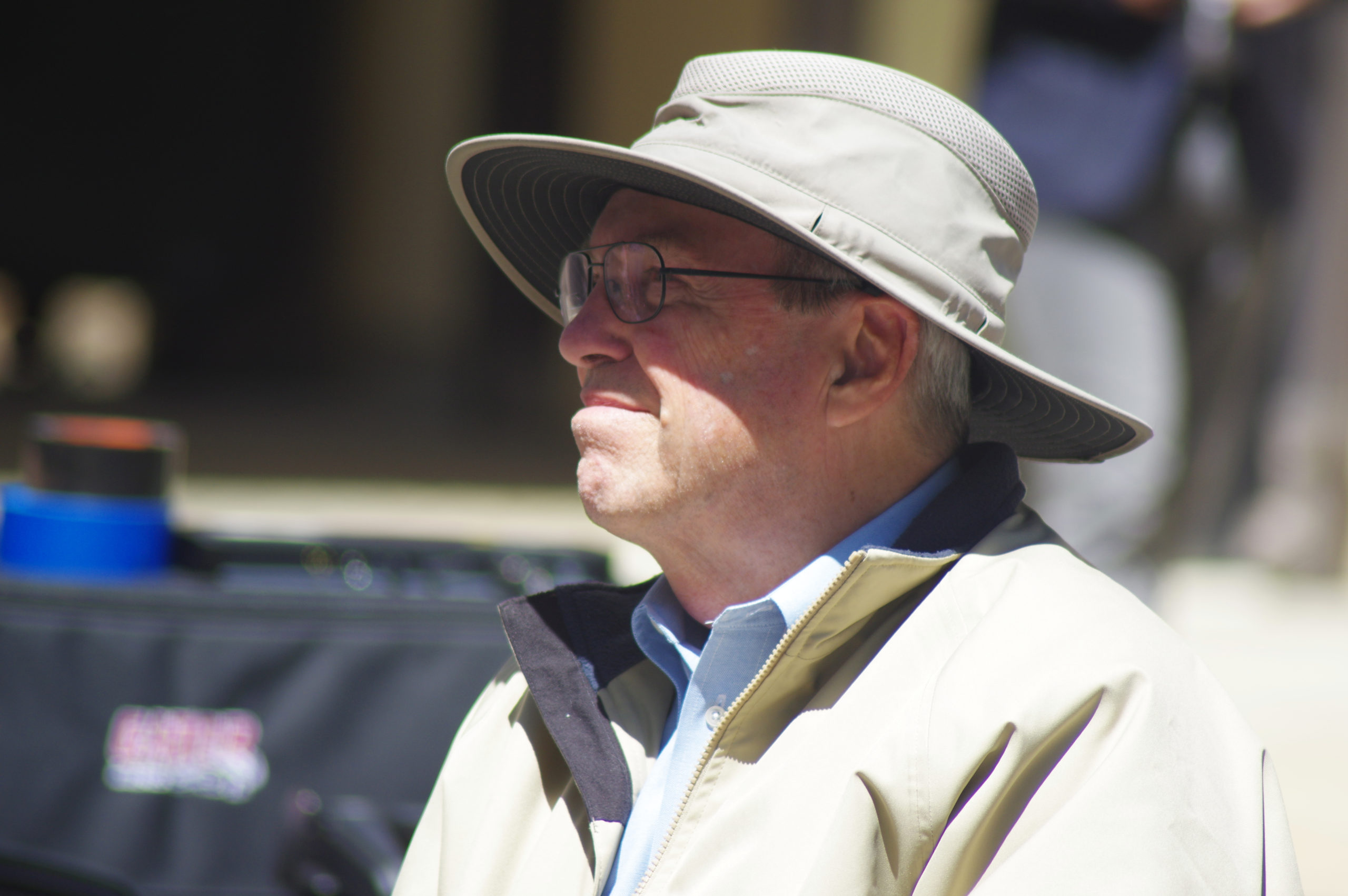
    Our good friend Don Tuttle passed away on May 15 at the age of 81. We were very sad to learn the news, and we extend our heartfelt condolences to his wife, Andrea, and his family and friends. 

    Don and Andrea Tuttle are longtime friends and supporters of the Schatz Energy Research Center and Humboldt State University. Andrea is a founding member of the Schatz Center’s Advisory Board, and they jointly established the Donald and Andrea Tuttle Fellowship for Clean Energy Studies in 2017. This fellowship provides support to graduate students in the Energy Technology and Policy (ETaP) and Environmental Resources Engineering options of the Environmental Systems graduate program.

    Don was a kind, thoughtful, and wise person. Over his long career, his persistent, careful, and historically-minded approach to environmental protection in relation to regional economic and infrastructure development has made a real and lasting difference in our community. We are grateful for his good works and leadership, and we will miss him very much.

    ~ Arne Jacobson

    Standing amid a crowd, a man in a hat shakes hands with a woman
    Don Tuttle greets Sintana Vergara at the opening ceremony for the West Wing of the Schatz Center in May 2018
  • Schatz student researchers recognized for outstanding achievements

    Schatz student researchers recognized for outstanding achievements

    This month, five student researchers from the Schatz team were recognized by Humboldt State University and by the Environmental Resources Engineering (ERE) department for outstanding achievements. Chih-Wei Hsu and Ciara Emery received masters degrees this December; Sabrinna Rios Romero is graduating this month with a BS in ERE; and Liszet Burgueno and Elizabeth Van Skike are a junior and senior in ERE, respectively. We’re delighted that each of them is being recognized by the campus community, and wanted to share a little about their research here at the Center.

    Chih-Wei Hsu

    Chih-Wei Hsu graduated in December with a MS in Environmental Systems with a concentration in Energy Technology and Policy. His thesis revealed inequities by race and income in California’s deployment of public charging infrastructure and the cost of owning an electric vehicle. At the Schatz Center, Chih-Wei contributed to transportation projects including a Climate Resilient Electrified Transit Plan for the Humboldt Transit Authority. He also contributed to energy access projects, including analyses related to off-grid solar product adoption in Uganda and the environmental footprint of backup generators in areas with unreliable electric grids.

    During his time at Humboldt, Chih-Wei was also deeply engaged in the campus and local community. He was a student director for HSU’s Sponsored Programs Foundation board, a member of the Humboldt Energy Independence Fund governing committee, an active volunteer with GRID Alternatives — and helped to install the Schatz Center’s solar array in 2018! Chih-Wei is now the EV Fellow at the International Council on Clean Transportation. This month, he was awarded the Patricia O. McConkey award as an Outstanding Graduate Student.

    Three smiling people stand outside glass windows with the Schatz logo etched into the glass.
    Chih-Wei Hsu, Kristina Kunkel, and Anh Bui (left to right)

    Ciara Emery

    Ciara Emery graduated in December with an MA in Environment and Community. Her thesis contributed to the Center’s offshore wind feasibility research by interviewing local stakeholders to understand their perceptions of the challenges and potentials for wind farm development off Humboldt Bay. Ciara also attended conferences and workshops to evaluate the discussions being held within the community. Ciara presented her findings as part of the California State University research competition in April.

    Ciara is now the Field Representative for Congressman Jared Huffman in Humboldt, Del Norte, and Trinity counties. This month, she was recognized by HSU for Outstanding Student Research.

    Elizabeth Van Skike

    A smiling woman leans against a test station table, with redwoods behind her.
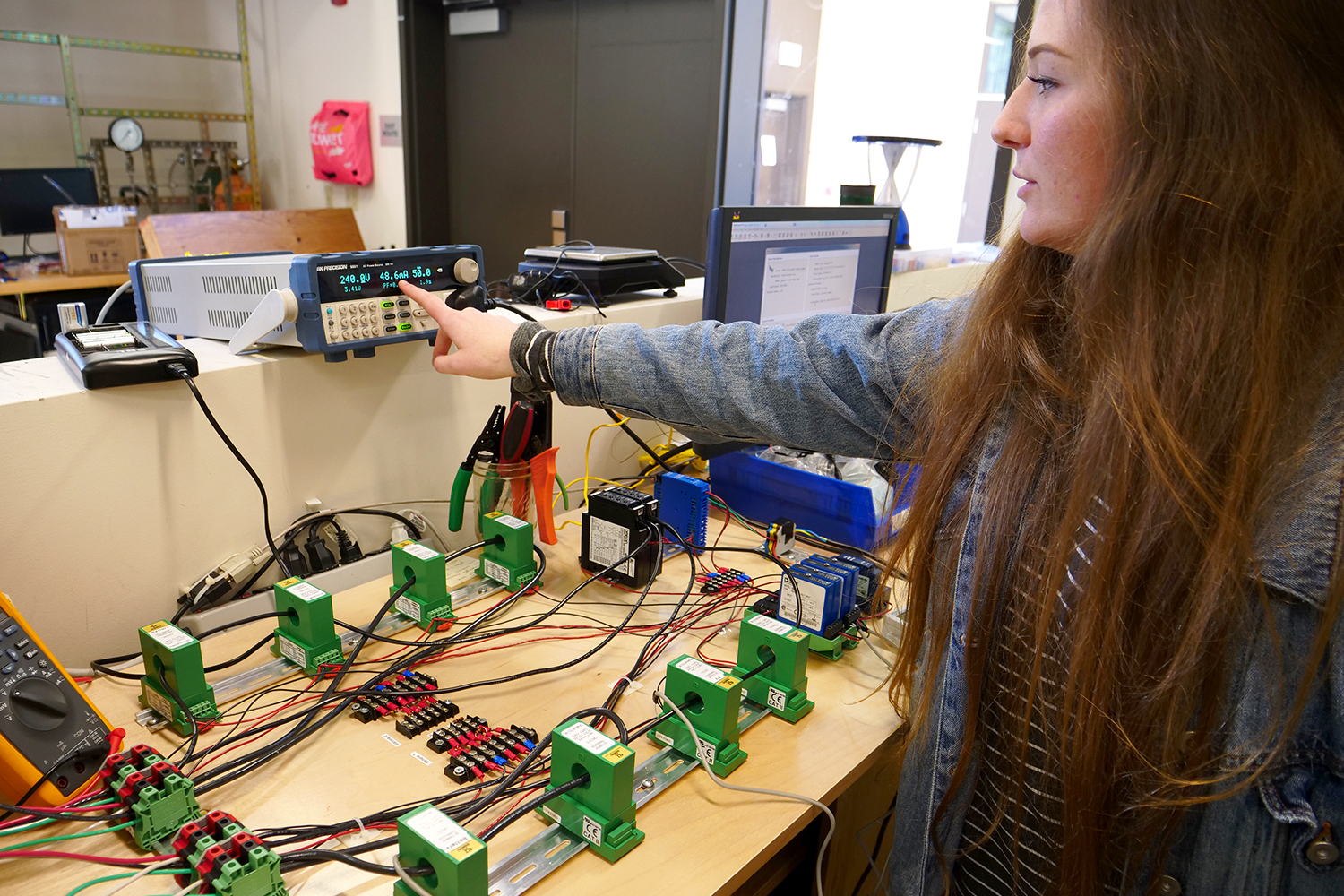
    Elizabeth Van Skike at our solar water pump test station

    Elizabeth Van Skike is a 2020 recipient for the Homer Arnold award for Applied Research in Environmental Resources Engineering. A key member of our solar products test lab team since 2018, Ellie has helped perform safety, durability, and performance testing on solar lighting products and appliances — including televisions, radios, and solar water pumps. She has designed and built electrical systems and components, including a data acquisition circuit for overprotection and solar charge product tests. And, she has trained fellow student researchers and new employees on product test protocols.

    Elizabeth is continuing at the Schatz Center this summer, and will work on multiple projects related to quality assurance for off-grid solar products. 

    Sabrinna Rios Romero

    In 2018, Sabrinna Rios Romero furthered our understanding of biomass life cycles by quantifying the decay rates for the post-harvest residues of seven California crops. Measuring decay rates allows us to better assess how leaving agricultural residues in the field — versus converting them into electricity — impacts greenhouse gas emissions. Sabrinna also conducted a survey of state foresters to assess which post-logging residue pathways (e.g. piling, burning, and scattering) were most commonly used across California. And, she worked in the Center’s biomass lab to measure the performance of a gasifier system.

    In addition to her Center research and engineering clubs activities, Sabrinna accomplished her ERE degree in only four years, an atypical achievement within this challenging major program!

    Two students stand outside the new West Wing building
    Sabrinna Rios Romero and Steven Shoemaker (left to right), as ribbon-cutters for the grand opening of the West Wing

    Liszet Burgueno

    Liszet Burgueno is a second year engineering student who has excelled academically while demonstrating ongoing commitment to bettering her community. She holds officer positions in both the Renewable Energy Student Union (RESU) and the Society of Hispanic Professional Engineers (SHPE), and also works for the Humboldt Energy Independence Fund, an organization that funds the implementation of green projects on campus. In 2019, as a student research assistant at the Schatz Center, Liszet contributed substantially to a literature review and experimental protocol development for measuring greenhouse gas emissions from stored woody biomass.

    Liszet is the 2020 recipient of the Engineers Without Borders award. The EWB award honors a student’s contribution to ERE club projects, fundraisers, and community service, as well as professional-student interaction and social responsibility within and outside the ERE community.

    Six students stand in front of the main doors to the Schatz Center
    Spring 2019 student researchers (left to right):
    Liszet Burgueno, Craig Mitchell, Ellen Thompson, Merissa Coello, Rene DeWees, and Thalia Quinn

    We are very proud of our students and their work, and we congratulate Chih-Wei, Ciara, Elizabeth, Sabrinna, and Liszet for their accomplishments. ~ Arne Jacobson

  • A message from the Director

    A message from the Director

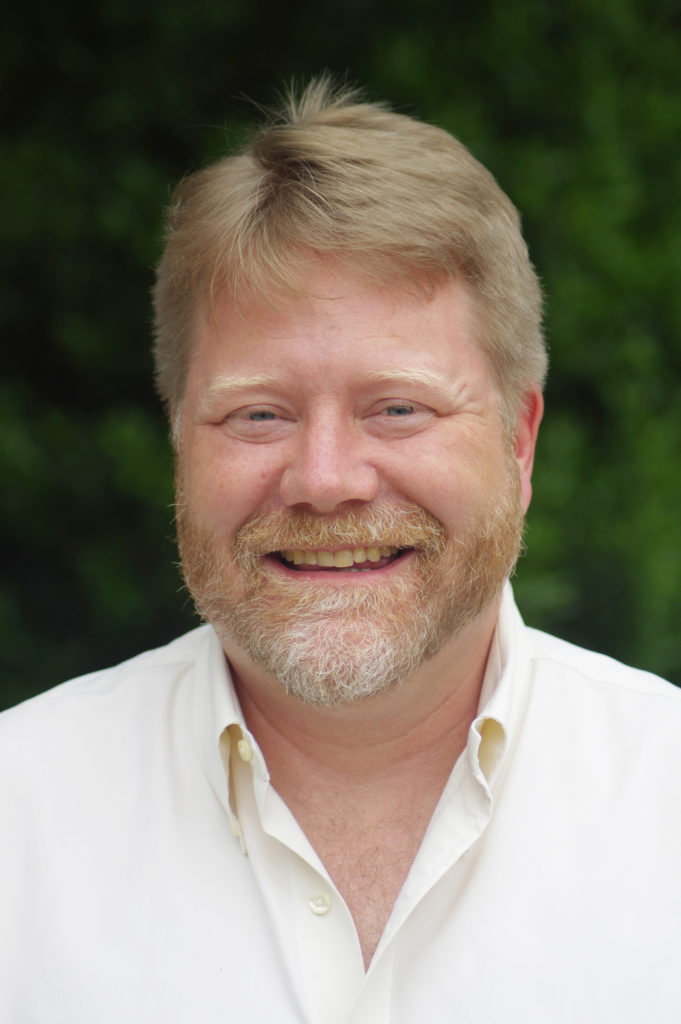
    Headshot of Arne Jacobson

    In 1989, two environmental resource engineering professors — Peter Lehman and Charles Chamberlin — began the Schatz Solar Hydrogen Project. In April, we celebrated the Schatz Center’s 30th anniversary with a party attended by staff, faculty, and students, alongside members of our advisory board, project collaborators, and campus and community supporters. For me, the celebration was an inspiring and fun event with a wonderful group of people. It also provided an opportunity to reflect on our history and our future. I’d like to share three themes.

    First, it is notable how much our team has grown. The initial core team for the Solar Hydrogen Project consisted of two founding directors and four students, with funding from Dr. Louis W. Schatz. Our group now includes nearly 50 people — including 10 faculty, 23 professional staff, and 16 students — and our annual budget has grown from $100K to nearly $7 million today.

    Second, since the mid-1990s professional staff have played crucial roles in advancing our work, generating innovative ideas, managing projects, and mentoring students. They are truly a pillar of strength for our organization. During the celebration, we recognized four professional staff members who have been with the Center for more than half of its 30 years: Allison Hansberry, Marc Marshall, Greg Chapman, and Jim Zoellick. We are grateful for the substantial contributions they have made and for their continued leadership.

    Third, much of our work continues to focus on the successful deployment of cutting-edge energy systems. Throughout the 90s, the Center was involved in developing hydrogen fuel cell vehicles and renewably generated hydrogen fuel, and in 1997 we deployed the first street-legal fuel cell vehicle in the United States. Mainstream manufacturers subsequently developed their own models, and fuel cell vehicles are now commercially available from companies including Toyota, Honda, and Hyundai.

    Today, our work includes technologies ranging from renewable energy microgrids to off-grid solar systems. Our first solar microgrid went live at the Blue Lake Rancheria in 2017, and we have two more scheduled to launch in Northern California, in 2019 and 2021. Renewable microgrids address global climate change by (1) deploying low-carbon energy systems while (2) increasing onsite resilience through improved electrical reliability. This technology is now on the verge of going mainstream, with utilities such as Pacific Gas and Electric considering widespread deployment to mitigate wildfire risk and ensure reliable power for critical facilities. 

    Likewise, in West Africa we are engaged in projects to generate reliable electricity for rural health clinics. Where successful, these systems can provide life saving improvements for health services ranging from support for mothers during delivery of babies to vaccination and surgery. In partnership with regional and national organizations and the World Bank, we are developing a new approach to deploy and maintain off-grid solar systems in clinics across Nigeria and Niger.

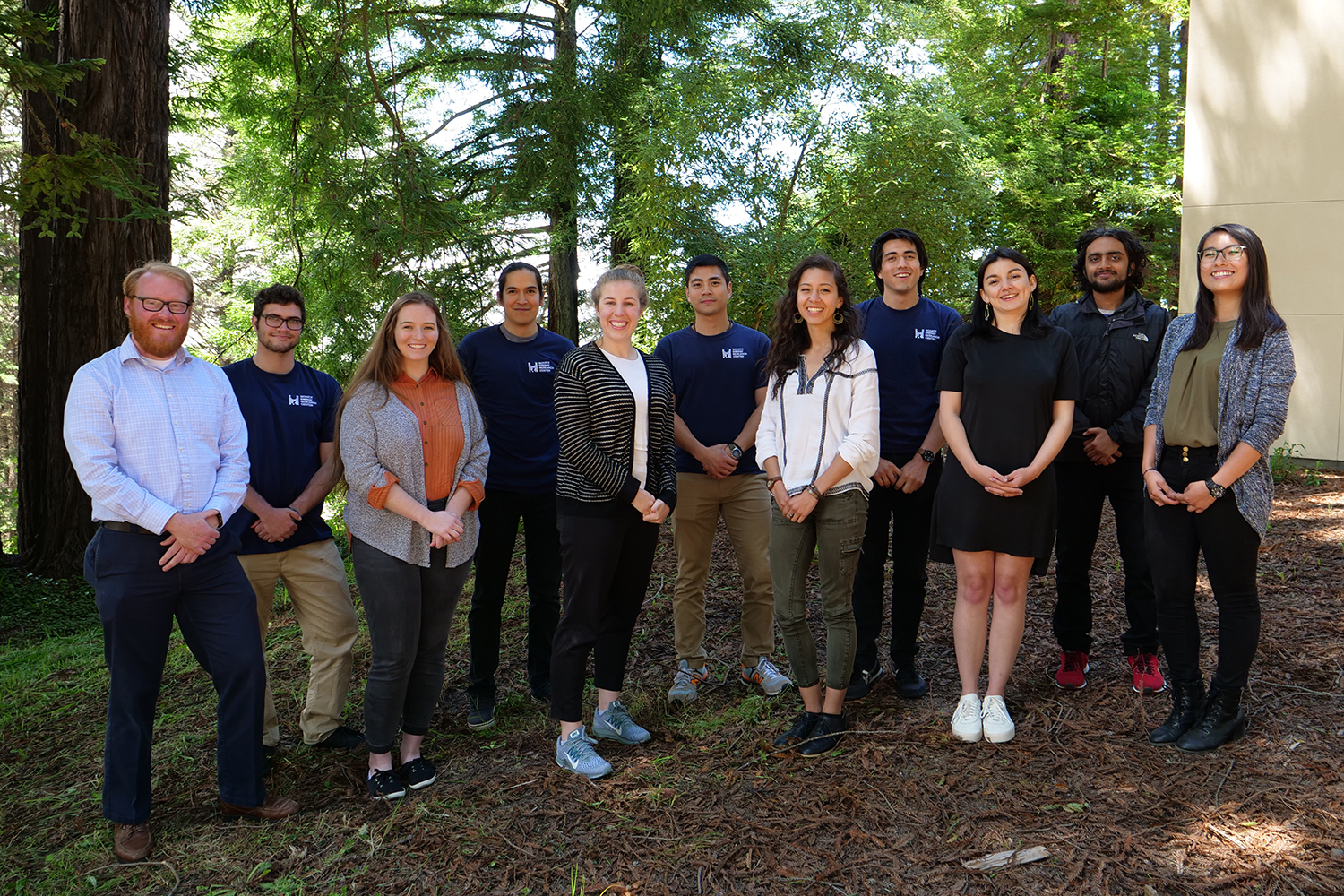
    It is my pleasure to welcome new members to the Schatz Center team. We have hired four new professional staff since the beginning of the year: Tanya Garcia, Eli Wallach, Ian Guerrero, and Max Blasdel. We are also pleased to welcome three incoming graduate student fellows who will join us in August: Aditya Singh (Christina and Jack West Fellowship), Kristine Stern (Blue Lake Rancheria Fellowship), and Amin Younes (Schatz Energy Fellowship). Finally, we have a dynamic crew of thirteen students working for us this summer. We are very glad to have them all on our team.

    Happy summer, and goodbye until next time. – Arne Jacobson

    Four staff members stand beneath redwoods
    Eli Wallach, Tanya Garcia, Ian Guerrero, and Max Blasdel (left to right)
  • Director’s Note: November 2018

    Director’s Note: November 2018

    Headshot of Arne Jacobson

    The Camp Fire in Butte County has been the most damaging wildfire in California history. Hurricanes, wildfires, cyclones, floods, and heat waves are taking a heavy toll on communities around the globe. While no single weather event can be linked directly to climate change, weather disasters as a whole are expected to become increasingly common and destructive as climate change progresses.

    The Intergovernmental Panel on Climate Change’s (IPCC) recent special report on the prospect of limiting climate change to a 1.5°C global average temperature rise relative to pre-industrial conditions indicates that global net human-caused greenhouse gas emissions need to decline before 2030 by about 45% relative to 2010 levels. It is imperative that we do all we can to make progress toward this goal given the expected damages associated with a failure to do so. Simultaneously, given the climate disruption that is already baked into the system, actions to reduce vulnerability and increase resilience to climate damages are also needed.

    Our work at the Schatz Center is strongly motivated by these challenges. Our renewable energy microgrid work combines efforts to integrate more solar power into the electrical grid while increasing resilience for critical infrastructure including emergency response centers, fuel stations, airports, and Coast Guard facilities. Likewise, our upcoming feasibility analysis of offshore wind development along California’s northern coast will explore a large potential new clean energy resource for our state. Through these and other efforts, we continue to promote clean and renewable energy and to otherwise take measures to address global climate change.

    Measures to address climate change will be most effective if they are crafted by diverse teams from all walks of life. Over the past six months, we have been doing some introspective work at the Center related to staff diversity and an inclusive work environment. We held an all-day retreat in August that focused on these topics, and we have begun implementing measures identified at the retreat and subsequent staff and subcommittee meetings. As we work to make progress, I appreciate the thoughtfulness and initiative that our team has brought to the table. We are committed for the long haul when it comes to making a positive difference regarding diversity and inclusion. The successes that we achieve will make us a stronger and more effective organization.

    I will close by welcoming Carisse Geronimo and Grishma Raj Dahal to the Schatz Center. Both are graduate students in the Energy Technology and Policy (ETaP) master’s program, and they joined us in August. Carisse is the first recipient of the Donald and Andrea Tuttle Fellowship for Clean Energy Studies. She is working with Dr. Sintana Vergara and other Schatz Center colleagues on biomass energy, waste management, and associated opportunities to reduce greenhouse gas pollution. Grishma, who received the Schatz Energy Fellowship, is working with our off-grid energy access team on research related to off-grid solar power. We are very glad to have them on our team.

    Happy winter holidays, and goodbye until next time.

    ~ Arne

  • Director’s Note: June 2018

    Director’s Note: June 2018

    On May 4, we had the pleasure of hosting the Schatz Center Advisory Board for our annual meeting. In addition to our customary discussion of Center activities and strategy, we were happy to be able to include the Advisory Board members in a dedication ceremony for our new building addition, which we have been calling the “West Wing.”

    During the meeting, we reported our progress toward the Center’s strategic goals—which are derived from our mission to promote clean and renewable energy—and discussed our portfolio of projects, budget, staffing, and space within this context. We were able to report good news to the Advisory Board in multiple spheres.

    We noted that our two most active project areas are those related to (i) renewable energy microgrids, grid integration of renewable energy, and associated demand-side management strategies and (ii) improved access to energy in off-grid and marginal grid communities in Sub-Saharan Africa and South Asia. Together with our partners, we have received recognition for our efforts in both areas: in January alone, the Blue Lake Rancheria renewable energy microgrid was awarded the Project of the Year for Distributed Energy Resources at the annual DistribuTECH conference in San Antonio, Texas, while our energy access team simultaneously played a key role at the premier international conference for the off-grid solar sector, the Global Off-Grid Solar Forum and Expo in Hong Kong. We also have current projects and activities in bioenergy, clean transportation, off-shore wind, energy efficiency, hydrogen energy, clean energy policy, and education/outreach. Our staff expertise continues to deepen, and we have ample opportunities for continued work in pursuit of our mission.

    Regarding staffing, we have a motivated, skilled, and professional team, and their strengths provide the foundation for our success. Recent additions to the Schatz Center include Dr. Nicholas Lam (research scientist), Kaileigh Vincent-Welling (engineering technician), Richard Williams (engineering technician), and Jessica Ramirez (administrative assistant). We are pleased to welcome them to our team. During the advisory board meeting, we discussed two strategic foci in relation to personnel. We began by noting the importance of expanding our team’s project management capacity to meet the needs of our growing work portfolio. We then discussed our commitment to increasing staff diversity and ensuring a broadly welcoming work environment. We appreciate our board’s thoughtful advice, and we look forward to a continued focus on these key issues.

    And, of course, we celebrated our new building and the opportunities that it enables. Importantly, the increase in space—along with a commitment to student mentorship by faculty and staff on our team—has allowed us to hire nine summer student interns. They join seven continuing student employees, for a total of 16 students working with us this summer. This is the largest number of students working at Schatz Center at one time in the history of our organization. We are grateful for the contributions that each student is making to our work, and I thank my colleagues for all that they have done to create hands-on learning opportunities.

    Happy summer solstice, and goodbye until next time. ~ Arne Jacobson

  • Director’s Note: October 2017

    The past year has been a very productive one for the Schatz Center, and I am grateful for all the good work that our team and partners have done to turn opportunities into successes.

    I want to give special acknowledgement to everyone involved in the development and implementation of the Blue Lake Rancheria (BLR) Low-Carbon Community Scale Microgrid. The BLR Microgrid Project was funded by the California Energy Commission, with project leadership by the Schatz Center’s Dr. Peter Lehman (Principal Investigator), Dave Carter (project manager), and Jim Zoellick (co-project manager), in collaboration with the Blue Lake Rancheria’s Tribal Government and many technical partners.

    This microgrid project is now a finalist for two award competitions, including the 2017 Platts Global Energy Awards (one of six finalists for the Commercial Application of the Year; the winners will be announced in New York City on December 7) and the Pennwell Projects of the Year Awards (one of three finalists for Best Renewable Project; the winners will be announced in Las Vegas on December 5). In addition, the Blue Lake Rancheria recently received the John D. Solomon Whole Community Preparedness award from the Federal Emergency Management Agency (FEMA), for which the microgrid was a contributing factor leading to the award. I congratulate the Rancheria, our team, and our partners for all their success so far, and my fingers are crossed for even more good news in December.

    I would also like to discuss three key investments that we have been making to lay the foundation for future contributions to clean energy research and development. First, our success at the Schatz Center depends on the efforts and expertise of our faculty and professional staff. We have a talented and experienced team, and, over the past year, we have been fortunate to attract several key new members. On this front, I am pleased to announce that Dr. Nick Lam will be joining us soon as a Schatz Center Research Scientist. Nick specializes in energy access, indoor air quality, and environmental health, and he will play a leading role on our off-grid energy access team. He has a Ph.D. in Environmental Health Sciences from U.C. Berkeley, and he is currently working as a post-doctoral research scholar at the University of Illinois at Urbana-Champaign. We are excited to welcome Nick to the Schatz Center.

    In addition, we hired Maia Cheli this past March for a newly created position that includes media relations and coordination of the Schatz Center’s educational programs. Since joining, she has led an effort to revamp our website and expand our portfolio of public relations materials. Early next year, after the new website has gone live, she will turn some of her attention to development and implementation of our Center’s education and outreach activities. We are very happy to have Maia on our team, and we have already benefited greatly from her expertise and hard work.

    Among faculty associated with the Center, Dr. Liza Boyle and Dr. Peter Alstone joined us in August 2016, and both are already making substantive contributions. Liza has engaged in proposal development and in research related to the effect of particulate deposition on solar arrays, including work with an engineering undergraduate student, Merissa Coello, that will lead to a journal publication. Peter has been involved in research on innovative new strategies for management of California’s electric grid. Peter is also the team lead for a new $1.5 million project funded by the California Energy Commission (CEC) through their Solar+ program. Dr. Kevin Fingerman, who joined us in 2013, is the lead for a new $1 million CEC-funded project that involves developing tools for assessing the environmental impacts and benefits of biomass power plants in California. We are also very happy to welcome Dr. Sintana Vergara, who joined the Environmental Resources Engineering Department as an Assistant Professor this August and is already working with the Schatz Center team on a proposal for research involving measurement of methane emissions from biomass energy operations. As Director, it is exciting to see the growing contributions of new members as they work together with our existing team.

    Second, we continue to expand opportunities for students at the Schatz Center. Since last fall, we have had 13 students working in paid positions and seven students supporting our efforts as volunteer docents. I would like to give a special welcome to students who have joined in the past few months, including undergraduates Bryce Baker, Jo Caminiti, Merissa Coello, Benjamin Kees Goldberg, Matilda Kerwin, Michael Malone, Murielle Manka, Eli Wallach, and Richard Williams, and graduate students Max Blasdel, Thalia Quinn, and Anamika Singh. Thalia and Anamika deserve special mention, as they are this year’s recipients of the Schatz Energy Fellowship and the Blue Lake Rancheria Fellowship for Clean Energy Studies, respectively.

    I am pleased to announce that Andrea and Don Tuttle of Arcata are establishing the Donald and Andrea Tuttle Fellowship for Clean Energy Studies. This fellowship will provide $15,000 in funding to one incoming graduate student per year in the Energy Technology and Policy (ETaP) or Environmental Resources Engineering (ERE) options of the Environmental Systems Graduate Program. The fellowship is for one year with the potential to renew for a second year. The selected fellow will also receive a position to work at the Schatz Energy Research Center. Our heartfelt thanks go to Don and Andrea for their generous gift. At the Schatz Center, we are committed to expanding opportunities for students in the clean energy field as we work to develop a new generation of leaders, and support from partners like Andrea and Don Tuttle and the Blue Lake Rancheria help us greatly in making progress toward this goal.

    Our third investment has been in a new 1,900 square foot “West Wing” addition, built to accommodate our growing staff and capabilities. Construction of the building is nearly complete, and we expect to move in by early December. The new facility will provide us with 14 new work stations, two offices, and a much needed second conference room. We are grateful for the generous support from Louis W. Schatz, Anne and David Katz, Peter and Carolyn Lehman, Christina and Jack West, Jamie Everett, and Joel Lehman, and grant funding from the California Energy Commission, who together made this project possible.

    We are thankful to HSU Facilities Management (especially Mike Fisher and Garrett McSorley), Suarez-Kuehne Architecture, Adams Commercial General Contracting, and the many local contractors who made professional contributions to this project. Our new addition is a beautiful building that is well matched to our existing facility in both function and form, and we are excited to move in and get to work in it.

    Goodbye until next time.
  • A Message from the Director

    As we move into autumn, I would like to take time to thank the SERC team and our many excellent project partners. We are in the midst of one of the busiest and most productive years in our history. The successes we have had are a result of the hard and good work of our stellar team and our collaborators.

    Over the past year we have worked on over 20 projects involving more than 60 collaborators. This work spans four continents, including efforts in Africa (Kenya, Tanzania, Ethiopia, Uganda, and Nigeria), Asia (India, Bangladesh, Pakistan, Myanmar, and China), Europe (UK, Netherlands, and Germany), and North America (USA). While I cannot thank each of our partners by name, several deserve special mention, including the Redwood Coast Energy Authority, the Blue Lake Rancheria, Siemens, Pacific Gas and Electric, Idaho National Laboratory, Lawrence Berkeley National Laboratory, Global LEAP, everyone from the BRDI/Waste to Wisdom team, and colleagues from the World Bank Group’s Lighting Global, Lighting Africa, and Lighting Asia programs.

    As you can imagine, our team has been very busy. While everyone has pulled their weight and more, special thanks are due in several areas. First, our operations and administrative team, led by Allison Hansberry, has worked tirelessly to keep everything moving forward effectively. I give my sincere gratitude for their efforts and good work. Second, SERC’s project managers have managed substantial responsibility with grace and poise. Dave Carter, Jim Zoellick, Jerome Carman, and Meg Harper merit special thanks for carrying heavy project management loads in difficult circumstances. Third, Steve Karp and his team at the Humboldt State University Sponsored Programs Foundation deserve credit for all the support they provide during both the pre- and post-award periods. We all appreciate their efforts; we could not succeed without them. Fourth, the SERC Advisory Board has helped us immensely through input that ranges from strategic guidance to networking support. Their assistance has been invaluable. Fifth, I want to thank everyone on the SERC team who has stepped up and helped with fundraising and proposal writing over the past few months, despite all the other work on their collective plates. While many have contributed, several people in particular have played leadership roles in this push, including Peter Lehman, Kevin Fingerman, Jim Zoellick, Jerome Carman, Meg Harper, Richa Goyal, and Mark Severy. I also want to thank all of the agencies that have supported our work over the past year. Here, the California Energy Commission, International Finance Corporation, World Bank, and U.S. Department of Energy merit special mention for being among our leading funders.

    I will close with some staff transitions. First, I am pleased to welcome our new faculty members; Peter Alstone and Liza Boyle joined us in August. Peter has a joint appointment between SERC and the Environmental Resources Engineering (ERE) Department, while Liza is a Faculty Research Associate at SERC and a member of the ERE Department. Both are already engaged in activities at SERC, and we look forward to much more of their involvement going forward. I am also pleased to welcome Scott Toyama, Jimento Aikhuele, and Steve Shoemaker to the SERC team. Scott joined in May as a full-time engineering technician in our off-grid solar laboratory. Jimento and Steve are incoming graduate students in the Energy Technology and Policy (ETaP) master’s program. Jimento is this year’s recipient of the Schatz Energy Fellowship, while Steve is the first recipient of the Blue Lake Rancheria Fellowship for Clean Energy Studies. It is great to have them both on board (and thank you again to the Blue Lake Rancheria Tribe for establishing the fellowship).

    Last, but certainly not least, I want to thank people who have moved on from SERC to other endeavors. These include Malini Kannan, Janoah Osborne, Ga Rick Lee, Greg Pfotenhauer, and Lukas Kennedy; they each made great contributions over the past few years to SERC’s work related to off-grid solar, clean transportation, and/or biomass energy. I am also grateful to Asif Hassan, Jayati Thakor, Steve Harrison, Emily Klee, and Rich Williams, all of whom worked for us as students, for their efforts on projects related to off-grid energy access and biomass energy. Richa Goyal, who has been with us at SERC as a visiting scholar for the past year and a half, has moved back to India. Fortunately for us, she will continue to work with us as a consultant going forward. Finally, a very special thank you is due to Mark Rocheleau, who retired from SERC in June after 24 years of dedicated service. All of these good people are greatly missed, but we are excited about all the good things that they are doing out in the world.

    Goodbye until next time.