Who: Everyone is invited to attend this free event!
Carla J. Peterman is Executive Vice President, Corporate Affairs and Chief Sustainability Officer for PG&E Corporation. At PG&E, she oversees the company’s regulatory, legislative, sustainability, and charitable strategies. Peterman has spent her career in several senior-level government and utility roles focused on California’s clean energy future. Peterman holds a PhD in energy and resources from the University of California, Berkeley, and MS and MBA degrees from Oxford University, where she was a Rhodes Scholar.
Carla’s talk “Scaling Our Energy Future: Insights from the utility sector” will focus on how PG&E, as one of the nation’s largest electric and gas utilities, plans to scale the energy system to meet growing load and decarbonization and resiliency goals, while ensuring energy remains affordable.
This event is free and open to the public, and accessible parking is available nearby (see the BSS & Native American Forum buildings on the campus map).
Please contact us at schatzenergy@humboldt.eduor 707-826-4345 for additional accommodations or questions.
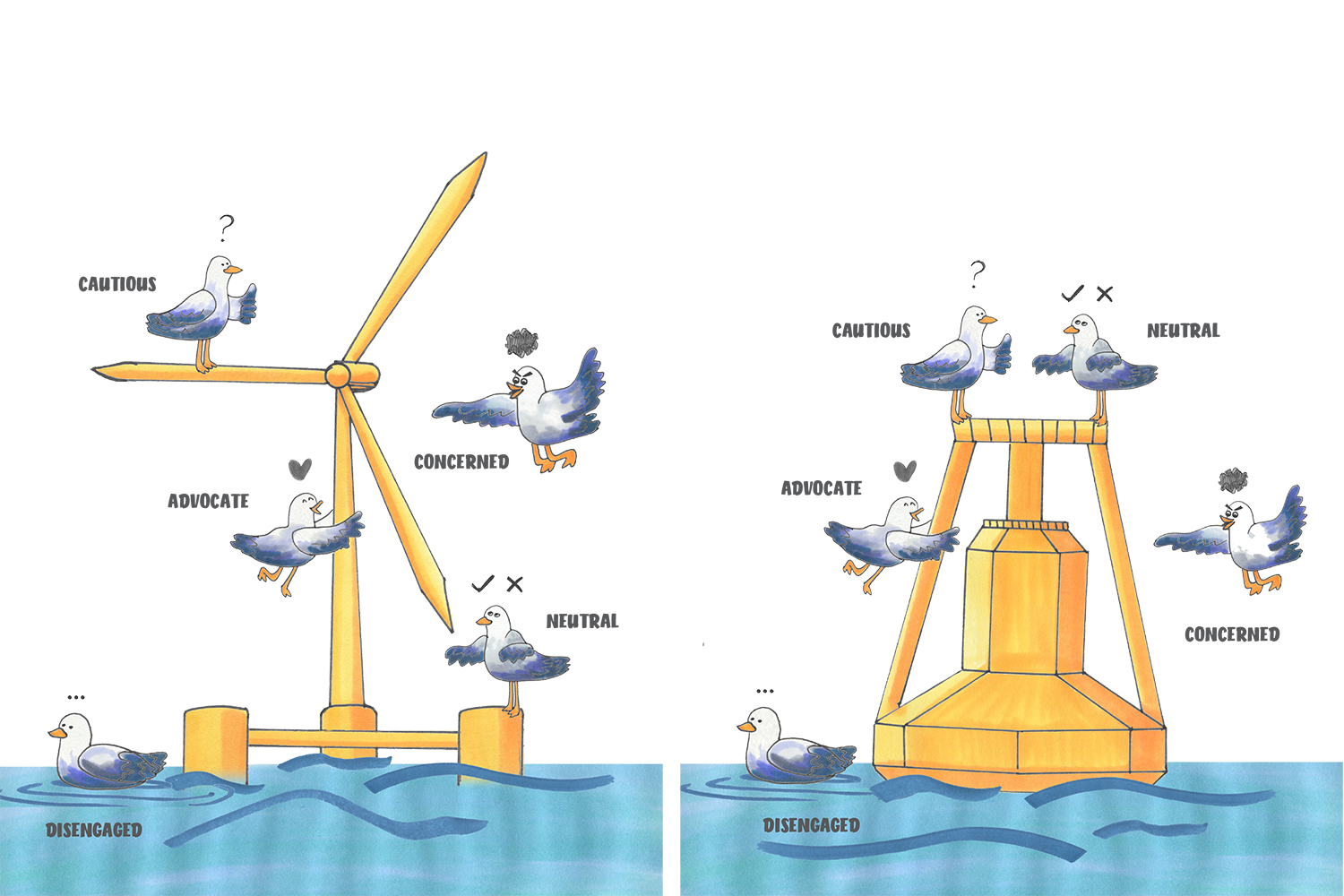
What factors influence people’s different responses to proposed offshore wind and wave energy developments – and what might the implications for future siting and permitting processes be? In this talk, Hilary Boudet and Gregory Stelmach of Oregon State University will share insights from their ongoing studies of community perspectives toward marine renewables development.
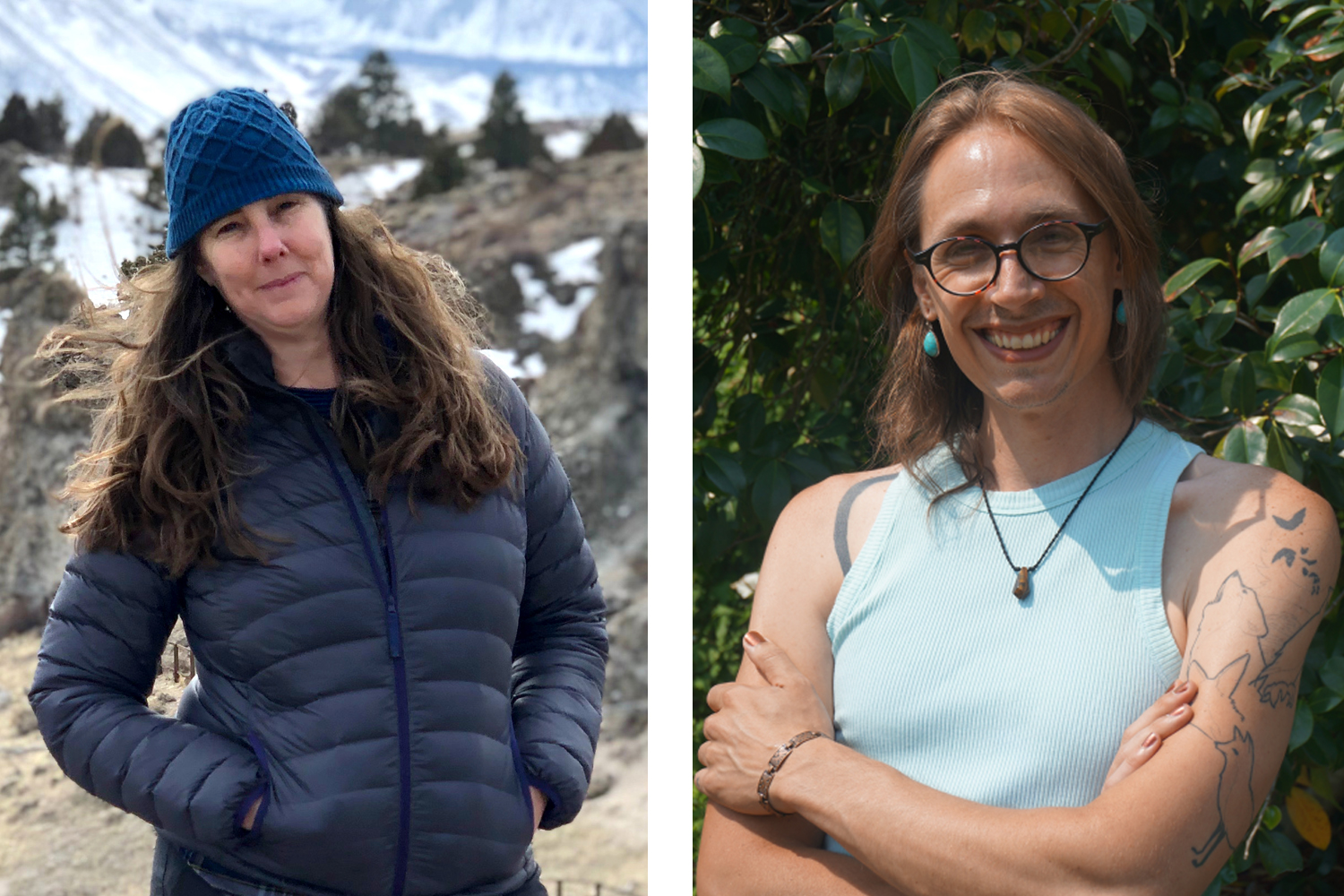
Hilary Boudet is a Professor and Director of Graduate Programs in the School of Public Policy at Oregon State University. Her research interests include environmental and energy policy, natural resource sociology, social movements, and public participation in energy and environmental decision-making. Greg Stelmach is a Postdoctoral Scholar in the School of Public Policy at Oregon State University and the Pacific Marine Energy Center.
For questions about this webinar or to request technical or accessibility support, please contact schatzenergy@humboldt.edu or call 707-826-4345.
This webinar is being hosted by the Pacific Offshore Wind Consortium (POWC, pronounced pow-sea), which is a joint effort between three research centers: the Schatz Energy Research Center at Cal Poly Humboldt, the Pacific Marine Energy Center at Oregon State University, and the Center for Coastal Marine Sciences at Cal Poly San Luis Obispo. These universities are all housed in and supported by the coastal communities that are anticipated to host floating offshore wind development. Together, the consortium aims to advance three pillars: (i) research and innovation, (ii) university-level workforce education and professional development, and (iii) community and Tribal engagement and knowledge exchange. Learn more about the POWC here.
Where: Native American Forum (BSS 162) at Cal Poly Humboldt
Who: Everyone is invited to attend this free event!
Renewable energy development is necessary to decarbonize the electrical grid and move communities away from reliance on burning fossil fuels, and yet sometimes decarbonization efforts conflict with the also pressing work of decolonization. Advocates view renewable energy projects as necessary, even if building them requires sacrifices. But those sacrifices tend to fall on Indigenous people, who have already suffered genocide, loss of land, boarding schools, and other tragic consequences of colonization. To be truly just, climate solutions need to be developed outside of colonial structures, rather than replicate them. Featuring two journalists — one writer and one editor — this talk will touch on ways tribal communities are pushing back against renewable energy projects that threaten ecological and cultural resources, what alternative approaches to renewable energy development might look like, and how one Indigenous affairs reporter has brought these issues to light and made an impact through their work.
B. ‘Toastie’ Oaster is an award-winning journalist, reporting for the Indigenous affairs desk at High Country News from Chinook lands in the Pacific Northwest. Their work has also appeared in Foreign Policy, ICT News, Street Roots, the Portland Mercury and elsewhere. Their first feature for HCN, a story about Pacific lamprey, was nominated for a National Magazine award. They’re a member of the Uproot Project, the Trans Journalists Association, and the Indigiqueer committee at the Indigenous Journalists’s Association, as well as a citizen of the Choctaw Nation of Oklahoma.
Jennifer Sahn has spent the past two decades working in the nonprofit journalism sphere, editing award-winning narrative nonfiction and leading teams to new heights. She is currently Editor in Chief of High Country News, a magazine about the West. She previously served as Executive Editor of Pacific Standard and as Editor of Orion magazine before that. She took a detour into the corporate world to work as Deputy Editor at Patagonia, Inc. Her work has been recognized by the National Magazine Awards, Utne Independent Press Awards, Pushcart Prize, O. Henry Prize, John Burroughs Essay Awards, and the Best American Series anthologies. She has been a judge for several literary awards and fellowships and has taught and lectured at a number of writing workshops.
This event is free and open to the public, and accessible parking and seating is available for the Native American Forum.
Please contact us at schatzenergy@humboldt.eduor 707-826-4345 for additional accommodations or questions.
Attention students: Do you want to learn more about environmental reporting and professional development? Join us on Thursday, February 20, from noon to 1 pm in the Library Fishbowl (2nd floor), for a student-oriented professional development workshop and pizza lunch with Oaster and Sahn. Questions? Email Professor Jennifer Marlow at jjm182@humboldt.edu.
Many thanks to our campus partners for sponsoring this event and supporting conversations around energy, equity, community, and sustainability! Collaborators for this event include faculty and staff in the departments of Environmental Science & Management (ESM), the ESM Justice Equity Diversity Inclusion Committee, Journalism & Mass Communication, Native American Studies, Environmental Studies, English, Engineering, and the Campus Library and Sustainability Office.
We also offer deep thanks to Native faculty, staff, and students at Cal Poly Humboldt for sharing their Forum with us for this special event.
Presented by: Eli Wallach and Arne Jacobson of the Schatz Center, and Stephanie Schneider and Sharon Kramer of H. T. Harvey & Associates.
Expert Panelists: Lisa Ballance (Oregon State University), Scott Johnson (U.S. Fish and Wildlife Service), and David Pereksta (Bureau of Ocean Energy Management)
Due to strong and reliable winds off California, offshore wind will play a key role in the state’s goal to achieve 100% renewable energy by 2045. A new report led by the Schatz Energy Research Center in collaboration with H. T. Harvey & Associates evaluates the tradeoffs between the collision vulnerability of 44 seabird species and the offshore wind power-generation potential along California’s coast. This work will improve understanding of seabirds in 3D and help evaluate potential locations for future wind energy developments with minimized impact to seabird populations.
The study model uses a multi-objective optimization framework to balance between seabird densities at rotor-swept heights and anticipated energy production. The objective is to highlight regions that minimize seabird exposure while ensuring viable power generation. The results indicate that while seabirds are very abundant in the study area, most remain below rotor-swept heights and concentrate nearshore and to the south. Long term data suggests that about 8% of the seabird community is likely to be present above 10 meters, primarily the abundant Sooty Shearwater (a dynamic soaring species) and gulls.
These findings can guide offshore wind site selection to ensure California’s renewable energy development considers seabird populations, focusing on those that are most vulnerable.
This webinar will explore the methods used to model the collision vulnerability for forty-four seabird species, and how wind facility power generation was simulated. And, we will discuss possible tradeoffs between seabird vulnerability and power generation.
This webinar is being hosted by the Pacific Offshore Wind Consortium (POWC, pronounced pow-sea), which is a joint effort between three research centers: the Schatz Energy Research Center at Cal Poly Humboldt, the Pacific Marine Energy Center at Oregon State University, and the Center for Coastal Marine Sciences at Cal Poly San Luis Obispo. These universities are all housed in and supported by the coastal communities that are anticipated to host floating offshore wind development. Together, the consortium aims to advance three pillars: (i) research and innovation, (ii) university-level workforce education and professional development, and (iii) community and Tribal engagement and knowledge exchange. Learn more about the POWC here.
Additional resources
If you’d like to receive emails about our offshore wind research and details on related webinars and presentations, please send us an email at windstudies@schatzcenter.org.
The Tribal Energy Resilience and Sovereignty project (TERAS) will empower four tribes in Northern California to transform one of the state’s least reliable electrical circuits into a highly resilient renewable energy system. Supported by $88 million in funding from the Department of Energy’s Grid Resilience and Innovative Partnerships (GRIP) program, this project will significantly advance tribal energy sovereignty, climate resilience, jobs equity, and clean energy innovation.
The 142 mile-long “Hoopa 1101” distribution circuit provides electricity to three tribes in eastern Humboldt County – the Hoopa, Yurok, and Karuk Tribes – who jointly experience some of the most frequent and longest duration outages in California. These three tribes are collaborating with the Blue Lake Rancheria Tribe, located along the Baduwa’t River in coastal Humboldt, the Redwood Coast Energy Authority (RCEA), Pacific Gas & Electric (PG&E), and the Schatz Energy Research Center at Cal Poly Humboldt, to co-develop nested microgrid solutions.
Advancing the state of microgrid technology
Major technical innovations of this project will include deployment of three nested microgrids – for the Hoopa, Yurok, and Karuk Tribes – and development of a complex controls system that is appropriate to support rugged, rural, and wildfire-prone environments. As “front-of-the-meter” energy systems, each of the three microgrids will be capable of powering a portion of PG&E’s electrical circuit during local outages, and will be able to function either jointly or independently, as immediate circumstances along the power line require.
To support this project, the Blue Lake Rancheria (BLR) is expanding its own campus energy system into four nested, behind-the-meter microgrids, which will provide a demonstration site for the controls system that will subsequently be deployed along the Hoopa 1101. “Tribes believe in the principles of self determination as a cornerstone of tribal sovereignty,” says Jason Ramos, Acting Chair of the Blue Lake Rancheria. “This project makes us even more resilient. As we demonstrated with our earlier microgrids, this nested microgrid project will advance critical technology, and that is good for all Californians. Robust microgrid technology will assist the state to reach its ambitious carbon emission goals.”
Technical development for TERAS is being led by the Schatz Energy Research Center – whose award-winning projects include California’s first front-of-the-meter, 100% renewable energy microgrid at the Redwood Coast Airport, and the BLR’s main campus microgrid system. “We are honored to work with this tribal partnership, and are excited to radically expand the capacity of microgrids to provide energy reliability in high-risk locations,” says Schatz Center Director Arne Jacobson. “These tribes are already leading the field in dam removal, healthy fire on the land, middle and last-mile telecommunications access, and renewable energy systems deployment – and will now support development of what we hope will be a game-changing climate resilience solution.”
Clean energy projects led by tribal partnership
As Chairman Russell “Buster” Attebery of the Karuk Tribe explains, “More often than not, the disadvantaged community of Panamnik (Orleans) is faced with power grid blackouts and shortage of resources due to its remote location. Microgrid energy will not only empower our tribal sovereignty, but provide the safeguards needed to survive along the river. Our people will no longer fear losing their food or vital medical resources, like vaccines, as we have in the past. TERAS is a great example of tribes working together in accomplishing good for their people; we are proud to be a part of this collaborative.”
Yurok Tribe Chairman Joseph L. James shares, “This project dramatically improves energy resiliency on our reservation and represents a major step toward our goal of energy sovereignty. I would like to thank the DOE for the award and our fellow tribes, RCEA, and the Schatz Energy Research Center for working with us to develop a resilient network of tribally owned microgrids to power our homes, schools, government buildings, businesses, and community centers.”
Linnea Jackson, General Manager of the Hoopa Valley Public Utilities District adds, “The Hoopa Valley Tribe is deeply honored to be a part of the Department of Energy’s Grid Resilience and Innovation Partnerships (GRIP) program along with our esteemed project partners. The Hoopa Valley Tribe has always been a steward of our natural resources, and this award enables us to further our efforts in ensuring tribal energy sovereignty and environmental protection for our community. We look forward to leveraging this opportunity to build a resilient and sustainable energy future for our tribe and beyond.”
A model for rural communities
TERAS will create reliability along the Hoopa 1101 distribution circuit at roughly half the cost of conventional hardening solutions such as undergrounding – and will do so via a partnership that prioritizes intertribal collaboration, tribal capacity building, grid resiliency and decarbonization, and workforce and economic development.
TERAS will advance…
Tribal sovereignty – through tribal construction, ownership, and operation of advanced microgrid systems.
Resilience – with an anticipated 90% reduction in outage hours across the microgrid service area.
Clean energy – via installation of over 20 MW in renewable energy resources.
Career development – through the creation of pre-apprentice and apprentice pathways for tribal members, and access to union apprenticeship programs.
Education – by close collaboration with regional K-12, community college, and university programs to support student outreach and training, and local capacity building.
Administration and timeline
TERAS project work is expected to begin in 2025, and the microgrid systems should be operational within five years. The TERAS project award will be administered by the Redwood Coast Energy Authority (RCEA). “RCEA, Humboldt County’s community choice energy provider, is honored to partner with local tribes on TERAS, which will be a major milestone for our clean energy and resilience efforts. We look forward to creating effective strategies to improve community resiliency that can be replicated throughout the nation,” says RCEA Interim Executive Director Eileen Verbeck.
Contact information
Blue Lake Rancheria Tribe: Heidi Moore-Guynup, Director of Tribal and Government Affairs, hguynup@bluelakerancheria-nsn.org or (707) 668-5101 x1045
Hoopa Valley Tribe Public Utilities District: Linnea Jackson, General Manager, gm@hoopavalleypud.com or (530) 625-4543
Karuk Tribe: Sherezada Caballero, Public Relations, scaballero@karuk.us or (530) 643-1702
Yurok Tribe: Matt Mais, Public Relations Director: mmais@yuroktribe.nsn.us or (707) 954-0976
Schatz Energy Research Center: Maia Cheli, Senior Development Manager, schatzenergy@humboldt.edu or (707) 826-4345
Redwood Coast Energy Authority: Eileen Verbeck, Interim Executive Director, outreach@redwoodenergy.org or (707) 291-4588
A new solar microgrid designed by the Schatz Center is expected to be up and running at Cal Poly Humboldt by fall 2025. The microgrid will be a solar+battery system with 2.1 megawatts of AC solar and a 5.8 megawatt battery with 11.6 megawatt-hours of energy storage capacity. This will allow the campus to stay independently powered on clean energy for up to two days, depending on weather conditions. Solar panels will be installed on some campus buildings, and some parking lots, like G11, will have solar canopies covering parking spaces.
Following the unprecedented public safety power shutoff (PSPS) events throughout California in the summer of 2019, Cal Poly Humboldt began considering a microgrid solution for keeping the campus fully powered year-round. A widespread outage caused by a 6.4-magnitude earthquake in December 2022 and a multi-week outage in neighboring Del Norte County caused by fires in September 2023 made the importance of campus energy resilience even more clear.
Under normal conditions, the campus microgrid will be able to both generate energy onsite and import energy from the main utility grid. During a local outage, the microgrid will “island” and operate independently of the main power grid to provide ongoing electricity to campus facilities.
Beyond keeping the lights on, the university’s microgrid will be a concrete demonstration of renewable energy, showing students how much power is being generated and stored, and how the microgrid operates.
Students in the School of Engineering and other programs, for example, will have the opportunity to take practical courses that prepare them for careers working with microgrids, resilience, and clean energy systems, and will gain critical skills for responding to our changing world.
Microgrid research and development at the Schatz Center
A new West Coast collaboration for offshore wind science was announced in Sacramento today. The Pacific Offshore Wind Consortium (POWC) is a joint effort between three research centers: the Schatz Energy Research Center at Cal Poly Humboldt, the Pacific Marine Energy Center at Oregon State University, and the Center for Coastal Marine Sciences at Cal Poly San Luis Obispo. Together, these universities are housed in and support the coastal communities in California and Oregon which are anticipated to host floating offshore wind development. The POWC (pronounced pow-sea) will enable universities, host communities, and Tribal nations to share resources, co-develop best practices, and design comprehensive research programs that reflect the dynamic nature of the ocean environment and the diversity of community perspectives.
The consortium will advance three pillars: (i) research and innovation, (ii) university-level workforce education and professional development, and (iii) community and Tribal engagement and knowledge exchange.
Expertise from three universities
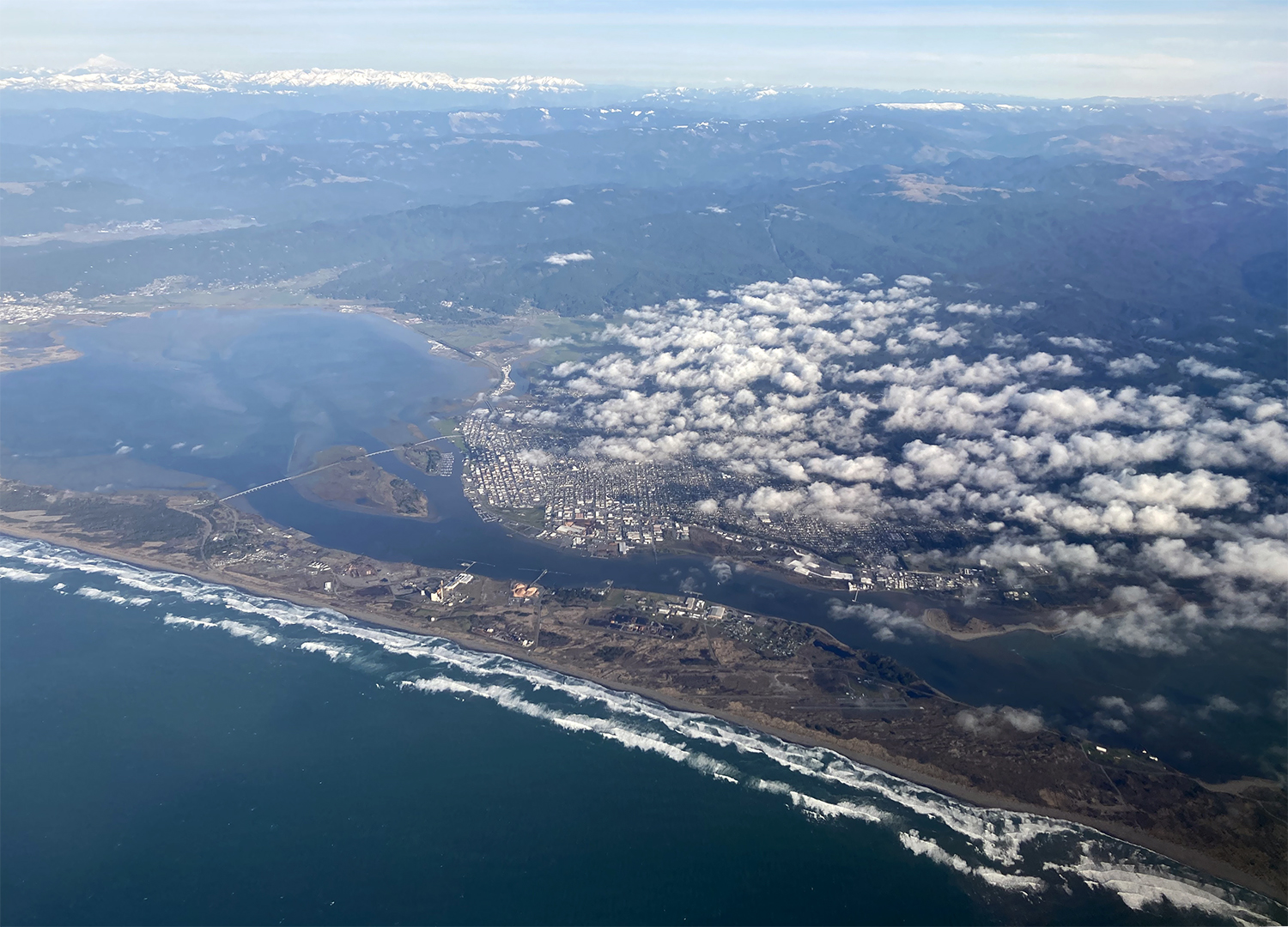
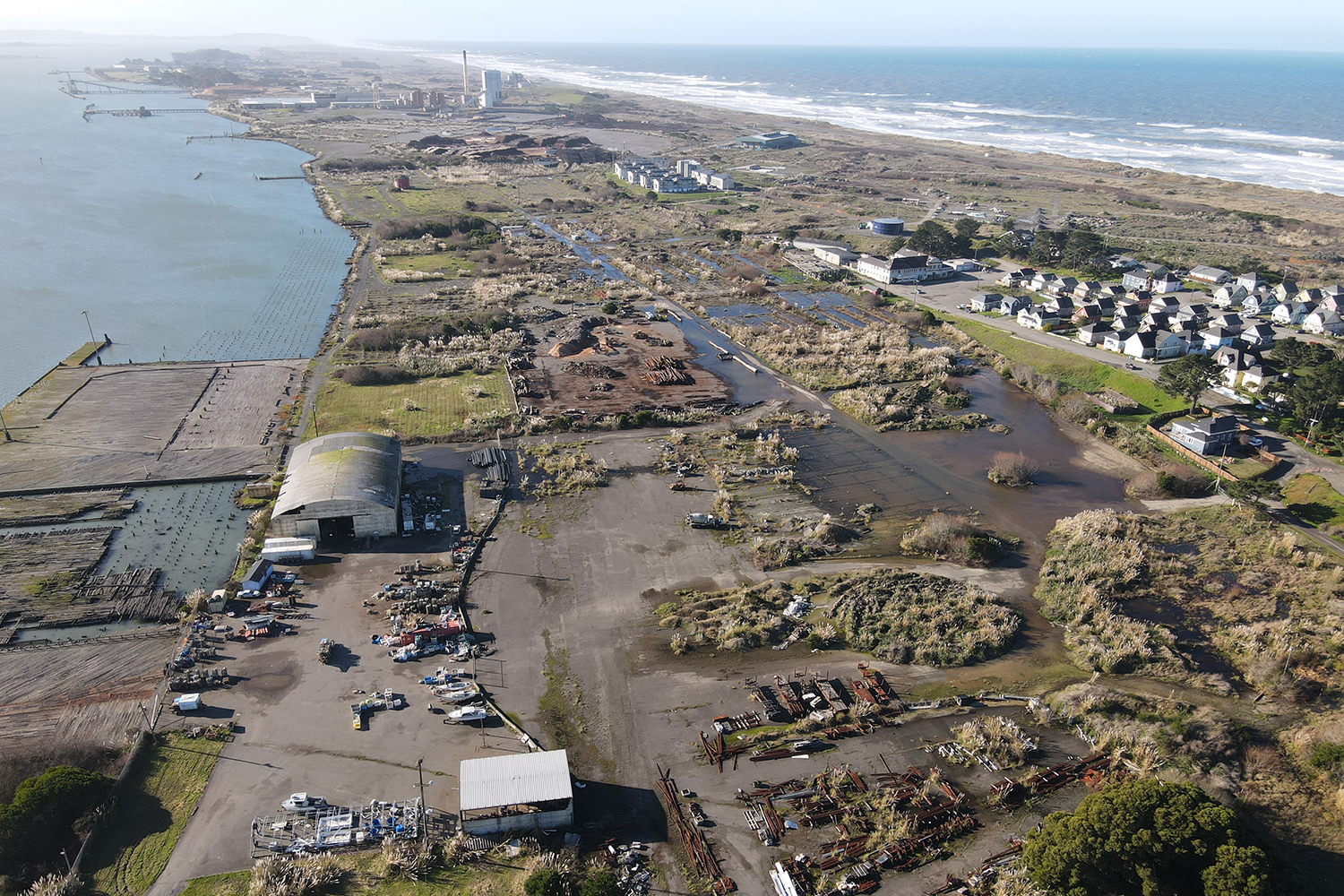
The Schatz Energy Research Center is located in the Humboldt Bay Area, which is preparing to house one of only two feasible staging and integration ports in California for offshore wind deployment. Humboldt is also home to two wind lease areas, which begin 20 miles offshore and span 207 square miles. Since 2018, the Schatz Center has published over 30 reports on topics ranging from transmission expansion to seabird vulnerability, in an effort to understand the feasibility of offshore wind, and to identify critical environmental and community needs that would be associated with its development. The Schatz Center works in close partnership with Tribal Nations, county services, and state government to design innovative solutions for clean power generation and energy resilience.
“We are coming together as a consortium because we know we need to take bold action to address climate change, and offshore wind has potential to play an important role. We also know that the transition to clean energy needs to happen in a way that is inclusive, equitable, and environmentally responsible,” says Arne Jacobson, Director of the Schatz Center. “As universities embedded in the regions where offshore wind is proposed, we have a special role to play, and – working in collaboration with partners – we can help generate the knowledge needed to transform our energy system in a way that does right by our communities and the planet.”
Entrance to Humboldt Bay. Photo by Maia Cheli, 2019.
Environmental research for offshore wind includes baseline surveys, behavioral assessments, data integration and modeling, monitoring for protected species, planned mitigation, pathways for adaptive management, and transfer of lessons learned. Cal Poly San Luis Obispo is home to the Center for Coastal Marine Sciences, which has a history of interdisciplinary, applied research to address a range of management issues for the Central Coast. Cal Poly San Luis Obispo works collaboratively with a variety of interest groups in the Morro Bay Area to promote and design effective environmental monitoring for offshore wind. The Morro Bay Wind Energy Area covers 376 square miles across three wind lease areas.
“It will be essential that any offshore wind energy projects are developed in environmentally and socially responsible ways,” says Benjamin Ruttenberg, Director of the Center of Coastal Marine Sciences. “While many of the key issues are common across regions, some will be area-specific. The diverse expertise across the POWC institutions, along with their deep understanding of local communities and regional environmental issues, makes this group extremely well-qualified to be a neutral and trusted source to generate and summarize scientific information that can inform and guide the conversations about whether and how to deploy offshore wind.”
Open house for the Center for Coastal Marine Sciences at the Cal Poly Pier. Photo by Dylan Head, Multimedia Producer @ Cal Poly SLO, 2023.
The Pacific Marine Energy Center (PMEC) at Oregon State University brings over 15 years of experience investigating the technical, environmental, and social dimensions of offshore energy, and expanding scientific understanding, engaging stakeholders, and educating students. The Hatfield Marine Science Center at OSU serves as a hub for research on potential ecological effects of offshore renewable energy, while the PacWave test site demonstrates in-water activities and potential issues associated with offshore energy projects, such as seabed surveys, cable laying, construction and operational noise, and electromagnetic fields (EMF). PMEC also conducts significant hydrodynamic and aerodynamic studies of offshore wind platforms at the Hinsdale Wave Research Laboratory. The State of Oregon is now considering how offshore wind could be incorporated with the environment, existing ocean uses, cultures, and communities, as lease sales for offshore floating wind sites are expected in fall 2024.
“This consortium will leverage the experience and expertise of the three partner universities and provide consistency of approach to evaluation of offshore wind along the west coast,” says Sarah Henkel, Associate Director of the Pacific Marine Energy Center at OSU. “We are excited that through this consortium we will have additional support to engage with our local communities, continue our regional ecological investigations, focus on development of next generation platform design, as well as collaborate and share findings to build a comprehensive understanding of outcomes related to potential offshore wind deployment.”
Researchers prepare hydrophones to track movements of tagged Dungeness crabs. Photo by Curtis Roegner (NOAA).
POWC Advisory Committee
The POWC will support interdisciplinary understanding across academia, industry, agencies, community organizations, and Tribal Nations. This breadth is reflected in the consortium’s Advisory Committee, which recently convened for its inaugural meeting. As a non-governing committee, the advisory group will provide guidance and advance discussion and collaboration in the offshore wind space. Founding members include representatives from: Tribal Nations: the Hon. Jason Ramos and Heidi Moore-Guynup, Blue Lake Rancheria, Linnea Jackson, Hoopa Valley Public Utilities District, and Michael Gerace, the Hon. Lana McCovey and the Hon. Philip Williams, Yurok Tribe; State agencies:Jenn Eckerle and Justine Kimball, California Natural Resources Agency / California Ocean Protection Council, Katerina Robinson and Jessica Eckdish, California Energy Commission, Andy Lanier, Oregon Department of Land Conservation and Development, and Jason Sierman, Oregon Department of Energy; Federal labs, agencies, and Sea Grant partnerships: Alicia Mahon, Pacific Northwest National Laboratory, Karina Nielsen, Oregon Sea Grant, Shauna Oh, California Sea Grant and Scripps Institution of Oceanography, and Eric P. Bjorkstedt, NOAA Fisheries, Southwest Fisheries Science Center, Ecosystem Science Division and Department of Fisheries Biology, Cal Poly Humboldt; Philanthropy:Curtis Seymour, AC Strategies; and the Offshore wind industry: Ciara Emery and Joel Southall, RWE Offshore Wind Holdings, LLC, and Laura Nagy and Erik Peckar, Vineyard Offshore.
“The Blue Lake Rancheria recognises the urgency of the climate crisis and intends to leverage their knowledge and resources to continue to advance clean energy innovations,” says Heidi Moore-Guynup, Director of Tribal and Government Affairs at the Blue Lake Rancheria (BLR). “At the same time, BLR understands the imperative need to coordinate scientific inquiry and research and believes that Traditional Ecological Knowledge must be part of such inquiry. BLR is honored to serve on the POWC advisory committee and looks forward to uplifting the findings of this consortium.”
“Oregon Sea Grant understands the broad spectrum of challenges and opportunities that floating offshore wind energy brings to the US West Coast. There is a clear and urgent need for regional integration of science and knowledge across many disciplines to enable responsible development of offshore wind energy,” said Karina Nielsen, Director of Oregon Sea Grant. “We look forward to partnering with POWC, our sister Sea Grant programs in California and Washington, the National Sea Grant Offshore Wind Energy Liaison, and other partners to support co-developed research and community education to help our coastal communities and marine ecosystems thrive.”
Core Team and Advisory Committee members at the Blue Lake Rancheria in April 2024
POWC funding
Over $12 million in current grant funding, primarily from state and federal agencies, supports offshore renewables research and project work at the three centers. Additionally, the POWC itself has received commitments for $1.6 million in starting funds from private donors and industry.
“Growing an offshore wind industry that’s responsible, equitable and inclusive requires sustained commitments and deep collaboration,” said Alicia Barton, CEO of Vineyard Offshore. “We are delighted to support and participate in the new Pacific Offshore Wind Consortium. Anchored by three world-class research institutions, the Consortium will foster meaningful engagement, research and collaboration within the west coast offshore wind industry. Our partnership in this effort reinforces Vineyard Offshore’s dedication to enhancing opportunities for Tribal Nations, underserved communities, and local businesses while preparing students and others for careers in this burgeoning field.”
“We’re proud to be supporting the world-class research of Cal Poly Humboldt, Cal Poly San Luis Obispo and Oregon State University and to contribute to an effort that meets the needs of the Humboldt region,” said Sam Eaton, CEO of RWE US Offshore Wind Holdings. “Community engagement is a core principle of RWE’s approach to developing offshore wind projects, including our Canopy Offshore Wind project off of Northern California. The Humboldt community will help us shape this project as well as the future of offshore wind on the Pacific Coast. Offshore wind will play an essential role in our clean energy future, job creation and local economic development, and the Pacific Offshore Wind Consortium’s work will provide valuable insights into the responsible development of this renewable resource.”
Contact
For more information on the POWC and to receive updates, please visit powc.us or contact info@powc.us.
For more information about the three centers and their research programs, visit:
Schatz Energy Research Center at Cal Poly Humboldt: schatzenergy.org
We recently released a new reportthat evaluates potential scenarios for electric grid transmission development to support floating offshore wind along the northern coast of California and the southern coast of Oregon. The scenarios include onshore and offshore (undersea) transmission systems, with interconnections ranging from 7.2 to 25.8 gigawatts of generation capacity. The study encompasses multiple possible wind farm sites between Coos Bay, Oregon and Cape Mendocino, California, including the two currently awarded lease areas located 20 miles off California’s Humboldt Bay, and two Draft Wind Energy Areas near Brookings and Coos Bay, Oregon.
Because the existing transmission infrastructure in these rural, coastal areas is very limited, major investments will be required to support offshore wind development. This report estimates that transmission infrastructure costs could range from $7.5 billion for a 7.2 gigawatt wind farm to as much as $41.3 billion for a 25.8 gigawatt buildout. For the 7.2 gigawatt scenario, annual system-wide benefits are estimated to be roughly $1.2 billion, when compared to a base case without offshore wind generation. These savings include both production cost savings and greenhouse gas emissions savings; the latter is valued at $72 per metric ton of avoided emissions, based on the EPA’s projected social cost of carbon.
The report examines combinations of onshore and offshore transmission solutions, utilizing both high-voltage alternating current (HVAC) and high-voltage direct current (HVDC). Estimates also include the costs to deliver wind power to nearby coastal communities. The analysis indicates that coastal communities near wind farms could be connected to the new transmission infrastructure, thereby increasing the reliability and available capacity of electricity in those areas, for only 0.4% to 2.4% of the overall cost of the transmission upgrades.
This study also includes a preliminary assessment of anticipated permitting challenges related to environmental impacts, land use conflicts, and undersea cable routing. The findings indicate significant variations in permitting difficulty, ranging from low to very high among the various possible routes.
Because the Pacific offshore wind buildout will take decades to accomplish, the report emphasizes that infrastructure investment decisions made in the early phases must be informed by expected long-term strategies—both to minimize cost and impact, and so that developments do not become stranded. Proactive, regional transmission planning is critical. Likewise, technologies installed today must be designed to adapt to future solutions.
We recommend next steps including taking a more detailed look at near-term transmission needs for the first phase of offshore wind development; a detailed analysis of transmission routes, land ownership, and rights-of-way; and an assessment of the potential to couple battery energy storage with offshore wind.
This study was funded by the California Energy Commission and the Office of Local Defense Community Cooperation of the U.S. Department of Defense, and developed in close collaboration with the Oregon Department of Energy. Technical project partners included the National Renewable Energy Laboratory, Quanta Technology, H. T. Harvey & Associates, Mott MacDonald, and Conaway Geomatics.
When: Thursday, November 30 from 5:30-7:00 pm (with a book signing to follow the talk)
Where: Native American Forum (BSS 162) at Cal Poly Humboldt
Who: Everyone is invited to attend this free event!
“Tell me the facts and I’ll learn. Tell me the truth and I’ll believe. But tell me a story and it will live in my heart forever.”
In this talk, Rosanna Xia will break down how journalists today are writing about climate change, with lessons learned on how to turn complex issues into deeply-felt stories. Xia will also introduce her new book, California Against the Sea, and share insights from her award-winning reporting on sea level rise.
Rosanna Xia is an environmental reporter for the Los Angeles Times, where she specializes in stories about the coast and ocean. She was a Pulitzer Prize finalist in 2020 for explanatory reporting, and her work has been anthologized in the Best American Science and Nature Writing series. Her recent book, California Against the Sea, has been praised as a beautiful and revelatory exploration of how we think about the natural world.
This event is free and open to the public, and accessible parking and seating is available for the Native American Forum.
Please contact us at schatzenergy@humboldt.eduor 707-826-4345 for additional accommodations or questions.
*** Attention students: Are you interested in learning about environmental reporting as a career? Join us from noon to 1 pm in the Library Fishbowl (2nd floor), for a pizza lunch & professional development workshop with Rosanna Xia. Questions? Email Professor Jennifer Marlow at jjm182@humboldt.edu. ***
Many thanks to our campus partners for sponsoring this event and supporting conversations around energy, equity, community, and sustainability! Collaborators for this event include faculty and staff in English, Engineering, Environmental Science and Management, Environmental Studies, Journalism, Sustainability, the Cal Poly Humboldt Library, and the Humboldt Sea Level Rise Institute.
We also offer deep thanks to Native faculty, staff, and students at Cal Poly Humboldt for sharing their Forum with us for this special event.
Presented by: Sharon Kramer and Stephanie Schneider of H. T. Harvey & Associates, and Eli Wallach and Arne Jacobson of the Schatz Energy Research Center at Cal Poly Humboldt
Panelists: Garry George, Director of the Clean Energy Initiative for the National Audubon Society, and David M. Pereksta, Avian Biologist at the Bureau of Ocean Energy Management
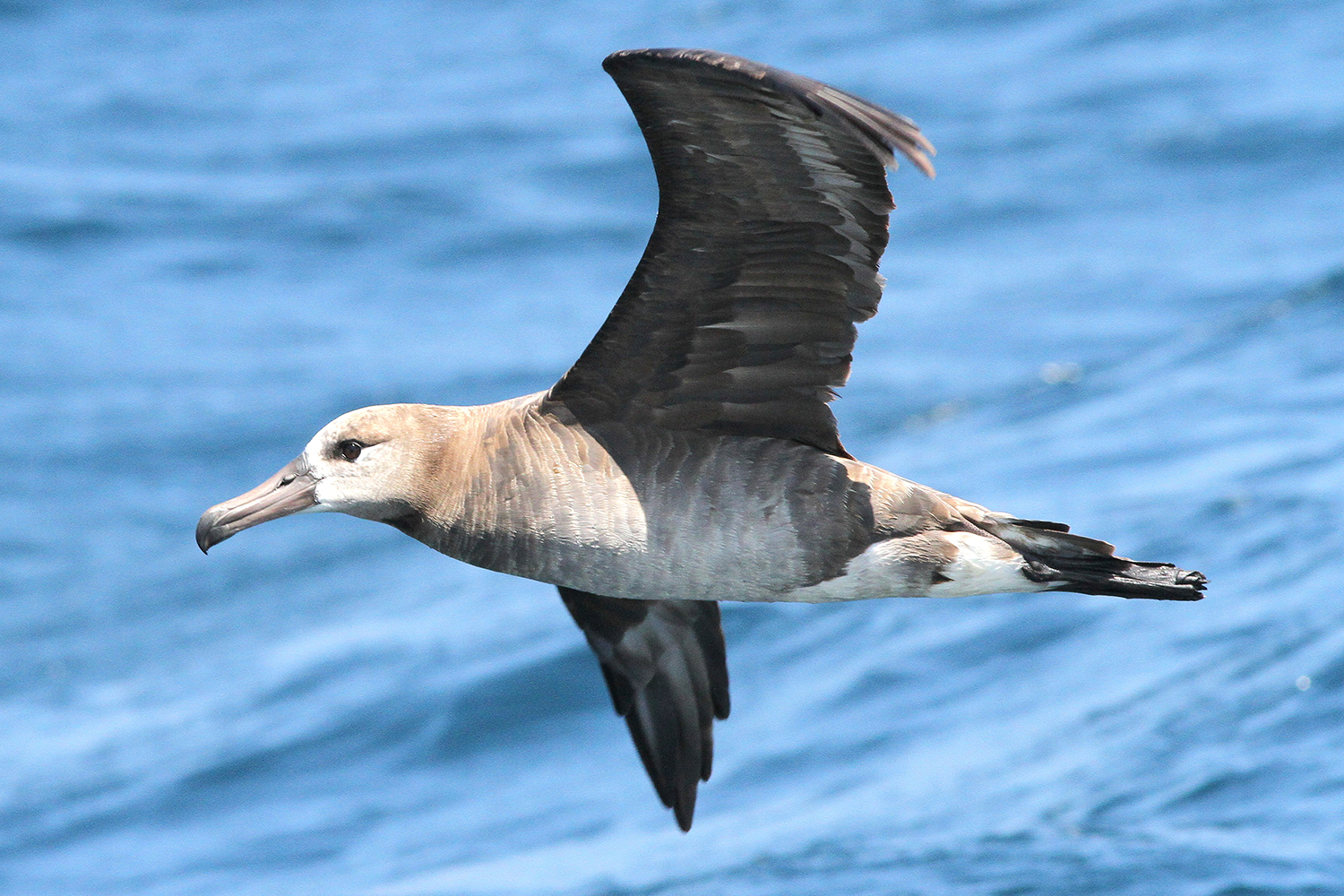
In order to determine the potential impacts of offshore wind turbines on seabird species, we need to understand species distribution and behavior in three dimensions – not only where birds have been recorded per longitude and latitude, but how they behave in the air column in response to varying wind conditions. For example, seabirds that typically fly beneath the sweep range of a turbine may have different avoidance behaviors than those for whom the blades are in their preferred flight space. Further, birds respond to the wind speed, and adjust their flight height when the wind is strong (and hence turbines are rotating quickly) versus when the air is calm, so there is a conditional dimension to the analysis as well.
Our 3D seabird interactions study models (a) the abundance of seabirds within rotor swept elevations, and (b) localized offshore wind generation potential. The objective is to identify those areas along the California coast which have a strong generation potential and minimal seabird occurrence.
Our model inputs begin with historic at-sea observation data from both vessels and aircraft, and long term spatial covariates, for the US West Coast.
Relationships between wind speeds and seabird flight height are then added to create a 3D map of anticipated seabird density.
Next, power generation estimates are made using modeled wind resource data generated by the National Renewable Energy Laboratory (NREL) for coastal and offshore areas, along with the expected turbine characteristics for 12 and 15 MW turbines.
Finally, the performance of various wind farm configurations are compared with seabird abundance using a pareto optimization approach.
In this talk, we will discuss these methods, which we used to model abundance for forty-four seabird species, and how we simulated wind facility power generation. And, we will explore possible tradeoffs between seabird vulnerability and power generation.
If you’d like to receive emails about our offshore wind research and details on related webinars and presentations, please send us an email at windstudies@schatzcenter.org.