In 2020, our team began a collaboration with H. T. Harvey & Associates to understand seabird vulnerability to offshore wind within the marine waters off Southern California to Central Oregon.
H. T. Harvey & Associates led an effort to understand where seabirds have been observed, based on decades of existing data, and how those recorded species typically behave within the vertical air column in response to wind speed.
Simultaneously, the Schatz Center team analyzed wind speeds and associated power generation potential across the region – and then integrated the bird vulnerability framework with the wind power generation model.
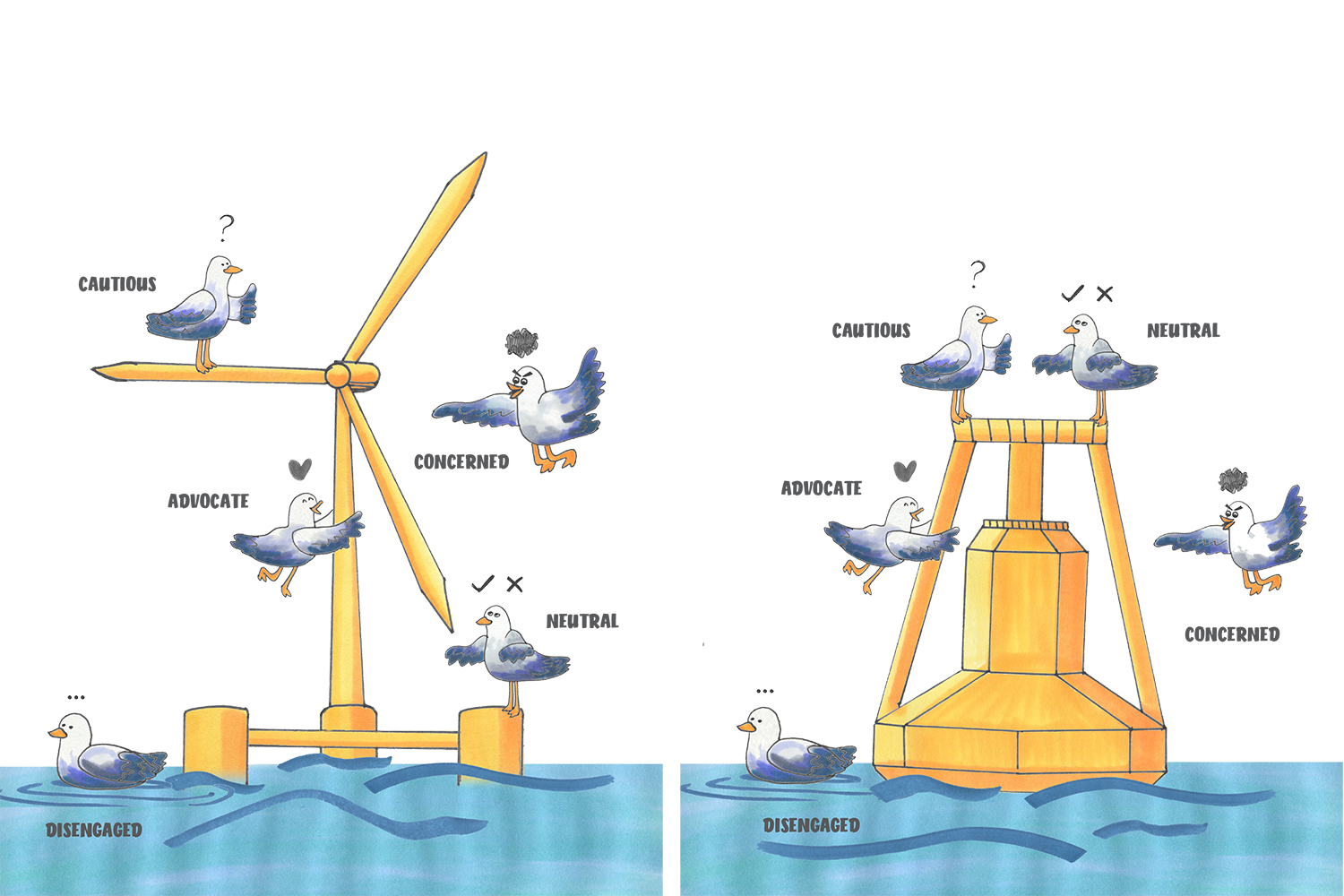
Our goal was to illuminate potential tradeoffs between collision vulnerability and offshore wind power generation, and to understand the likelihood of a given species to be within the strike-vulnerable zone of a rotating wind turbine. (Note: just as crossing a street is not equivalent to being hit by a car, assessing which birds may fly at heights within the rotor-swept zone of a wind turbine does not predict a number of strikes, but instead highlights a potential vulnerability for birds of that species. Future studies will examine seabird avoidance and attraction behaviors in response to turbine infrastructure.)
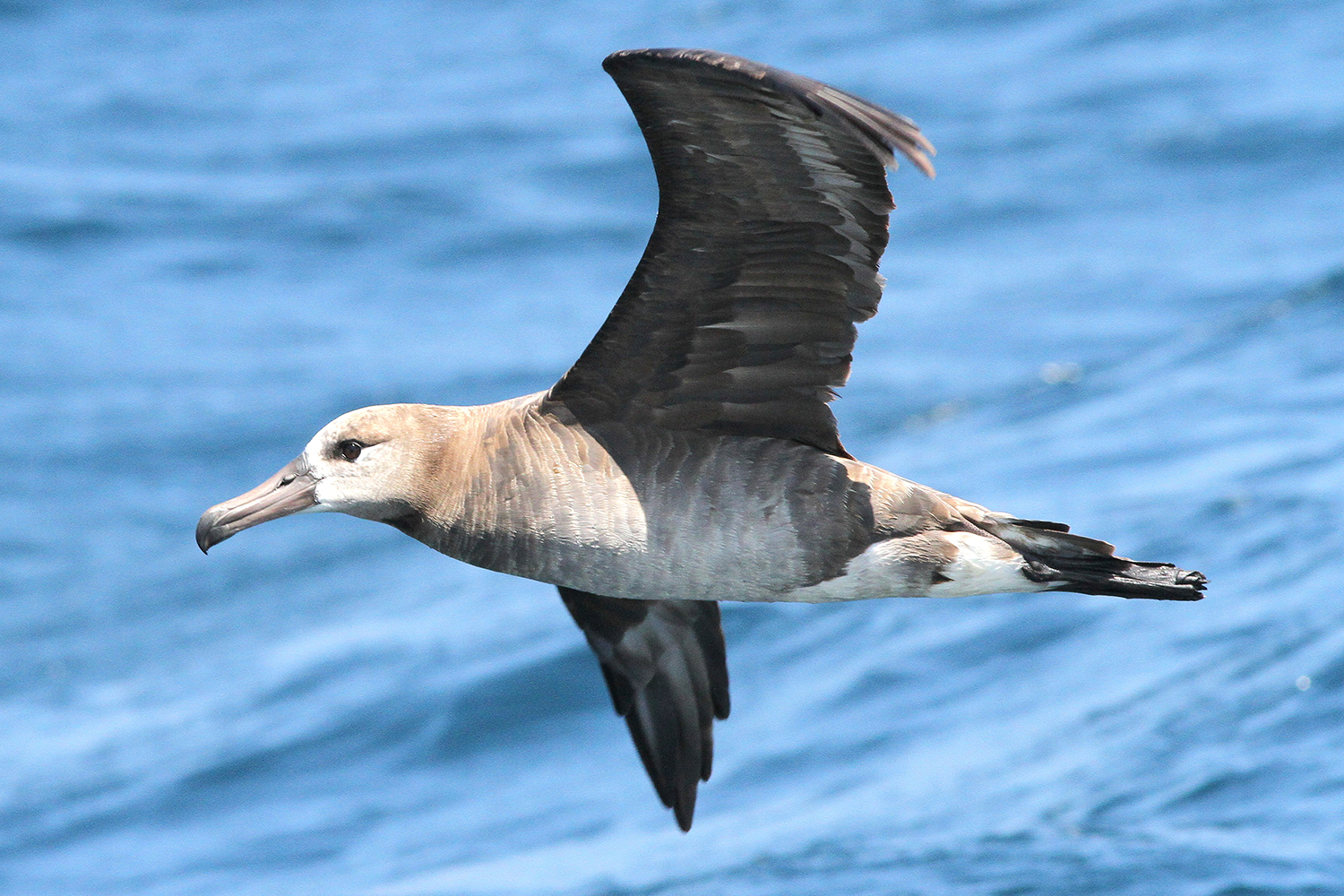
For large floating offshore wind turbines such as those proposed for development along California’s Outer Continental Shelf, the base of the rotor-swept zone would be at least 25 meters above sea level. Our study uses a more conservative measure starting at 10 meters above sea level, which aligns with existing observational data. Our results indicate that for 44 species of seabirds found across the study area – from Point Conception, CA to Newport, OR – most are predicted to fly below 10 meters, with approximately 8% of the seabird community flying at or above 10 meters at any given time. These higher-flyers are dominated numerically by the seasonally abundant sooty shearwater, a dynamic-soaring species that uses high wind speeds to obtain high flight heights and soar for long distances, as well as several gull species.
Our assessments encompassed all waters in the study area that are shallow enough to support floating OSW mooring infrastructure (1,300 meters or shallower). While multiple wind facility scenarios across a broad area of the West Coast were simulated for this report, the same framework can be utilized in the future to focus on new lease areas and other probable project locations as those become better refined.
Our new report, California Floating Offshore Wind: Evaluating Workforce Analyses and Assessing Professional Labor Needs, offers new insights into the professional workforce that will be needed in order to deploy floating offshore wind (FOSW) in California. The report (a) evaluates existing workforce analyses and tools, (b) examines key factors influencing job projections, and (c) assesses professional labor needs across multiple industry activities, including project development, supply chain, operations and maintenance, port development, and transmission infrastructure. In the context of this report, “professional occupations” refer to roles that typically require a university degree, and “professionals” are individuals in the workforce who hold such degrees.
Existing analyses for the sector exhibit significant variability in job projections. For example, estimates for job creation by 2030 range from 2,375 to 8,280 jobs — with differences largely driven by assumptions regarding project scale and level of state participation in the supply chain. This report includes a sensitivity analysis of supply chain factors using the National Renewable Energy Laboratory’s Jobs and Economic Development Impact (JEDI) model. Our findings underscore the significant impact of in-state supply chain participation on overall job creation and workforce composition.
Our analysis indicates that of the total jobs that could be created through the development of a 1.5 GW offshore wind project in the Humboldt Wind Energy Area, the manufacturing of components accounts for 60%; staging, assembly, and installation represent 10%; development and soft costs account for 11%; and less than 18% are in operations and maintenance.
The report’s evaluation of professional occupations across the FOSW sector, found that professional occupations make up an estimated 37-41% of FOSW industry jobs (depending on the level of in-state supply chain activities), 20% of port development jobs, and 15% of onshore electric transmission development. In the FOSW industry, roles are concentrated in engineering, life and physical science, and management for many of the major activities.
To assess workforce readiness, this report also examines how professional FOSW industry and port development occupations align with existing degree programs at Cal Poly Humboldt (CPH). Our review indicates that CPH currently offers programs that align with nearly all professional roles in the FOSW industry and port development, with particular strengths in engineering and environmental sciences.
Download California Floating Offshore Wind: Evaluating Workforce Analyses and Assessing Professional Labor Needs from our publications archive.
For more information, contact: schatzenergy@humboldt.edu or 707-826-4345.
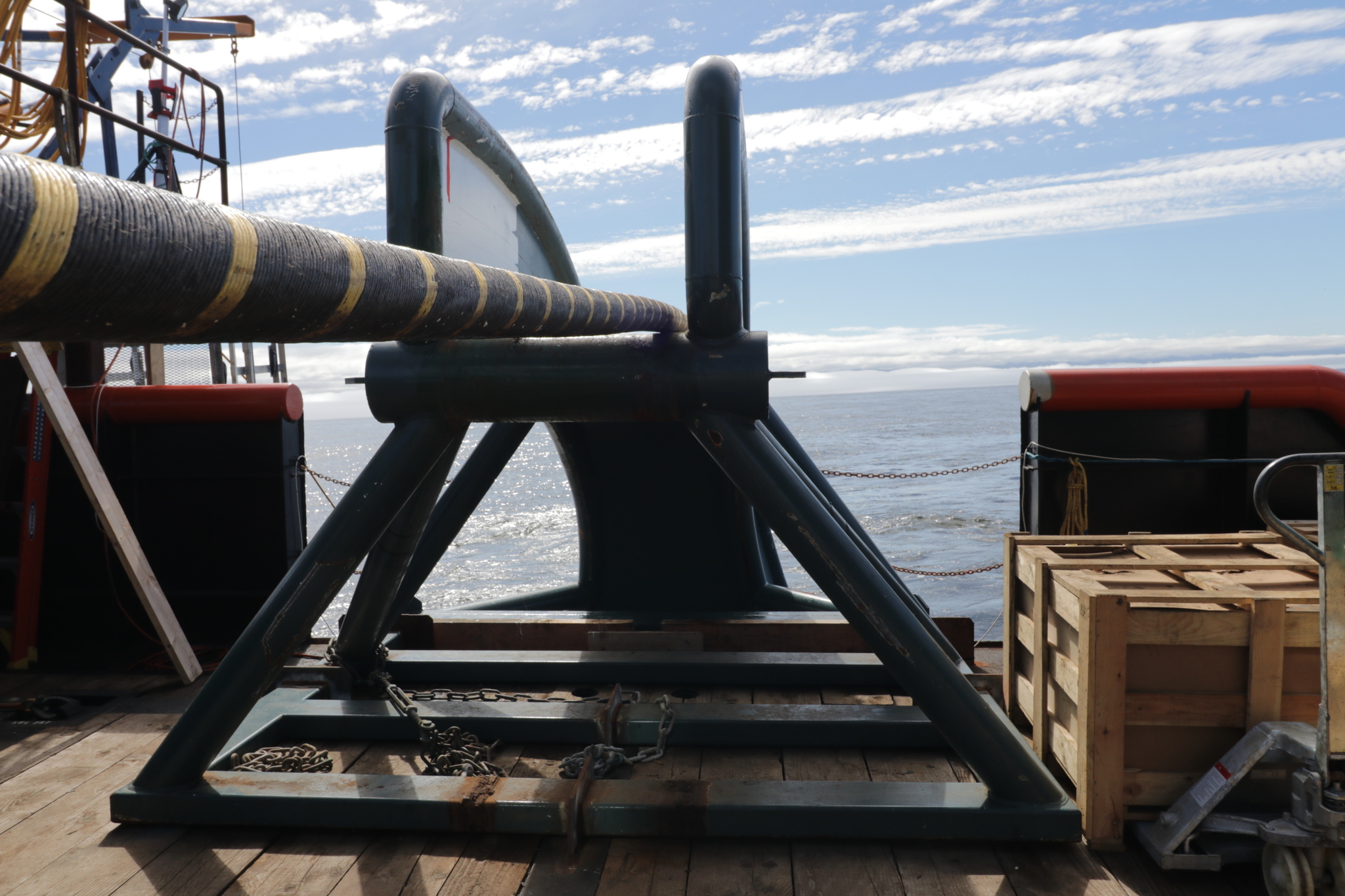
PacWave is a state-of-the-art, pre-permitted, grid-connected, wave energy test facility that is being developed in partnership with the US Department of Energy, the State of Oregon, Oregon State University (OSU) and local stakeholders. The open ocean test site consists of four berths, which occupy two square nautical miles of ocean with a cable to shore of approximately 12 miles in length (for each berth). Drilling for cable conduits began in summer 2021 and cable laying was completed in fall 2024; however, permitting and cable procurement started long before that. This webinar will describe the cabling process, including pre-installation environmental surveys and post-installation monitoring.
Presenters: Dan Hellin, the Director of the PacWave test facility and Sarah Henkel, the Associate Director of the Pacific Marine Energy Center at Oregon State University.
For questions about this webinar or to request technical or accessibility support, please contact schatzenergy@humboldt.edu or call 707-826-4345.
This webinar is being hosted by the Pacific Offshore Wind Consortium (POWC, pronounced pow-sea), which is a joint effort between three research centers: the Schatz Energy Research Center at Cal Poly Humboldt, the Pacific Marine Energy Center at Oregon State University, and the Center for Coastal Marine Sciences at Cal Poly San Luis Obispo. These universities are all housed in and supported by the coastal communities that are anticipated to host floating offshore wind development. Together, the consortium aims to advance three pillars: (i) research and innovation, (ii) university-level workforce education and professional development, and (iii) community and Tribal engagement and knowledge exchange. Learn more about the POWC here.
Additional resources
If you’d like to receive emails about our offshore wind research and details on related webinars and presentations, please send us an email at windstudies@schatzcenter.org.
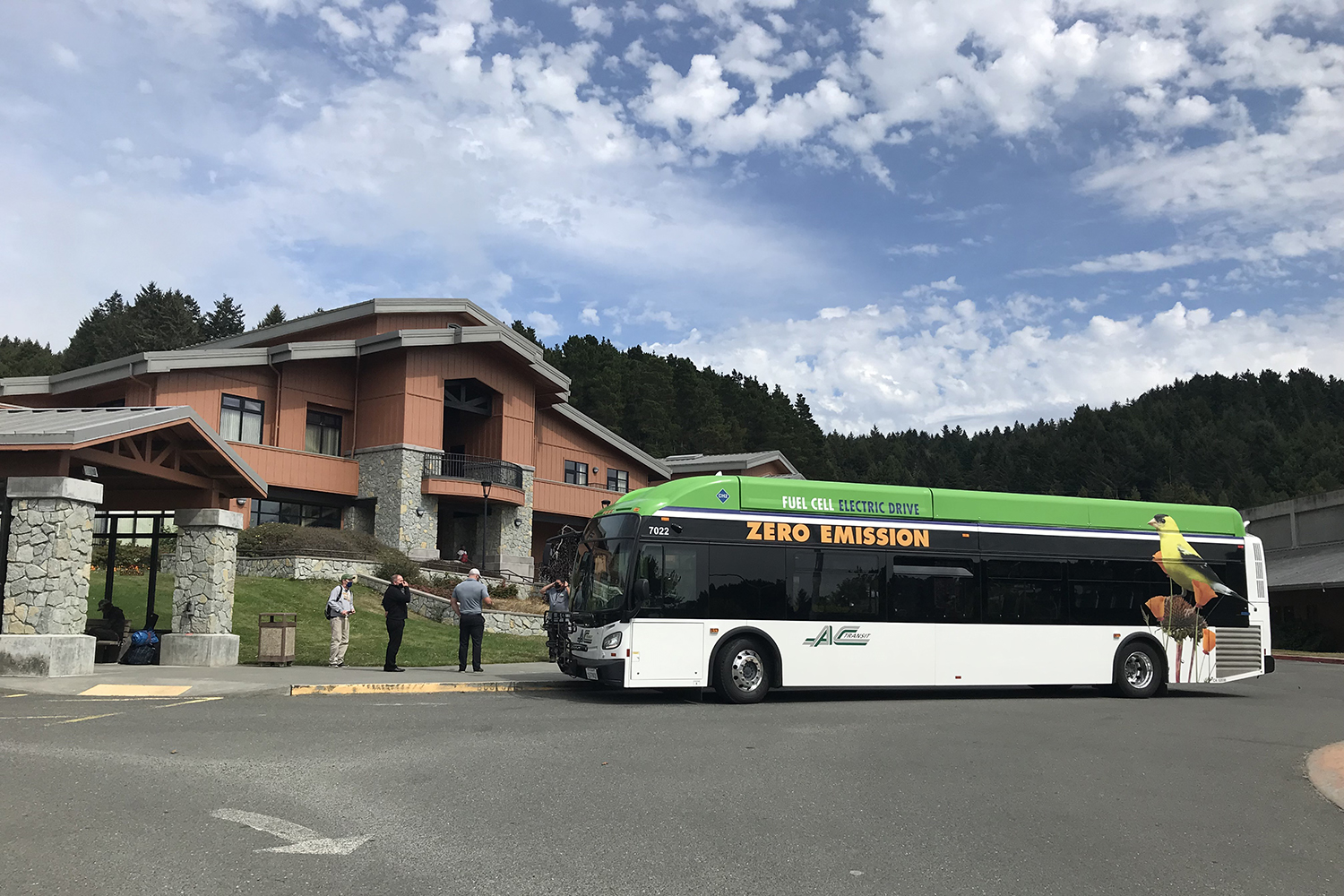
Responding to California’s Clean Transit Initiative, our local Humboldt Transit Authority (HTA) has begun a required transition to a zero-emission transit fleet. HTA will soon receive 11 New Flyer Xcelsior CHARGE FC™ fuel cell electric buses and construct a hydrogen fueling station on their corporation yard to fuel them. HTA will also work with the City of Eureka to construct the Eureka Regional Transit and Housing Center—the EaRTH Center—in downtown Eureka. The Schatz Center worked with HTA to submit the grant proposal that funded this project and will work as HTA’s owner’s engineer as the project progresses. California’s Transit and Intercity Rail Capital Program awarded HTA $39M for this work.
New bus service is also part of the project. HTA is initiating a new service — the Redwood Express — from Eureka to Ukiah and back. The new service will allow transit riders to connect to Mendocino Transit and then on to the SMART train, connecting to San Francisco and other Bay Area locations. The route to Ukiah and back is an exceptionally demanding route for a 40-foot transit bus and existing fuel cell buses were unable to complete the route on one tank of hydrogen fuel. HTA and Schatz worked with New Flyer on a new bus design with a larger fuel cell, a larger battery, a more powerful traction motor, and additional fuel storage. This new bus has a 370-mile range and will comfortably make the Redwood Express run.
HTA’s pilot fuel cell bus will arrive early in spring 2025 and be fueled at a temporary hydrogen fueler installed by Linde, an international gas supply company. The pilot bus will undergo an extensive testing program designed and overseen by the Schatz Center. Once certified, it will begin serving passengers on HTA’s Trinidad-to-Scotia and Redwood Express routes. The remaining 10 buses and the permanent hydrogen fueling station are planned for delivery and completion in 2026.
Who: Everyone is invited to attend this free event!
Carla J. Peterman is Executive Vice President, Corporate Affairs and Chief Sustainability Officer for PG&E Corporation. At PG&E, she oversees the company’s regulatory, legislative, sustainability, and charitable strategies. Peterman has spent her career in several senior-level government and utility roles focused on California’s clean energy future. Peterman holds a PhD in energy and resources from the University of California, Berkeley, and MS and MBA degrees from Oxford University, where she was a Rhodes Scholar.
Carla’s talk “Scaling Our Energy Future: Insights from the utility sector” will focus on how PG&E, as one of the nation’s largest electric and gas utilities, plans to scale the energy system to meet growing load and decarbonization and resiliency goals, while ensuring energy remains affordable.
This event is free and open to the public, and accessible parking is available nearby (see the BSS & Native American Forum buildings on the campus map).
Please contact us at schatzenergy@humboldt.eduor 707-826-4345 for additional accommodations or questions.
What factors influence people’s different responses to proposed offshore wind and wave energy developments – and what might the implications for future siting and permitting processes be? In this talk, Hilary Boudet and Gregory Stelmach of Oregon State University will share insights from their ongoing studies of community perspectives toward marine renewables development.
Hilary Boudet is a Professor and Director of Graduate Programs in the School of Public Policy at Oregon State University. Her research interests include environmental and energy policy, natural resource sociology, social movements, and public participation in energy and environmental decision-making. Greg Stelmach is a Postdoctoral Scholar in the School of Public Policy at Oregon State University and the Pacific Marine Energy Center.
For questions about this webinar or to request technical or accessibility support, please contact schatzenergy@humboldt.edu or call 707-826-4345.
This webinar is being hosted by the Pacific Offshore Wind Consortium (POWC, pronounced pow-sea), which is a joint effort between three research centers: the Schatz Energy Research Center at Cal Poly Humboldt, the Pacific Marine Energy Center at Oregon State University, and the Center for Coastal Marine Sciences at Cal Poly San Luis Obispo. These universities are all housed in and supported by the coastal communities that are anticipated to host floating offshore wind development. Together, the consortium aims to advance three pillars: (i) research and innovation, (ii) university-level workforce education and professional development, and (iii) community and Tribal engagement and knowledge exchange. Learn more about the POWC here.
Where: Native American Forum (BSS 162) at Cal Poly Humboldt
Who: Everyone is invited to attend this free event!
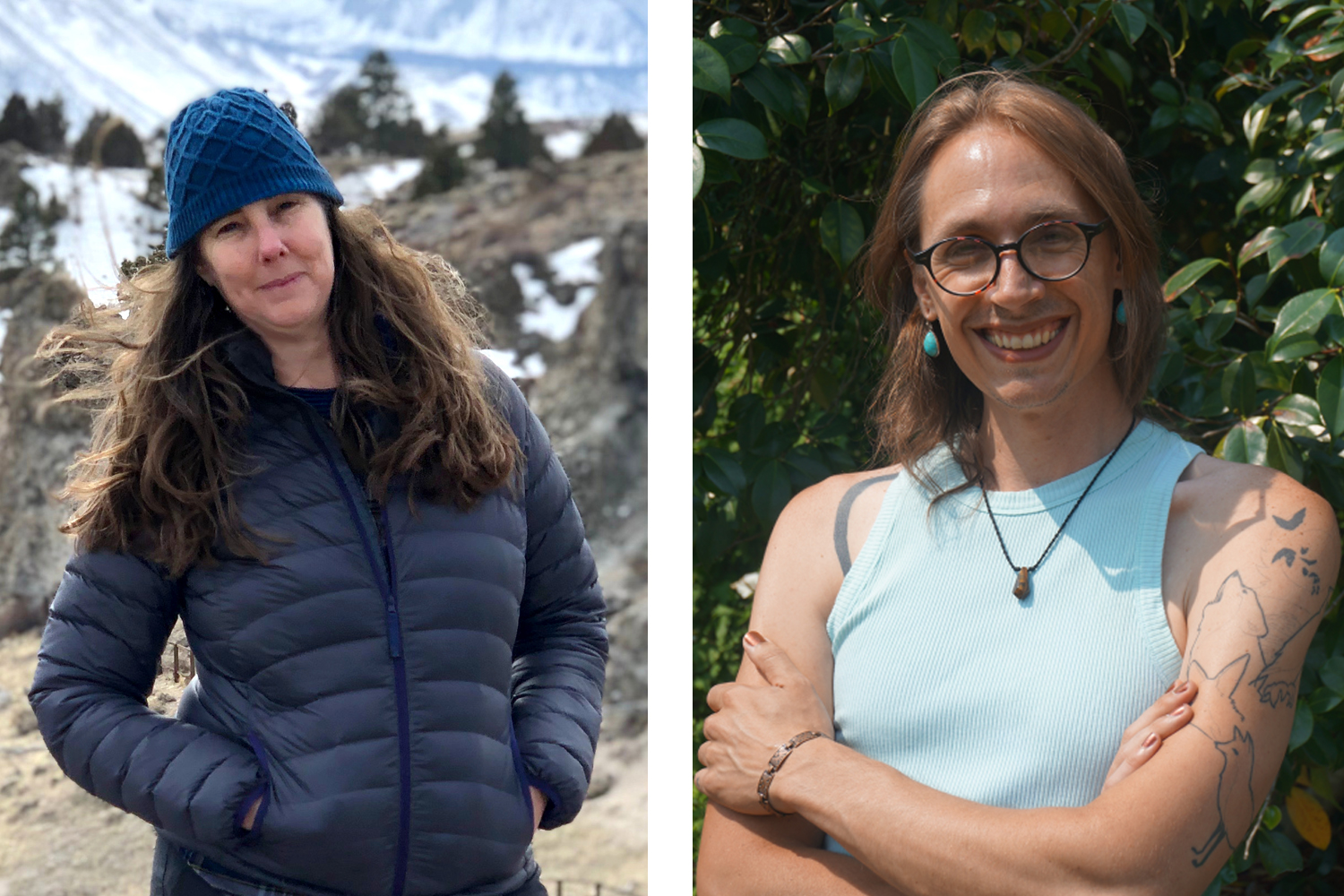
Renewable energy development is necessary to decarbonize the electrical grid and move communities away from reliance on burning fossil fuels, and yet sometimes decarbonization efforts conflict with the also pressing work of decolonization. Advocates view renewable energy projects as necessary, even if building them requires sacrifices. But those sacrifices tend to fall on Indigenous people, who have already suffered genocide, loss of land, boarding schools, and other tragic consequences of colonization. To be truly just, climate solutions need to be developed outside of colonial structures, rather than replicate them. Featuring two journalists — one writer and one editor — this talk will touch on ways tribal communities are pushing back against renewable energy projects that threaten ecological and cultural resources, what alternative approaches to renewable energy development might look like, and how one Indigenous affairs reporter has brought these issues to light and made an impact through their work.
B. ‘Toastie’ Oaster is an award-winning journalist, reporting for the Indigenous affairs desk at High Country News from Chinook lands in the Pacific Northwest. Their work has also appeared in Foreign Policy, ICT News, Street Roots, the Portland Mercury and elsewhere. Their first feature for HCN, a story about Pacific lamprey, was nominated for a National Magazine award. They’re a member of the Uproot Project, the Trans Journalists Association, and the Indigiqueer committee at the Indigenous Journalists’s Association, as well as a citizen of the Choctaw Nation of Oklahoma.
Jennifer Sahn has spent the past two decades working in the nonprofit journalism sphere, editing award-winning narrative nonfiction and leading teams to new heights. She is currently Editor in Chief of High Country News, a magazine about the West. She previously served as Executive Editor of Pacific Standard and as Editor of Orion magazine before that. She took a detour into the corporate world to work as Deputy Editor at Patagonia, Inc. Her work has been recognized by the National Magazine Awards, Utne Independent Press Awards, Pushcart Prize, O. Henry Prize, John Burroughs Essay Awards, and the Best American Series anthologies. She has been a judge for several literary awards and fellowships and has taught and lectured at a number of writing workshops.
This event is free and open to the public, and accessible parking and seating is available for the Native American Forum.
Please contact us at schatzenergy@humboldt.eduor 707-826-4345 for additional accommodations or questions.
Attention students: Do you want to learn more about environmental reporting and professional development? Join us on Thursday, February 20, from noon to 1 pm in the Library Fishbowl (2nd floor), for a student-oriented professional development workshop and pizza lunch with Oaster and Sahn. Questions? Email Professor Jennifer Marlow at jjm182@humboldt.edu.
Many thanks to our campus partners for sponsoring this event and supporting conversations around energy, equity, community, and sustainability! Collaborators for this event include faculty and staff in the departments of Environmental Science & Management (ESM), the ESM Justice Equity Diversity Inclusion Committee, Journalism & Mass Communication, Native American Studies, Environmental Studies, English, Engineering, and the Campus Library and Sustainability Office.
We also offer deep thanks to Native faculty, staff, and students at Cal Poly Humboldt for sharing their Forum with us for this special event.
Presented by: Eli Wallach and Arne Jacobson of the Schatz Center, and Stephanie Schneider and Sharon Kramer of H. T. Harvey & Associates.
Expert Panelists: Lisa Ballance (Oregon State University), Scott Johnson (U.S. Fish and Wildlife Service), and David Pereksta (Bureau of Ocean Energy Management)
Due to strong and reliable winds off California, offshore wind will play a key role in the state’s goal to achieve 100% renewable energy by 2045. A new report led by the Schatz Energy Research Center in collaboration with H. T. Harvey & Associates evaluates the tradeoffs between the collision vulnerability of 44 seabird species and the offshore wind power-generation potential along California’s coast. This work will improve understanding of seabirds in 3D and help evaluate potential locations for future wind energy developments with minimized impact to seabird populations.
The study model uses a multi-objective optimization framework to balance between seabird densities at rotor-swept heights and anticipated energy production. The objective is to highlight regions that minimize seabird exposure while ensuring viable power generation. The results indicate that while seabirds are very abundant in the study area, most remain below rotor-swept heights and concentrate nearshore and to the south. Long term data suggests that about 8% of the seabird community is likely to be present above 10 meters, primarily the abundant Sooty Shearwater (a dynamic soaring species) and gulls.
These findings can guide offshore wind site selection to ensure California’s renewable energy development considers seabird populations, focusing on those that are most vulnerable.
This webinar will explore the methods used to model the collision vulnerability for forty-four seabird species, and how wind facility power generation was simulated. And, we will discuss possible tradeoffs between seabird vulnerability and power generation.
This webinar is being hosted by the Pacific Offshore Wind Consortium (POWC, pronounced pow-sea), which is a joint effort between three research centers: the Schatz Energy Research Center at Cal Poly Humboldt, the Pacific Marine Energy Center at Oregon State University, and the Center for Coastal Marine Sciences at Cal Poly San Luis Obispo. These universities are all housed in and supported by the coastal communities that are anticipated to host floating offshore wind development. Together, the consortium aims to advance three pillars: (i) research and innovation, (ii) university-level workforce education and professional development, and (iii) community and Tribal engagement and knowledge exchange. Learn more about the POWC here.
Additional resources
If you’d like to receive emails about our offshore wind research and details on related webinars and presentations, please send us an email at windstudies@schatzcenter.org.
The Tribal Energy Resilience and Sovereignty project (TERAS) will empower four tribes in Northern California to transform one of the state’s least reliable electrical circuits into a highly resilient renewable energy system. Supported by $88 million in funding from the Department of Energy’s Grid Resilience and Innovative Partnerships (GRIP) program, this project will significantly advance tribal energy sovereignty, climate resilience, jobs equity, and clean energy innovation.
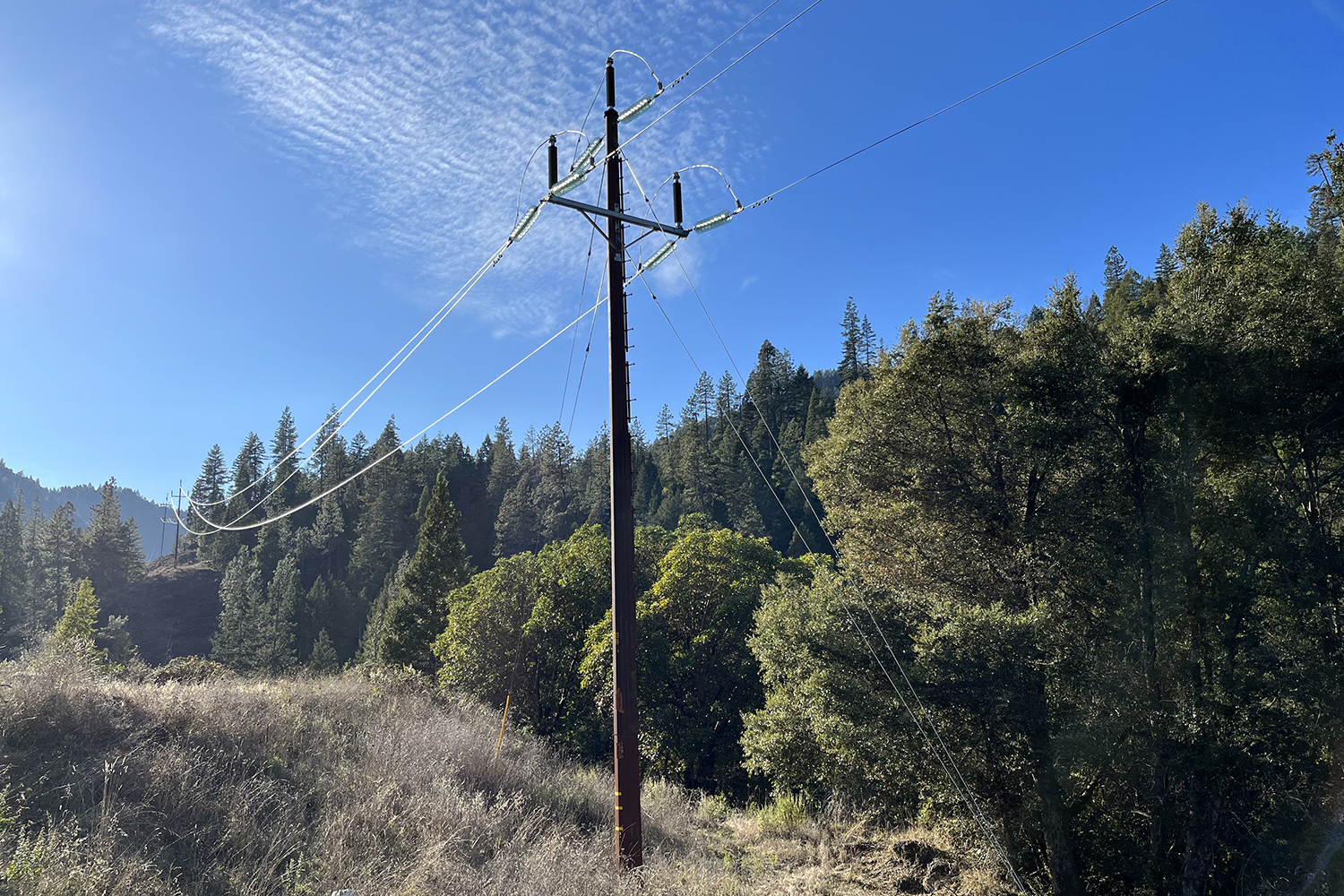
The 142 mile-long “Hoopa 1101” distribution circuit provides electricity to three tribes in eastern Humboldt County – the Hoopa, Yurok, and Karuk Tribes – who jointly experience some of the most frequent and longest duration outages in California. These three tribes are collaborating with the Blue Lake Rancheria Tribe, located along the Baduwa’t River in coastal Humboldt, the Redwood Coast Energy Authority (RCEA), Pacific Gas & Electric (PG&E), and the Schatz Energy Research Center at Cal Poly Humboldt, to co-develop nested microgrid solutions.
Advancing the state of microgrid technology
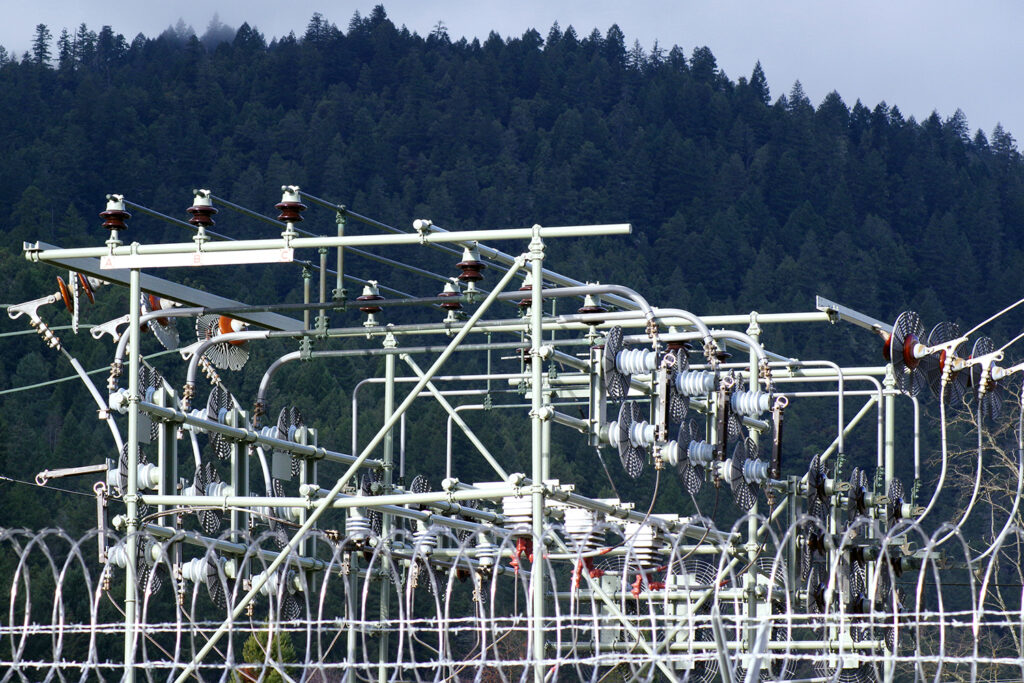
Major technical innovations of this project will include deployment of three nested microgrids – for the Hoopa, Yurok, and Karuk Tribes – and development of a complex controls system that is appropriate to support rugged, rural, and wildfire-prone environments. As “front-of-the-meter” energy systems, each of the three microgrids will be capable of powering a portion of PG&E’s electrical circuit during local outages, and will be able to function either jointly or independently, as immediate circumstances along the power line require.
To support this project, the Blue Lake Rancheria (BLR) is expanding its own campus energy system into four nested, behind-the-meter microgrids, which will provide a demonstration site for the controls system that will subsequently be deployed along the Hoopa 1101. “Tribes believe in the principles of self determination as a cornerstone of tribal sovereignty,” says Jason Ramos, Acting Chair of the Blue Lake Rancheria. “This project makes us even more resilient. As we demonstrated with our earlier microgrids, this nested microgrid project will advance critical technology, and that is good for all Californians. Robust microgrid technology will assist the state to reach its ambitious carbon emission goals.”
Technical development for TERAS is being led by the Schatz Energy Research Center – whose award-winning projects include California’s first front-of-the-meter, 100% renewable energy microgrid at the Redwood Coast Airport, and the BLR’s main campus microgrid system. “We are honored to work with this tribal partnership, and are excited to radically expand the capacity of microgrids to provide energy reliability in high-risk locations,” says Schatz Center Director Arne Jacobson. “These tribes are already leading the field in dam removal, healthy fire on the land, middle and last-mile telecommunications access, and renewable energy systems deployment – and will now support development of what we hope will be a game-changing climate resilience solution.”
Clean energy projects led by tribal partnership
As Chairman Russell “Buster” Attebery of the Karuk Tribe explains, “More often than not, the disadvantaged community of Panamnik (Orleans) is faced with power grid blackouts and shortage of resources due to its remote location. Microgrid energy will not only empower our tribal sovereignty, but provide the safeguards needed to survive along the river. Our people will no longer fear losing their food or vital medical resources, like vaccines, as we have in the past. TERAS is a great example of tribes working together in accomplishing good for their people; we are proud to be a part of this collaborative.”
Yurok Tribe Chairman Joseph L. James shares, “This project dramatically improves energy resiliency on our reservation and represents a major step toward our goal of energy sovereignty. I would like to thank the DOE for the award and our fellow tribes, RCEA, and the Schatz Energy Research Center for working with us to develop a resilient network of tribally owned microgrids to power our homes, schools, government buildings, businesses, and community centers.”
Linnea Jackson, General Manager of the Hoopa Valley Public Utilities District adds, “The Hoopa Valley Tribe is deeply honored to be a part of the Department of Energy’s Grid Resilience and Innovation Partnerships (GRIP) program along with our esteemed project partners. The Hoopa Valley Tribe has always been a steward of our natural resources, and this award enables us to further our efforts in ensuring tribal energy sovereignty and environmental protection for our community. We look forward to leveraging this opportunity to build a resilient and sustainable energy future for our tribe and beyond.”
A model for rural communities
TERAS will create reliability along the Hoopa 1101 distribution circuit at roughly half the cost of conventional hardening solutions such as undergrounding – and will do so via a partnership that prioritizes intertribal collaboration, tribal capacity building, grid resiliency and decarbonization, and workforce and economic development.
TERAS will advance…
Tribal sovereignty – through tribal construction, ownership, and operation of advanced microgrid systems.
Resilience – with an anticipated 90% reduction in outage hours across the microgrid service area.
Clean energy – via installation of over 20 MW in renewable energy resources.
Career development – through the creation of pre-apprentice and apprentice pathways for tribal members, and access to union apprenticeship programs.
Education – by close collaboration with regional K-12, community college, and university programs to support student outreach and training, and local capacity building.
Administration and timeline
TERAS project work is expected to begin in 2025, and the microgrid systems should be operational within five years. The TERAS project award will be administered by the Redwood Coast Energy Authority (RCEA). “RCEA, Humboldt County’s community choice energy provider, is honored to partner with local tribes on TERAS, which will be a major milestone for our clean energy and resilience efforts. We look forward to creating effective strategies to improve community resiliency that can be replicated throughout the nation,” says RCEA Interim Executive Director Eileen Verbeck.
Contact information
Blue Lake Rancheria Tribe: Heidi Moore-Guynup, Director of Tribal and Government Affairs, hguynup@bluelakerancheria-nsn.org or (707) 668-5101 x1045
Hoopa Valley Tribe Public Utilities District: Linnea Jackson, General Manager, gm@hoopavalleypud.com or (530) 625-4543
Karuk Tribe: Sherezada Caballero, Public Relations, scaballero@karuk.us or (530) 643-1702
Yurok Tribe: Matt Mais, Public Relations Director: mmais@yuroktribe.nsn.us or (707) 954-0976
Schatz Energy Research Center: Maia Cheli, Senior Development Manager, schatzenergy@humboldt.edu or (707) 826-4345
Redwood Coast Energy Authority: Eileen Verbeck, Interim Executive Director, outreach@redwoodenergy.org or (707) 291-4588
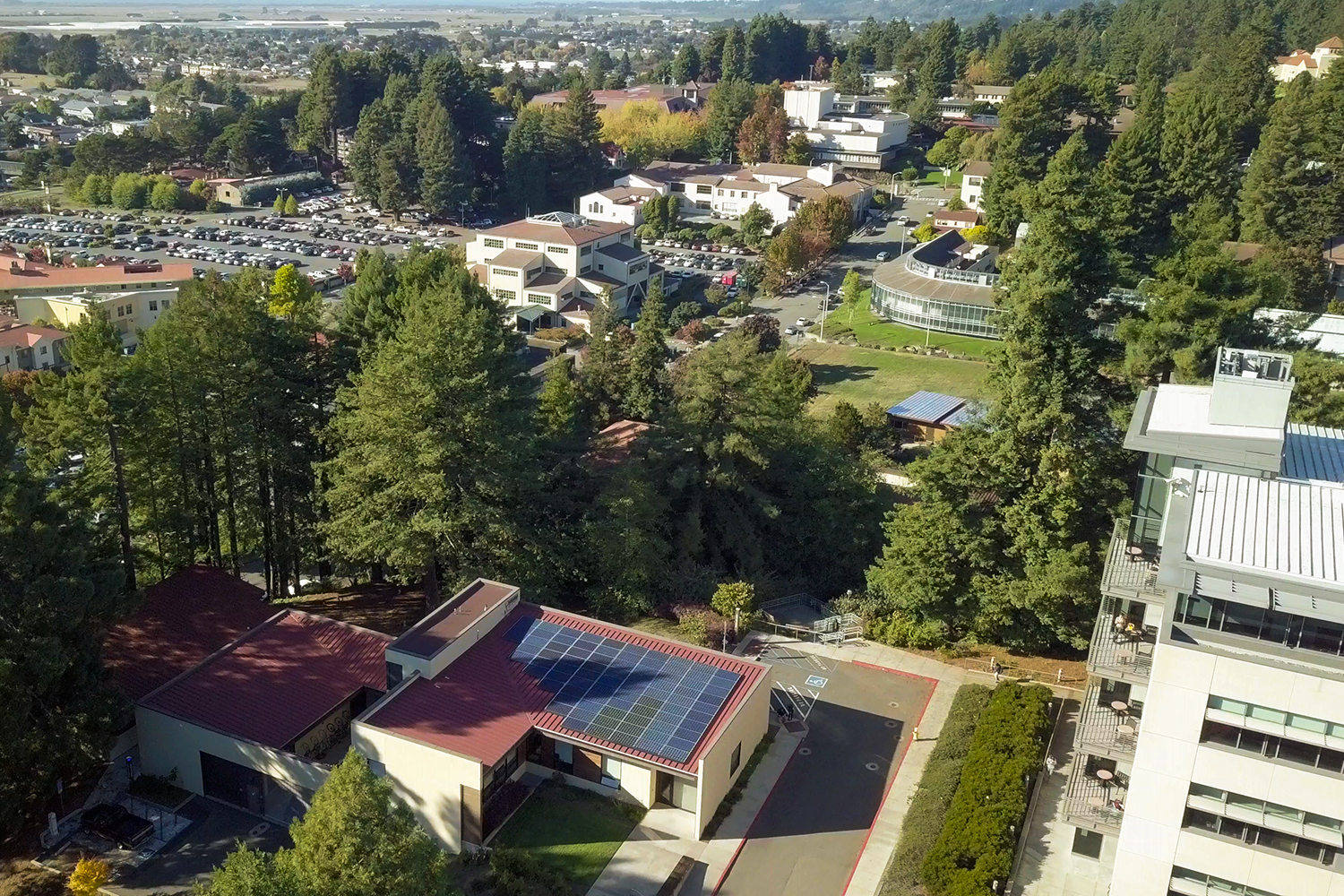
A new solar microgrid designed by the Schatz Center is expected to be up and running at Cal Poly Humboldt by fall 2025. The microgrid will be a solar+battery system with 2.1 megawatts of AC solar and a 5.8 megawatt battery with 11.6 megawatt-hours of energy storage capacity. This will allow the campus to stay independently powered on clean energy for up to two days, depending on weather conditions. Solar panels will be installed on some campus buildings, and some parking lots, like G11, will have solar canopies covering parking spaces.
Following the unprecedented public safety power shutoff (PSPS) events throughout California in the summer of 2019, Cal Poly Humboldt began considering a microgrid solution for keeping the campus fully powered year-round. A widespread outage caused by a 6.4-magnitude earthquake in December 2022 and a multi-week outage in neighboring Del Norte County caused by fires in September 2023 made the importance of campus energy resilience even more clear.
Under normal conditions, the campus microgrid will be able to both generate energy onsite and import energy from the main utility grid. During a local outage, the microgrid will “island” and operate independently of the main power grid to provide ongoing electricity to campus facilities.
Beyond keeping the lights on, the university’s microgrid will be a concrete demonstration of renewable energy, showing students how much power is being generated and stored, and how the microgrid operates.
Students in the School of Engineering and other programs, for example, will have the opportunity to take practical courses that prepare them for careers working with microgrids, resilience, and clean energy systems, and will gain critical skills for responding to our changing world.
Microgrid research and development at the Schatz Center