Author: Meg Harper

  • 5/7 webinar: IEC quality standards for pico-solar products & SHS kits

    5/7 webinar: IEC quality standards for pico-solar products & SHS kits

    View the webinar recording and download a followup Q&A

    Over the past 10 years, the off-grid energy access team at the Schatz Center has worked with the World Bank Group, CLASP, and a broad range of stakeholders to develop and maintain the Lighting Global Quality Standards, which have been the backbone of the Lighting Global Quality Assurance program.

    In recent years, several national governments have adopted these standards to protect their markets from poor quality products, and others have expressed interest in adoption. To ensure a harmonized approach across countries, the Lighting Global Quality Standards are now moving to the internationally recognized and familiar standards platform of the International Electrotechnical Committee (IEC).

    Our team has worked diligently to transfer the current standards to a new IEC document, consulted international experts on battery and PV safety requirements, sought stakeholder feedback, and shepherded the document through the IEC review process. The new document, IEC TS 62257-9-8, is expected to be published soon, and will cover quality standards for pico-solar products and solar home system kits. The IEC document is similar to the current Lighting Global Quality Standards, but includes additional safety requirements for lithium batteries and PV modules.

    On Thursday, May 7 at 13:00 GMT, VeraSol* will host a free, public webinar about the IEC document. Participants will learn how the new IEC document differs from the Lighting Global Quality Standards and receive guidance on how public and private entities can successfully transition to using the new standards.

    *VeraSol is the new name for Lighting Global Quality Assurance, and reflects the organization’s addition of non-lighting appliances such as solar water pumps, refrigerators, and media and communications devices. VeraSol is managed by CLASP in collaboration with the Schatz Center, with foundational support from the World Bank, UKaid, IKEA Foundation, and others. Learn more at VeraSol.org

  • Clean energy for healthcare

    Clean energy for healthcare

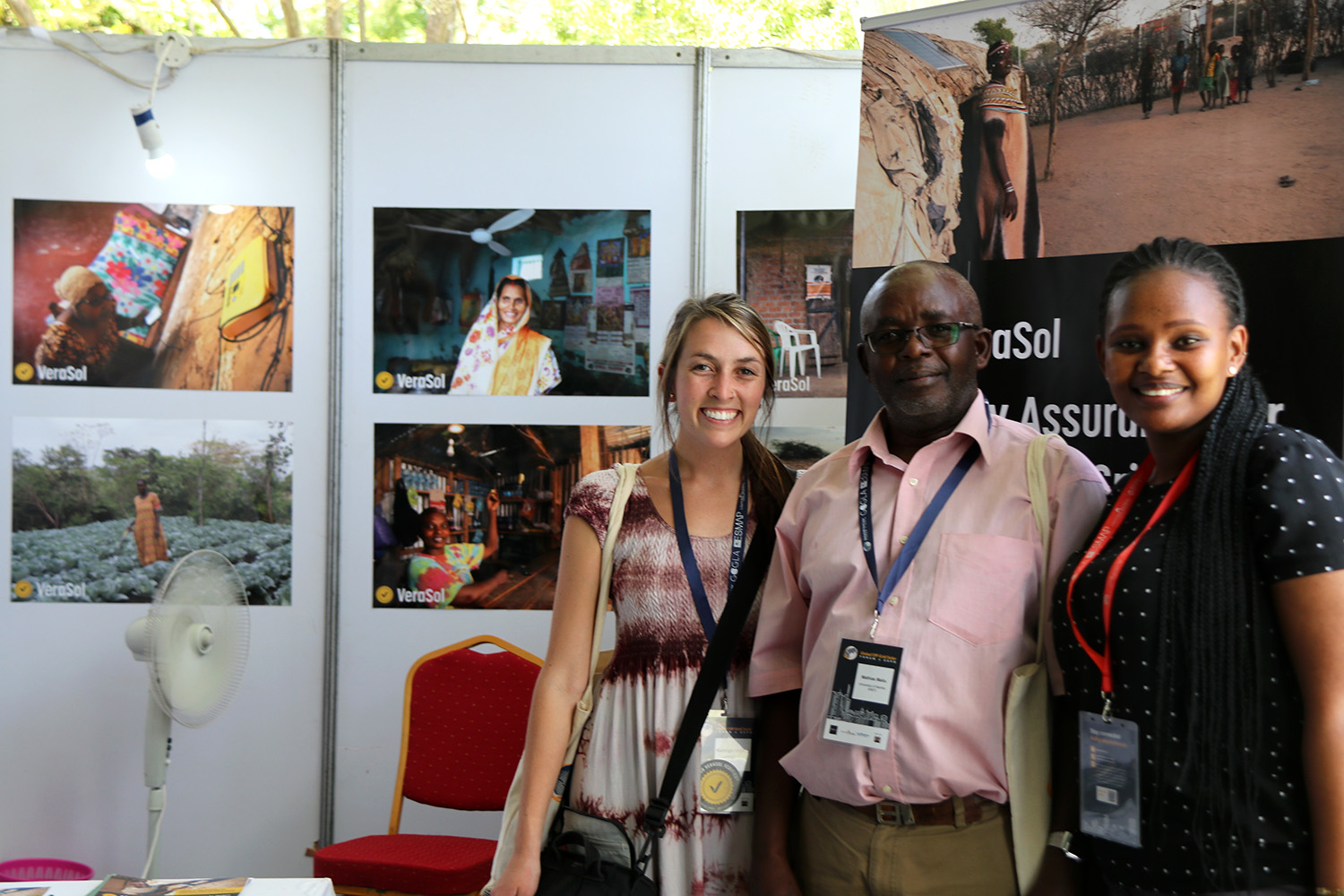
    In April, Arne Jacobson and Meg Harper attended the United Nations Foundation (UNF) Clean Energy for Healthcare conference in Nairobi, Kenya. Arne and Meg presented interim findings from our QA for Public Facilities project — in which the Schatz Center is working with the World Bank and ECREEE to design a quality assurance framework for solar installations at public facilities such as health clinics and schools in sub-Saharan Africa.

    Key messages echoed throughout the conference included:

    • the overwhelming need for electricity in rural health care
    • the ability for solar PV systems to meet electricity needs in the absence of reliable grid power
    • the importance of pairing energy efficient appliances with these systems, and
    • the need for long-term operation and maintenance — along with business models to financially support this O&M — throughout the systems’ 10-20 year design life.

    During the conference, the UNF and Sustainable Energy for All (SE4ALL) released a new report which explores many of these themes — Lasting Impact: Sustainable Off-Grid Solar Delivery Models to Power Health and Education.

    Further reading:

  • A Quality Assurance Framework for Solar System Installations at Public Facilities in West Africa

    A Quality Assurance Framework for Solar System Installations at Public Facilities in West Africa

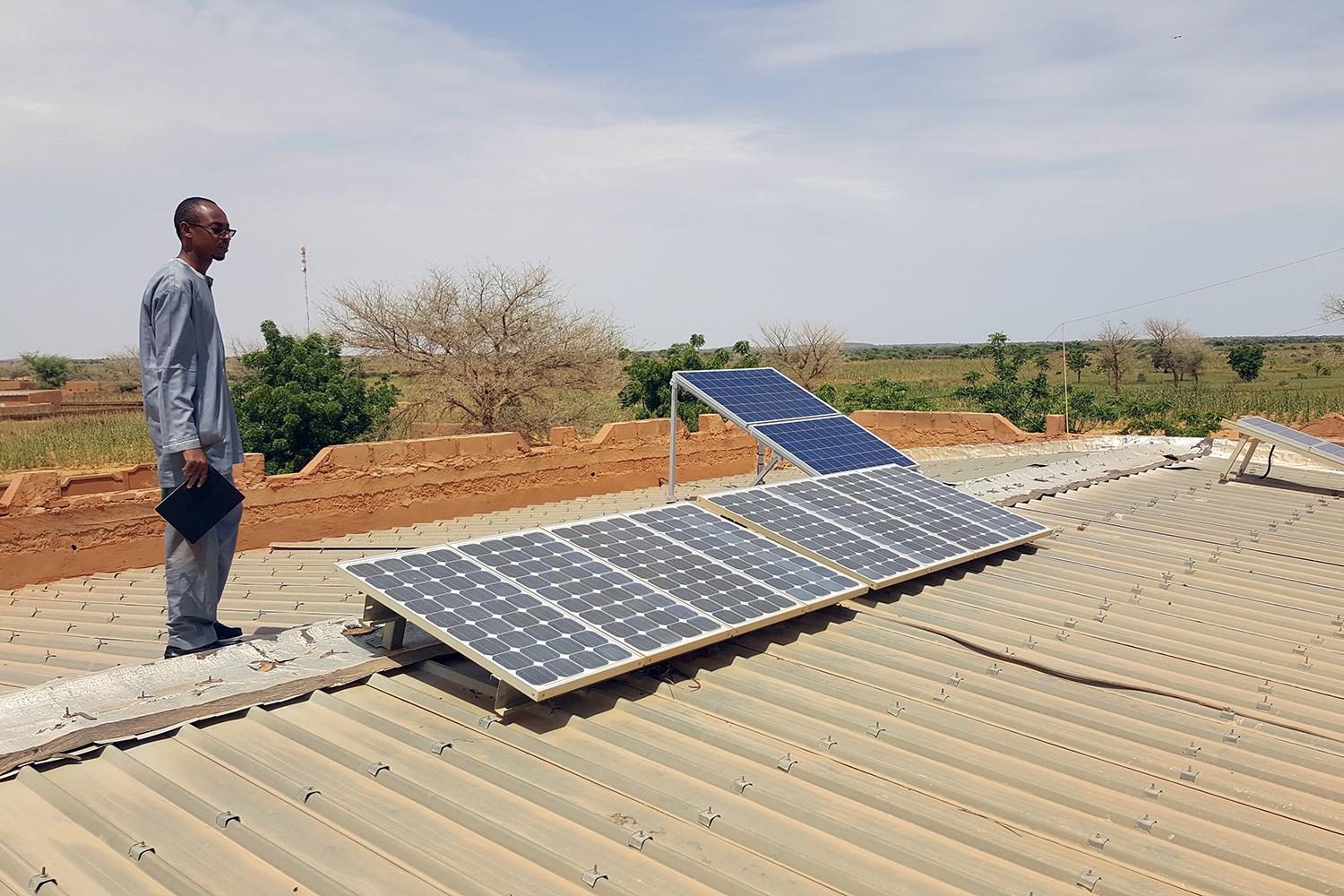
    The Schatz Center and the ECOWAS Centre for Renewable Energy and Energy Efficiency (ECREEE), with support from the World Bank through their Lighting Africa program, are working collaboratively with government partners in Nigeria and Niger to develop a new approach for the procurement, installation, and long-term maintenance of off-grid solar electricity systems at public facilities, such as health clinics, schools, police posts, public offices, and water pumps.

    Off-grid solar systems offer the promise of clean, renewable electricity for public facilities. However, historically, there has been a high failure rate for these systems in many countries, often caused by poor quality design and installation, or lack of maintenance and good operational practices following installation even when initially high quality system components are installed.

    The proposed new approach involves the innovative use of digital remote monitoring technology, along with quality standards for equipment, design, and installation, to ensure and verify the ongoing performance of off-grid solar electricity systems. Under such an approach, companies in the off-grid solar sector could enter lease agreements or extended service contracts with government agencies to provide an agreed-upon level of electricity service in return for guaranteed monthly payments. The payments could be designed to cover the capital costs of equipment and installation (or a percentage of these costs), along with the ongoing operation and maintenance costs over the projected system life. By digitally monitoring the performance of the systems, a third-party could verify that the service provider is delivering the agreed electrical service and instruct the government agency to pay the monthly fee. Spreading the cost of the systems over many years and keeping service providers engaged is expected to improve the long-term performance of the systems.

    Over the next two years, the proposed approach will be developed, evaluated, and revised through research and deployment of approximately fifteen pilot systems in Nigeria and fifteen pilot systems in Niger. Our main role in this effort is to develop the quality assurance framework that serves as the basis for the approach. This includes determining a standard for service delivery that can be used to verify that the system’s performance matches contractually specified targets. Our staff will conduct site visits, provide technical designs for the thirty pilot systems, and verify system performance for the first six months. Support for this effort is provided by the World Bank Group’s Lighting Africa Program.

    To kickoff the project this September, three team members visited sites in Niger and Nigeria to gather initial information about health clinics, schools and other public facilities. Chris Carlsen, a Center alumna and current consultant, met with officials in Niger and visited several communities to understand the country’s existing infrastructure. Jimento Aikhuele, a Schatz Energy graduate fellow originally from Nigeria, and Olakunle Owoeye, a Center consultant, met Chris in Nigeria to scope out potential sites for pilot installations and learn about the energy needs of the various facilities. The team also visited sites with existing solar installations to gain insight into why well-intentioned solar systems so often fail. Our initial work in the field was fruitful thanks to the indispensable support of ECREEE, the Ministries of Energy, Health and Secondary Education of Niger, and the Ministry of Power, Works and Housing of Nigeria.

    Back at the Schatz Center, we have been hard at work reviewing existing standards and determining appropriate requirements to include in the quality assurance framework. This work dovetails with projects we’ve conducted in the past, including the ongoing development and co-management of the Lighting Global Quality Assurance program. We are looking forward to heading back into the field to gather more information before finalizing a draft of the framework and providing recommended designs for the pilot installations next spring.