Webinar (11/17): Detecting potential entanglements with floating OSW mooring lines — using sensors, modeling, and ROVs
Register for the November 17, 2026 webinar (1-3 pm Pacific time)
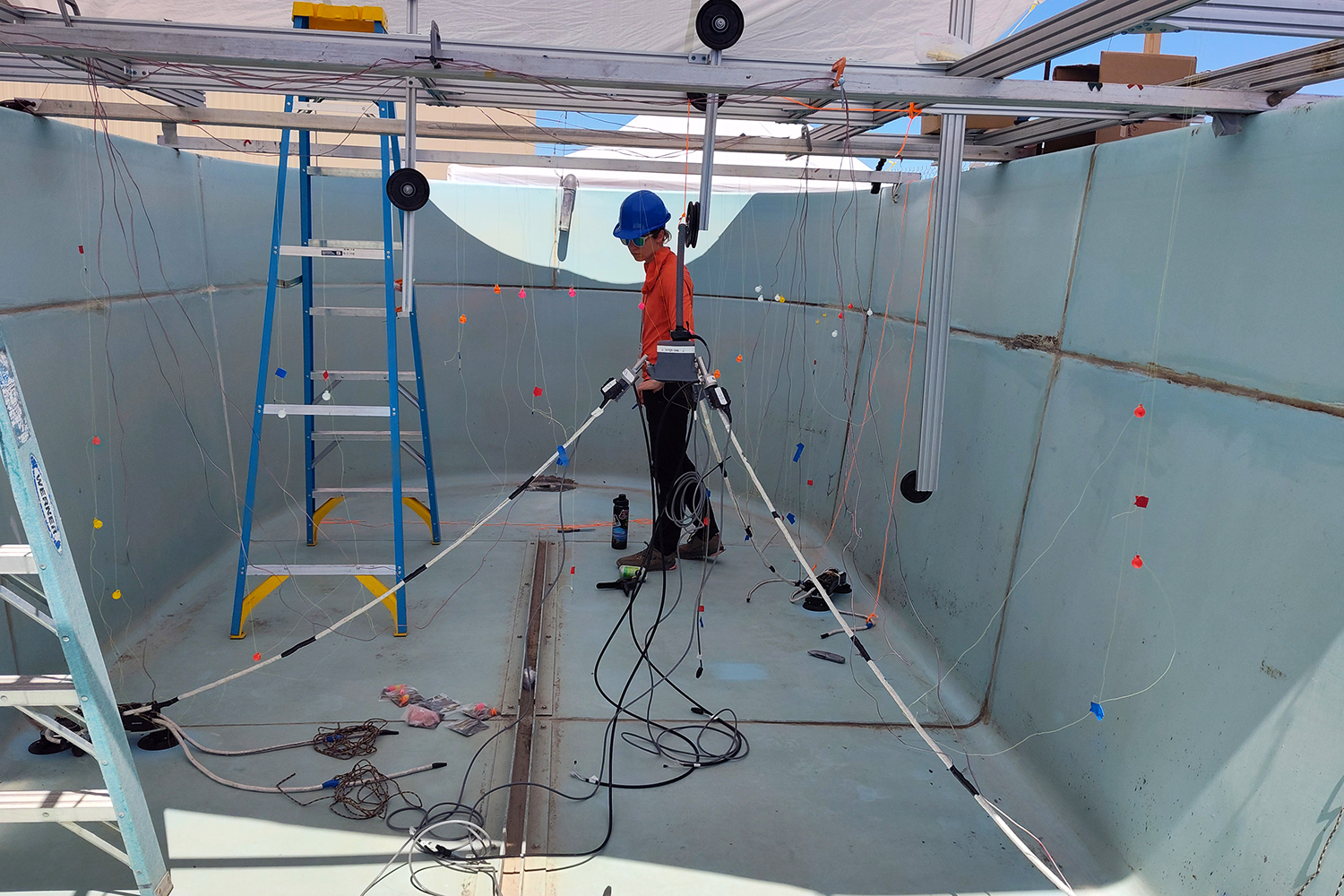
As part of a research program for detecting secondary entanglement on floating offshore wind mooring lines, the Schatz Center and project collaborators recently developed a sensor package and inspection ROV platform, conducted tank tests of both the sensor package and ROV system, and analyzed the efficacy of the sensors to detect scaled entanglement loads (such as turtles, pinnipeds, or whales) which could occur on the mooring lines on a floating offshore wind system.
This webinar will describe the sensor package developed by PNNL and the inspection ROV platform developed by MARE, and will share results on the development and testing of both of these components of the MoorSEA system. We will hear about predicted capacity of the PNNL sensors to detect entanglements, and how that could be confirmed by the MARE ROV. We will also hear from Schatz Center research staff about how simulation modeling aided in the development of a detection algorithm, which helped to guide the sensor package development. We will explore a few next steps, including how these systems might be deployed on a floating platform, and discuss potential preliminary limits of detectability.
Joining the discussion will be project staff from the Schatz Energy Research Center, Pacific Northwest National Laboratory (PNNL), and Marine Applied Research & Exploration (MARE). This research effort is funded by the California Energy Commission.
This talk is a production of the Pacific Offshore Wind Consortium and the Schatz Energy Research Center. For questions about this webinar or to request technical or accessibility support, please contact schatzenergy@humboldt.edu or call 707-826-4345.
Balancing offshore wind port infrastructure with existing coastal industries: perspectives from the Humboldt Bay shellfish industry-October 13, 2026 (webinar)
Port infrastructure is a critical part of deploying floating offshore wind. In California, only two ports – Long Beach and Humboldt Bay – are currently considering developing staging and integration facilities, where turbines could be assembled and then towed offshore for installation.
Understanding what it means to develop these large-scale port infrastructure projects requires meaningful engagement with the communities and industries currently occupying those spaces. In a partnership with California Sea Grant, the Schatz Energy Research Center has been supporting this type of engagement for the CA North Coast, including with the shellfish industry in Wigi / Humboldt Bay.
This webinar will include presentations from California Sea Grant and the Schatz Center about their work with Humboldt Bay shellfish farmers over the past two years, and perspectives from local shellfish farmers who have participated in these efforts and are actively engaged in the development process. Our goal is for attendees to come away with a better understanding of Humboldt Bay as a working estuary and agricultural space, and of the concerns and priorities of the shellfish industry regarding large-scale port development.
Presenters & panelists will include Tanner Etherton (Schatz Energy Research Center & California Sea Grant), Kevin Johnson (California Sea Grant), Justin Mojonnier (Hog Island Oyster Company), and Todd Van Herpe (Humboldt Bay Oyster Company).
This talk is a production of the Pacific Offshore Wind Consortium and the Schatz Energy Research Center. For questions about this webinar or to request technical or accessibility support, please contact us at schatzenergy@humboldt.edu or call 707-826-4345.
Introducing the California Offshore Wind Environmental Monitoring Framework – June 23, 2026 (webinar)
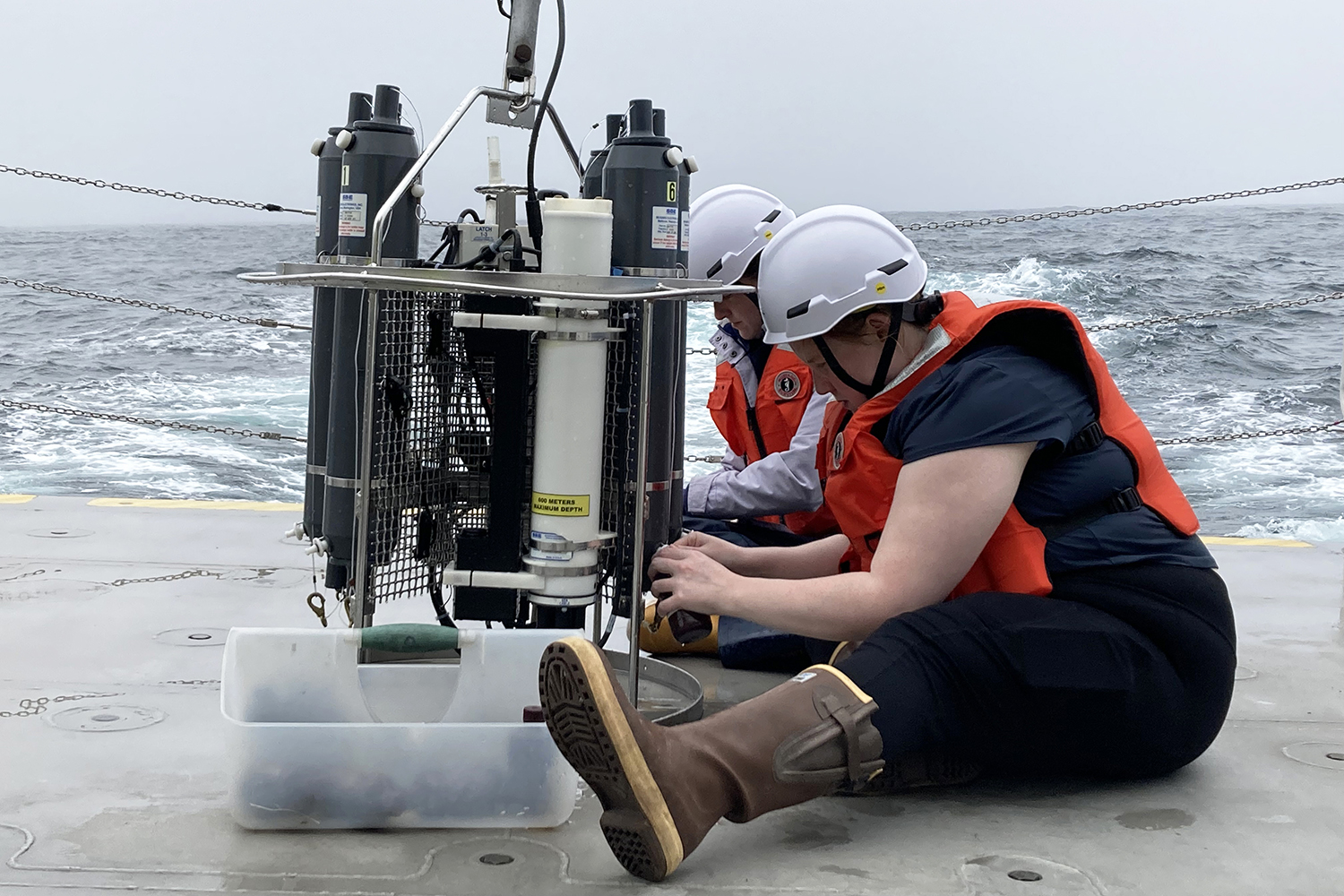
Over the last two years, the California Marine Sanctuary Foundation (CMSF) has worked with over two hundred scientists — in coordination with the California Ocean Protection Council and California Department of Fish and Wildlife — to develop a statewide Environmental Monitoring Framework for floating offshore wind development. This framework provides a science-based foundation to guide the development of site-specific monitoring plans for species, habitats, and oceanographic processes that may be affected by floating offshore wind in California. It identifies potential environmental impacts from OSW development, proposes relevant monitoring questions, and reviews available and emerging monitoring tools.
This talk is a production of the Pacific Offshore Wind Consortium. For more information on POWC, please visit powc.us.
For questions about this webinar or to request technical or accessibility support, please contact schatzenergy@humboldt.edu or call 707-826-4345.
Learn more about our offshore wind research
For more information, contact: schatzenergy@humboldt.edu or 707-826-4345.
Important note: The Schatz Center is committed to providing research that is accessible to everyone. If you encounter any barriers while using this document or require the information in an alternative format, please contact us at schatzenergy@humboldt.edu or 707-826-4345.
Designing sensors to detect and reduce marine entanglement in the context of California floating offshore wind – June 17, 2026 (webinar)
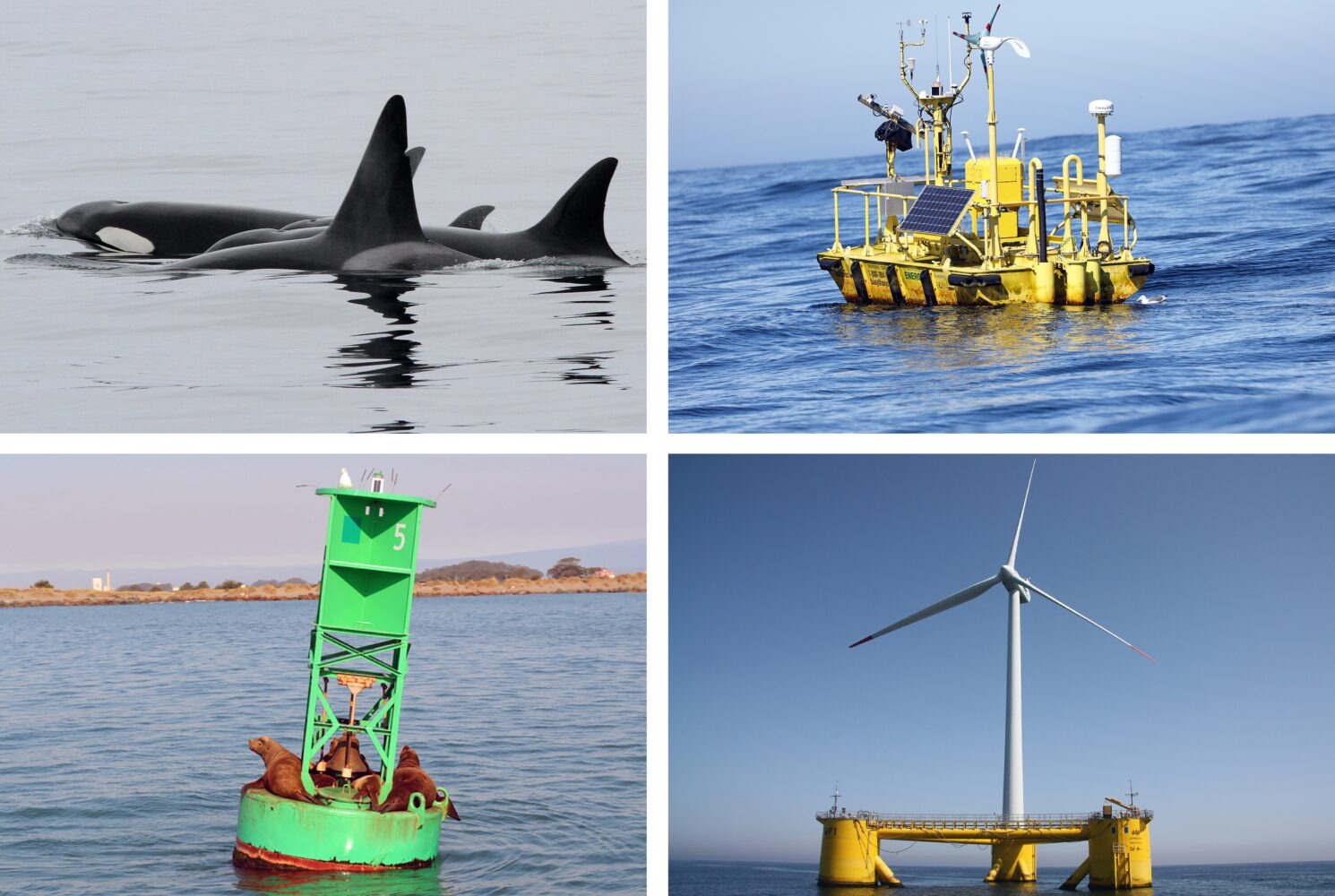
“Ghost gear” is the evocative term for lost, discarded and abandoned fishing gear found in the marine and coastal environment. This gear can create multiple hazards for marine life.
Secondary entanglement refers to situations where ghost gear becomes entangled with existing infrastructure – creating a new entanglement hazard. The Schatz Center is leading research efforts to support advancements in environmental monitoring for mooring lines used to anchor floating offshore wind farms. Our goal is to expand the capacity of underwater sensors and remote operated vehicles to detect (a) primary entanglements between ghost gear and mooring lines, and (b) secondary entanglements between mooring-line-entangled ghost gear and transiting marine species. Our study focus is the deepwater environment of the Humboldt and Morro Bay Wind Energy Areas (WEAs) off the coast of Northern and Central California.
In order to assess detectability, we first need to characterize: (i) species of concern within these areas, (ii) ghost gear found within this region, and (iii) the metocean environment within the WEAs. (Note: metocean data is key for evaluating the sensor-signal to background noise ratio.)
Our first report, prepared by the Schatz Center and our partner colleagues at H.T. Harvey & Associates for the MoorSEA project, provides a high-level overview of the environmental and biological data associated with the Humboldt and Morro Bay WEAs.
Learn more about our offshore wind research
For more information, contact: schatzenergy@humboldt.edu or 707-826-4345.
Important note: The Schatz Center is committed to providing research that is accessible to everyone. If you encounter any barriers while using this document or require the information in an alternative format, please contact us at schatzenergy@humboldt.edu or 707-826-4345.