Author: Peter Alstone

  • Solar+ systems and wildfire solutions

    Solar+ systems and wildfire solutions

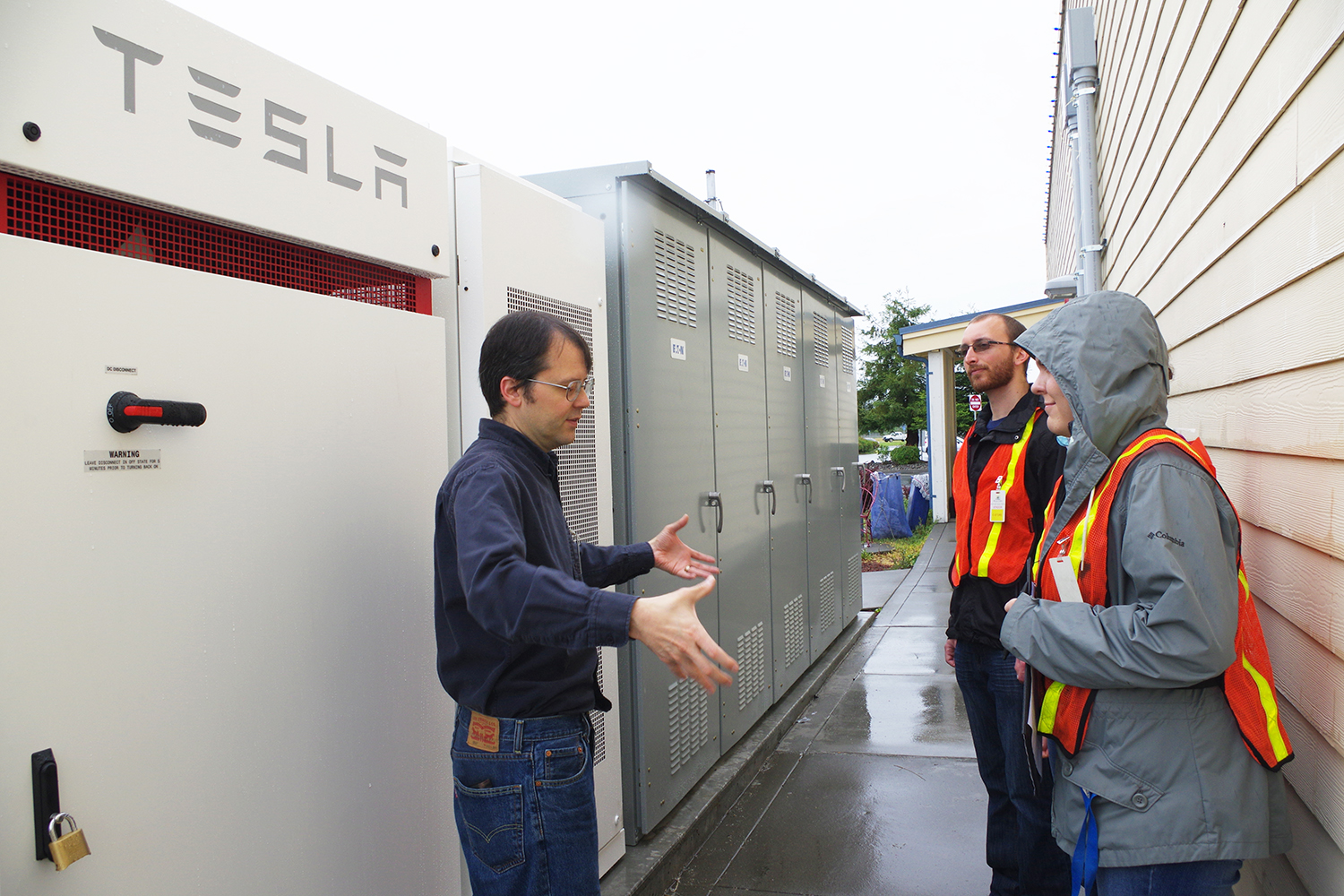
    The Solar+ project at the Blue Lake Rancheria (BLR) is fast approaching completion. This summer, we are working closely with the BLR and with our project partners at Lawrence Berkeley National Laboratory to connect the final pieces of hardware and software for the Rancheria’s fueling station microgrid. Once the project is commissioned and operational, we will run a range of experiments on the advanced controls that form the core of the system.

    When we started this project in 2017, we knew that finding microgrid solutions that work for small-to-medium commercial buildings was important — but we could not have predicted how wildfires would intensify the need for these systems. Electric utilities on the West Coast are now using Public Safety Power Shutoff events to reduce wildfire risk by deenergizing parts of the grid. We have already had one of these events in PG&E’s service territory this summer, impacting ~22,000 customers, and expect more to come. Because fueling stations provide critical services not only for evacuees but also for first responders in high risk fire districts, maintaining electricity at these stations has become a wildfire mitigation goal.

    Our May technical advisory meeting for this project focused on resiliency and disaster preparedness. Designing microgrids that can keep critical facilities online during blackouts is emerging as a key area of our work. As our Solar+ microgrid at the Blue Lake Rancheria enters its deployment and reporting phase, we will seek ways to connect our results with this emerging challenge.
  • EPIC Symposium 2019: a field report

    EPIC Symposium 2019: a field report

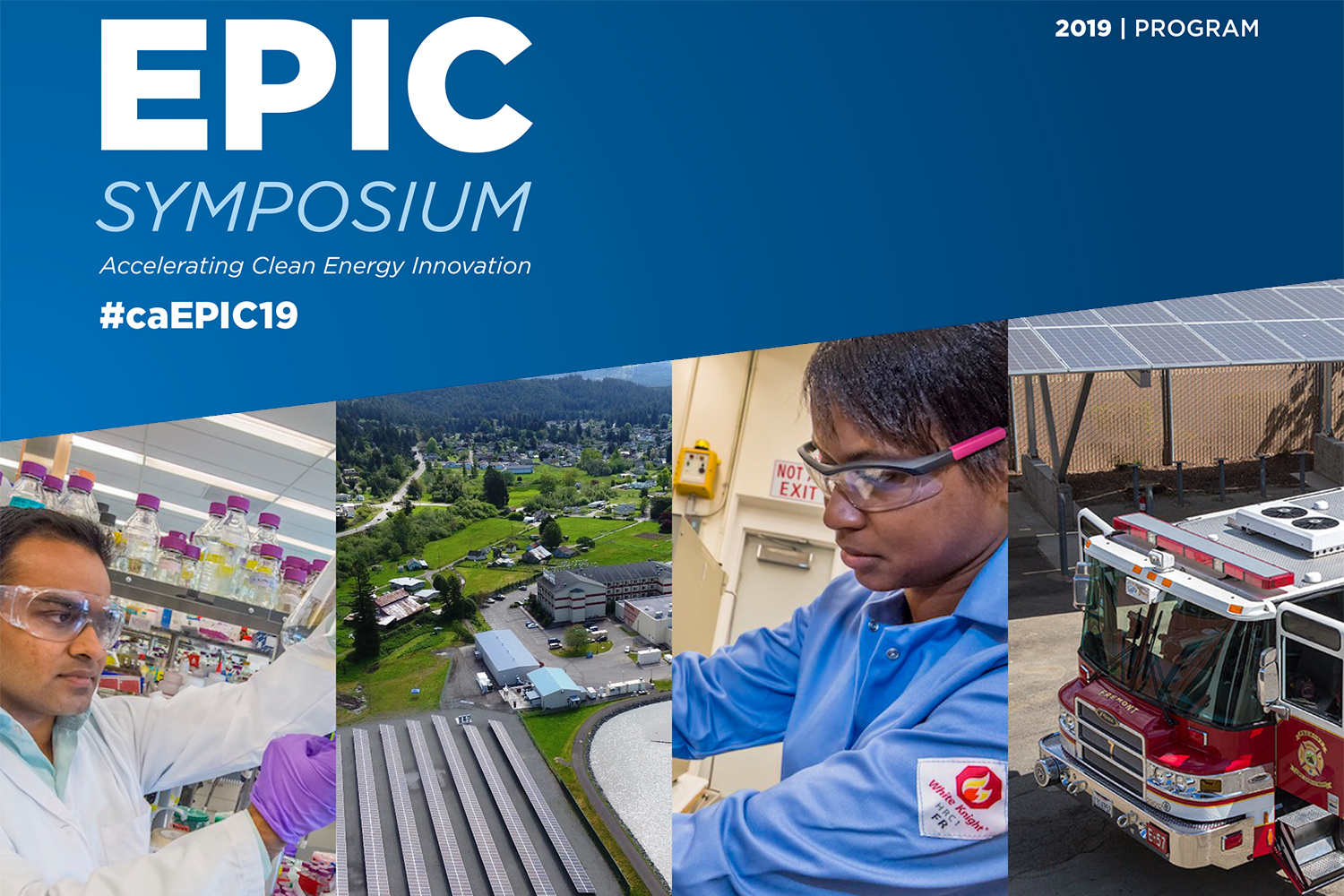
    I presented at the California Energy Commission’s EPIC Symposium in Sacramento last Tuesday. The conference gathered energy policy and technology professionals from across California, with a thousand people in attendance. Hallway posters gave a nice sense of the range of projects supported by EPIC funding — from market and program development to hardware including microgrids, advanced storage, demand response, and energy efficiency.

    In a morning discussion, the Berkeley Center for the Built Environment shared results from a pilot test for smart ceiling fans used in coordination with air conditioning. These smart fans extend the range of comfortable temperatures, so that A/C isn’t needed until temps exceed 80 ℉. Apartment residents of one pilot site in the Central Valley reported staying just as comfortable following smart fan integration — but their A/C energy use was reduced by 60%, saving $1,000 per month in building operation costs. What a cool project!

    As part of the panel on Resilient and Equitable Communities, I presented our Solar+ small microgrid design, and spoke about the leadership demonstrated by the Blue Lake Rancheria in clean energy deployment. I was joined by panelists with expertise in energy efficiency, net-zero retrofits in low-income housing, and advocating for racially just climate and energy policies — important work at the intersection of clean energy and environmental justice.

    ~ Peter Alstone, Faculty Scientist at the Schatz Center

  • Solar+ project continues in Blue Lake

    Solar+ project continues in Blue Lake

    The Solar+ project at the Blue Lake Rancheria (BLR) hit high gear this summer, with activity across our research and design areas — from engineering to market assessment. Our project is at the halfway point, with construction underway and plans afoot for experiments to run once we are operational next year. It has been rewarding to see progress towards a standardized package for microgrids at the building scale.

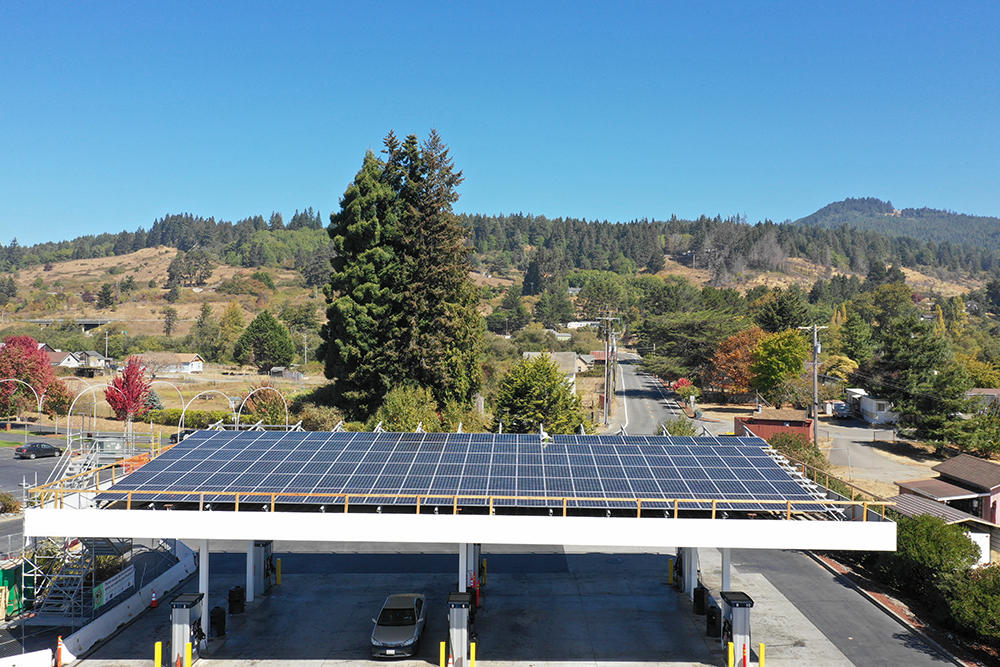
    Over the summer, our engineering designs came into form as the PV array was installed at the Rancheria’s “Playstation 777” fueling station and convenience store. Our partners at BLR have been working closely with us to coordinate the construction and installation of a 60 kW array of high efficiency SunPower modules on the fueling area canopy. Later this year we will install control devices, switchgear, and other microgrid components.

    In parallel to our work designing and installing the microgrid hardware, project partners at Lawrence Berkeley National Lab have been developing the control software that will eventually manage the microgrid. Building off the open source XBOS (“Extensible Building Operating System”) framework, the LBNL team has been adding model-predictive control and communications features needed to optimize the operation of our energy systems. We are in the testing phase for this software now, and look forward to its installation and operation in 2019.

    Along with our progress on the prototype installation for our Solar+ microgrid design, we have been synthesizing our overall experience in microgrid design and development. Our cross-site analysis is helping us to model the current costs and benefits of microgrids based on the characteristics of a site — and we are looking ahead to future prices for PV, storage, and integration technology to understand possible deployment pathways for microgrids at scale.

    We made a lot of progress this summer, thanks in great part to a crew of excellent summer research assistants. René DeWees and Ellen Thompson joined our market and data analysis team, and helped model the costs of microgrids (along with big contributions from Jo Caminiti and Thalia Quinn). Craig Mitchell joined the hardware design and construction team, and provided important on-site research observation and engineering support as we worked on building the PV array.

  • Solar Plus: Improving Performance in Distributed Clean Energy Systems

    Solar Plus: Improving Performance in Distributed Clean Energy Systems

    This fall, we are kicking off a new “Solar Plus” (Solar+) project to investigate how real-time coordination between clean energy systems can yield performance improvements that benefit both building owners and utility operations. Research and development over the past decade has successfully reduced the cost of solar arrays, batteries, building controls, and electric vehicles. Many of the emerging challenges we now face are related to the large-scale deployment and integration of distributed clean energy components. For example, electrical distribution circuit capacity is limited (in order to prevent power lines from overheating), which in turn limits the downline capacity of distributed generation systems. This Solar+ project will develop control strategies to coordinate onsite resources to reduce their combined footprint on the power system, effectively increasing the capacity of the grid to host clean energy technology.

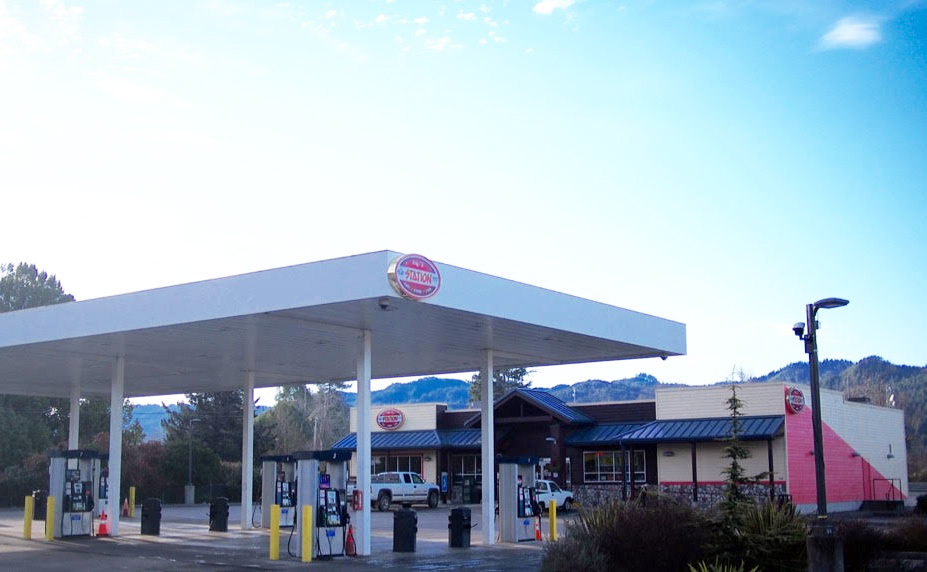
    Our pilot site is a gas station and convenience store at the Blue Lake Rancheria (BLR) in Blue Lake, California. Convenience stores typically have sizable loads, including HVAC and refrigeration, which require backup power. Many of the sites also have significant potential to host rooftop solar. By working with a very common building type (there are 12,000 convenience stores in California alone), we can design with replication in mind.

    Over the next two and a half years we will design and install a Solar+ system at the BLR and measure the value of distributed energy coordination. Our project will develop: (1) a hardware design guide for integrated Solar+ packages, (2) open-source software for controlling the technology, and (3) guidelines to determine the best locations for investment, given local insolation and onsite potential for system coordination. Our outcomes will be focused on integrating solar, batteries, and advanced building controls into packages that are market ready and can make positive impacts on the future trajectory of California’s built environment.

    This project is funded by the California Energy Commission through the Electric Program Investment Charge (EPIC) program. Our key partners are the Blue Lake Rancheria, which owns the gas station, and Lawrence Berkeley National Lab, where a team of researchers is developing open-source “Solar+ Optimizer” software.

    Project partners also include Southern California Edison, whose refrigeration system test center data is helping us to develop algorithms, and Pacific Gas & Electric, the local energy utility.